14 Feb 2011: Report

Arctic Roamers: The Move of
Southern Species into Far North

Grizzly bears mating with polar bears. Red foxes out-competing Arctic foxes. Exotic diseases making their way into once-isolated polar realms. These are just some of the worrisome phenomena now occurring as Arctic temperatures soar and the Arctic Ocean, a once-impermeable barrier, melts.

by ed struzik

Scientist John England was flying in the High Arctic last summer when he spotted something large moving on a tiny island in the Beaufort Sea, not far from the Alaska-Yukon border. When he and the helicopter pilot moved in to get a closer look, they were astounded to see a grizzly bear prowling the shoreline.

What this brown bear was doing in the kingdom of its white cousin is not entirely clear. But a week later when I joined England in the field, we found the tracks of the animal leading to a partially excavated den. It was obvious that the bear had no intention of going back to the mainland.

Up until about twenty years ago, sightings of grizzlies in the High Arctic were extremely rare; a quirk of nature, many biologists thought, that may
The new concern is that interbreeding might result in hybrid creatures that will water down a unique gene pool.
have simply occurred because the bear ended up walking the wrong way or because it had strayed too far following mainland caribou that sometimes cross the sea ice to the Arctic islands. But that thinking began to change in recent years as more brown bears and a succession of other animals such as red fox, white-tailed deer, Pacific salmon, and killer whales began showing up in areas traditionally occupied by polar bears, Arctic fox, caribou, Arctic char, and beluga whales.

Most scientists now believe that climate change, which is warming the Arctic faster than any other place on Earth, is responsible for removing the barriers — long winters, bitterly cold temperatures, and thick, continent-size sheets of sea ice — that once stopped these southern animals from moving into the far north.

Initially, the fear was that some of these Arctic animals would not be able to compete with their southern cousins. Experimental studies have shown that Arctic fox do not fare well in competition with red fox, and anecdotal evidence from some Arctic regions — including a video from Alaska’s Prudhoe Bay Oilfield showing a red fox killing an Arctic fox — suggests that this is the case in the wild. Killer whales moving into the Arctic from more southerly waters have eaten beluga whales and narwhal, as Inuit hunters have been reporting for years. In August 2005, several biologists from Canada’s Department of Fisheries and Oceans witnessed such an attack at Kakiak Point in Admiralty Inlet, Nunavut, Canada.
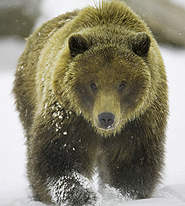
Grizzly Bear
iStockphoto
Sightings of grizzlies in the High Arctic were extremely rare until two decades ago.
Now, the new concern is that interbreeding might result in hybrid creatures that will water down a unique gene pool that has helped Arctic animals adapt to this harsh environment.

Interbreeding is “likely to become increasingly important as the summer ice diminishes and is ultimately lost,” says David Tallmon, a marine biologist at the University of Alaska. “Hybridization is essentially impossible to reverse once it has begun on a large scale.”

The possibility of this happening came to light for biologist Brendan Kelly in 2006 when an American hunter killed an animal in the High Arctic that turned out to be the offspring of a female polar bear and a male grizzly. The bear had a combination of traits from both species, including a mix of white fur on its torso and brown fur on its paws. It also had a head shaped more like that of a grizzly, but the longer claws of a polar bear.

Kelly, who is now the deputy director of the Arctic Sciences Division at the National Science Foundation, wondered then whether this kind of hybridization was occurring in other species. Marine mammals such as seals, walrus and sea lions, he knew, are more prone to hybridization, because they share the same number of chromosomes, which allows them to produce offspring. If you removed this vast ice sheet that prevented southern marine mammals from moving north, he thought, what might be the outcome?

In a recent paper published in the journal Nature, Kelly and two colleagues reported that hybridization had already occurred between harp and
Marine mammals are more prone to hybridization because they share the same number of chromosomes.
hooded seals, narwhal and beluga whales, and very likely between North Pacific right whales and bowhead whales. This is not unimportant because with only a few hundred North Pacific right whales left in the world, for example, the species’ gene pool is becoming perilously shallow. Kelly and his colleagues suggested that at least 22 Arctic marine mammals — many of them already threatened or endangered — are at risk from hybridization.

“There is something to be said about species adapting to climate change,” Kelly says. “But the kind of adaptation that’s necessary is a shift to genes that fit the new climatic environment better than the old genes. That takes time. The change that is taking place in the Arctic now is happening so fast that long-lived animals like whales, seals and polar bears aren’t getting the chance to adapt as quickly as it is necessary.”

Kelly likens the role that sea ice has played in the Arctic to the role South America has played in separating the world’s two great oceans. For tens of millions of years, the continent was a barrier to dispersal and gene flow between the South Atlantic and the South Pacific. If you could somehow remove South America, its disappearance would be similar to eliminating the big barrier of sea ice in the Arctic world.

“People have a tough time wrapping their minds around this concept,” says Kelly, “but sea ice is a huge barrier that prevents air-breathing marine mammals from moving from one place to the other. It is also in its own way a very important habitat for many Arctic species. Removing that as quickly as is happening now is going to have an impact.”

Almost lost in the current debate about Arctic hybridization and invasive species from the south is that some southern marine mammals will also bring with them diseases for which Arctic marine mammals have no immunity.

The possibility of this happening came to light several years ago when Canadian scientists were monitoring the spread of trichinella in the Arctic.
Southern marine mammals will also bring diseases for which Arctic marine mammals have no immunity.
This parastic roundworm, which is commonly found in polar bears and Arctic fox, was of little concern in the Arctic until the 1980s, when it began to spread to walrus and to humans who had eaten uncooked walrus meat, as occurred last fall in a village in Nunavut. Trichinosis in humans can create severe gastrointestinal problems and in some cases can be fatal.

Ole Nielsen, a microbiologist working for the Canadian Department of Fisheries and Oceans, was assigned the task of tracking the spread of this parasite and determining whether there might be anything else of concern in the hunter-killed samples he was given. He soon found evidence of brucellosis, a bacterial disease — sometimes found in cattle, wild animals, dogs, and humans — that has been linked to reproductive failure in dolphins and baleen whales.

The disease is extremely widespread in the marine world, and Nielsen said it wasn’t a stretch to think it might have gotten a foothold in the Arctic. What did surprise him was the speed with which the disease has spread since he began sampling in the Arctic more than two decades ago. He now sees it in 21 percent of his samples, a four-fold increase from the 1980s.
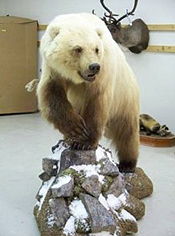
Grolar Bear
Photo courtesy of Robertson Taxidermy
A stuffed hybrid “grolar” bear, killed last year in the Northwest Territories, Canada.
A bigger concern, however, was the discovery that neither beluga whales nor narwhal have antibodies that would help them resist phocine distemper, a deadly virus that was first discovered in the marine environment in 1988 when it killed 20,000 harbor seals in northwestern Europe. Since then it has spread to seals in Russia’s Lake Baikal, striped dolphins in the Mediterranean, and to several other marine mammals species worldwide.

No one knows how phocine distemper made its way into the ocean. But because it is so closely related to canine distemper, it is thought to have its origins in land-based species whose remains were dumped into salt water. “There are a lot of unknowns should distemper strains capable of infecting narwhal and beluga make their way to the North American Arctic,” says Nielsen. “If distemper gets a foothold here, it could get ugly. With as many as 80,000 narwhal and 150,000 belugas in the North American Arctic for most if not all of the year, a massive die-off somewhere is not out of the question.”

All that’s required is a carrier: a pilot whale, harbor seal, or dolphin — marine mammals that are known to carry the virus for long periods of time before suffering the symptoms. Any number of them could ride a warm current into an Arctic environment that is no longer choked with ice.

Brendan Kelly acknowledges that there is no easy solution to what’s happening. Culling hybrids, as some countries do, for example, would be difficult in an environment as large and as hostile as the Arctic. One step advocated by Kelly is more careful study of mammals killed by Arctic hunters, so that the spread of various lethal viruses can be tracked and better understood.

MORE FROM YALE e360

First Comes Global Warming,
Then an Evolutionary Explosion

First Comes Global Warming, Then an Evolutionary Explosion
In a matter of years or decades, researchers believe, animals and plants already are adapting to life in a warmer world. Some species will be unable to change quickly enough and will go extinct, but others will evolve, as natural selection enables them to carry on in an altered environment, Carl Zimmer writes.
READ MORE
“Many of the species that are vulnerable are already endangered or threatened,” he says. “Removing that barrier of ice as fast as is happening now could be the final straw for many of them.”

Heading back home last summer, England and I crossed paths on separate occasions with an Inuit hunter and mining geologists who had spotted a total of three other grizzly bears. The Inuk turned out to be Roger Kuptana, the guide who led the American hunter to the hybrid “grolar” bear in 2006. He was also the cousin of the man who shot a second hybrid bear in the Arctic that spring.

“I’m sure there are more out there,” Kuptana told me. “Think about it. Bears almost always produce more than one cub. So it’s very likely that there are brothers or sisters of those two animals still out there mating with other bears, including that grizzly bear you saw.”

POSTED ON 14 Feb 2011 IN Climate Antarctica and the Arctic 

COMMENTS


Isn't hybridization a good thing, though? Because it expands the gene pool and increases animals' abilities to adapt?

Posted by SW on 14 Feb 2011


Thank you for a great posting---as a fellow Canadian, I have a great fascination for the north, and the creatures that can live in such a harsh climate! Fortunately not in my lifetime but certainly in the future these beautiful creatures both above and below the waters will no longer exist---very sad.

Posted by Kathy Dowsett on 14 Feb 2011


It's the speed of the changes that will be the big problem. It takes time for adaptation to new conditions, this I fear will mean the loss of many species.

Posted by k. nockles on 15 Feb 2011


As we are clearly unable to reverse rapid anthropogenic climate change, should we view rapid natural selection responses – hybridisation - as a good thing because it is so rapid? Or should we attempt to preserve what is/was best suited to a different climate regime when we cannot preserve the natural habitat in which they evolved? I’m not arguing either way. I’m genuinely, and worryingly unclear on this. It’s an ethical dilemma; one environmental managers and policy makers must now confront.

Posted by Sonny Whitelaw on 20 Feb 2011


It is important to remember that although climate cycles may be changing, most of the species migrations into the north have been occurring over the past 200 years (both red fox and grizzly bear have been documented as fur species by the HBC since the 1800's) and are also related to habitat loss in the south.

Posted by climatebioNWT on 21 Feb 2011


As a former student of the late Charles Remington (evolutionary biologist and entomologist at Yale) I have to think that the concern over hybridization of closely related species that are coming back into contact is overblown. I would refer anyone interested to Remington, C L. 1968. Suture-zones of hybrid interaction between recently joined biotas. Evol Biol, 3, 321–428. In this Remington addresses the poorly understood concept that when a population becomes ecologically divided into two groups that no longer interbreed speciation will eventually occur but as long as there can be no interbreeding between those speciating populations there is no selective pressure for evolution of a reproductive barrier between the newly evolved "species."

If conditions later change allowing restored contact, interbreeding may occur. There are two possible outcomes: 1) the hybrid off-spring will be as fit as either parent species in which case the parent species were not true ecological species or 2) the hybrids will prove less fit than either parent species and a reproductive barrier will evolve since the tendency to interbreed will be selected against. This is evolution in action, folks. Not something to get overwrought about.

Posted by William Brown DVM on 24 Feb 2011


POST A COMMENT

Comments are moderated and will be reviewed before they are posted to ensure they are on topic, relevant, and not abusive. They may be edited for length and clarity. By filling out this form, you give Yale Environment 360 permission to publish this comment.

Name 
Email address 
Comment 
 

ed struzikABOUT THE AUTHOR
Canadian author and photographer Ed Struzik has been writing on the Arctic for three decades. He is the 2007 recipient of the Atkinson Fellowship in Public Policy and was a finalist for the Grantham Prize for Excellence in Reporting on the Environment in 2008. His latest book is The Big Thaw. In previous articles for Yale Environment 360, he has written about the need for an Arctic Ocean treaty and about the threats facing polar bears as Arctic sea ice disappears.
MORE BY THIS AUTHOR


RELATED ARTICLES


As Threats to Biodiversity Grow,
Can We Save World’s Species?

With soaring human populations and rapid climate change putting unprecedented pressure on species, conservationists must look to innovative strategies — from creating migratory corridors to preserving biodiversity hotspots — if we are to prevent countless animals and plants from heading to extinction.
READ MORE

Monitoring A Grim Rise
In the Illegal Ivory Trade

For two decades, TRAFFIC’s Tom Milliken has tracked the illicit ivory trade that has led to the continued slaughter of Africa’s elephants. In an interview with Yale Environment 360, Milliken talks about the recent increase in ivory seizures and the criminal gangs that supply Asia’s black market for ivory.
READ MORE

Florida Counties Band Together
To Ready for Warming’s Effects

While U.S. action on climate change remains stalled, four south Florida counties have joined forces to plan for how to deal with the impacts — some of which are already being felt — of rising seas, higher temperatures, and more torrential rains.
READ MORE

What Rising Temperatures May
Mean for World’s Wine Industry

Warming temperatures associated with climate change are already affecting vineyards from France to Chile, often in beneficial ways. But as the world continues to warm, some traditional winemaking regions are scrambling to adapt, while other areas see themselves as new wine frontiers.
READ MORE

Can Vulnerable Species
Outrun Climate Change?

Recent studies shed light on the key question of whether certain species, including slow-moving amphibians, can move swiftly enough to new territories as their old habitats warm. The challenges are formidable, especially if human-caused warming continues at such a rapid rate.
READ MORE


MORE IN Reports


Africa’s Ambitious Experiment
To Preserve Threatened Wildlife

by caroline fraser
Five nations in southern Africa are joining together to create a huge conservation area that will extend across their borders and expand critical territory for elephants. But can these new protections reverse decades of decline for area wildlife while also benefiting the people who live there?
READ MORE

Melting Sea Ice Could Lead
To Pressure on Arctic Fishery

by ed struzik
With melting sea ice opening up previously inaccessible parts of the Arctic Ocean, the fishing industry sees a potential bonanza. But some scientists and government officials have begun calling for a moratorium on fishing in the region until the true state of the Arctic fishery is assessed.
READ MORE

Solar Windows: Transforming
Buildings Into Energy Producers

by dave levitan
The vast amount of glass in skyscrapers and office buildings represents enormous potential for an emerging technology that turns windows into solar panels. But major questions remain as to whether solar windows can be sufficiently inexpensive and efficient to be widely adopted.
READ MORE

Fighting A Last-Ditch Battle
To Save the Rare Javan Rhino

by rhett butler
Rhinoceroses worldwide are under siege as their habitat shrinks and poachers slaughter hundreds annually for their valuable horns. Now, in Indonesia, conservation groups are engaged in a desperate struggle to save the last 40 Javan rhinos on earth.
READ MORE

Insurance Companies Face
Increased Risks from Warming

by ben schiller
If the damages related to climate change mount in the coming decades, insurance companies may face the prospect of paying larger disaster claims and being dragged into global warming lawsuits. But many firms, especially in the U.S., have barely begun to confront the risks.
READ MORE

Hopes Fade for Cleanup
In Nigeria’s Oil-Rich Delta

by fred pearce
The Ogoniland region of Nigeria has long been badly polluted by decades of oil production that has fouled the delta and contaminated drinking water. A United Nations report has recommended a massive recovery initiative, but so far the Nigerian government has shown few signs it will agree to the cleanup project.
READ MORE

Betting on Technology to
Help Turn Consumers Green

by marc gunther
U.S. consumers tell researchers they want to buy environmentally friendly products, but so far they haven’t been doing that on a large scale. Now a host of companies and nonprofits are trying to use new technology — from smartphones to social networking — to make it easier for buyers to make the green choice.
READ MORE

U.S. Fossil Fuel Boom
Dims Glow of Clean Energy

by keith schneider
A surge in gas and oil drilling in the U.S. is helping drive the economic recovery and is enhancing energy security. But as the situation in Ohio shows, cheaper energy prices and the focus on fossil fuels has been bad news for the renewable energy industry.
READ MORE

Can Reforming the Farm Bill
Help Change U.S. Agriculture?

by jim robbins
For decades, farm bills in the U.S. Congress have supported large-scale agriculture. But with the 2012 Farm Bill now up for debate, advocates say seismic shifts in the way the nation views food production may lead to new policies that tilt more toward local, sustainable agriculture.
READ MORE

Scientists Warn of Low-Dose
Risks of Chemical Exposure

by elizabeth grossman
A new study finds that even low doses of hormone-disrupting chemicals — used in everything from plastics to pesticides – can have serious effects on human health. These findings, the researchers say, point to the need for basic changes in how chemical safety testing is conducted.
READ MORE


Yale
Yale Environment 360 is
a publication of the
Yale School of Forestry
& Environmental Studies
.

SEARCH e360


Donate to Yale Environment 360

CONNECT

Twitter: YaleE360
e360 on Facebook
Donate to e360
View mobile site
Bookmark
Share e360
Email newsletter
Subscribe to our feed:
rss


ABOUT

About e360
Contact
Submission Guidelines
Reprints

e360 VIDEO

Warriors of Qiugang
The Warriors of Qiugang, a Yale Environment 360 video that chronicles the story of a Chinese village’s fight against a polluting chemical plant, was nominated for a 2011 Academy Award for Best Documentary (Short Subject). Watch the video.


DEPARTMENTS

Opinion
Reports
Analysis
Interviews
e360 Digest
Video Reports

TOPICS

Biodiversity
Business & Innovation
Climate
Energy
Forests
Oceans
Policy & Politics
Pollution & Health
Science & Technology
Sustainability
Urbanization
Water

REGIONS

Antarctica and the Arctic
Africa
Asia
Australia
Central & South America
Europe
Middle East
North America

e360 VIDEO REPORT

When the Water Ends
As temperatures rise and water supplies dry up, tribes in East Africa increasingly are coming into conflict. A Yale Environment 360 video reports on a phenomenon that could become more common: how worsening drought will pit groups — and nations — against one another. Watch the video.

e360 MOBILE

Mobile
The latest
from Yale
Environment 360
is now available for mobile devices at e360.yale.edu/mobile.


header image
Top Image: aerial view of Iceland. © Google & TerraMetrics.

e360 VIDEO REPORT

Leveling Appalachia
Leveling Appalachia: The Legacy of Mountaintop Removal Mining, an e360 video examining the environmental and human impacts of this mining practice, won the award for best video in the 2010 National Magazine Awards for Digital Media. Watch the video.


OF INTEREST


Yale