26 May 2009: Report

Adaptation Emerges as Key
Part of Any Climate Change Plan

After years of reluctance, scientists and governments are now looking to adaptation measures as critical for confronting the consequences of climate change. And increasingly, plans are being developed to deal with rising seas, water shortages, spreading diseases, and other realities of a warming world.

by bruce stutz

Adaptation. For many in the climate change community, the word has had a traitorous ring, implying that its proponents were giving up on the notion that the world might mitigate the threat of global warming by significantly reducing emissions of greenhouse gases. Adaptation was for quitters.

Not anymore.

With nations in the industrialized and developing worlds continuing to pump record levels of carbon dioxide into the atmosphere, hopes are fading that over the next half-century atmospheric CO2 levels can be kept below 450 parts per million (ppm) and global warming held to 2 degrees Celsius (3.6 Fahrenheit). Now, a new sense of urgency has arisen as to how the world will adapt to a warming planet, where carbon dioxide levels could hit 600 parts per million and global temperatures could rise by 3 to 4 degrees C (5.4 to 7.2 degrees F).

“My view is that we’ll be lucky if we can stop CO2 at 600 ppm,” says Wallace Broecker, a geoscientist at Columbia University’s Earth Institute. “There’s no way we’re going to stop at 450. Impossible. If we’re going to double CO2, we’d better prepare what we’re going to do about it.”

If Broecker and many of his fellow climate scientists are right, the planet will experience myriad far-reaching changes to which humans, plants and animals will need to adapt: higher sea levels, the melting of glaciers that have long supplied hundreds of millions of people with water, drought-stressed agriculture, more severe storms, spreading disease, and reduced biodiversity.

“We’re talking about altering the world’s biogeography,” says Neil Adger, of the Tyndall Centre for Climate Change Research at the U.K.’s University of East Anglia and lead author of the Intergovernmental Panel on Climate Change (IPCC) Assessment of adaptation. “In extreme weather events, coastal flooding, wildfires, and droughts, the world is recognizing that predicted impacts are already happening.”

Major international organizations and governing bodies — including the European Union, the World Bank, and the IPCC — have called for the
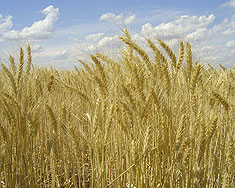
Australia
In Australia, scientists are developing drought-resistant strains of wheat that can grow in the country's increasingly dry regions.
development of adaptation strategies. Prominent nonprofit groups also have announced major adaptation initiatives. Two years ago, the Rockefeller Foundation said it was creating a $70 million program to promote “climate resilience” (note the avoidance of the word “adaptation”) in the developing world. The Rockefeller program is designed to confront one of the major issues of adaptation: that the world’s poorer nations, which — with their low greenhouse gas emissions — have had little to do with creating the problem, may well be hit the hardest by global warming.

Last year, the John D. and Catherine T. MacArthur Foundation announced that it was committing $50 million to conservation groups to help them preserve biodiversity in eight ecologically rich “hotspots” as the world warms.

Stanford University climatologist Stephen Schneider points out that adaptation strategies are only beginning to be developed, mainly because there’s precious little science on adaptation and few working models.

“Everyone is now talking about adaptation, but for all the talk there’s little actually being done,” says Schneider.

Developing strategies to cope with the impacts of a warmer world will be complex and expensive. Oxfam estimates it could cost some $40 billion a year; the World Bank estimates it might cost more than three times that. While strategies and technologies designed to mitigate climate change can be applied globally — one less coal-powered plant in China has the same effect as one less plant in the U.S. — adaptation strategies must deal with regional and local geography.

In April, for example, a European Union report on adaptation said Europe’s most vulnerable regions to climate change will be southern
Climate change will test not only the resiliency of ecosystems but also the adaptability of cities, villages, and societies.
Europe, the Mediterranean basin, the Alps, and the far north. Europe will have to adapt to the diminishing Alpine glaciers that now provide 40 percent of its fresh water. Africa, the western U.S., and Australia will have to adapt to intense droughts. Communities in the Arctic will have to adapt to melting ice and permafrost. If the Himalayan region loses its glaciers and monsoon patterns change, 40 percent of the world’s population will likely face severe shortages of water for drinking and agriculture.

To preserve ecosystems and endangered species, conservationists will have to adapt their strategies. And epidemiologists will have to adapt to changing disease vectors. Climate change will test not only the resiliency of ecosystems but also the adaptability of individual cities, villages, and societies.

CONFRONTING WATER SCARCITY

In the world’s sub-tropics, most models predict that wet regions will become wetter and dry regions drier, but there’s little agreement on how these trends will affect regional annual rainfall patterns and growing seasons. And it’s these that determine crop productivity. Farmers have always had to adapt to changing weather patterns. Climate change will exacerbate the uncertainties, both in the short and longterm. The key to coping will be to make farming as resilient as possible.

Researchers in Ethiopia, for example, found that many farmers had already recognized that temperature and precipitation changes were affecting their crops and altering the growing season. Once they were given access to technical support, credit, and information about future climate change, these farmers adjusted their agricultural practices. They changed crop varieties, adopted soil and water conservation measures, and changed planting and harvesting periods.

For researchers at the Rockefeller Foundation, future “simultaneous changes in temperature, precipitation, CO2 fertilization, and pest/pathogen dynamics” will require breeding new crop varieties, especially for those crops that feed most of the world’s poor. The reserve of genetic material now in seed banks may not be enough from which to develop new drought-, temperature-, or flood-resistant crops, and the foundation is urging new efforts to increase the world’s genetic reserves of seed crops.

Adaptation strategies are already underway to cope with changes in the world’s fresh water resources. In April, the European Union issued a dire warning about declining water resources. Temperatures in the Alps — “the water tower of Europe” — have increased 1.5°C (2.7°F) over the last 100 years, twice the global average. The glaciers are vanishing. At the same time, warming temperatures and drought have left southern Europe dry, with creeping desertification in Spain and Portugal. The EU is focusing on adaptation strategies aimed mainly at reducing demand through water conservation, introducing new methods of efficient irrigation, and reforming water pricing.

RISING SEA LEVELS

While scientists still debate predictions of sea level rise over the century due to climate change — with many studies predicting an increase of one to two meters — there is no doubt that rising seas have already begun affecting low-lying coastal regions. How humans adapt will depend not only upon regional geography, but regional development. The world’s large river deltas — the Mississippi, Nile, Rhine and Ganges — have been altered by development and agriculture, their tidal wetlands diminished and, with that, their resistance to flooding and erosion weakened, especially during storm surges.

That is why in the Ganges-Brahmaputra delta in Bangladesh, efforts are
By 2030, some 60 percent of the world's population will live in flood-prone coastal areas.
underway to restore lost mangroves to keep storm surges from flooding agricultural land and human settlements, and to keep delta land from washing away. At the same time, Bangladesh is trying to restore its upland forests to prevent downstream erosion. Islands, too, will hope to adapt to rising seas by creating or restoring natural buffer zones.

Things will be different, however, where coastal nature has already been lost to population growth and development.

By 2030, some 60 percent of the world’s population will live in coastal cities that may be increasingly subject to flooding from storm surges. Complex and expensive solutions will be needed to protect not only homes and people, but sanitation, communication, and transportation infrastructures. New York City, where the land is only 5 to 16 feet above sea level, has engaged a consortium of city agencies and researchers from Columbia University’s Earth Institute to develop adaptation plans to deal with sea level rises that could easily reach 1 ½ feet by 2080, as well as with increased tidal and storm surges.

City planners are modeling the risks and working with New York citizens' groups and city agencies to develop a coordinated approach to protecting vulnerable roads, tunnels, water supplies, transit, sewers, and water treatment plants. One firm has proposed a concrete tidal barrier that would stretch across the neck of lower New York Bay, similar to one that the Russian government has already commissioned to protect St. Petersburg from rising levels of the Baltic Sea.

THE SPREAD OF DISEASE

The greatest impediment to developing adaptation strategies to deal with the expected increase in disease due to climate change, is that “the regions with the greatest burden of climate-sensitive diseases are also the regions with the lowest capacity to adapt to the new risks,” writes Jonathan A. Patz of the Center for Sustainability and the Global Environment, Nelson Institute for Environmental Studies at the University of Wisconsin.

In these places, disease is most often the result of poverty, overpopulation, lack of access to fresh water, malnutrition, and lack of sanitary facilities, all of which will be exacerbated by global warming. One concern of scientists is the spread of disease-carrying mosquitoes and other insects as temperatures rise, a phenomenon already evident in parts of the world. Climate change may also cause clean water supplies to dry up in small villages, forcing residents to collect water from streams and ponds contaminated by insects and pathogens whose fecundity and range may well increase in a warmer world.

River flooding can also contaminate water supplies. Gambia, for example, has undertaken a program along the Gambia River coastal floodplain to increase the number of improved pit latrines in school, health and community centers; to purchase fogging machines and sprayers for insect control; and to stockpile drugs and vaccines to deal with disease outbreaks. In Samoa, authorities are developing a program in which doctors and meteorologists work together to predict outbreaks of disease — such as mosquito-transmitted dengue fever — that may worsen as temperatures rise.

PRESERVING BIODIVERSITY

The most localized adaptation strategies may be best suited to deal with the effects of climate change on the world’s biodiversity. As habitats and even seasons are altered, species will be forced to adapt or migrate in what — by
Early adaptation studies have been aimed at making people and places resilient to a possible range of changes.
normal evolutionary standards — are very short time spans. They may follow expected adaptive pathways: Lowland species may move to higher elevations or migrate north, as some bird and plant species already are doing. In many places, however, migration routes are blocked by development or deforestation. Current nature reserve boundaries may no longer protect species forced by climate change to migrate. And while older trees that find themselves in an altered climate may survive, their seedlings may have a far narrower range of conditions under which they can thrive and thus be unable to grow in a warmer environment.

Enlarging the borders of established reserves will provide some species with protection while they seek out new ranges. Where reserves are hemmed in by developed land, efforts are underway to create wildlife corridors or preserve even small natural refuges — forests or wetlands — in the midst of cultivated fields. Such fragments of habitat may prove useful to birds or insects as their migration routes change.


As experts contemplate the challenges of climate change adaptation, they are stressing the need to proceed on sound scientific grounds. Without understanding the science, Schneider says, there’s every possibility of developing “maladaptations,” such as reacting to changes that appear to be caused by climate change, but that may be due to normal weather variables such, as El Nino, or to natural cyclical changes in species abundance.

For example, to implement irrigation after a few years of drought only to find that the longer-term forecast will be for a wetter — not drier — environment, is to waste a great deal of time, money, and good will. So would construction of a sea wall to protect against a mistaken prediction of sea level rise. Drought-resistant crops may be susceptible to new pests or diseases. That is why early adaptation studies have been aimed at understanding vulnerabilities, evaluating adaptive potential, and attempting to make people and places resilient to a possible range of changes.

Adaptation must also be finely tuned not only to the vagaries of local geography and ecology, but to local economies and cultures. Kate Barnes, climate program associate for the MacArthur Foundation, has found that cultural, economic, and political differences affect adaptation efforts to preserve the world’s montane biodiversity from the effects of climate change. In Bhutan, for instance, researchers found people’s “intrinsic appreciation for nature” made them more open to adaptation strategies than in Peru, where an interest in producing biofuels and gas exploration superseded an interest in conservation.

“The reality,” Adger says, “is that people don’t want to move and will resist adaptation when it affects things they care about — their jobs and their homes — even if they’re no longer sustainable.”

POSTED ON 26 May 2009 IN Business & Innovation Climate Energy Science & Technology Sustainability Sustainability North America 

COMMENTS


As we move toward adaptation — and move we must — it is crucial that we continue to make mitigation the principal priority and, in fact, make mitigation much more aggressive than it has been to date. If we do not, then adaptation will be impossible in the long run, because as civilization we simply cannot adapt to runaway climate change. This means, in part, that adaptation efforts must be meshed with mitigation efforts. They must do double duty — making us resilient to changes that are *already inevitable* and preventing changes that will *become inevitable* if we do not adequately mitigate.

Contending, as geoscientist Broecker seems to do, that 600 ppm is all but inevitable sends a misguided signal: that adaptation programs should be predicated on the assumption that mitigation efforts will fail, hence, put all eggs in the adaptation basket. 600 ppm is not yet inevitable, and we must all work to *assure that adaptation plans don't contribute to making it inevitable.*

To keep adaptation from undermining mitigation, adaptation must to the maximum degree possible be carbon neutral. E.g., to combat drought, instead of building giant dams made with cement produced in kilns burning fossil fuels, stop dumping water on golf courses; and to combat heat waves, instead of installing new/bigger air conditioners, make rooftops green (with plants) or white (with paint) to reduce the urban heat island effect.

I advance these ideas in the context of urban planning in a forthcoming book chapter:

Jeff Howard, “Climate change mitigation and adaptation in developed nations: A critical perspective on the adaptation turn in urban climate planning.” In Planning for Climate Change: Strategies for Mitigation and Adaptation, ed. Simin Davoudi, Jenny Crawford and Abid Mehmood. Forthcoming, August 2009, Earthscan.

Posted by Jeff Howard on 28 May 2009


It is interesting Broecker is in the same department and James Hansen. Both Hansen's target co2 paper and his paper on peak fossil fuels show that 600 ppm is idiotic and likely impossible (absent some surprise release of hydrates, soil organic matter, etc.).


Posted by Jason Bradford on 29 May 2009


Why would we be able to adapt successfully?

We can't do the mitigation.

What is the basis for claims of competence?
Posted by hapa on 02 Jun 2009


Planning adaptations that preserve biodiversity will be difficult due to the lack of empirical information. The biodiversity concept is well understood, but the existing condition of biodiversity is unknown for most places. Field work is not popular, and many of its fundamentals have received very little attention. It took U.S. ecologists 25 years to adopt the 1973, UNESCO standard for vegetation classification (partial review in current issue of Ecological Monographs).

Vegetation, the basic resource, habitat, environmental shock absorber and indicator of environmental conditions, has been mapped for only a small fraction of the U.S. With some exceptions, most of the rest of the planetary vegetation cover is similarly flora incognito. Many critical plant communities will probably disappear without ever being recognized.

Without vegetation maps the simple spatial correlation between animal species and plant communities cannot be determined, and our small store of knowledge of dependence must remain largely hypothetical. Pragmatic recognition of the inevitability of serious climate change is probably wise, but adaptation planning without adequate data is not.
Posted by Y. Sregor on 04 Jun 2009


"Without vegetation maps the simple spatial correlation between animal species and plant communities cannot be determined, and our small store of knowledge of dependence must remain largely hypothetical. Pragmatic recognition of the inevitability of serious climate change is probably wise, but adaptation planning without adequate data is not."

I don't know what "store of knowledge" there is...I assume it is as deficient as the above claims. No problem. You don't go from pathetically deficient knowledge base to full knowledge base in one step. Integral with climate change "adaptation planning" IS the procuring of necessary but missing data.

It isn't clear how much data is required to justify action in the writer's eyes, but there is a need for a lot more data -- enough to establish a pattern of evidence that supports given adaptation practices, I suppose.

It is likely that protecting and restoring natural habitats will move us in a positive direction. So that work doesn't have to wait on additional data to be vastly expanded.

A Google Earth type mapping of Earth's vegetation needs to be put into motion 20 years ago. If only point one percent of the planet's surface is adequately mapped, that gives you a fine starting point for mapping the other 99.9 percent. Knowing precisely where the gaps are, making them visible for all to see, is a powerful motivator for getting the job done.

A journey of a thousand miles begins with a single step.

Posted by TRB on 10 Jun 2009


"Adaptation was for quitters."

The thrust of this article has not been true at least for five years or more when scientists and policy-makers began addressing this problem in earnest.

The European Environment Agency faced up to the fact five years ago, saying adaptation was of paramount important. And just for example, Australia published an adaptation plan four years ago. Sweden has an adaptation commission to deal with unavoidable climate change.
Posted by William D'Alessandro on 13 Jun 2009


There's another side to adaption research; once you realise how hard it will be to adapt, then countries, businesses and people all over the place will start to do it rather putting effort into mitigation. It's like asking some really stupid extreme sports guy to plan out his post-accident rehabilitation in advance. I'm pretty sure he'll quickly choose to train to do it right the first time instead.
Posted by Josh W on 20 Jun 2009


RESPONSE TO : "600 ppm is idiotic and likely impossible (absent some surprise release of hydrates, soil organic matter, etc.).

Posted by Jason Bradford on 29 May 2009"

The surprise release of carbon from melting permafrost is already proceding at a 1 to 2 billion GT annual clip per Peter Kuhry (IPY) and will accelerate for a long time even if a perfect world eliminated all future greenhouse gas emissions. The updated estimate of carbon reserves in permafrost is now up to 1.6 thousand GT. Methane hydrates are another matter altogether.

Posted by Paul M. Suckow, TSU UPEP on 11 Aug 2009


More than oil, I think, the humankind is going to face the problem of clean drinking water. We are already aware of lack of clean water in parts of Africa. The rivers from the Himalayas in Indian subcontinent are drying up too due to melting glaciers. The Indo-Pak region is already at a high tension level due to historic reasons and now their water sharing treaty is under stress due to lack of drinking water in both countries.

Makes me wonder if the next world conflict will be over drinking water instead of liquid gold, oil.
Posted by Amy on 12 Aug 2009


I think Hurricane Katrina gives the lie to the adaptation myth. No, I’m not saying humans are not adaptable. Nor am I saying global warming caused Hurricane Katrina, although warming probably did make it a more intense. But on the four-year anniversary of Katrina — and the three year anniversary of Climate Progress’s initial launch — I’m saying Katrina showed the limitations of adaptation as a response to climate change, for several reasons.

First, the citizens of New Orleans “adapted” to Hurricane Katrina, but I’m certain that every last one of them wishes we had prevented the disaster with stronger levees. The multiple catastrophes — extreme drought, extreme flooding, extreme weather, extreme temperatures — that global warming will bring can be suffered through, but I wouldn’t call it adaptation.

Second, a classic adaptation strategy to deal with rising sea levels is levees. Yet even though we knew that New Orleans would be flooded if the levees were overtopped and breached, even though New Orleans has been sinking for decades, we refused to spend the money to “adapt” New Orleans to the threat. We didn’t make the levees able to withstand a category 4 or 5 hurricane (Katrina was weaker at landfall than that, but the storm surge was that of a category 4).

Third, even now, after witnessing the devastation of the city, we still refuse to spend the money needed to strengthen the levees to withstand a category 5 hurricane. We refuse to spend money on adaptation to preserve one of our greatest cities, ensuring its destruction, probably sometime this century.

If we won’t adapt to the realities of having one city below sea level in hurricane alley, what are the chances we are going to adapt to the realities of having all our great Gulf and Atlantic Coast cities at risk for the same fate as New Orleans — since sea level from climate change will ultimately put many cities, like Miami, below sea level? And just how do you adapt to sea levels rising 6 to 12 inches a decade for centuries, which is the fate we risk by 2100 if we don’t reverse greenhouse gas emissions trends soon. Climate change driven by humans GHGs is already happening much faster than past climate change from natural causes — and it is accelerating.

The fact is, the deniers don’t believe climate change is happening, and the the delayers don’t take the climate change impacts above seriously, so they don’t believe in spending serious money on adaptation. The Center for American Progress has written an important paper on hurricane preparedness, which is a good starting point for those who are serious about adaptation.

But don’t be taken in by heartfelt expressions of faith in human adaptability. If Katrina shows us anything, it is that preventing disaster would be considerably less expensive — and more humane — than forcing future generations to “adapt to” an unending stream of disasters.
Posted by E-Cigarette Advocate on 14 Oct 2009


OK, I’m no geoscientist (most of my knowledge on these subjects comes from The Economist) but it seems to me that an intelligent solution to climate change would have to incorporate both models.

In California, the rings on old growth trees have shown a long-term cycle of drought and flooding, drought and flooding. In one sense, climate change is not on a unidirectional vector toward oblivion, but is, has been, and more than likely always will be like a sine-wave, going up and down and up again (or hot and cold and hot again; wet and dry and wet again, etc.). We need merely remain resilient to the changes (humanity’s greatest trait, if history’s any indicator) to survive. Yes, that means adaptation.

But we’d be foolish not to also pay equal attention to diminishing the effects we’re having on that cycle, because there’s no denying the evidence that we are, and that sine-wave or not, every crest in either direction is increasingly extreme. We’re not invulnerable to these extremes and at some point in time we could reach a tipping point. So do we also have to live responsibly to mitigate those extremes? Of course.

Why does it have to be one or the other?
First world countries will always be competing for power, and that includes economic power, which means that productivity will always reign supreme. Eventually we’re going to have to make a choice that humanity’s survival is worth cutting into our profits some and (dare I say it) more global cooperation replacing some of that competition. Even as I write it, though, I hear how pie-in-the-sky it sounds, with those of us in the nations most able to implement effective adaptation and mitigation strategies both being the ones likely to be last affected by climate change’s harshest impacts. Does that mean the peoples of the poorer nations will just die off at some point while those in the richer nations weather the storm? I don’t think that’s what Darwin had in mind when he wrote of survival of the fittest.

Posted by David DeAngelo on 07 Dec 2009


I think one of the immediate short-term goals should be to reduce carbon dioxide emissions dramatically. Switching to alternative, clean burning fuels, investing in alternative energy technology, and taking part in global efforts to educate people about sustainable practices may help prevent numerous disasters in the future.
Posted by Dean Cortez on 27 May 2010


Regarding the comment of reducing carbon dioxide emissions:
I don't think this has any chance of succeeding with the way developing countries are getting hungrier and hungrier for growth and it's entirely their privilege to pursuit this path.
I think one solution can be synthetic biology. Creating bacteria or other species capable of photosynthesis a 1000 times more efficiently than alga or trees would be a viable alternative to trying to artificially decrease emission by stopping growth of prosperity.

Posted by Jessy Parker on 24 Jun 2010


If Climate change is a problem that is affecting people and the environment. Then, greater energy efficiency and new technologies hold promise for reducing greenhouse gases and solving this global challenge.

The EPA's website does provide information on climate change for communities, individuals, businesses, states, localities and governments. just visit to get a full scope of the issue.

Posted by Matt Huston on 26 Jan 2011


Comments have been closed on this feature.
bruce stutzABOUT THE AUTHOR
Bruce Stutz writes on science, nature, and the environment. A former editor-in-chief of Natural History, he is a contributing editor to OnEarth. He has written for the New York Times, The Christian Science Monitor, The Washington Post, Discover and Audubon. He is the author of Natural Lives, Modern Times and Chasing Spring, An American Journey Through a Changing Season. In recent articles for Yale Environment 360, Stutz wrote about how planners are trying to tackle sprawl in Europe and how researchers have been discovering species at a record pace.
MORE BY THIS AUTHOR


RELATED ARTICLES


Probing the Reasons Behind
The Changing Pace of Warming

A consensus is emerging among scientists that the rate of global warming has slowed over the last decade. While they are still examining why, many researchers believe this phenomenon is linked to the heat being absorbed by the world’s oceans.
READ MORE

In Tibet, Change Comes to the
Once-Pristine Roof of the World

Renowned biologist George Schaller has been traveling to the Tibetan Plateau for nearly three decades, studying its unique wildlife. But with climate change and overgrazing taking a toll on the landscape, he reports, scientists and the Chinese government are working to preserve one of the planet’s wildest places.
READ MORE

The Perils and Rewards of
Protecting Congo’s Gorillas

Virunga National Park, home to one of the last remaining populations of mountain gorillas, has witnessed years of war and civil strife. In an interview with Yale Environment 360, the park’s warden describes the lethal threats faced by his rangers and the remarkable survival of the park’s gorillas.
READ MORE

Too Big to Flood? Megacities
Face Future of Major Storm Risk

As economic activity and populations continue to expand in coastal urban areas, particularly in Asia, hundreds of trillions of dollars of infrastructure, industrial and office buildings, and homes are increasingly at risk from intensifying storms and rising sea levels.
READ MORE

At Edge of Peruvian Andes,
Tracking Impacts of Warming

The Andes in eastern Peru, with steep slopes and remarkable biodiversity, are what one scientist calls a “perfect laboratory” for studying the effects of climate change. E360 contributor Elizabeth Kolbert trekked there with researchers seeking to determine if tree populations can move uphill fast enough to survive warming temperatures.
READ MORE


MORE IN Reports


A Plague of Deforestation
Sweeps Across Southeast Asia

by daniel drollette
Illegal logging and unchecked economic development are taking a devastating toll on the forests of Vietnam and neighboring countries, threatening areas of biodiversity so rich that 1,700 species have been discovered in the last 15 years alone.
READ MORE

In Post-Tsunami Japan, A Push
To Rebuild Coast in Concrete

by winifred bird
In the wake of the 2011 tsunami, the Japanese government is forgoing an opportunity to sustainably protect its coastline and is instead building towering concrete seawalls and other defenses that environmentalists say will inflict serious damage on coastal ecosystems.
READ MORE

How Mussel Farming Could
Help to Clean Fouled Waters

by paul greenberg
Along the shores of New York Harbor, scientists are investigating whether this ubiquitous bivalve can be grown in urban areas as a way of cleansing coastal waters of sewage, fertilizers, and other pollutants.
READ MORE

A Key Experiment to Probe the
Future of Our Acidifying Oceans

by peter friederici
In a Swedish fjord, European researchers are conducting an ambitious experiment aimed at better understanding how ocean acidification will affect marine life. Ultimately, these scientists hope to determine which species might win and which might lose in a more acidic ocean.
READ MORE

Declining Bee Populations Pose
A Threat to Global Agriculture

by elizabeth grossman
The danger that the decline of bees and other pollinators represents to the world’s food supply was highlighted this week when the European Commission decided to ban a class of pesticides suspected of playing a role in so-called “colony collapse disorder.”
READ MORE

Fires Burn More Fiercely
As Northern Forests Warm

by dylan walsh
From North America to Siberia, rising temperatures and drier woodlands are leading to a longer burning season and a significant increase in forest fires. Scientists warn that this trend is expected continue in the years ahead.
READ MORE

Will Electric Bicycles Get
Americans to Start Pedaling?

by marc gunther
Electric bicycles are already popular in Europe and in China, which has more e-bikes than cars on its roads. Now, manufacturers are marketing e-bikes in the U.S., promoting them as a "green" alternative to driving.
READ MORE

Copenhagen’s Ambitious Push
To Be Carbon Neutral by 2025

by justin gerdes
The Danish capital is moving rapidly toward a zero-carbon future, as it erects wind farms, transforms its citywide heating systems, promotes energy efficiency, and lures more people out of their cars and onto public transportation and bikes.
READ MORE

How Ontario Is Putting an End
To Coal-Burning Power Plants

by keith schneider
Ontario is on the verge of becoming the first industrial region in North America to eliminate all coal-fired electrical generation. Here’s how Canada’s most populous province did it — and what the U.S. and others can learn from it.
READ MORE

Long Outlawed in the West,
Lead Paint Sold in Poor Nations

by rebecca kessler
A new study finds that household lead paint — banned for years in the U.S. and Europe because of its health effects on children — is commonly sold in the African nation of Cameroon. Is lead paint the latest case of Western companies selling unsafe products in developing countries?
READ MORE


e360 digest
Yale
Yale Environment 360 is
a publication of the
Yale School of Forestry
& Environmental Studies
.

SEARCH e360


Donate to Yale Environment 360

CONNECT

Twitter: YaleE360
e360 on Facebook
Donate to e360
View mobile site
Bookmark
Share e360
Email newsletter
Subscribe to our feed:
rss


ABOUT

About e360
Contact
Submission Guidelines
Reprints

e360 PHOTO GALLERY

To Catch a Rhino Welz
South African photojournalist Adam Welz documents the harrowing relocation of six white rhinos to a region that has lost all its rhinos to poaching. View the gallery.


DEPARTMENTS

Opinion
Reports
Analysis
Interviews
e360 Digest
Podcasts
Video Reports

TOPICS

Biodiversity
Business & Innovation
Climate
Energy
Forests
Oceans
Policy & Politics
Pollution & Health
Science & Technology
Sustainability
Urbanization
Water

REGIONS

Antarctica and the Arctic
Africa
Asia
Australia
Central & South America
Europe
Middle East
North America

e360 VIDEO

Into Heart of Ecuador Yasuni
A Yale Environment 360 video explores Ecuador’s threatened Yasuni Biosphere Reserve with scientists inventorying its stunning forests and wildlife. Watch the video.

e360 MOBILE

Mobile
The latest
from Yale
Environment 360
is now available for mobile devices at e360.yale.edu/mobile.

e360 VIDEO

Colorado River Video
In a Yale Environment 360 video, photographer Pete McBride documents how increasing water demands have transformed the Colorado River, the lifeblood of the arid Southwest. Watch the video.


header image
Top Image: aerial view of Iceland. © Google & TerraMetrics.

e360 VIDEO

Warriors of Qiugang
The Warriors of Qiugang, a Yale Environment 360 video that chronicles the story of a Chinese village’s fight against a polluting chemical plant, was nominated for a 2011 Academy Award for Best Documentary (Short Subject). Watch the video.


OF INTEREST


Yale