08 Feb 2012: Interview

California’s ‘Clean Car’ Rules
Help Remake U.S. Auto Industry

With the passage of strict new auto emission and air pollution standards, California has again demonstrated its role as the U.S.’s environmental pacesetter. In an interview with Yale Environment 360, Mary Nichols, chairwoman of the California Air Resources Board, explains how her state is helping drive a clean-car revolution.

by paul rogers

How likely is it that your next vehicle might be an electric car? California just increased the odds. On Jan. 27, the California Air Resources Board, a powerful state agency with a history of setting first-in-the-nation clean air and climate regulations, voted 9-0 on a package of sweeping “clean car” rules that are expected to help reshape the U.S. auto industry.
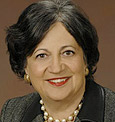
Mary Nichols
ARB
Mary Nichols
The chairman of the board, Mary Nichols, oversaw the enactment of these new rules, which require that 15 percent of all new cars sold in California by 2025 emit little or no pollution and that the state reduce emissions of smog-forming pollutants by 75 percent. The rules are expected to result in 1.4 million zero- and low-emission vehicles — electric, plug-in hybrid, and hydrogen fuel cell — reaching California auto showrooms over the next dozen years, compared to roughly 10,000 on the road there today. And it’s a near certainty that once built, those models won’t just be sold in California, but in the other 49 states, as well.

In an interview with Yale Environment 360 contributor Paul Rogers, Nichols — who has headed the board since 2007 — explains why California has consistently led the U.S. in passing the toughest air pollution and vehicle mileage standards, why Detroit automakers have decided to endorse California’s new rules, and why U.S. and international car makers are on the verge of a clean-car revolution. “Auto manufacturers have finally come to the conclusion that their future lies in very efficient, very clean vehicles,” says Nichols.

Yale Environment 360: Why did California pass these rules?

Mary Nichols: California has been working on these rules for decades. Really, this is just the latest version of a program that has been in effect since the 1960s, which began because we were the first place to discover smog and to begin to take action to deal with the problem of pollution caused by motor vehicles. But this most recent round of standards is one
We’ve concluded that we’re going to need a fleet of vehicles that is not primarily running on conventional fuels.”
that reflects a real change in viewpoint about what the future of our transportation system is going to look like. Basically we have concluded that when you look at the rates of growth in travel and the even greater problems of energy use, dependence on imported petroleum, as well as global warming and our contribution to it, we’re going to need a fleet of vehicles that is not primarily running on conventional fuels. And so we’re looking for ways to help speed up the transition to a fleet of vehicles that are extremely clean and efficient. And we’re setting standards for their design that help use the power of the California marketplace to do that.

e360: And what impact do you think these rules will have on the entire auto industry in the United States?

Nichols: Well, California buys about 10 percent of all the new cars that are sold every year. But we have even more influence than that over the design of future vehicles because every car manufacturer from the largest to the most innovative start-ups uses us as a design laboratory because they know that Californians know cars and they really like them. The term “love affair with the car” might be an exaggeration, but not too much.

e360: So you see these rules as changing the way all Americans drive, not just Californians?

Nichols: Yes, clearly cars that are manufactured for the California marketplace also get sold outside of California. But we also have 13 states that followed California’s lead automatically. They’ve signed up for the California car program. Those states include all the states in the Northeast plus Oregon and New Mexico. They are going to be requiring that all the cars sold in their states meet California’s standards.

e360: The standards that the air board passed are pretty far reaching. They require 15 percent of all new vehicles by 2025 to have zero emissions, which as a practical matter means all electrical, hydrogen fuel cell, or plug-in electric. Why do you think the auto industry generally supported them, when in the past it has filed lawsuits to block laws California has previously passed?

Nichols: I think that the auto manufacturers have finally — maybe a bit belatedly — come to the conclusion that their future lies in very efficient, very clean vehicles. If they are going to be able to continue to provide cars
We are prepared to provide direct incentives toward the initial cost of some of these vehicles.”
for places where the demand is really growing, like Asia and other developing parts of the world, they’re going to have to compete in an arena where gasoline is extremely expensive and, in some cases, almost impossible to obtain. They’ve also got to recognize that gasoline prices are going up and that there is a need for extremely clean fuels that can meet other demands, as well, in some of the most polluted areas on the planet, including India and China.

Alternative fuel vehicles are going to be hot sellers as soon as there are enough cars available and the fuel suppliers come along and fill the demand for whatever the future fuel is going to be. The demand in the parts of the world where people are becoming more prosperous is almost insatiable for vehicles. The first thing that people buy when they get to the point where they have a little disposable income — people want mobility. First, electric bicycles, then motorcycles, then a car — that seems to be an almost iron rule at this point. The car companies are going to have to have cars that meet that customer demand.

e360: In terms of the American consumer, what would you say to critics who say that government can force suppliers to make a certain amount of vehicles, like electric vehicles, but it can’t force the public to buy them? That they might all be left sitting on lots.

Nichols: Well, we agree that there’s more to be done than simply to mandate the vehicles. We view our mandate program as giving a floor so that the manufacturers know that this is the minimum that we are going to be asking of them. But we are predicting that these cars are going to do much better than the minimum. The only way we are going to achieve that
The political will to require cleaner cars in California goes back to the discovery of smog.”
is through government taking responsibility that the changeover to new kinds of fuels is as simple as possible for the consumer — that is, making sure that there is easy access to electric charging or other ultra clean fuels. We are also prepared — as we already are doing — to provide direct incentives toward the initial cost of some of these vehicles. We know that until we’ve gotten the demand up and the volumes of production in place, that the initial cost of the new vehicles is going to be a deterrent to some. We want to be sure these cars are widely available, that people see them in the showrooms, and that they want to buy them.

e360: Sounds like the incentives you are talking about are tax credits and access to carpool lanes, things like that?

Nichols: Yes, exactly. Actually, we offer direct rebate funding thanks to a program in California called AB 118, which is a surcharge on vehicle registration fees. Some of that money goes into consumer rebates for purchasing zero-emission vehicles.

e360: How will a showroom in California or the United States look differently 10 years from now because of this rule?

Nichols: We expect that at least one out of every seven cars in that showroom is going to be a plug-in vehicle.

e360: In a wider sense, California has also passed some groundbreaking legislation on climate change with AB 32. Can you talk a little bit about how this clean car package of rules fits in with AB 32?

Nichols: AB 32, which is the state’s global warming law, was actually founded on the basis of our vehicle emissions rules for greenhouse gases. In 2002 the legislature ordered the resources board to start treating greenhouse gases as air pollutants and to set emissions standards for them. The standards were actually set in 2004. They weren’t implemented until after Obama came into office because the Bush administration held up the waiver that California needed to enforce our standards. We were already planning on addressing the problem of the contribution that our motor vehicles make to the overall problem of global warming. In California, [vehicles] are our largest contributor. In passing AB 32, the legislature told us to adopt a plan that would meet the standards of the Kyoto treaty and bring our overall emissions as a state back to 1990 levels by 2020, which meant they [included] our electricity system and our other major industrial sources of pollution, such as oil refineries. But the first step was to look at cars and see what we could do there.

e360: Finally California has a 50-year history of passing tougher air pollution regulations than the rest of the country. Can you talk a little about why that’s the case and what the effects have been?

MORE FROM YALE e360

For the Electric Car,
A Slow Road to Success

For the Electric Car, A Slow Road to Success
The big electric car launches of 2011 failed to generate the consumer excitement some had predicted. But as new battery technologies emerge and tougher mileage standards kick in, Jim Motavalli writes, automakers and analysts still believe electric vehicles have a bright future.
READ MORE
Nichols: I think the political will to require cleaner cars in California goes back to the discovery of smog, no question about that. But that will is backed up by the fact that people are well aware that we really are breathing a lot of pollution that’s created by our desire and our need for mobility. They are willing to support the notion that we may pay a little more for a brand new car, but in return for that we get the satisfaction of knowing we are helping to move the auto industry in the direction of producing cleaner cars for everybody.

e360: So everything from the catalytic converter to unleaded gasoline and now to these electric vehicle mandates originates in California and spreads to the rest of the country after that?

Nichols: Well, that has been the history, and certainly we’re proud to have played that role as the pioneer. But we wouldn’t have been able to continue doing it if we hadn’t built up a kind of technical expertise, knowledge of what the industry actually could do and what technology might be available with enough of a push to make it happen. Year in and year out, we’ve seen the companies, after some initial fuss, competing with each other to produce very attractive, desirable vehicles that also pollute less. That gives us the confidence to keep on moving forward.

POSTED ON 08 Feb 2012 IN Business & Innovation Climate Energy Oceans Policy & Politics Policy & Politics Pollution & Health Pollution & Health North America North America 

COMMENTS


Mary Nichols will be giving the KEYNOTE SPEECH at the upcoming YALE ENVIRONMENTAL LAW CONFERENCE - New Directions in Environmental Law: [Re]Claiming Accountability, on Saturday, February 25th, in Burke Auditorium in Kroon Hall. Join us! Registration free for members of the Yale and New Haven communities:

http://www.rsvpbook.com/event.php?409939;

http://www.law.yale.edu/news/2012envirolawconference.htm

Posted by Yale Environmental Law Conference on 09 Feb 2012


California has the best car emissions system but we need support to improve performance.

Improved car fleet toxic impact will provide better health and economic performance.

Will folks support the California Air Resources Board (CARB) efforts to improve compliance with the California Partial Zero-emissions Vehicles (PZEV) standards.


Posted by Charlie Peters on 13 Feb 2012


I wonder if, a decade or 2 from now, when a decent percentage of the population is plugging their cars in to charge, how will that effect the overall power consumption from our power plants? In turn, what will be the on-going changes in standards for producing clean and efficient energy for them?

Posted by Brian on 13 Feb 2012


Comments have been closed on this feature.
ABOUT THE AUTHOR
Paul Rogers, who conducted this interview for Yale Environment 360, is the resources and environment writer for the San Jose Mercury News, where he has worked since 1989. He also works as managing editor of QUEST, a weekly science and environment series broadcast by KQED, the NPR and PBS affiliate in San Francisco.


RELATED ARTICLES


How Laundry Detergent Became
A Catalyst for Green Innovation

In an interview with Yale Environment 360, Adam Lowry, co-founder of a company that has pioneered the use of environmentally friendly cleaning products, discusses how a small firm has been able to nudge large corporations down the path of sustainability.
READ MORE

An Advocate in Pursuit of
Environmental Justice at EPA

Matthew Tejada is taking over the EPA’s Office of Environmental Justice after helping low-income communities in Houston fight air pollution in their neighborhoods. He talks to Yale Environment 360 about how his work in Texas prepared him for the challenges of his new post.
READ MORE

Black Carbon and Warming:
It’s Worse than We Thought

A new study indicates soot, known as black carbon, plays a far greater role in global warming than previously believed and is second only to CO2 in the amount of heat it traps in the atmosphere. Reducing some forms of soot emissions — such as from diesel fuel and coal burning — could prove effective in slowing down the planet’s warming.
READ MORE

Will President Obama Seize
Moment on Climate Change?

Climate change received scant attention in the election campaign. But with public concern about global warming growing in the wake of Hurricane Sandy, President Obama has an unprecedented opportunity to take bold action on climate and clean energy.
READ MORE

Forget the Kyoto Accord
And Tax Carbon Consumption

Given the failure of international climate negotiations, a tax on carbon consumption is the most effective way of lowering CO2 emissions. If nations are serious about addressing climate change, then they must pay for the carbon pollution caused by what they consume.
READ MORE


MORE IN Interviews


How Laundry Detergent Became
A Catalyst for Green Innovation

by marc gunther
In an interview with Yale Environment 360, Adam Lowry, co-founder of a company that has pioneered the use of environmentally friendly cleaning products, discusses how a small firm has been able to nudge large corporations down the path of sustainability.
READ MORE

Michael Pollan on the Links
Between Biodiversity and Health

by jack hitt
Author Michael Pollan has often written about people’s relationship to the natural world. In a Yale Environment 360 interview, he talks about researching his latest book and what he learned about the connections between ecology and human health.
READ MORE

For Africa’s Solar Sisters,
Off-Grid Electricity is Power

by diane toomey
U.S. businesswoman Katherine Lucey is working with a network of women entrepreneurs in sub-Saharan Africa to sell inexpensive, household solar energy systems. In an interview with Yale Environment 360, Lucey explains how solar electricity can transform lives, particularly those of rural women and girls.
READ MORE

Son of Climate Science Pioneer
Ponders A Sobering Milestone

by fen montaigne
Climate scientist Ralph Keeling has followed in the footsteps of his father, who pioneered the measurement of carbon dioxide in the atmosphere. In an interview with Yale Environment 360, the younger Keeling talks about the implications of crossing an alarming CO2 threshold this month.
READ MORE

Ginkgo: The Life Story of
The Oldest Tree on Earth

by roger cohn
Revered for its beauty and its longevity, the ginkgo is a living fossil, unchanged for more than 200 million years. Botanist Peter Crane, who has a written what he calls a biography of this unique tree, talks to Yale Environment 360 about the inspiring history and cultural significance of the ginkgo.
READ MORE

Harnessing Citizen Power to
Fund a U.S. Solar Revolution

by todd woody
Environmental activist Billy Parish believes the best way to fight climate change is to fund the renewable energy projects that will supplant fossil fuels. In an interview with Yale Environment 360, he discusses how “crowdfunding” can help lead to the widespread adoption of solar power.
READ MORE

Tracking the Causes of Sharp
Decline of the Monarch Butterfly

by richard conniff
A new census found this winter’s population of North American monarch butterflies in Mexico was at the lowest level ever measured. Insect ecologist Orley Taylor talks to Yale Environment 360 about how the planting of genetically modified crops and the resulting use of herbicides has contributed to the monarchs’ decline.
READ MORE

A Leading Marine Biologist
Works to Create a ‘Wired Ocean’

by ben goldfarb
Stanford University scientist Barbara Block heads a program that has placed satellite tags on thousands of sharks, bluefin tuna, and other marine predators to better understand their life cycles. Now, using data available on mobile devices, she hopes to enlist public support for protecting these threatened creatures.
READ MORE

An Advocate in Pursuit of
Environmental Justice at EPA

by ben goldfarb
Matthew Tejada is taking over the EPA’s Office of Environmental Justice after helping low-income communities in Houston fight air pollution in their neighborhoods. He talks to Yale Environment 360 about how his work in Texas prepared him for the challenges of his new post.
READ MORE

A Conservative Who Believes
That Climate Change Is Real

by roger cohn
Republican Bob Inglis’ statement that he believed in human-caused climate change helped cost him his seat in Congress. In a Yale Environment 360 interview, Inglis explains why he is now trying to persuade his fellow conservatives that their principles can help save the planet.
READ MORE


e360 digest
Yale
Yale Environment 360 is
a publication of the
Yale School of Forestry
& Environmental Studies
.

SEARCH e360


Donate to Yale Environment 360

CONNECT

Twitter: YaleE360
e360 on Facebook
Donate to e360
View mobile site
Bookmark
Share e360
Email newsletter
Subscribe to our feed:
rss


ABOUT

About e360
Contact
Submission Guidelines
Reprints

e360 PHOTO GALLERY

To Catch a Rhino Welz
South African photojournalist Adam Welz documents the harrowing relocation of six white rhinos to a region that has lost all its rhinos to poaching. View the gallery.


DEPARTMENTS

Opinion
Reports
Analysis
Interviews
e360 Digest
Podcasts
Video Reports

TOPICS

Biodiversity
Business & Innovation
Climate
Energy
Forests
Oceans
Policy & Politics
Pollution & Health
Science & Technology
Sustainability
Urbanization
Water

REGIONS

Antarctica and the Arctic
Africa
Asia
Australia
Central & South America
Europe
Middle East
North America

e360 VIDEO

Into Heart of Ecuador Yasuni
A Yale Environment 360 video explores Ecuador’s threatened Yasuni Biosphere Reserve with scientists inventorying its stunning forests and wildlife. Watch the video.

e360 MOBILE

Mobile
The latest
from Yale
Environment 360
is now available for mobile devices at e360.yale.edu/mobile.

e360 VIDEO

Colorado River Video
In a Yale Environment 360 video, photographer Pete McBride documents how increasing water demands have transformed the Colorado River, the lifeblood of the arid Southwest. Watch the video.


header image
Top Image: aerial view of Iceland. © Google & TerraMetrics.

e360 VIDEO

Warriors of Qiugang
The Warriors of Qiugang, a Yale Environment 360 video that chronicles the story of a Chinese village’s fight against a polluting chemical plant, was nominated for a 2011 Academy Award for Best Documentary (Short Subject). Watch the video.


OF INTEREST


Yale