26 Jan 2012: Report

For the Electric Car,
A Slow Road to Success

The big electric car launches of 2011 failed to generate the consumer excitement that some had predicted. But as new battery technologies emerge and tougher mileage standards kick in, automakers and analysts still believe that electric vehicles have a bright future.

by jim motavalli

At the Detroit Auto Show early this month, I sat down with some Nissan executives who were celebrating the sale of the 10,000th Leaf battery car in the U.S. (and 20,000th worldwide). Behind them on the company’s stand was the eNV200, a plug-in version of one of Nissan’s minivans and one of three new electric cars Nissan will have on the road by 2015. Brendan Jones, a Nissan marketing and sales strategist, told me, “From a Leaf perspective, 2011 was a great year, and very positive for the company.” He said that Nissan’s EV sales had topped those of any other automaker in history.

By traditional auto standards, 10,000 sales of a much-hyped model in a full calendar year are disappointing. The Chevrolet Volt plug-in hybrid, equally celebrated, did slightly worse, with sales of 7,671 in 2011. By contrast, Nissan sold 114,991 Sentras and 268,981 Altimas last year, and Chevrolet sold 204,808 Malibus.

Photo gallery
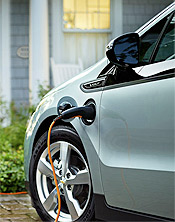
Chevy Volt Charging

Courtesy of GM
View a gallery of electric vehicles unveiled at the Detroit Auto Show, including the 2012 Chevy Volt, above.
Since the Obama administration offered subsidies to ease the EVs way forward, the early sales performance became the target of political attacks, particularly after a Volt caught fire following a government crash test. (The car was later exonerated by federal regulators.) The Republican Party’s website headlined an article “Failed Promise: Obama’s Million Electric Cars ‘Overly Optimistic.’” Mitt Romney, the son of an auto company president, described the Volt “an idea whose time has not come,” and Rush Limbaugh said bluntly, “Nobody wants to buy any.”

But much of the reporting on the subject, and the attacks, failed to tell the full story. Neither the Volt nor Leaf were available nationwide in 2011, and both were plagued by supply problems. Leaf customers on the East Coast, who put down early deposits, should be getting their cars in the coming months, and Nissan hopes to double production and delivery in 2012. The EV technology is still a novelty for prospective buyers, but the necessary charging networks, though still embryonic, are growing rapidly.

Yet while the big electric car launches of 2011 failed to find as many buyers as hoped, automakers and analysts still see increasing success for electric vehicles in the U.S. and in global markets, including China, which will soon be the world’s largest. The future, they say, lies in new battery technologies that will lower the cost and increase the range of EVs. And tougher mileage standards for U.S. auto fleets, set to kick in over the next decade, will give the cars a big boost.

Felix Kramer, who founded CalCars.org to promote plug-in hybrids, is optimistic. “In spite of press reports of disappointing sales, we don’t hear about unsold cars stuck on dealer lots or buyers’ remorse. We do hear current and prospective owners talking about the features they want in the next cars that come to market.” He points out that Ford, Honda, Toyota, Mitsubishi, BMW, and most other carmakers will be rolling out new EV models over the next two years.

“Early adopter” buyers tend to be vocal boosters — a group of loyal Volt owners sent a letter after the fire controversy broke, headlined, “Why are Chevy Volt Owners Keeping Their Keys?” Paul Scott, a director of Plug In
I think we created too much hype and conversation about EVs and plug-in hybrids,’ an analyst says.
America who doubles as a Leaf salesman in the Los Angeles area, says electric cars are doing great. “Instead of a few hundred EV drivers, we now have almost 20,000. A high percentage of these are vocal advocates of the technology... As long as the external costs of dirty energy are not in the price, we’ll be at a disadvantage, but the gap will close eventually, one way or the other, and EVs will dominate in every way.”

But clearly, there were unreasonable expectations for electric car liftoff. “I think we, particularly the government, created too much hype and conversation about both pure EVs and plug-in hybrids,” David Cole, chairman emeritus of the Center for Automotive Research in Michigan, told me. “The fact is that the economics are not here yet... The problem was that they invested in commercialization before it was ready for prime time. The fact is that just because you want something to happen doesn’t make it happen.”

The U.S. Advanced Battery Consortium has set a cost goal of $250 per kilowatt-hour stored, but many packs today come in at three times that. A $7,500 federal income tax credit (and some state subsidies) helps take the sting out of high prices, but the cars (which currently start at more than $30,000) are still expensive.

Does this mean that EVs are doomed? Not at all, but it does mean that early numbers are likely to be relatively low. Cole is siding with many in Detroit when he says that plug-in hybrid technology (which, as in the Volt,
Some predict that battery pack costs will be cut in half within five years.
combines an electric motor and batteries with a gas engine acting as a generator) “will be the long-term winner” because it solves the “range anxiety” issue presented by battery cars that travel 100 miles on a charge. Even with that advantage, however, GM’s sales goal of 45,000 for the Volt in 2012 may be overly optimistic. “I want some of whatever they’re smoking,” said Eric Evarts, associate autos editor at Consumer Reports.

But cars running solely on batteries will get cheaper and offer increased range. Automakers are pouring billions into battery research, and some predict that pack costs will be cut in half within five years. “All of the manufacturers are working very hard on the technology, as they should, so they are prepared when the economics work to launch product in high volume,” Cole said.

Bob Lutz, who famously dismissed global warming as “a crock of [expletive]” when he was vice chairman of General Motors, nevertheless earned the title “Father of the Chevrolet Volt” for shepherding the car to production. Lutz told me that, by 2025, 20 to 25 percent of new car sales will be hybrid, plug-in hybrid, or battery electric “merely because of government regulations — by 2025, American auto fleets will have to achieve 54.5 mpg.” And he added that European regulations are similarly
One report finds electric vehicles will have a penetration of 26 percent in the global market by 2020.
demanding. “No one knows how to meet these regulations without massive hybridization and electrification,” he said. In the film Revenge of the Electric Car, Lutz says that “the electrification of the automobile is inevitable.”

Aside from government regulation, other factors likely to boost plug-in cars are the quest for energy independence — since electricity, especially when it’s generated from renewable fuels, is domestic — and state efforts, especially in California, to combat global warming and cut local pollution from tailpipes.

Lutz’ predictions are in line with the industry and the analysts who follow it. According to the Boston Consulting Group in a 2010 report, all forms of electrics will have “a likely overall penetration of 26 percent” in the global market by 2020. And that explains why — despite the slow sales — the stands at the Detroit Auto Show, both foreign and domestic, were crowded with electric cars and plug-in hybrids. “For the next 20 years, the internal-combustion engine will be the leading powertrain, but increasingly the electric cars will dominate,” I was told by Peter Marks, then the CEO of major auto supplier Bosch. “My grandchildren will drive electric cars, I’m convinced of it. It’s inevitable that cars will become electric.”

The pace of EV adoption in Europe and China — which has the potential to develop a market far outstripping that of the U.S.— has also been slow in the early days, despite subsidies that in some cases dwarf those in the U.S. John Gartner, an auto analyst with Pike Research, attributes the sluggish sales pace around the world to “a combination of the automakers making the vehicles available later than intended, the twin natural disasters in Japan, and the sluggish global economy.”

According to a survey from JATO Dynamics, by last September only 5,222 EVs were registered in Europe, with Germany (1,020 cars) in the lead,
China now has 55 companies building electric vehicles or launching development programs.
despite the lowest subsidy ($491) on the continent. Denmark, with very lucrative $26,000 tax credits possible on EVs, registered only 283 of them in the first half of 2011. JATO concluded that perks associated with EVs — such as free city-center parking in Oslo, Norway and access to bus lanes —mattered more than price as a determining factor. In Norway, despite lower subsidies, EV sales were three times those of Denmark.

But price is still a problem for many European buyers, despite the EV’s significantly lower operating costs. Even with a $7,700 government subsidy, the Leaf in Great Britain (where it costs $44,000) is $10,900 more than the very fuel-efficient VW Golf Bluemotion. The Leaf is 10 cents a mile cheaper to run, but it takes a lot of dimes to total $10,900.

Pike Research predicts that China, with the world’s largest auto market, will also have the leading EV market by 2015. China, with 150 automakers, has no less than 55 companies now building electrified vehicles or launching development programs. Some EV builders, such as BYD (with a 10 percent investment by financier Warren Buffett), are also major battery makers. Chinese government subsidies are among the most generous in the world. In five major cities, consumers can tap into $9,474 in rebates (paid to automakers rather than car buyers) for battery electrics and $7,895 for plug-in hybrids. Pike’s Gartner, who calls China’s electric sales so far “disappointing,” also points out that, beginning January 1, all electrified vehicles were exempted from vehicle usage taxes, “which is likely to boost sales there.”

China set a government goal of enabling production of 500,000 electric cars and buses a year by the end of 2011, but its actual rollout is at this point considerably smaller, only a few thousand annually. BYD’s plan to start selling electric cars in the U.S. has stalled. A China Business News count identified only 10 registered electric cars in Shanghai (which has 23 million people) last fall, and 25 in Hangzhou.

MORE FROM YALE e360

Can Electric Cars Take Off?
A Roadmap to Find the Answer

Can Electric Vehicles Take Off?
A Roadmap to Find the Answer
Electric cars are finally coming to market in the U.S., but what is the future potential for this much-touted technology? A good way to find out would be to launch demonstration projects in selected U.S. cities to determine if the public will truly embrace plug-in vehicles.
READ MORE
But Chinese central planning could dictate that the industry will ramp up quickly. Prime Minister Wen Jiabao has called for a new “road map” for green cars, and the EV effort is heavily supported by China’s state-run electric companies. As the New York Times reported, “With China expected to surpass the United States in the number of all vehicles on the road by as early as 2020, the government-run utilities see it as their job to provide an alternative to imported oil as a way to power several hundred million cars, trucks, and buses.”

China is a sleeping giant when it comes to electric cars, and that’s a pretty good analogy for the rest of the global industry, too. If you judge by the cars on the road today, EVs aren’t impressive — but it’s the potential just around the corner that has gotten automakers and governments excited. Consumers aren’t yet on board in large numbers, but if the cars continue to improve and get cheaper, they will be.

POSTED ON 26 Jan 2012 IN Business & Innovation Energy Policy & Politics Pollution & Health North America North America 

COMMENTS


"Since the Obama administration offered subsidies to ease the EVs way forward, the early sales performance became the target of political attacks,"

The subsidies were put in place by the Bush administration. The Obama administration was attacked because that's just what the conservatives and the media seem to do in this country.

Posted by Buzz on 26 Jan 2012


Federal and state governments give electric car owners tax breaks and credits to buy their vehicles as well as special freeway lanes even though there’s no evidence they’ve done anything positive for the environment in return. In fact, the mining, heavy metals, and other side effects of electric car production and operation are likely worse for the environment when compared to traditional gasoline-powered vehicles, and will be for some time, at least according to a National Academies report.

Electric vehicle subsidies act to reinforce the suburban sprawl model and the car-culture that accompanies it. Electric vehicles are hardly worthy of environmental praise when bicycling, walking and transit are the real solutions.

-- Ozzie Zehner, author of Green Illusions

Posted by Ozzie Zehner on 26 Jan 2012


One million electric cars will require about 55 million more pounds of copper than the same number of standard vehicles. Care to do the math for how much copper will be needed for a quarter of the Earth's cars? I'm not against EV's, but folks can't keep taking the candy that allows them to protest mining, while simultaneously agitating for green vehicles!

Posted by Greg Durocher on 26 Jan 2012


Are the comments aimed at shooting down electric cars based on fantasy? Let's simplify Greg's claim of 55 million more pounds of copper for a million EVs... 55 pounds per car. Total world production of copper is presently 15 million TONS per year. That is 30,000,000,000 (30 billion pounds per YEAR). Presently total world production of EVs is less than 100,000 vehicles per year... taking the 55 pounds as true that means those vehicles are using a whopping 0.00018% of the annual copper produced over the same number of gas cars. Under this premise, we need to stop using up our copper for computers and other modern devices or else... what or else what? Copper is recycled at a level exceeding 80%.

This premise is almost as bad as the one that electric cars just change burning fossil fuels in
the tank to at the dirty power plant. That argument ignores that it takes a lot more electricity from those same power plants to make a gallon of gasoline (about 8KW hours) than is takes to propel an electric car the same distance as a gas car that burns that gallon of gas making another layer of pollution.

EV vehicles do not encourage urban sprawl. Range issues encourage ownership by those that live close to work/shopping etc. My NEV works perfect for my 3 mile commute (yeah, I could bike it and do weather permitting) and my chores around town that rarely mean traveling over 15 miles in a day. Hybrids continue the ability to sustain sprawl... affordable pure EV cars don't.

Posted by Scott McElhiney on 26 Jan 2012


From my quote in the article, "As long as the external costs of dirty energy are not in the price, we’ll be at a disadvantage... "

And then from David Cole, chairman emeritus of the Center for Automotive Research in Michigan, “The fact is that the economics are not here yet... The problem was that they invested in commercialization before it was ready for prime time."

Clearly, the easiest solution is to internalize the externalities of dirty oil, and I insist that these
include all the military, health and environmental costs. Unless or until this is done, we're fighting a tough battle. There are carrots and sticks, the carrots are plentiful with the $7,500 federal tax credit and various state incentives, but the sticks are no where to be found. Make those who use oil pay the full cost and then the market will take care of the rest.

Posted by Paul Scott on 27 Jan 2012


Ozzie Zehner's comment on EVs that "there’s no evidence they’ve done anything positive for the environment... " is absurd. We sold close to 20,000 EVs last year in the U.S. and none of those cars emits pollution when running on electricity. If that's not doing something for the environment, I'd like to know how Mr. Zehner defines the term.

I have been driving an EV for over 9 years and powering it, and my house, on solar energy. For 101,000 miles, I've been driving 100 percent pollution-free. I personally know a few hundred people doing the same thing. A recent study found that 30% of LEAF buyers were using solar energy to power their homes and cars. Many of the rest are signed up with their utility's renewable energy program, so they were using wind, solar and geothermal to run their homes and cars. This means their driving is 100 percent pollution-free "well-to-wheels."

I can only surmise that Mr. Zehner does not power his home with renewable energy and therefore thinks running an EV on the grid mix his utility provides is equally as dirty as an internal combustion car. If he were to read the list of over 40 studies that have researched the pollution generated from EVs and ICE on a well-to-wheel basis, he'd know that EVs are always cleaner than gas cars even when coal makes up to 90 percent of the local grid mix.

http://images.pluginamerica.org/EmissionsSummary.pdf

If my assumption that Mr. Zehner does not power his home with renewable electricity is correct, then I question his credibility to write a book called "Green Illusions".


Posted by Paul Scott on 27 Jan 2012


The electric car is a step backward.

There is no surprise that they are advocated by a global warming denier.

To produce electricity you waste 50 percent of the total energy in heat. This is why electric cars are worse than today's car, this without including material issue (mining and so on).

Electric car, just like biofuel is one more PR trick to sustain business as usual. But it even for business as usual, it is meant to fail: no energy source, especially the "super clean super safe" nuclear energy will ever be able to scale up to meet the needs as oil is getting more expensive.

So forget about cars, buy a good bike.

Posted by kervennic on 28 Jan 2012


EVs are great in theory but at moment they're largely fossil/nuclear vehicles: built by fossil/nuclear baseload power throughout supply chains and factories, and dependent largely on fossil/nuclear baseload for re-charging. US power system, eg, is around 80% fossil. You cannot scale enough wind and power--i wish we could--and, eg, build it next to the factories that are building EVs

Posted by Spencer Swartz on 31 Jan 2012


"Only the Super-Rich Can Save Us!" is the title of Ralph Nader's latest book. And he's right. They're doing it by becoming first adopters and spending their wealth on electric cars like the Tesla, absorbing the cost of R&D which will ultimately, hopefully, make EVs one day affordable for the rest of us. There is no technical reason why the economics of scale can't bring the cost of the Tesla Roadster down to a mere $20.000 within the next few years, then we can all zip around from 0 to 60 in under 4 seconds and play bumper cars.

Posted by Remy Chevalier on 31 Jan 2012


I just shared this article, thanks for posting!

Posted by Abogados Peru on 14 Feb 2012


nice share

Posted by Rickcase Mitsubishi on 17 Feb 2012


I don't know the answer but that's why they are making hybrid cars now same difference but it just uses water.. That's smart it will keep the air clean and cheap on fuel.

Posted by Jonas on 18 Feb 2012


Automakers have yet to produce a green car that is not a weeniemobile. They're flimsy, fragile, black-boxed machines that scream "I'm a nerd!" The current crop of cars is designed for and by committees of car-haters, and it shows.

Want electric technology to take off? Build stripped-down, infinitely modifiable cars aimed at gearheads. Sell a raw platform, not a "here's how you'll take it, and you'll like it" finished product. Establish a set of open standards, then stand back and let the maker/hacker/gearhead community do the final engineering. The market will ignite if it's done right, providing attractive options to the millions of people who find the current offerings repulsive.

Or continue pursuing the path of righteous dogma, and remain puzzled about why the market is so sluggish.

Posted by Scott McCullough on 20 Feb 2012


I hope we see the day when electric cars rule the day. I know it's coming...I mean 'we' as in people living today!

We just wrote a story about the factors involved in driving to work, and how much more sense it makes to live near work. That's when electric cars would make the most sense.

Here's the story: http://www.movoto.com/blog/opinions/dont-buy-that-big-house/

Posted by Nick at Movoto on 01 Jun 2012


POST A COMMENT

Comments are moderated and will be reviewed before they are posted to ensure they are on topic, relevant, and not abusive. They may be edited for length and clarity. By filling out this form, you give Yale Environment 360 permission to publish this comment.

Name 
Email address 
Comment 
 

jim motavalliABOUT THE AUTHOR
Jim Motavalli is a contributor to the New York Times, Car Talk on National Public Radio, Mother Nature Network and PlugInCars.com. His most recent book is High Voltage: The Fast Track to Plug in the Auto Industry (Rodale). In a previous article for Yale Environment 360, he wrote about efforts to build a network of charging stations for electric vehicles.
MORE BY THIS AUTHOR


RELATED ARTICLES


Will Electric Bicycles Get
Americans to Start Pedaling?

Electric bicycles are already popular in Europe and in China, which has more e-bikes than cars on its roads. Now, manufacturers are marketing e-bikes in the U.S., promoting them as a "green" alternative to driving.
READ MORE

Why a Highly Promising
Electric Car Start-Up Is Failing

Better Place was touted as one of the world’s most innovative electric vehicle start-ups when it launched six years ago. But after selling fewer than 750 cars in a major initiative in Israel and losing more than $500 million, the company’s experience shows that EVs are still not ready for primetime.
READ MORE

To Control Floods, The Dutch
Turn to Nature for Inspiration

The Netherlands’ system of dikes and sea gates has long been the best in the world. But as the country confronts the challenges of climate change, it is increasingly relying on techniques that mimic natural systems and harness nature’s power to hold back the sea.
READ MORE

Hurricane Sandy Relief Bill
Fails to Face Coastal Realities

As part of the sorely-needed aid package to help victims of Hurricane Sandy, Congress is also considering spending billions on ill-advised and environmentally damaging beach and coastal rebuilding projects that ignore the looming threats of rising seas and intensifying storms.
READ MORE

For Electric Car Batteries,
The Race for a Rapid Charge

The amount of time it takes to recharge lithium-ion batteries has been a major impediment to consumer acceptance of electric vehicles. But a host of companies and researchers are working intensively to develop a battery that can recharge in 10 minutes and power a car for hundreds of miles.
READ MORE


MORE IN Reports


A Plague of Deforestation
Sweeps Across Southeast Asia

by daniel drollette
Illegal logging and unchecked economic development are taking a devastating toll on the forests of Vietnam and neighboring countries, threatening areas of biodiversity so rich that 1,700 species have been discovered in the last 15 years alone.
READ MORE

In Post-Tsunami Japan, A Push
To Rebuild Coast in Concrete

by winifred bird
In the wake of the 2011 tsunami, the Japanese government is forgoing an opportunity to sustainably protect its coastline and is instead building towering concrete seawalls and other defenses that environmentalists say will inflict serious damage on coastal ecosystems.
READ MORE

How Mussel Farming Could
Help to Clean Fouled Waters

by paul greenberg
Along the shores of New York Harbor, scientists are investigating whether this ubiquitous bivalve can be grown in urban areas as a way of cleansing coastal waters of sewage, fertilizers, and other pollutants.
READ MORE

A Key Experiment to Probe the
Future of Our Acidifying Oceans

by peter friederici
In a Swedish fjord, European researchers are conducting an ambitious experiment aimed at better understanding how ocean acidification will affect marine life. Ultimately, these scientists hope to determine which species might win and which might lose in a more acidic ocean.
READ MORE

Declining Bee Populations Pose
A Threat to Global Agriculture

by elizabeth grossman
The danger that the decline of bees and other pollinators represents to the world’s food supply was highlighted this week when the European Commission decided to ban a class of pesticides suspected of playing a role in so-called “colony collapse disorder.”
READ MORE

Fires Burn More Fiercely
As Northern Forests Warm

by dylan walsh
From North America to Siberia, rising temperatures and drier woodlands are leading to a longer burning season and a significant increase in forest fires. Scientists warn that this trend is expected continue in the years ahead.
READ MORE

Will Electric Bicycles Get
Americans to Start Pedaling?

by marc gunther
Electric bicycles are already popular in Europe and in China, which has more e-bikes than cars on its roads. Now, manufacturers are marketing e-bikes in the U.S., promoting them as a "green" alternative to driving.
READ MORE

Copenhagen’s Ambitious Push
To Be Carbon Neutral by 2025

by justin gerdes
The Danish capital is moving rapidly toward a zero-carbon future, as it erects wind farms, transforms its citywide heating systems, promotes energy efficiency, and lures more people out of their cars and onto public transportation and bikes.
READ MORE

How Ontario Is Putting an End
To Coal-Burning Power Plants

by keith schneider
Ontario is on the verge of becoming the first industrial region in North America to eliminate all coal-fired electrical generation. Here’s how Canada’s most populous province did it — and what the U.S. and others can learn from it.
READ MORE

Long Outlawed in the West,
Lead Paint Sold in Poor Nations

by rebecca kessler
A new study finds that household lead paint — banned for years in the U.S. and Europe because of its health effects on children — is commonly sold in the African nation of Cameroon. Is lead paint the latest case of Western companies selling unsafe products in developing countries?
READ MORE


e360 digest
Yale
Yale Environment 360 is
a publication of the
Yale School of Forestry
& Environmental Studies
.

SEARCH e360


Donate to Yale Environment 360

CONNECT

Twitter: YaleE360
e360 on Facebook
Donate to e360
View mobile site
Bookmark
Share e360
Email newsletter
Subscribe to our feed:
rss


ABOUT

About e360
Contact
Submission Guidelines
Reprints

e360 PHOTO GALLERY

To Catch a Rhino Welz
South African photojournalist Adam Welz documents the harrowing relocation of six white rhinos to a region that has lost all its rhinos to poaching. View the gallery.


DEPARTMENTS

Opinion
Reports
Analysis
Interviews
e360 Digest
Podcasts
Video Reports

TOPICS

Biodiversity
Business & Innovation
Climate
Energy
Forests
Oceans
Policy & Politics
Pollution & Health
Science & Technology
Sustainability
Urbanization
Water

REGIONS

Antarctica and the Arctic
Africa
Asia
Australia
Central & South America
Europe
Middle East
North America

e360 VIDEO

Into Heart of Ecuador Yasuni
A Yale Environment 360 video explores Ecuador’s threatened Yasuni Biosphere Reserve with scientists inventorying its stunning forests and wildlife. Watch the video.

e360 MOBILE

Mobile
The latest
from Yale
Environment 360
is now available for mobile devices at e360.yale.edu/mobile.

e360 VIDEO

Colorado River Video
In a Yale Environment 360 video, photographer Pete McBride documents how increasing water demands have transformed the Colorado River, the lifeblood of the arid Southwest. Watch the video.


header image
Top Image: aerial view of Iceland. © Google & TerraMetrics.

e360 VIDEO

Warriors of Qiugang
The Warriors of Qiugang, a Yale Environment 360 video that chronicles the story of a Chinese village’s fight against a polluting chemical plant, was nominated for a 2011 Academy Award for Best Documentary (Short Subject). Watch the video.


OF INTEREST


Yale