Senate Democratic leaders have turned to a familiar figure as they try to craft global warming legislation that can be matched up with the House bill approved in June on a tight 219-212 vote.
John Kerry of Massachusetts, the party’s 2004 presidential nominee, is serving this year as co-pilot in shepherding the Senate climate bill, alongside California’s Barbara Boxer, chairwoman of the Senate Environment and Public Works Committee. The two have been hosting meetings large and small all year — participants have included Obama administration officials, governors, CEOs — to try to get colleagues ready for the legislative push to cap carbon emissions.
In an interview with Yale Environment 360, conducted by Greenwire senior reporter Darren Samuelsohn, Kerry spoke about the political and policy challenges that Democrats face this year in trying to pass a climate bill, President Obama’s role in the Capitol Hill debate, and what qualifies as success at the UN climate conference this December in Copenhagen.
As a candidate for the White House, Kerry says, he gleaned a valuable perspective on the country’s energy and environmental issues, insight that
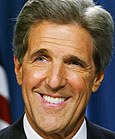 John Kerry
helps him connect to a number of reluctant senators whose votes will be critical to the bill’s passage.
And as chairman of the Senate Foreign Relations Committee, succeeding Vice President Joe Biden, Kerry has the added responsibility of shaping the U.S. bill alongside international efforts to deal with climate change. He would also be the floor manager if and when the Senate has to ratify a new international climate treaty, which would require 67 votes, a much steeper hurdle than the 60 needed just to pass a climate bill.
Yale Environment 360: I remember watching you last year in the Senate debate on the floor as [you] were voting on the Lieberman-Warner [climate] bill, working with your senators. President Bush was waiting at that point with a veto pen. Now you have President Obama, who would sign a bill. Can you talk a little about the [changed] dynamics?
John Kerry: This time there’s a reality to it, because the science is more compelling, because we have a Democratic president, because we have 60 votes, because we have a responsibility to people, to Copenhagen, and the United States needs to lead. So there’s a very different dynamic, and I think a lot of communities have already moved — I mean, the electorate is way ahead of some of our colleagues here, in terms of energy efficiency projects, other kinds of things mayors have done, some of the governors, the state compacts in the Midwest, in the West, in the Northeast. Over half the American economy has already voluntarily put itself under mandatory [carbon] reduction schemes. So I think as people begin to analyze the realities here, there are greater possibilities this time around. Doesn’t mean it’s going to be easy — it’s not, it’s a very complicated issue, and it will be hard fought.
e360: As an advocate without President Bush around, though, is it hard to push this?
Kerry: We don’t want [to be] divisive, we don’t want anything partisan out of this. It’s not a partisan issue. This is an issue that ought to be based on science, on facts, on economics, and on good environmental policy — good economic policy, may I add significantly. I mean, this bill is really a bill for the transformation of the American economy. This bill is about jobs — clean energy jobs that stay here in America, that pay people decent salaries. It represents one of the fastest growing sectors of many of our states, including North Dakota. North Dakota, it has been determined by the [American Wind Energy] Association, is the number one potential state for wind in the country. It could produce ten thousand times its own electricity needs just from wind. So, there are many reasons for people to embrace what is going to be done here. It is an anti-pollution bill that protects children from all the impacts of bad air, and it is a huge step forward for energy independence for our country.
e360: Some say that the House bill is too weak, that it was watered down too much in the negotiations. You have the Europeans calling for stronger targets. What’s your opinion?
The key here is to build as broad a coalition as is possible.
Kerry: I introduced legislation several years ago that had higher levels of reductions. But we’re going to have to find a level of compromise here that works for people. I know that the House started at a higher level and had to move backward somewhat, but it got the votes, and we’re going to have to negotiate here — obviously intelligently — and get the votes. I can’t tell you what the level will be in the bill, because those are decisions that will be made down the road here as we get together in the next weeks. I think the House bill is actually a very good bill, a very strong bill, [with] enormous positive assets, and there may be several things we feel we can tweak, make stronger. We met with Markey and Waxman, and they encouraged us to do that if we can in various places, even gave us some ideas about things they would have liked to have done but weren’t able to. So the key here is to build as broad a coalition as is possible.
e360: In [the 2004 presidential] campaign, you didn’t win West Virginia and Montana and the Dakotas and these states that are the swing states. Are you concerned that you might be too polarizing as a senator representing Massachusetts now?
Kerry: I really don’t think so. You have to be reasonable — West Virginia has huge unemployment, a lot of folks who are on the lower end of the economic income scale, and a major coal interest, and I respect that. We’re trying to find a way to save the coal industry. In fact, coal has a better opportunity for its future if it comes on board this bill, because if it doesn’t, it’s going to be regulated by the EPA, without the assistance that we’re going to put in this bill to help them. So, our commitment to clean coal technology is in fact a huge incentive for coal states to recognize that this is a good moment. Again, this is legislating, this is not a campaign, this is not a race for the presidency. This is about how do we meet those interests.
e360: From a political standpoint, after every single House amendment vote that took place in the Energy and Commerce Committee, reporters’ e-mail inboxes were flooded with press releases from the National Republican Congressional Committee attacking the House Democrats who voted on those amendments.
Kerry: Well, there’s a huge grassroots effort going on right now that will support the people who are involved with this. Al Gore, the Climate Action Partnership. Different people are raising money, hiring people involved with grassroots organizing, putting advertisements together, and they’re going to run ads in support of people where they do this, and they’re also going to run ads describing this challenge appropriately in certain states to encourage people to change their mind. But they’re going to try to educate the public about it.
So this will be hard fought, it’ll be a very big deal, it’ll be very tough. I have no illusions about it, I know it’s tough. It’s taken a lot of time to try to get health care through here. And we’re still fighting that. But there this is a growing recognition of a major challenge to Americans’ security and economic interests.
e360: Republicans think they can take the House and Senate back with this vote. I’ve also talked to Newt Gingrich. He says President Obama, in a run for a second term, could be in trouble because of this cap-and-trade bill. Do you think there’s any truth to that?
Kerry: I don’t agree. This is an economic jobs bill. This is a jobs bill, we will show. We had Governor Bill Ritter from Colorado here, Governor Christine Gregoire here, two days ago, talking about how many jobs they created in their states as a consequence of their moves on environmental policy, and what they’re doing, and they can dispute and completely discredit any arguments that they’ve lost jobs because they’re doing those things. So as the evidence comes in, people who look at the facts are going to realize what’s really happening here.
You have to take risks. The Republicans, what’s their plan? What plan do they have for anything? Do they have a plan for heath care? No. Do they want to fix the system? No. Their “no” is a vote for the status quo, and the status quo hurts Americans. What’s their energy, what’s their global climate change policy? To stick their heads in the sand and pretend it isn’t happening? And risk catastrophe for our nation and the planet? I think people will recognize the importance of these issues as we go forward. Let this debate be joined. I look forward to it.
e360: At the press conference after Lieberman-Warner last year you talked about how this was one of the first times that the senators had had to grapple with the issue. What’s changed from last year to this year?
I think this bill is already better than a lot of people think it is or know it is, because they don’t know yet really what’s in it.
Kerry: I think our colleagues are well aware of the problem and concerned about it. They’re just trying to figure out what’s the best way to try to deal with it. I think what’s changed is that the science is coming back dramatically faster — and in greater affirmation of the predictions — than anybody had thought, and so scientists are deeply alarmed. That’s one thing that’s changed. Secondly, major businesses and corporations have signed up realizing that this is critical to their economic future, and so you have DuPont and Siemens, and various power companies, like Florida Power and Light and American Electric Power, who believe that we’ve got to do this. You’ve got tech companies, different kinds of entities, all of whom believe that this is a big deal for America’s economy, that we’re going to create jobs that don’t go overseas, that provide a higher standard of living. I think that that realization is striking home with people. Thirdly, you’ve got global climate change impacts hitting states all across the country. Less rainfall, stronger drought, fire risks, beetle pine nut bugs that are eating forests in Colorado and Montana. Things are happening to the negative because of climate change, and local populations are perceiving those things. So I think that the public is ahead of some of the politicians in Washington on this, and we’ve just got to get it caught up.
e360: What specifics are you going to add to the bill from the Senate Foreign Relations Committee?
Kerry: I can’t tell you what we will do or not do. We may just put them into the bill with [Environment and Public Works Committee Chairwoman] Barbara [Boxer]. We may mark it up ourselves. That decision has yet to be made.
e360: Can you talk about what general issues you intend?
Kerry: The kinds of things are offsets, adaptation technology transfer, potential goals for Copenhagen…
e360: How much does the health care debate influence the climate debate — success on health care breeds success on climate and failure on health care could be trouble?
Kerry: Well you know how this place works, any time you’re successful it opens up the opportunity to go out and be successful again. But when you fail at something it also doesn’t end the opportunity to get something done. People make too much of all that stuff. These issues are going to rise and fall based on how well they are addressed. I think this bill is already better than a lot of people think it is or know it is, because they don’t know yet really what’s in it.
Things don’t end with Copenhagen, the issue doesn’t suddenly go away. Whatever we achieve… is a first major step, among many.
But when they learn that there are billions of dollars there to help develop clean coal technology, when they learn there are incentives for energy efficiencies or new technologies, that we’re helping to mitigate any kind of cost increase against the individual homeowner or electricity user, which we do very effectively in this. CBO [Congressional Budget Office] — and the EPA — has demonstrated that the cost to the lowest quintile of Americansis actually no cost, it’s $40 in their pocket, and the cost to others is a range, between 75 dollars and a hundred and something, over an entire year for a family of four. But that’s without taking into account energy efficiencies or taking into account the new technologies. So that’s now being scoped into it, and it also doesn’t take into account the final things in the House when they voted. That was on the Waxman-Markey original bill, and I think that as people learn that this is actually a winner, it’s a jobs winner, it’s a jobs creator, it’s a significant engine of growth for the economy, as well as an improvement in the health of children because you’re reducing pollution. And also increasing the security of the United States because you’re reducing energy dependency, a lot of people are going to say, “Wow, this is not the scary thing people have described it as.”
e360: What level of specificity do you think the United States needs going into Copenhagen?
Kerry: Well I think what the House has done, and if we get a bill out of committee here, that’s pretty good, that’s a good level to go in with. Would it be better if we finished the job here and got it passed? Absolutely, that’s our goal. But we have to see what happens to the Senate schedule, and just where we are, overall, budget issues, health care, and everything else. Hopefully we’ll have time to do it.
e360: Senator Reid has said that he would like it signed into law by Copenhagen, and Speaker Pelosi has said the same.
Kerry: We’d all like it — ideally you’d get a November signing.
e360: And going into Copenhagen, if you had a law, does that tie the United States’ hands, negotiating with China and with other countries?
Kerry: Not at all. I think that China is doing a lot more than people know or think. Is it sufficient yet to deal with what we have to deal with going into Copenhagen? Not yet, but that is what has to be fleshed out in the negotiating process.
e360: How do you convince senators here to vote for a bill knowing that China hasn’t yet signed on the dotted line?
Delay hurts the American consumer, and we need to show them exactly how.
Kerry: We have to do what we have to do no matter what. I think people understand that. And if you want to enhance China’s prospects of signing onto [a treaty], we’re better off passing something. That puts pressure on China and India and everybody else. So if your interest is in getting something done, we should pass something.
You know, what people ought to understand is that legislation isn’t forever. If evidence came in in a few years showing we could slow it down, we can always react. If evidence came in saying we’ve got to speed it up, we can react. This is not a static process. Things don’t end with Copenhagen, the issue doesn’t suddenly go away. Whatever we achieve in Copenhagen is a first major step, among many, that are going to be necessary, with some adjustment as we go along to the realities of science and economics and other things as they come at us.
e360: Do we leave Copenhagen with a document that is the Copenhagen Protocol?
Kerry: I hope so. I’m optimistic about the capacity to do it. But it’s going to take leadership, and a bona fide effort by the United States, to do what we need to do.
e360: When you look at the G8 meetings that just happened, or Secretary Clinton’s trip to India, there was some pretty harsh reaction toward the United States, and you have the House bill at that moment, too.
Kerry: It’s been overblown — the Indians are repeating what they’ve always been saying, and the Chinese likewise. I thought the 2 degrees C goal [temperature increase target] they came out of [the G8 meetings] with is pretty significant, because a 2 degrees goal carries with it certain obligations. It also carries with it some requirements with respect to what you do, domestically, to achieve that.
e360: What happens if this can’t pass this year — does this go on the shelf like health care?
Kerry: This is going to grow in significance and importance, and regrettably it’s going to get actually more expensive, because it is harder to take more [CO2] out of the atmosphere the more you delay, and that gets more expensive. So in fact delay hurts the American consumer, and we need to show them exactly how.
e360: I’ve watched nine years of this debate on Capitol Hill. The votes have hovered around 45 in the Senate. If you’re still stuck at that number, or maybe get a little bit higher, but not 60, do you anticipate this coming back next year and the next year?
Kerry: I’m not even going to contemplate not getting this passed or coming back or anything else. We’re going to try to get this done, and we’re going to approach it with the attitude that we can get it done, and we’re going to get it done. There’s no fallback position right now.