When new reports about global warming come out, they typically include a picture of the land and sky, with arrows marking the movement of carbon dioxide around the planet. Some arrows rise up from cities and farmland, while other arrows plunge down to forests and oceans. This sort of diagram does a great job of illustrating the big picture. Thanks to human activity, carbon dioxide is rising into the atmosphere faster than the planet can draw it down. But the giant scale of this picture hides some of the most important players in the global warming story, which are as crucial to the future of the planet as factories and forests: the planet’s vast swarms of microbes.
A single bacterium, measuring a few millionths of an inch across, may not seem like much compared to a coal-fired power plant. But taken together, microbes are a force to be reckoned with. Some scientists estimate that our planet is home to about 5 trillion trillion bacteria They pack the oceans and the soils; they live just about everywhere they can find even a trace of liquid water. Together, microbes lock up — and release — a huge amount of carbon. The world’s soils — the product of bacteria and fungi breaking down plant matter — contain more than 2.5 trillion tons of carbon. “If you look at all the trees and the grass and the flowers and add all that up, there’s four times as much carbon in the soil,” says Steven Allison, a biologist at the University of California at Irvine.
Microbes have been absorbing and releasing greenhouse gases since they evolved 3.5 billion years ago
Even more impressive is the vast amount of carbon that microbes pump around the biosphere. On the surface of the ocean, photosynthetic bacteriasuck vast amounts of carbon dioxide dissolved in the water and turn it into organic molecules. The ocean is also rife with bacteria that feed on organic matter and release carbon dioxide as waste. Meanwhile, the microbes that break plant matter into soil release 55 billion tons a year of carbon dioxide. “It’s eight times what humans are putting into the atmosphere through fossil fuel burning and deforestation,” says Allison.
Microbes have been absorbing and releasing greenhouse gases ever since they first evolved in the ocean more than 3.5 billion years ago and spread on land about 2 billion years ago. And in the process they’ve influenced the Earth’s climate. But the influence doesn’t just flow one way, from microbes to the climate. As the climate changes, it can change the planet’s microbial menagerie.
Scientists are only just starting to figure out some of the rules that govern this feedback. They know just enough to recognize that as we raise the planet’s temperature, we will alter the planet’s microbes. And as we change the world’s microbes, we will also change their impact on the climate. But scientists have only a rough sense of what those changes will turn out to be. It’s possible that we will cause bacteria to churn out greenhouse gases far faster than they do today, adding to our own global warming.
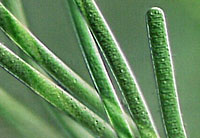
Or they may be stimulated to draw carbon dioxide out of the atmosphere, softening the blow of climate change. Or all of the above.
To see the starkest evidence of the feedback between global warming and microbes, you need only travel to the Arctic. The tundra is a tough place for microbes to make a living. They are frozen for much of the year, and the stress of the cold makes them grow poorly even in warm months. Making life even harder for them is the lack of oxygen in the boggy ground. When tundra plants die, microbes can only break down a fraction of their biomass. The rest becomes entombed in permafrost.
The tundra of North America and Siberia has been storing away carbon for the past 11,000 years, since the glaciers retreated at the end of the last Ice Age. But as the Arctic has warmed in recent decades, the flow of carbon has reversed: The tundra has started releasing more carbon than it captures. Scientists believe that the change has come as rising temperatures in the Arctic have reduced the stress experienced by the microbes. The tundra has also become drier, so that oxygen can penetrate into the ground, allowing microbes to thrive. Decomposing microbes can now feed on the dead plant matter and pump carbon into the atmosphere.
“We believe that as the polar ocean warms, the ecosystem will change to favor microbes,” says one researcher.
Scientists would like to know what those microbes will do if we continue to shoot more carbon dioxide into the atmosphere. It’s possible, for example,that microbes could accelerate the pace of climate change.
As the Arctic warms and dries, microbes release carbon dioxide into the air. The carbon dioxide drives up temperatures, causing the tundra to warm and dry even more. The microbes are spurred to grow faster and release still more carbon dioxide. With so much carbon locked up in the world’s permafrost, the possibility of such a runaway feedback is sobering.
The microbes in the polar oceans may behave in a similar way, although for different reasons. Hugh Ducklow, director of the Ecosystems Center at the Marine Biological Laboratory in Woods Hole, Mass., and his colleagues have found that marine microbes eat only a small fraction of organic matter. The rest gets devoured by small animals or sinks down into the deep ocean. As polar oceans warm, however, Ducklow suspects that marine microbes will become more active and devour more organic matter. “We believe that as the polar ocean warms, the ecosystem will change to favor microbes,” says Ducklow.
As the microbe population grows, it will release more carbon dioxide into the water. The oceans will thus be able to absorb less carbon dioxide from the atmosphere. As a result, the carbon dioxide levels in the atmosphere will climb, warming the planet. “The effects of climate change on the oceans are a bit like what’s happening in the tundra,” says Ducklow, “but the mechanisms and timescales are very different.”
It’s possible that there are rare species of microbes that will thrive in warmer temperatures.
On land and at sea, however, microbes are influenced by lots of different factors. In the ocean, global warming will also change the pH of seawater and the wind patterns, both of which could either slow the growth of microbes or accelerate it. Likewise, in the tundra, the warmer temperatures are allowing trees and shrubs to advance northward, and the shadows they cast on the ground may influence microbes in unpredictable ways.
To tackle this complexity, some scientists are developing sophisticated computer models. Allison and his colleagues recently constructed a model of the microbes living in the soil of temperate forests. The model tracked the growth of bacteria as they fed on carbon in the soil, along with the carbon dioxide they released into the atmosphere. The scientists then raised the temperature of their virtual forest 5 degrees Celsius and observed how it changed.
The bacteria experienced stress in the warmer climate, and as a result their biochemical reactions ran less efficiently. Instead of converting much of the carbon in plants into their own biomass, the microbes released more of it as carbon dioxide.
You might think that the hotter temperatures would therefore lead to more carbon dioxide in the air. But because the bacteria became inefficient, their growth slowed down. So there were fewer bacteria to release carbon dioxide.
The two effects — inefficiency and slow growth — cancelled each other out. “We don’t see microbes releasing very much carbon at all when we warm them up,” says Allison.
Allison stresses that his model is just a first stab at understanding the complex changes that will come to the microbial world. For one thing, it only applies to temperate forests. “Our model doesn’t apply to the tundra at all,” he says, pointing out that warming the tundra reduces the stress on bacteria, because they’re so cold to start off with. He expects that his model would show the tundra releasing more carbon.
Such models assume that bacteria stay the same as the climate changes. But communities of microbes change a lot, over days, months, and years. It’s possible, for example, that there are rare species of microbes that will turn out to thrive in the warmer temperatures. It’s also possible that global warming will drive microbes to evolve. Albert Bennett, Dean of the School of Biological Sciences at the University of California, Irvine, has run experiments in which he has reared flasks of E. coli while steadily raising the temperature. After just a few hundred generations, the bacteria evolved to grow faster at the higher temperature than at their original temperature. We may be running the same experiment on a planetary scale.
“We don’t understand if they can adapt, or how fast they can adapt,” says Allison. “It’s now our job as scientists to figure out which is going to be the case.”