Region: Australia


In Fight to Save Coral Reefs,<br /> Finding Strategies that Work

Interview

In Fight to Save Coral Reefs,
Finding Strategies that Work

by kevin dennehy
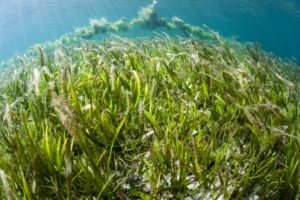
In four decades as a marine biologist, Nancy Knowlton has played a key role in documenting the biodiversity of coral reefs and the threats they increasingly face. In an interview with Yale Environment 360, she assesses the state of the world’s corals and highlights conservation projects that offer hope of saving these irreplaceable ecosystems.
READ MORE

In Australia’s New Carbon Tax,<br /> A Host of Missed Opportunities

Opinion

In Australia’s New Carbon Tax,
A Host of Missed Opportunities

by richard denniss
The Australian government will begin imposing a tax on carbon emissions in mid-2012. But large giveaways to industry mean Australia’s scheme doesn’t go nearly far enough in reducing the nation’s CO2 emissions or providing economic stimulus.
READ MORE

The World’s Tropical Forests<br /> Are Already Feeling the Heat

Analysis

The World’s Tropical Forests
Are Already Feeling the Heat

by william laurance
Much attention has been paid to how global warming is affecting the world’s polar regions and glaciers. But a leading authority on tropical forests warns that rising temperatures could have an equally profound impact on rainforests and are already taking a toll on some tropical species.
READ MORE

Is the End in Sight for<br /> The World’s Coral Reefs?

Analysis

Is the End in Sight for
The World’s Coral Reefs?

by j.e.n. veron
It is a difficult idea to fathom. But the science is clear: Unless we change the way we live, the Earth's coral reefs will be utterly destroyed within our children's lifetimes.
READ MORE

Report

Warming Takes Center Stage
as Australian Drought Worsens

by keith schneider
With record-setting heat waves, bush fires and drought, Australians are increasingly convinced they are facing the early impacts of global warming. Their growing concern about climate change has led to a consensus that the nation must now act boldly to stave off the crisis.
READ MORE

Report

Deep Geothermal: The Untapped Renewable Energy Source

by david biello
Until now, geothermal technology has only been used on a small scale to produce power. But with major new projects now underway, deep geothermal systems may soon begin making a significant contribution to the world’s energy needs.
READ MORE

What’s Killing<br/> the Tasmanian Devil?

Report

What’s Killing
the Tasmanian Devil?

by david quammen
Scientists have been trying to identify the cause of a cancer epidemic that is wiping out Australia’s Tasmanian devils. Now new research points to an alarming conclusion: because of the species’ low genetic diversity, the cancer is contagious and is spreading from one devil to another.
READ MORE

e360 digest

RELATED e360 DIGEST ITEMS


30 Apr 2012: Australia Lists Koala As
Threatened Species for First Time

The Australian government has added the koala to the list of threatened species in parts of the country for the first time, saying the iconic species is under threat from habitat loss, urban expansion, disease, and climate change. Following a three-year study, Environment Minister Tony Burke announced that koalas will be listed as vulnerable in Queensland, where populations have declined by 40 percent in two decades; New South Wales, where numbers have dropped by one-third; and the Australian Capital Territory. In addition to the listing, which will impose restrictions on development in areas where the species is threatened, the government committed $300,000 for koala monitoring and habitat research. Not only are koalas facing declining food sources as eucalypt plants are aggressively cleared for development, but scientists say the nutritional value of remaining eucalypts has diminished as a result of climate change. While the government says there are about 200,000 remaining koalas nationwide, the Australian Koala Foundation estimates there are likely fewer than 100,000.
PERMALINK


02 Apr 2012: Some Corals More Resilient
To Increased Acidification, Study Shows

Some coral species may be better able to cope with the increasingly acidic condition of the world’s oceans than previously believed, a new study says. Writing in the journal Nature Climate Change, an international team of scientists describes an internal mechanism by which many coral species are able to buffer against the rising pH levels and still form healthy skeletons. According to the scientists, coral species with skeletons made of aragonite — including the well-known Porites and Acropora corals — contain molecular “pumps” that enable them to regulate internal acid balance. Corals that form calcite skeletons, however, do not have this mechanism. Also, the researchers found that coralline algae — which they describe as the “glue” that holds coral reefs together — remain vulnerable to ocean acidification. In another study, scientists at the Scripps Institution of Oceanography have documented how temperatures in the upper regions of the world’s oceans have increased by an average of .59 degrees F (.33 degrees C) over the last 140 years, with the greatest temperature increases occurring at surface levels, where temperatures rose by an average of 1.1 degrees F.
PERMALINK


27 Mar 2012: Common Herbicide a Threat
To Great Barrier Reef, Report Says

A popular herbicide used widely in coastal regions of Australia has been found at dangerous levels in the Great Barrier Reef, posing a toxic threat to the world’s largest coral reef system. The chemical Diuron, which is used largely by sugar cane farmers along the Queensland coast, was found at levels 55 times higher than safety standards in creeks that drain into the reef, and at levels 100 times the safe standards in the reef itself, according to a new report by the World Wildlife Fund. After a decade-long review, the Australian government on Tuesday announced it would continue a suspension of the chemical except in the country's tropical regions. A decision on a permanent ban will be made by November, the Australian Pesticides and Veterinary Medicines Authority said. In a recent report, the Great Barrier Reef Marine Park Authority called a decline in the quality of water in catchment areas one of the greatest threats facing the reef. Nick Heath, the WWF freshwater and reef coordinator, said the widespread use of the chemical and the length of time it persists in the environment pose a significant threat.
PERMALINK


23 Mar 2012: Australian Mammal Extinctions
Tied to Human Hunting, Not Climate Change

The disappearance roughly 40,000 years ago of dozens of large mammals in Australia — including rhinoceros-sized wombats and tapir-like marsupials — was caused by human hunting and not by climate change, according to a new study by Australian scientists.
Australia Diprotodon
©Science/AAAS/Drawing by Peter Murray
Diprotodon optatum
Researchers at the University of Tasmania reached that conclusion after analyzing two mud core samples dating back as far as 130,000 years. By examining the cores for the Sporomiella fungus — which only releases its spores when in the dung of plant-eating animals — the scientists concluded that megafauna survived periods of climate change over the last 100,000 years. But when humans arrived in sizeable numbers, the presence of the spores dropped “almost to zero” around 41,000 years ago, indicating that hunting was the main reason for the extinction of these large animals, according to the paper, published in Science. Not long after the megafauna was hunted to extinction, grasses and trees began to grow more profusely because of the decline of grazing animals, setting the stage for large fires. The Australian research parallels other, similar findings worldwide showing that human hunting was crucial in large-animal extinctions.
PERMALINK


12 Mar 2012: Scientists Use Ancient Gene
To Create Salt-Tolerant Wheat Variety

Australian scientists have crossed a popular variety of wheat with an ancient species, producing a salt-tolerant variety they say could help reduce food shortages in the world’s arid and semi-arid regions. Using a genetic variation that had been lost in plants due to domestication before it was rediscovered a decade ago, the researchers say they were able to boost yields of durum wheat by 25 percent in salty soils. The gene, which was isolated from an ancestral cousin of modern-day wheat, Triticum monococcum, is believed to help prevent salt from traveling up the plant’s shoots, where it can cause damage, lead researcher Matthew Gilliham of the University of Adelaide, told Reuters. “Salty soils are a major problem because if soldium starts to build up in the leaves it will affect important processes such as photosynthesis,” he said. The findings could have an important impact on wheat yields worldwide, where salinity already affects more than 20 percent of soils, Gilliham said. The study was published in the journal Nature Biotechnology.
PERMALINK


15 Feb 2012: Documents Expose Campaign
By Think Tank To Undermine Climate Science

A series of leaked internal documents from the Heartland Institute, a conservative U.S. think tank, reveal an elaborate, multi-million dollar campaign to undermine the credibility of global warming science. The documents — which were sent anonymously to several bloggers and can be viewed online at DeSmogBlog.com — describe efforts to produce scientific studies that “discredit the UN’s Intergovernmental Panel on Climate Change. The Heartland Institute also allocated $100,000 to create a global warming curriculum for school teachers emphasizing “that the topic of climate change is controversial and uncertain — two key points that are effective at dissuading teachers from teaching science.” According to the documents, a significant part of the campaign has been funded by a single anonymous donor, who spent more than $8.6 million on “climate change projects” from 2007 to 2011. That individual donated $3.6 million in 2008, the same year that the Heartland Institute began organizing annual climate change conferences.
PERMALINK


25 Jan 2012: South Pacific ‘Free-for-All’
Decimating Fish Stocks, Report Says

Years of lax oversight, corruption, and political rivalry have allowed industrial fishing fleets from Asia, Europe, and Latin America to decimate fish stocks across the southern Pacific, a “free-for-all” that has pushed one
Peru Fish Meal Factory
Getty Images
A Peruvian fishmeal factory
critical species to the brink, according to a new report by the International Consortium of Investigative Journalists (ICIJ). With governments ignoring the threat of overfishing and heavily subsidizing the fishing industry, fleets have plundered the waters off Chile and Peru and have fished heavily right up to protected Antarctic waters. Stocks of jack mackerel — an oily fish that is a staple in Africa and a vital component in fishmeal for aquaculture — have declined by more than 90 percent, from an estimated 30 million metric tons to less than 3 million metric tons, in just two decades. According to Daniel Pauly, an oceanographer at the University of British Columbia, the jack mackerel decline could portend a collapse in fisheries worldwide.
PERMALINK


29 Nov 2011: Carbon Sinks in Estuaries
Have Been Degraded by Industrial Activity

The ability of the world’s estuaries, salt marshes, and mangrove swamps to sequester carbon has been seriously degraded by industrial activity, according to a study by Australian researchers. Scientists at the University of Technology, Sydney, examined layers of estuary sediment in Sydney’s Botany Bay for the past 6,000 years. They found that sea grass abundance has declined sharply, while quantities of micro-algae have soared. Increasing nitrogen deposition and pollution are the main culprits in destroying seagrass beds, which have the capacity to store as much as 100 times more carbon than micro-algae. The researchers dated the sediments using radiocarbon dating and determined the plant makeup of the Botany Bay estuary by examining isotopic ratios of seagrass versus micro-algae. Reporting in the journal Global Change Biology, lead researcher Peter Macreadie said the results show the importance of preserving and restoring so-called “blue carbon habitats” in wetlands and estuaries. The partial loss of these carbon sinks has “severely hampered the ability of nature to reset the planet’s thermostat.”
PERMALINK


28 Nov 2011: World's Largest Marine Reserve
Proposed in Australia’s Coral Sea

Australia has proposed the creation of the world’s largest marine park in the Coral Sea, a 382,000-square-mile area where fishing would be limited and oil and gas exploration would be banned. The so-called Coral Sea Commonwealth Marine Reserve would begin in waters about 36 miles off Australia’s northeastern coast, an area known for its array of coral reefs, sandy cays, sea plains, and canyons. According to Tony Burke, Australia’s Environment Minister, the waters of this area have become increasingly vulnerable to overfishing and habitat degradation. “In the space of one lifetime, the world’s oceans have gone from being relatively pristine to being under increasing pressure,” Burke said. According to the plan, 196,000 of the reserve square miles will be designated as “no take” areas where fishing is banned. Larissa Waters, a Queensland senator and Green Party member, said the plan doesn’t go far enough, with only two out of every 25 reefs receiving “full protection.”
PERMALINK


11 Nov 2011: New Irrigation Device Pulls
Water From the Air in Driest Conditions

A student at Australia’s Swinburne University this week received the James Dyson Award for a device he says is capable of harvesting moisture from the air for use in irrigation, even in the world’s driest places. Developed by Edward Linnacre, the Airdrop is a wind- or solar-powered device that sucks air underground through a coiled metal pipe, where the cooler temperature of the surrounding soil slowly causes it to condense. The device ultimately collects the water in an underground tank before it is pumped back to the roots of nearby crops via a sub-surface drip irrigation system. According to Linnacre, a prototype that he developed in his mother’s backyard was able to produce about one liter of water per day. He hopes the technology can be used for agriculture in even the driest conditions. “There are water-harvesting technologies out there, but there’s very few low-tech solutions,” he said. “A low-tech solution is perfect for rural farmers, something that they can install, something that they can maintain themselves.”
PERMALINK


08 Nov 2011: Australian Parliament Passes
Landmark Tax on Carbon Emissions

The Australian government has passed the world’s first tax on carbon emissions, a landmark reform proponents say will promote better energy efficiency and increased reliance on renewable sources of energy, while also significantly cutting air pollution. The legislation, which was passed by the Senate in a 36-32 vote, will require the nation’s 500 biggest carbon emitters to pay a price of 23 Australian dollars ($23.78 U.S.) per ton of carbon beginning in July 2012. It then will shift to an emissions trading scheme beginning in 2015. Those companies — most of which are electricity generators, heavy industry manufacturers, and mining companies — will need to obtain a permit for each ton of carbon they emit. According to government officials, the new tax will reduce carbon emissions by at least 160 million tons annually by 2020 — or the equivalent of taking 45 million vehicles off the road. Prime Minister Julia Gillard, who staked her political career on the controversial legislation, called it a significant victory for the environment and for the emerging green energy economy. “It’s the right thing to do,” she said.
PERMALINK


12 Oct 2011: Australia Edges Closer
To Carbon Tax After Key Vote

The Australian government has taken a critical step toward adopting a tax on carbon emissions, with the lower house of Parliament approving the controversial plan by a narrow margin. The bill, which survived a late push by opponents to delay a vote, would require the nation’s 500 biggest carbon emitters to pay a price of 23 Australian dollars ($23 U.S.) per ton of carbon. Most of the biggest emitters are electricity generators, heavy industry manufacturers, and mining companies. While the initiative will increase living costs for the average household by about $9.90 per week — including $3.30 for electricity — advocates of the plan say those hardships will be offset by reductions to the income tax and other benefits increases. The measure, which has been aggressively pushed by Prime Minister Julia Gillard, is expected to pass the Senate with ease sometime next month. If approved, Australia would become the first nation to impose a direct tax on carbon, as opposed to an emissions trading scheme like the one now in effect in the European Union.
PERMALINK


07 Oct 2011: Desalination Equipment Rushed
to Drought-Stricken Pacific Nation

Military airplanes from Australia and New Zealand are delivering a large desalination unit to the drought-stricken Pacific nation of Tuvalu, where water supplies have nearly run dry after six months without rain. The tiny island nation, which has a population of about 11,000 people, has declared a state of emergency, with officials predicting that drinking water could run out within days. In addition to record drought conditions caused by the La Nina weather phenomenon, officials say rising seas have contaminated groundwater supplies. While New Zealand had already sent desalination equipment to the remote island nation, its foreign minister said more capacity is needed to meet the nation’s needs. On the main island of Funafuti, where the majority of the population lives, water is already being rationed. “At present the two operating desalination plants at Funafuti are producing a combined volume of 43,000 liters a day,” said New Zealand Foreign Minister Murray McCully. “The minimum requirement for the 5,300 residents is 79,500 liters a day.” The Australian government has also sent 1,000 rehydration packs for Tuvalu’s hospitals and provided money to fuel the desalination plants.
PERMALINK


11 Jul 2011: Australia Unveils Plans to
Tax Carbon Emissions by Next Summer

The Australian government has unveiled a proposal to tax its heaviest carbon dioxide emitters as of July 2012, a plan that would make Australia the first nation to put a price on carbon. The plan, which is expected to pass both houses of parliament before the end of the year, would require the nation’s 500 biggest CO2 emitters to pay $24.60 (AU$23) per ton of carbon dioxide, with that price increasing by 2.5 percent annually until July, 2015. At that point, an emissions trading scheme will be introduced. By 2020, government officials say, the carbon tax would reduce Australia’s carbon emissions 5 percent below 2000 levels; by 2050, the plan will reduce emissions by 80 percent, officials said. About AU$10 billion of the anticipated revenue will be funneled into energy efficiency and renewable energy projects. “Failing to do so means that we would be passing on lower living standards to our children and grandchildren,”said Prime Minister Julia Gillard. With a population of about 22.6 million, Australia produces about 1.3 percent of the world’s carbon emissions.
PERMALINK


28 Jun 2011: Tasmanian Devil Epidemic
Linked to Human Disturbance, Study Finds

A mysterious cancer epidemic that is wiping out populations of the Tasmanian devil is largely the result of low genetic diversity caused by human interference, according to a new study. Using genetic sequencing,

View photos
Tasmanian Devil Facial Tumor Disease

DPIW/Tasmania
Tasmanian devils’ facial tumor epidemic
researchers determined that devils found on opposite ends of the Australian island state of Tasmania — which, consequently, should have been genetically distinct — were remarkably similar. Further analysis of 175 devils and museum specimens indicated that the species has had a low genetic diversity over the last century, making it vulnerable to disease, including a facial tumor epidemic transmitted by physical contact that has wiped out about 66 percent of the animals since it was first observed in 1996. “Devils are essentially immunological clones, so tumors pass between them without triggering an immune response,” said Katherine Belov, an associate professor of animal genetics at the University of Sydney, Australia. Populations of the devil on mainland Australia were wiped out by dingoes introduced by settlers, while on Tasmania humans hunted the marsupials as pests. The findings are published in the journal Proceedings of the National Academy of Sciences.
PERMALINK


27 Jun 2011: Right Whales Return
To New Zealand After 100 Years

A new study shows that a small number of southern right whales have returned to their ancestral New Zealand breeding grounds more than a century after the species was hunted to local extinction. Using DNA
Right Whales Return to New Zealand
Oregon State University
A southern right whale
profiling, researchers determined that seven whales are now migrating between sub-Antarctic islands and the bays of mainland New Zealand, where thousands of whales used to birth and raise calves before whalers extirpated them. According to historical records, as many as 30,000 of the right whales once migrated to the region, where they could be seen from the shoreline as they slapped their tails and breached almost entirely out of the water. “The protected bays of New Zealand are excellent breeding grounds, and I suspect we may soon see a pulse of new whales following the pioneers, to colonize their former habitat,” said Scott Baker of Oregon State University’s Marine Mammal Institute. The findings were published in the journal Marine Ecology Progress Series.
PERMALINK


25 May 2011: Greener Aviation Industry
Deemed Feasible for Australia and Region

The creation of a sustainable, “bio-derived” aviation industry for Australia and New Zealand can be achieved within two decades, a report by Australia’s top science agency says. According to the report by the Commonwealth Scientific and Industrial Research Organization (CSIRO), the region has enough sources of non-food biomass — including crop and forestry residue, municipal waste, and algae — to support a local jet fuel industry and make the region less reliant on imported aviation fuels. In addition to cutting aviation-related greenhouse gas emissions by 17 percent, the report projects that in Australia the amount spent spent annually on imported fossil fuels could be slashed by $2 billion. By 2050, the report predicts, about 50 percent of an airline’s fuels could come from biofuels. But while the bio-derived industry will ultimately be commercially independent, the report says government support will be critical in establishing a supportive market structure and the development of refining plants.
PERMALINK


25 Mar 2011: Wind Speeds Increasing
On World’s Oceans, Study Says

Average wind speeds and wave heights have been rising on the world’s oceans over the last quarter century, a trend that could portend more intense storms, hurricanes, and cyclones, according to a new study. Using satellite altimeter data from 1985 to 2008, Australian researchers calculated that wind speeds increased 0.25 to 0.5 percent per year, and overall had increased 5 to 10 percent during that time. The most pronounced increases were observed during extreme wind events — in comparison with mean conditions — which increased about 0.75 percent annually, according to the study, published in the journal Science. Ian Young, a professor at the Australian National University at Canberra and lead author of the study, said it is unclear whether it is a temporary phenomenon or the result of global climate change, although he added, “If we have oceans that are warming, that energy could feed storms, which increase wind speeds and wave heights.”
PERMALINK


09 Mar 2011: Carbon Storage Projects
Expanded in 2010 Despite Tough Economy

Twenty-one new carbon capture and storage (CCS) demonstration projects were launched worldwide in 2010, despite rising technology costs, according to a new report by Australia’s Global CCS Institute. That growth represented a 10 percent increase from the previous year, and bumped the total number of projects active or planned worldwide to 234. Of the 77 fully integrated, large-scale projects — all still in the experimental stage — 39 are in the United States and 21 in Europe, according to the report, “The Global Status of CCS: 2010.” Five large-scale, state-funded demonstration plants also are being developed in China. Worldwide, government support for the experimental technology increased in 2010, the report says, when $40 billion was spent, with most of that money going to 25 individual projects. However, another 22 projects were either shelved or canceled worldwide because of global economic conditions and rising technology costs. In Australia, officials recently approved the Gorgon CO2 Injection Project, which will be the largest carbon storage project in the world.
PERMALINK


11 Nov 2010: Wolves and Sharks Create
Similar ‘Ecology of Fear’ in Ecosystems

A ripple-effect “ecology of fear” created by wolves and sharks in their respective ecosystems may be more similar than previously understood, according to a new study. After comparing the relationship between wolves and elk in Yellowstone National Park in the U.S. and tiger sharks and dugongs in Australia’s Shark Bay,
Gray Wolf
U.S. Fish & Wildlife
researchers found that each of the predator species alters the behavior of their prey in ways that have ecological significance that goes beyond the species themselves. When wolves are present, elk almost immediately shift their grazing areas to less sensitive habitats, allowing streamside shrubs and aspen trees to recover, scientists from Oregon State University and the University of Washington say in the study, published in the journal Frontiers in Ecology and the Environment. Similarly, dugongs tend to avoid shallow waters when sharks are present, allowing seagrass meadows — and the plants and marine animal species that depend on them — to thrive.
PERMALINK


Yale
Yale Environment 360 is
a publication of the
Yale School of Forestry
& Environmental Studies
.

SEARCH e360


Donate to Yale Environment 360

CONNECT

Twitter: YaleE360
e360 on Facebook
Donate to e360
View mobile site
Bookmark
Share e360
Email newsletter
Subscribe to our feed:
rss


ABOUT

About e360
Contact
Submission Guidelines
Reprints

e360 VIDEO

Warriors of Qiugang
The Warriors of Qiugang, a Yale Environment 360 video that chronicles the story of a Chinese village’s fight against a polluting chemical plant, was nominated for a 2011 Academy Award for Best Documentary (Short Subject). Watch the video.


DEPARTMENTS

Opinion
Reports
Analysis
Interviews
e360 Digest
Video Reports

TOPICS

Biodiversity
Business & Innovation
Climate
Energy
Forests
Oceans
Policy & Politics
Pollution & Health
Science & Technology
Sustainability
Urbanization
Water

REGIONS

Antarctica and the Arctic
Africa
Asia
Australia
Central & South America
Europe
Middle East
North America

e360 VIDEO REPORT

When the Water Ends
As temperatures rise and water supplies dry up, tribes in East Africa increasingly are coming into conflict. A Yale Environment 360 video reports on a phenomenon that could become more common: how worsening drought will pit groups — and nations — against one another. Watch the video.

e360 MOBILE

Mobile
The latest
from Yale
Environment 360
is now available for mobile devices at e360.yale.edu/mobile.


header image
Top Image: aerial view of Iceland. © Google & TerraMetrics.

e360 VIDEO REPORT

Leveling Appalachia
Leveling Appalachia: The Legacy of Mountaintop Removal Mining, an e360 video examining the environmental and human impacts of this mining practice, won the award for best video in the 2010 National Magazine Awards for Digital Media. Watch the video.


OF INTEREST


Yale