Topic: Biodiversity
Dispatch
Mysteries of Killer Whales
Uncovered in the Antarctic
Two of the world’s leading experts on the world’s top marine predator are now in Antarctica, tagging and photographing a creature whose remarkably cooperative hunting behavior and transmission of knowledge across generations may be rivaled only by humans.
Report
A Vast Canadian Wilderness
Poised for a Uranium Boom
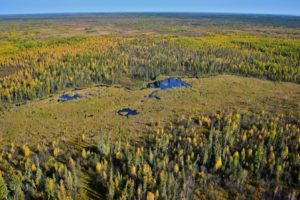
Canada’s Nunavut Territory is the largest undisturbed wilderness in the Northern Hemisphere. It also contains large deposits of uranium, generating intense interest from mining companies and raising concerns that a mining boom could harm the caribou at the center of Inuit life.
Interview
Monitoring A Grim Rise
In the Illegal Ivory Trade
For two decades, TRAFFIC’s Tom Milliken has tracked the illicit ivory trade that has led to the continued slaughter of Africa’s elephants. In an interview with Yale Environment 360, Milliken talks about the recent increase in ivory seizures and the criminal gangs that supply Asia’s black market for ivory.
Interview
A Defender of World’s Whales
Sees Only a Tenuous Recovery
Biologist Roger Payne played a key role in helping end the wholesale slaughter of whales. In an interview with Yale Environment 360, Payne discusses the mysteries of these legendary marine mammals and the threats they continue to face.
Report
Camera Traps Emerge as
Key Tool in Wildlife Research
Scientists and conservationists are increasingly relying on heat- and motion-activated camera traps to study rare or reclusive species in remote habitats. And the striking images they provide are proving to be a boon for raising conservation awareness worldwide.
Report
Northwest Oyster Die-offs Show
Ocean Acidification Has Arrived
The acidification of the world’s oceans from an excess of CO2 has already begun, as evidenced recently by the widespread mortality of oyster larvae in the Pacific Northwest. Scientists say this is just a harbinger of things to come if greenhouse gas emissions continue to soar.
Report
Military Bases Provide Unlikely
Refuge For South’s Longleaf Pine
The expanses of longleaf pine forest that once covered the southeastern United States have been whittled away to just 3 percent of their original range. But as scientists are discovering, this threatened forest ecosystem has found a sanctuary in an unexpected place — U.S. military installations.
Report
Can Vulnerable Species
Outrun Climate Change?
Recent studies shed light on the key question of whether certain species, including slow-moving amphibians, can move swiftly enough to new territories as their old habitats warm. The challenges are formidable, especially if human-caused warming continues at such a rapid rate.
Report
Killing Wolves: A Product of
Alberta’s Big Oil and Gas Boom
The development of the tar sands and other oil and gas fields in Alberta has carved up the Canadian province's boreal forest, threatening herds of woodland caribou. But rather than protect caribou habitat, officials have taken a controversial step: the large-scale killing of the wolves that prey on the caribou.
Report
A Rise in Fungal Diseases is
Taking Growing Toll on Wildlife
In an increasingly interconnected world, fungal diseases are spreading at an alarming rate and have led to deadly outbreaks in amphibian, bat, and bee populations. And in the last decade, researchers note, some of the most virulent strains have infected people.
Report
Can Wildlife Corridors
Heal Fragmented Landscapes?
Conservationists have long called for creating ecological corridors that would enable large mammals and other wildlife to roam more freely across an increasingly developed planet. But now scientists are taking a closer look at just how well these corridors are working and what role they might play in a warming world.
Analysis
The Crucial Role of Predators:
A New Perspective on Ecology
Scientists have recently begun to understand the vital role played by top predators in ecosystems and the profound impacts that occur when those predators are wiped out. Now, researchers are citing new evidence that shows the importance of lions, wolves, sharks, and other creatures at the top of the food chain.
Report
A Huge Oil Palm Plantation
Puts African Rainforest at Risk
As global agricultural companies turn to Africa, a U.S. firm is planning a massive oil palm plantation in Cameroon that it says will benefit local villagers. But critics argue that the project would destroy some of the key remaining forests in the West African nation and threaten species-rich reserves.
Report
In Berlin, Bringing Bees
Back to the Heart of the City
In Germany’s capital — and in cities as diverse as Hong Kong and Chicago — raising bees on rooftops and in small gardens has become increasingly popular, as urban beekeepers find they can reconnect with nature and maybe even make a profit.
Report
Climate Relicts: Seeking Clues
On How Some Species Survive
In pockets ranging from mountain peaks to bogs, scientists are discovering plants and animals that survived previous eras of climate change. Now, conservation biologists say, these climate “relicts” could shed light on how some species may hang on in the coming centuries.
Analysis
The Long Strange Journey
Of Earth’s Traveling Microbes
Airborne microbes can travel thousands of miles and high into the stratosphere. Now scientists are beginning to understand the possible role of these microbes — such as bacteria, fungal spores, and tiny algae — in creating clouds, causing rain, spreading disease, and even changing climate.
Report
On Lake Taihu, China Moves
To Battle Massive Algae Blooms
For two decades, the once-scenic Lake Taihu in eastern China has been choked with devastating algae blooms that have threatened drinking water for millions. Now, in a move that could provide lessons for other huge lakes worldwide, China is taking steps to restore Taihu’s ecological balance.
Analysis
The Unfulfilled Promise of the
World’s Marine Protected Areas
Biologists and conservationists maintain that establishing marine reserves — areas where fishing is off-limits or severely restricted — offers the best hope for recovery for our overstressed oceans. So why is such a small area of the world's oceans protected?
Analysis
In Brazil, Palm Oil Plantations
Could Help Preserve the Amazon
In recent years, palm oil development in Malaysia and Indonesia has devastated tropical forests there. With Brazil on the verge of its own palm oil boom, can sustainable cultivation of the crop actually help save the rainforest, rather than hastening its destruction?
Interview
Using the Power of the Web
To Protect Africa’s Wildlife
Paula Kahumbu runs a conservation organization with a distinctly 21st-century mission: Posting field blogs from conservationists to attract global support for wildlife protection. In an interview with Yale Environment 360, Kahumbu talks about her group’s triumphs and struggles as it battles to preserve Africa’s magnificent animals.
Analysis
The World’s Tropical Forests
Are Already Feeling the Heat
Much attention has been paid to how global warming is affecting the world’s polar regions and glaciers. But a leading authority on tropical forests warns that rising temperatures could have an equally profound impact on rainforests and are already taking a toll on some tropical species.
Report
The Cerrado: Brazil’s Other
Biodiverse Region Loses Ground
While Brazil touts its efforts to slow destruction of the Amazon, another biodiverse region of the country is being cleared for large-scale farming. But unlike the heralded rainforest it borders, the loss of the cerrado and its rich tropical savanna so far has failed to attract much notice.
Interview
A Scientist Extols the Value
Of Forests Shaped by Humans
Political ecologist Susanna Hecht has incurred the wrath of some conservationists by arguing that the notion of the primeval forest is largely a myth and that disturbed forests play a vital ecological function. In an interview with Yale Environment 360, she makes the case for a “new rurality” that places less emphasis on protected forests and more on the areas where people live.
Report
As Larger Animals Decline,
Forests Feel Their Absence
With giant tortoises, elephants, and other fruit-eating animals disappearing from many of the world’s tropical woodlands, forests are suffering from the loss of a key function performed by these creatures: the dispersal of tree seeds. But a new experiment shows that introduced species may be able to fulfill this vital ecological role.
Report
In Aeolus Cave, A Search for the
Vanishing Bats of the Northeast
When wildlife biologists ventured into a Vermont cave this month, they found disturbing evidence that white-nose syndrome was continuing to take its toll on once-abundant bat populations. But the question remains: What can be done to halt the spread of this still-mysterious ailment?
Report
Agribusiness Boom Threatens
Key African Wildlife Migration
The Ethiopian region of Gambella is home to Africa’s second-largest mammal migration, with more than a million endangered antelope and other animals moving through its grasslands. But the government has now leased vast tracts to foreign agribusinesses who are planning huge farms on land designated a national park.
Interview
Deep-Sea Mining is Coming:
Assessing the Potential Impacts
Numerous companies are moving ahead rapidly with plans to mine copper, gold, and other minerals near hydrothermal vents on the ocean floor. But in an interview with Yale Environment 360, marine biologist Cindy Lee Van Dover warns that without environmental safeguards the unique ecosystems of deep-sea vents could be severely damaged.
Report
Alien Species Reconsidered:
Finding a Value in Non-Natives
One of the tenets of conservation management holds that alien species are ecologically harmful. But a new study is pointing to research that demonstrates that some non-native plants and animals can have beneficial impacts.
Opinion
How Fisheries Can Gain From
The Lessons of Sustainable Food
As agriculture and energy production have made strides toward becoming more sustainable, the world’s fisheries have lagged behind. But restoring our beleaguered oceans to health will require an emphasis on diversification and conservation — and a more sensible mix of fishing practices.
Report
In Novel Approach to Fisheries,
Fishermen Manage the Catch
An increasingly productive way of restoring fisheries is based on the counter-intuitive concept of allowing fishermen to take charge of their own catch. But the success of this growing movement depends heavily on a strong leader who will look out not only for the fishermen, but for the resource itself.
Interview
A Fierce Advocate for Grizzlies
Sees Warning Signs for the Bear
Doug Peacock has been tireless defender of the Yellowstone grizzly for decades, but he believes the bear may now be facing its toughest threat yet. In an interview with Yale Environment 360, Peacock talks about the insect infestation that is destroying a key food source for grizzlies and recalls some of his closest encounters with the bears.
Report
Massive Outbreak of Jellyfish
Could Spell Trouble for Fisheries
The world’s oceans have been experiencing enormous blooms of jellyfish, apparently caused by overfishing, declining water quality, and rising sea temperatures. Now, scientists are trying to determine if these outbreaks could represent a “new normal” in which jellyfish increasingly supplant fish.
Analysis
Indonesia’s Corruption Legacy
Clouds a Forest Protection Plan
Norway and other nations have vowed to invest billions of dollars to help preserve Indonesia’s remaining tropical forests. But can foreign involvement stem the tide of graft and uncontrolled logging that has steadily decimated one of the world’s largest areas of rainforest?
Interview
As Shark Slaughter Continues,
A Defender Targets Fin Trade
As the economies of China and other Asian nations have boomed, demand for shark fins — a prized delicacy — has soared, leading to severe overfishing of many shark species. In an interview with Yale Environment 360, shark conservationist Sonja Fordham talks about the battle to save one of the world’s most magnificent fish.
Report
With Tigers Near Extinction,
A Last-Ditch Strategy Emerges
In the past century, populations of wild tigers have plummeted from 100,000 to 3,500. Now the World Bank and conservationists have launched an eleventh-hour effort to save this great predator, focusing on reining in the black market for tiger parts and ending the destruction of tiger habitat.
Report
In War-Scarred Landscape,
Vietnam Replants Its Forests
With large swaths of forest destroyed by wartime defoliants, and even larger areas lost to post-war logging, Vietnam has set an ambitious goal for regenerating its woodlands. But proponents of reintroducing native tree species face resistance from a timber industry that favors fast-growing exotics like acacia.
Report
Hatch-22: The Problem with
The Pacific Salmon Resurgence
The number of salmon in the Pacific Ocean is twice what it was 50 years ago. But there is a downside to this bounty, as growing numbers of hatchery-produced salmon are flooding the Pacific and making it hard for threatened wild salmon species to find enough food to survive.
Opinion
What Are Species Worth?
Putting a Price on Biodiversity
When officials gather for an international summit on biodiversity next month, they might look to remind the world why species matter to humans: for producing oxygen, finding new drugs, making agricultural crops more productive, and something far less tangible — a sense of wonder.
Report
A Troubling Decline in the
Caribou Herds of the Arctic
Across the Far North, populations of caribou — an indispensable source of food and clothing for indigenous people — are in steep decline. Scientists point to rising temperatures and a resource-development boom as the prime culprits.
Report
New Hope for Pavlovsk Station
And Russia’s Rare Plant Reserve
In the early 20th century, Russian botanist Nikolai Vavilov created a preserve outside St. Petersburg that today contains one of the world’s largest collections of rare seeds and crops. Now, scientists and conservationists are waging an international campaign to save the reserve’s fields from being bulldozed for housing development.
Report
In Scotland’s Search for Roots,
A Push to Restore Wild Lands
As Scotland asserts its identity and its autonomy, environmentalists are working to restore its denuded landscape – planting native forests, creating wildlife corridors, and reintroducing species that were wiped out centuries ago.
Report
A Steady, Steep Decline for
The Lowly, Uncharismatic Eel
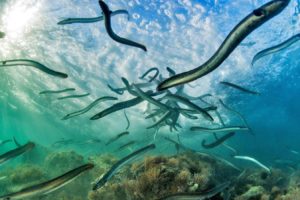
The freshwater eel, which spawns in the middle of the ocean, was once abundant in much of the world. But the proliferation of dams, coastal development, and overfishing have drastically reduced eel populations, with few defenders coming to the aid of these fascinating — though still not fully understood — creatures.
Analysis
A Looming Oxygen Crisis and
Its Impact on World’s Oceans
As warming intensifies, scientists warn, the oxygen content of oceans across the planet could be more and more diminished, with serious consequences for the future of fish and other sea life.
Report
Enlisting Endangered Species
As a Tool to Combat Warming
Environmentalists in the U.S. are increasingly trying to use the Endangered Species Act to ease the impact of global warming on numerous animals and plants, including the American pika. The goal is not only to protect the habitat of at-risk species but also to force reductions in greenhouse gas emissions.
Interview
For Hudson Bay Polar Bears,
The End is Already in Sight
The polar bear has long been a symbol of the damage wrought by global warming, but now biologist Andrew Derocher and his colleagues have calculated how long one southerly population can hold out. Their answer? No more than a few decades, as the bears’ decline closely tracks that of the Arctic’s disappearing sea ice.
Interview
As Madagascar is Plundered,
A Staunch Defender Fights Back
Primatologist Patricia Wright has spent the past 25 years studying — and protecting — Madagascar’s rich yet highly threatened biodiversity. Now, as many of the island’s remaining forests are being felled in the wake of a 2009 coup, Wright describes how she is helping organize the local residents and international conservation organizations to fight back.
Report
Under Threat in the Gulf,
A Refuge Created by Roosevelt
Among the natural treasures at risk from the oil spill in the Gulf of Mexico is the Breton National Wildlife Refuge, created by Theodore Roosevelt to halt a grave threat to birds in his era — the lucrative trade in plumage. Now, oil from the BP spill is starting to wash up on beaches where Roosevelt once walked.
Report
As Pharmaceutical Use Soars,
Drugs Taint Water and Wildlife
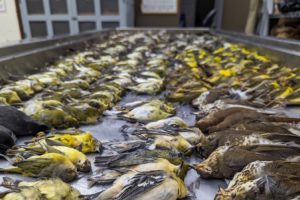
With nearly $800 billion in drugs sold worldwide, pharmaceuticals are increasingly being released into the environment. The “green pharmacy” movement seeks to reduce the ecological impact of these drugs, which have caused mass bird die-offs and spawned antibiotic-resistant pathogens.
Analysis
The Natural World Vanishes:
How Species Cease To Matter
Once, on both sides of the Atlantic, fish such as salmon, eels, and, shad were abundant and played an important role in society, feeding millions and providing a livelihood for tens of thousands. But as these fish have steadily dwindled, humans have lost sight of their significance, with each generation accepting a diminished environment as the new norm.
Report
What’s Killing the Great
Forests of the American West?
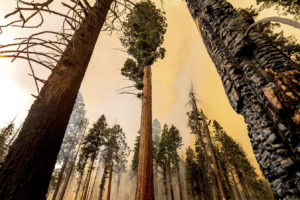
Across western North America, huge tracts of forest are dying off at an extraordinary rate, mostly because of outbreaks of insects. Scientists are now seeing such forest die-offs around the world and are linking them to changes in climate.
Opinion
After Two Decades of Delay,
A Chance to Save Bluefin Tuna
The obscenely profitable market for bluefin tuna in Japan has led to years of overfishing and left the world’s bluefin population badly depleted. A ban on the bluefin trade, if adopted at international talks this month, would go a long way toward giving this magnificent fish a chance to recover.
Interview
A New Strategy for Saving
The World’s Wild Big Cats
Populations of many of the world’s wild cats are plummeting, with the number of tigers falling to roughly 3,200. In an interview with Yale Environment 360, Alan Rabinowitz, a leading wild cat biologist, lays out a vision of how populations of these magnificent creatures can be brought back from the brink.
Analysis
Network Theory: A Key to
Unraveling How Nature Works
In the last two decades, network theory has emerged as a way of making sense of everything from the World Wide Web to the human brain. Now, as ecologists have begun applying this theory to ecosystems, they are gaining insights into how species are interconnected and how to foster biodiversity.
Opinion
Why Africa’s National Parks
Are Failing to Save Wildlife
The traditional parks model of closing off areas and keeping people out simply may not work in Africa, where human demands on the land are great. Instead, what’s needed is an approach that finds ways to enable people and animals to co-exist.
Report
Behind Mass Die-Offs,
Pesticides Lurk as Culprit
In the past dozen years, three new diseases have decimated populations of amphibians, honeybees, and — most recently — bats. Increasingly, scientists suspect that low-level exposure to pesticides could be contributing to this rash of epidemics.
Report
Madagascar’s Political Chaos
Threatens Conservation Gains
Since the government's collapse after a coup last March, Madagascar's rainforests have been plundered for their precious wood and unique wildlife. But now there are a few encouraging signs, as officials promise a crackdown on illegal logging and ecotourists begin to return to the island.
Report
Courting Controversy with
a New View on Exotic Species
A number of biologists are challenging the long-held orthodoxy that alien species are inherently bad. In their contrarian view, many introduced species have proven valuable and useful and have increased the diversity and resiliency of native ecosystems.
Report
In Japan’s Managed Landscape,
a Struggle to Save the Bears
Although it is a heavily urbanized nation, fully two-thirds of Japan remains woodlands. Yet many of the forests are timber plantations inhospitable to wildlife, especially black bears, which are struggling to survive in one of the most densely populated countries on Earth.
Report
The Spread of New Diseases
and the Climate Connection
As humans increasingly encroach on forested lands and as temperatures rise, the transmission of disease from animals and insects to people is growing. Now a new field, known as “conservation medicine,” is exploring how ecosystem disturbance and changing interactions between wildlife and humans can lead to the spread of new pathogens.
Report
The Growing Specter of
Africa Without Wildlife
Recent studies show that wildlife in some African nations is declining even in national parks, as poaching increases and human settlements hem in habitat. With the continent expected to add more than a billion people by 2050, do these trends portend an Africa devoid of wild animals?
Report
Controlling the Ranching Boom
that Threatens the Amazon
Clearing land for cattle is responsible for 80 percent of rainforest loss in the Brazilian Amazon. But with Amazon ranching now a multi-billion dollar business, corporate buyers of beef and leather, including Wal-Mart, are starting to demand that the destruction of the forest be halted.
Report
First Comes Global Warming,
Then an Evolutionary Explosion
In a matter of years or decades, researchers believe, animals and plants already are adapting to life in a warmer world. Some species will be unable to change quickly enough and will go extinct, but others will evolve, as natural selection enables them to carry on in an altered environment.
Opinion
A Total Ban on Whaling?
New Studies May Hold the Key
As the International Whaling Commission debates whether to ban all whaling or to expand the limited hunts now underway, recent research has convinced some scientists that the world’s largest mammal should never be hunted again.
Analysis
Climate Threat to Polar Bears:
Despite Facts, Doubters Remain
Wildlife biologists and climate scientists overwhelmingly agree that the disappearance of Arctic sea ice will lead to a sharp drop in polar bear populations. But some skeptics remain unconvinced, and they have managed to persuade the Canadian government not to take key steps to protect the animals.
Report
With the Clearing of Forests,
Baby Orangutans Are Marooned
As Borneo's rain forests are razed for oil palm plantations, wildlife centers are taking in more and more orphaned orangutans and preparing them for reintroduction into the wild. But the endangered primates now face a new threat — there is not enough habitat where they can be returned.
Interview
Previous Eras of Warming
Hold Warnings for Our Age
By 2100, the world will probably be hotter than it’s been in 3 million years. In an interview with Yale Environment 360, paleoecologist Anthony D. Barnosky describes the unprecedented challenges that many species will face in this era of intensified warming.

Report
As Climate Warms, Species
May Need to Migrate or Perish
With global warming pushing some animals and plants to the brink of extinction, conservation biologists are now saying that the only way to save some species may be to move them.
Report
Satellites and Google Earth
Prove Potent Conservation Tool
Armed with vivid images from space and remote sensing data, scientists, environmentalists, and armchair conservationists are now tracking threats to the planet and making the information available to anyone with an Internet connection.
Report
Twenty Years Later, Impacts
of the Exxon Valdez Linger
Two decades after the Exxon Valdez spilled 11 million gallons of crude oil into Alaska’s waters, the Prince William Sound, its fishermen, and its wildlife have still not fully recovered.
Analysis
With Temperatures Rising,
Here Comes ‘Global Weirding’
They’re calling it “global weirding” – the way in which rising temperatures are causing species to change their ranges, the timing of their migrations, and the way they interact with other living things. And the implications of all this are only beginning to be understood.
Report
Finding New Species:
The Golden Age of Discovery
Aided by new access to remote regions, researchers have been discovering new species at a record pace — 16,969 in 2006 alone. The challenge now is to preserve threatened ecosystems before these species, and others yet unknown, are lost.
Report
Laos Emerges as Key Source
in Asia’s Illicit Wildlife Trade
Long an isolated land with abundant forests and biodiversity, Laos is rapidly developing as China and other Asian nations exploit its resources. One of the first casualties has been the wildlife, now being rapidly depleted by a thriving black-market trade.
Report
The Cost of the Biofuel Boom:
Destroying Indonesia’s Forests
The clearing of Indonesia’s rain forest for palm oil plantations is having profound effects – threatening endangered species, upending the lives of indigenous people, and releasing massive amounts of carbon dioxide into the atmosphere.
Report
As Rain Forests Disappear,
A Market Solution Emerges
Despite the creation of protected areas in the Amazon and other tropical regions, rain forests worldwide are still being destroyed for a simple reason: They are worth more cut down than standing. But with deforestation now a leading driver of global warming, a movement is growing to pay nations and local people to keep their rain forests intact.
Opinion
Regulators Are Pushing
Bluefin Tuna to the Brink
The international commission charged with protecting the giant bluefin tuna is once again failing to do its job. Its recent decision to ignore scientists’ recommendations for reducing catch limits may spell doom for this magnificent – and endangered – fish.
Report
What’s Killing
the Tasmanian Devil?
Scientists have been trying to identify the cause of a cancer epidemic that is wiping out Australia’s Tasmanian devils. Now new research points to an alarming conclusion: because of the species’ low genetic diversity, the cancer is contagious and is spreading from one devil to another.
Report
A Corporate Approach to
Rescuing the World’s Fisheries
The commitment by Wal-Mart, McDonald’s, and other major companies to buy only sustainably-caught seafood is an encouraging sign in an otherwise bleak global fisheries picture. After decades of government inaction and ineffective consumer campaigns, corporate pressure may finally be starting to turn the tide on reckless overfishing.
Analysis
Saving the Seeds of the
Next Green Revolution
With food prices skyrocketing and climate change looming, the world needs a green revolution like the one a generation ago. But many valuable seed varieties have been lost – and scientists now are scrambling to protect those that remain before they vanish down the genetic drain.
Report
Alaska’s Pebble Mine:
Fish Versus Gold
With the support of Gov. Sarah Palin, mining interests have defeated an Alaska ballot measure that could have blocked a huge proposed mining project. Now, plans are moving forward to exploit the massive gold and copper deposit at Bristol Bay, home of one of the world’s greatest salmon runs.
Opinion
As Energy Prices Rise,
the Pressure to Drill Builds
President Bush is urging Congress to open the U.S. coasts and the Arctic National Wildlife Refuge to oil and gas drilling. But America must ultimately wean itself off fossil fuels. The question is whether it makes the transition now — or waits until every last one of its unspoiled places has been drilled.
Report
Global Commodities Boom
Fuels New Assault on Amazon
With soaring prices for agricultural goods and new demand for biofuels, the clearing of the world's largest rain forest has accelerated dramatically. Unless forceful measures are taken, half of the Brazilian Amazon could be cut, burned or dried out within 20 years.
Analysis
Biodiversity in the Balance
Paleontologists and geologists are looking to the ancient past for clues about whether global warming will result in mass extinctions. What they're finding is not encouraging.
Analysis
Carbon’s Burden on the World’s Oceans
The burgeoning amount of carbon dioxide in oceans is affecting a lot more than coral reefs. It is also damaging marine life and, most ominously, threatening the future survival of marine populations.
Report
Russia’s Lake Baikal: Preserving a Natural Treasure
The world's greatest lake, holding 20 percent of the planet's surface fresh water, has long remained one of the most pristine places on earth. Now, as Russia's economy booms and its climate warms, the Siberian lake faces new threats.
Report
DNA Technology:
Discovering New Species
By taking bits of a single gene, scientists are using DNA barcoding to identify new species. If a portable hand-held scanning device can be developed, one ecologist says, it could “do for biodiversity what the printing press did for literacy.”

Tom Milliken