Topic: Pollution & Health


California’s ‘Clean Car’ Rules<br /> Help Remake U.S. Auto Industry

Interview

California’s ‘Clean Car’ Rules
Help Remake U.S. Auto Industry

by paul rogers
With the passage of strict new auto emission and air pollution standards, California has again demonstrated its role as the U.S.’s environmental pacesetter. In an interview with Yale Environment 360, Mary Nichols, chairwoman of the California Air Resources Board, explains how her state is helping drive a clean-car revolution.
READ MORE

As Fukushima Cleanup Begins,<br /> Long-term Impacts are Weighed

Report

As Fukushima Cleanup Begins,
Long-term Impacts are Weighed

by winifred bird
The Japanese government is launching a large-scale cleanup of the fields, forests, and villages contaminated by the Fukushima nuclear disaster. But some experts caution that an overly aggressive remediation program could create a host of other environmental problems.
READ MORE

As Coal Use Declines in U.S.,<br /> Coal Companies Focus on China

Analysis

As Coal Use Declines in U.S.,
Coal Companies Focus on China

by jonathan thompson
With aging coal-fired U.S. power plants shutting down, major American coal companies are exporting ever-larger amounts of coal to China. Now, plans to build two new coal-shipping terminals on the West Coast have set up a battle with environmentalists who want to steer the world away from fossil fuels.
READ MORE

Northwest Oyster Die-offs Show<br /> Ocean Acidification Has Arrived

Report

Northwest Oyster Die-offs Show
Ocean Acidification Has Arrived

by elizabeth grossman
The acidification of the world’s oceans from an excess of CO2 has already begun, as evidenced recently by the widespread mortality of oyster larvae in the Pacific Northwest. Scientists say this is just a harbinger of things to come if greenhouse gas emissions continue to soar.
READ MORE

Making the Case for the<br /> Value of Environmental Rules

Opinion

Making the Case for the
Value of Environmental Rules

by gernot wagner
Some U.S. politicians have been attacking environmental regulations, arguing that they hurt the economy and that the costs outweigh the benefits. But four decades of data refute that claim and show we need not choose between a clean environment and economic growth.
READ MORE

A Rise in Fungal Diseases is<br /> Taking Growing Toll on Wildlife

Report

A Rise in Fungal Diseases is
Taking Growing Toll on Wildlife

by michelle nijhuis
In an increasingly interconnected world, fungal diseases are spreading at an alarming rate and have led to deadly outbreaks in amphibian, bat, and bee populations. And in the last decade, researchers note, some of the most virulent strains have infected people.
READ MORE

Are Flame Retardants Safe?<br /> Growing Evidence Says ‘No’

Report

Are Flame Retardants Safe?
Growing Evidence Says ‘No’

by elizabeth grossman
New studies have underscored the potentially harmful health effects of the most widely used flame retardants, found in everything from baby blankets to carpets. Health experts are now calling for more aggressive action to limit these chemicals, including cutting back on highly flammable, petroleum-based materials used in many consumer products.
READ MORE

The Big Payback from<br /> Bringing Back Peat Bogs

Report

The Big Payback from
Bringing Back Peat Bogs

by fred pearce
The draining and burning of peat bogs is a major global source of CO2 emissions. Now, a pilot project in Russia — where wildfires burned vast areas of dried-out bogs last summer — is looking to re-flood and restore tens of thousands of acres to their natural state.
READ MORE

Assessing Emerging Challenges<br /> In U.S. Environmental Health

Interview

Assessing Emerging Challenges
In U.S. Environmental Health

by elizabeth grossman
From understanding the cumulative impacts of widely used chemicals to preparing for life in a warming world, a host of environmental health issues now face medical experts. In an interview with Yale Environment 360, Lynn Goldman, dean of the George Washington University School of Public Health and Health Services, talks about meeting the challenges.
READ MORE

In Arid South African Lands,<br /> Fracking Controversy Emerges

Report

In Arid South African Lands,
Fracking Controversy Emerges

by todd pitock
The contentious practice of hydrofracking to extract underground natural gas has now made its way to South Africa’s Karoo, a semi-desert known for its stark beauty and indigenous plants. But opposition is growing amid concern that fracking will deplete and pollute the area’s scarce water supplies.
READ MORE

The World at 7 Billion:<br /> Can We Stop Growing Now?

Opinion

The World at 7 Billion:
Can We Stop Growing Now?

by robert engelman
With global population expected to surpass 7 billion people this year, the staggering impact on an overtaxed planet is becoming more and more evident. A two-pronged response is imperative: empower women to make their own decisions on childbearing and rein in our excessive consumption of resources.
READ MORE

Toxics in the ‘Clean Rooms’:<br /> Are Samsung Workers at Risk?

Report

Toxics in the ‘Clean Rooms’:
Are Samsung Workers at Risk?

by elizabeth grossman
Workers groups in South Korea report an unusually high incidence of cancers and other serious diseases among employees at Samsung’s semiconductor and other electronics plants. While the company denies any link, the pattern of illnesses is disturbingly similar to that seen at semiconductor facilities in the U.S. and Europe.
READ MORE

From the Fields to Inner City,<br /> Pesticides Affect Children’s IQ

Report

From the Fields to Inner City,
Pesticides Affect Children’s IQ

by elizabeth grossman
Scientists studying the effects of prenatal exposure to pesticides on the cognitive abilities of children have come to a troubling conclusion: Whether pregnant mothers are exposed to organophosphate pesticides in California fields or New York apartments, the chemicals appear to impair their children’s mental abilities.
READ MORE

Radioactivity in the Ocean:<br /> Diluted, But Far from Harmless

Report

Radioactivity in the Ocean:
Diluted, But Far from Harmless

by elizabeth grossman
With contaminated water from Japan’s crippled Fukushima nuclear complex continuing to pour into the Pacific, scientists are concerned about how that radioactivity might affect marine life. Although the ocean’s capacity to dilute radiation is huge, signs are that nuclear isotopes are already moving up the local food chain.
READ MORE

Anatomy of a Nuclear Crisis:<br /> A Chronology of Fukushima

Analysis

Anatomy of a Nuclear Crisis:
A Chronology of Fukushima

by david biello
The world’s worst nuclear reactor mishap in 25 years was caused by a massive natural calamity but compounded by what appear to be surprising mistakes by Japanese engineers. The result has been a fast-moving disaster that has left officials careening from one emergency to the next.
READ MORE

Examining the Missteps<br /> In Japan’s Nuclear Crisis

Interview

Examining the Missteps
In Japan’s Nuclear Crisis

A leading U.S. expert on nuclear energy discusses some of the fundamental failures that led to the intensifying nuclear drama in Japan and looks at what might lie in store for nuclear power worldwide.
READ MORE

Climate’s Strong Fingerprint<br /> In Global Cholera Outbreaks

Report

Climate’s Strong Fingerprint
In Global Cholera Outbreaks

by sonia shah
For decades, deadly outbreaks of cholera were attributed to the spread of disease through poor sanitation. But recent research demonstrates how closely cholera is tied to environmental and hydrological factors and to weather patterns — all of which may lead to more frequent cholera outbreaks as the world warms.
READ MORE

Panel Chief on the Gulf Spill:<br /> Complacency Led to Disaster

Interview

Panel Chief on the Gulf Spill:
Complacency Led to Disaster

by john mcquaid
William Reilly led the national commission that investigated the Deepwater Horizon oil spill and says he was struck by the totally inadequate response plans that were in place. In an interview with Yale Environment 360, he talks about why it’s crucial to carry out the reforms needed to prevent future disasters.
READ MORE

Threat of Mercury Poisoning<br /> Rises With Gold Mining Boom

Report

Threat of Mercury Poisoning
Rises With Gold Mining Boom

by shefa siegel
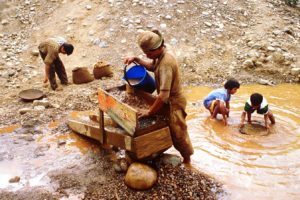
With high gold prices fueling a global gold rush, millions of people in the developing world are turning to small-scale gold mining. In many countries, including Colombia, miners are putting themselves and those who live nearby at risk by using highly toxic mercury in the refining process.
READ MORE

In China, a New Transparency<br /> On Government Pollution Data

Report

In China, a New Transparency
On Government Pollution Data

by christina larson
The Chinese government has begun to make environmental records available to the public, empowering green groups and citizens as they try to force factories — and the Western companies they supply — to comply with the law.
READ MORE

A Warning by Key Researcher<br /> On Risks of BPA in Our Lives

Interview

A Warning by Key Researcher
On Risks of BPA in Our Lives

by elizabeth kolbert
The synthetic chemical, BPA — found in everything from plastic bottles to cash register receipts — is a potent, estrogen-mimicking compound. In an interview with Yale Environment 360, biologist Frederick vom Saal harshly criticizes U.S. corporations and government regulators for covering up — or ignoring — the many health risks of BPA.
READ MORE

After a Strong Counterattack, <br />Big Coal Makes a Comeback

Opinion

After a Strong Counterattack,
Big Coal Makes a Comeback

by jeff goodell
With an aggressive campaign focused on advertising, lobbying, and political contributions, America’s coal industry has succeeded in beating back a challenge from environmentalists and clean-energy advocates. The dirty truth is that Big Coal is more powerful today than ever.
READ MORE

In War-Scarred Landscape,<br /> Vietnam Replants Its Forests

Report

In War-Scarred Landscape,
Vietnam Replants Its Forests

by mike ives
With large swaths of forest destroyed by wartime defoliants, and even larger areas lost to post-war logging, Vietnam has set an ambitious goal for regenerating its woodlands. But proponents of reintroducing native tree species face resistance from a timber industry that favors fast-growing exotics like acacia.
READ MORE

China Takes First Steps<br /> In the Fight Against Acid Rain

Report

China Takes First Steps
In the Fight Against Acid Rain

by christina larson
Amid China’s seemingly boundless emissions of industrial pollutants, there are signs of hope. Discharges of sulfur dioxide, which causes acid rain, have actually decreased, offering some evidence that China is starting to establish a culture of pollution monitoring and control.
READ MORE

Hungary’s Red Sludge Spill:<br /> The Media and the Eco-Disaster

Opinion

Hungary’s Red Sludge Spill:
The Media and the Eco-Disaster

by elisabeth rosenthal
The sludge spill in Hungary dominated world news for days, as horrific images of red-mud rivers appeared nonstop on the Internet, newspaper front pages, and TV screens. Yet other environmental threats — less visible, but potentially more devastating — often go largely unnoticed.
READ MORE

On China’s Beleaguered Yangtze,<br /> A Push to Save Surviving Species

Report

On China’s Beleaguered Yangtze,
A Push to Save Surviving Species

by richard stone
The Yangtze has been carved up by dams, used as an open sewer, and subjected to decades of overfishing. Now, Chinese scientists — alarmed by the disappearance of the Yangtze river dolphin and other creatures — are calling for a 10-year moratorium on fishing in the world’s third-longest river.
READ MORE

LEED Building Standards<br /> Fail to Protect Human Health

Opinion

LEED Building Standards
Fail to Protect Human Health

by john wargo
LEED certification has emerged as the green standard of approval for new buildings in the United States. But the criteria used for determining the ratings largely ignore factors relating to human health, particularly the use of potentially toxic building materials.
READ MORE

The Legacy of the Gulf Spill:<br /> What to Expect for the Future?

Report

The Legacy of the Gulf Spill:
What to Expect for the Future?

by john mcquaid
The Gulf of Mexico’s capacity to recover from previous environmental assaults — especially the 1979 Ixtoc explosion — provides encouragement about the prospects for its post-Deepwater future. But scientists remain worried about the BP spill's long-term effects on the health of the Gulf and its sea life.
READ MORE

Are Cell Phones Safe?<br /> The Verdict is Still Out

Report

Are Cell Phones Safe?
The Verdict is Still Out

by bruce stutz
While some studies have suggested that frequent use of cell phones causes increased risk of brain and mouth cancers, others have found no such links. But since cell phones are relatively new and brain cancers grow slowly, many experts are now recommending taking steps to reduce exposure.
READ MORE

With a Boost from Innovation,<br /> Small Wind Is Powering Ahead

Report

With a Boost from Innovation,
Small Wind Is Powering Ahead

by alex salkever
New technologies, feed-in tariffs, and tax credits are helping propel the small wind industry, especially in the United States. Once found mostly in rural areas, small wind installations are now starting to pop up on urban rooftops.
READ MORE

A Louisiana Bird Expert<br /> Assesses Damage from the Spill

Interview

A Louisiana Bird Expert
Assesses Damage from the Spill

The images of pelicans and other Gulf of Mexico seabirds drenched in oil have stirred sadness and outrage around the world. But, says conservationist Melanie Driscoll, the unseen effects are probably far greater, with some birds perishing out of sight, far from shore, and others facing spill-related declines in the fish on which they depend.
READ MORE

As the Far North Melts,<br /> Calls Grow for Arctic Treaty

Analysis

As the Far North Melts,
Calls Grow for Arctic Treaty

by ed struzik
The massive oil spill in the Gulf of Mexico is a warning, conservationists say, of what could happen in the Arctic as melting sea ice opens the Arctic Ocean to oil and gas drilling. Many experts argue that the time has come to adopt an Arctic Treaty similar to the one that has safeguarded Antarctica for half a century.
READ MORE

The Oil Spill’s Growing Toll<br /> On Sea Life in the Gulf of Mexico

Interview

The Oil Spill’s Growing Toll
On Sea Life in the Gulf of Mexico

by david biello
A prominent marine biologist says the impacts of the oil gushing into the Gulf of Mexico will persist for years, no matter when the flow finally stops. What’s more, scientist Thomas Shirley says that most of the damage remains out of sight below the surface, as creatures succumb to the toxic effects of the rapidly spreading tide of oil.
READ MORE

Under Pressure to Block Oil,<br /> A Rush To Dubious Projects

Opinion

Under Pressure to Block Oil,
A Rush To Dubious Projects

by rob young
In response to the widening disaster in the Gulf of Mexico, government officials have approved a plan to intercept the oil by building a 45-mile sand berm. But scientists fear the project is a costly boondoggle that will inflict further environmental damage and do little to keep oil off the coast.
READ MORE

Anatomy of the BP Oil Spill:<br /> An Accident Waiting to Happen

Analysis

Anatomy of the BP Oil Spill:
An Accident Waiting to Happen

by john mcquaid
The oil slick spreading across the Gulf of Mexico has shattered the notion that offshore drilling had become safe. A close look at the accident shows that lax federal oversight, complacency by BP and the other companies involved, and the complexities of drilling a mile deep all combined to create the perfect environmental storm.
READ MORE

Under Threat in the Gulf,<br /> A Refuge Created by Roosevelt

Report

Under Threat in the Gulf,
A Refuge Created by Roosevelt

by douglas brinkley
Among the natural treasures at risk from the oil spill in the Gulf of Mexico is the Breton National Wildlife Refuge, created by Theodore Roosevelt to halt a grave threat to birds in his era — the lucrative trade in plumage. Now, oil from the BP spill is starting to wash up on beaches where Roosevelt once walked.
READ MORE

Turning to Greener Weapons <br /> In the Battle Against Malaria

Report

Turning to Greener Weapons
In the Battle Against Malaria

by sonia shah
Insecticides such as DDT have long been used to combat the scourge of malaria in the developing world. But with the disease parasite becoming increasingly adept at resisting the chemical onslaught, some countries are achieving striking success by eliminating the environmental conditions that give rise to malarial mosquitoes.
READ MORE

The Consumption Conundrum:<br /> Driving the Destruction Abroad

Analysis

The Consumption Conundrum:
Driving the Destruction Abroad

by oswald j. schmitz and thomas e. graedel
Our high-tech products increasingly make use of rare metals, and mining those resources can have devastating environmental consequences. But if we block projects like the proposed Pebble Mine in Alaska, are we simply forcing mining activity to other parts of the world where protections may be far weaker?
READ MORE

As Pharmaceutical Use Soars,<br /> Drugs Taint Water and Wildlife

Report

As Pharmaceutical Use Soars,
Drugs Taint Water and Wildlife

by sonia shah
With nearly $800 billion in drugs sold worldwide, pharmaceuticals are increasingly being released into the environment. The “green pharmacy” movement seeks to reduce the ecological impact of these drugs, which have caused mass bird die-offs and spawned antibiotic-resistant pathogens.
READ MORE

Out of the Demographic Trap:<br /> Hope for Feeding the World

Opinion

Out of the Demographic Trap:
Hope for Feeding the World

by fred pearce
In Africa and elsewhere, burgeoning population growth threatens to overwhelm already over-stretched food supply systems. But the next agricultural revolution needs to get local — and must start to see rising populations as potentially part of the solution.
READ MORE

World’s Pall of Black Carbon<br /> Can Be Eased With New Stoves

Report

World’s Pall of Black Carbon
Can Be Eased With New Stoves

by jon r. luoma
Two billion people worldwide do their cooking on open fires, producing sooty pollution that shortens millions of lives and exacerbates global warming. If widely adopted, a new generation of inexpensive, durable cook stoves could go a long way toward alleviating this problem.
READ MORE

CO2 Capture and Storage<br /> Gains a Growing Foothold

Report

CO2 Capture and Storage
Gains a Growing Foothold

by david biello
The drive to extract and store CO2 from coal-fired power plants is gaining momentum, with the Obama administration backing the technology and the world’s first capture and sequestration project now operating in the U.S. Two questions loom: Will carbon capture and storage be affordable? And will it be safe?
READ MORE

In Low-Lying Bangladesh,<br /> The Sea Takes a Human Toll

e360 Video Report

In Low-Lying Bangladesh,
The Sea Takes a Human Toll

Living on shifting land formed by river deltas, the people of Bangladesh have a tenuous hold on their environment, with cyclones buffeting coastal zones and rising seas posing a looming threat. But, as this Yale Environment 360 video report by Jonathan Bjerg Møller makes clear, many Bangladeshis already are suffering as a growing population occupies increasingly vulnerable lands.
READ MORE

 Behind Mass Die-Offs,<br /> Pesticides Lurk as Culprit

Report

Behind Mass Die-Offs,
Pesticides Lurk as Culprit

by sonia shah
In the past dozen years, three new diseases have decimated populations of amphibians, honeybees, and — most recently — bats. Increasingly, scientists suspect that low-level exposure to pesticides could be contributing to this rash of epidemics.
READ MORE

Madagascar’s Political Chaos<br /> Threatens Conservation Gains

Report

Madagascar’s Political Chaos
Threatens Conservation Gains

by rhett butler
Since the government's collapse after a coup last March, Madagascar's rainforests have been plundered for their precious wood and unique wildlife. But now there are a few encouraging signs, as officials promise a crackdown on illegal logging and ecotourists begin to return to the island.
READ MORE

Looking for a Silver Lining<br /> in the Post-Summit Landscape

Opinion

Looking for a Silver Lining
in the Post-Summit Landscape

by fred pearce
Much was left undone in Copenhagen, and the many loopholes in the climate accord could lead to rising emissions. But the conference averted disaster by keeping the UN climate negotiations alive, and some expressed hope that the growth of renewable energy technology may ultimately save the day.
READ MORE

The Dangerous Allure of<br /> Global Warming Technofixes

Opinion

The Dangerous Allure of
Global Warming Technofixes

by dianne dumanoski
As the world weighs how to deal with warming, the idea of human manipulation of climate systems is gaining attention. Yet beyond the environmental and technical questions looms a more practical issue: How could governments really commit to supervising geoengineering schemes for centuries?
READ MORE

Pervasive Plastics: Why the U.S.<br /> Needs New and Tighter Controls

Opinion

Pervasive Plastics: Why the U.S.
Needs New and Tighter Controls

by john wargo
Long a ubiquitous part of modern life, plastics are now in everything from diapers to water bottles to cell phones. But given the proven health threats of some plastics — as well as the enormous environmental costs — the time has come for the U.S. to pass a comprehensive plastics control law.
READ MORE

The Nitrogen Fix:<br /> Breaking a Costly Addiction

Analysis

The Nitrogen Fix:
Breaking a Costly Addiction

by fred pearce
Over the last century, the intensive use of chemical fertilizers has saturated the Earth’s soils and waters with nitrogen. Now scientists are warning that we must move quickly to revolutionize agricultural systems and greatly reduce the amount of nitrogen we put into the planet's ecosystems.
READ MORE

Amid Mounting Pessimism,<br /> A Voice of Hope for Copenhagen

Interview

Amid Mounting Pessimism,
A Voice of Hope for Copenhagen

With skepticism growing about the chances of reaching a climate agreement next month in Copenhagen, Rajendra Pachauri, chairman of the Intergovernmental Panel on Climate Change, says he is “cautiously optimistic” that a treaty can still be signed. But in an interview with Yale Environment 360, Pachauri says the global community may have to move ahead without any commitment from the United States.audio
READ MORE

In Japan’s Managed Landscape,<br /> a Struggle to Save the Bears

Report

In Japan’s Managed Landscape,
a Struggle to Save the Bears

by winifred bird
Although it is a heavily urbanized nation, fully two-thirds of Japan remains woodlands. Yet many of the forests are timber plantations inhospitable to wildlife, especially black bears, which are struggling to survive in one of the most densely populated countries on Earth.
READ MORE

Leveling Appalachia: The Legacy<br /> of Mountaintop Removal Mining

e360 Video Report

Leveling Appalachia: The Legacy
of Mountaintop Removal Mining

During the last two decades, mountaintop removal mining in Appalachia has destroyed or severely damaged more than a million acres of forest and buried nearly 2,000 miles of streams. Leveling Appalachia: The Legacy of Mountaintop Removal Mining, a video report produced by Yale Environment 360 in collaboration with MediaStorm, focuses on the environmental and social impacts of this practice and examines the long-term effects on the region’s forests and waterways.

READ MORE

Finding Common Ground on<br /> Protecting Montana Wilderness

Opinion

Finding Common Ground on
Protecting Montana Wilderness

by rick bass
In the Yaak Valley of Montana, environmentalists have been talking to loggers, snowmobilers and other longtime opponents of wilderness protection about the future of public lands. Their accord is part of a cooperative effort that could lead to the first wilderness-area designation in the state in a quarter century.
READ MORE

The Great Paradox of China:<br /> Green Energy and Black Skies

Report

The Great Paradox of China:
Green Energy and Black Skies

by christina larson
China is on its way to becoming the world’s largest producer of renewable energy, yet it remains one of the most polluted countries on earth. A year after the Beijing Olympics, economic and political forces are combining to make China simultaneously a leader in alternative energy – and in dirty water and air.
READ MORE

Mountaintop Mining Legacy:<br /> Destroying Appalachia’s Streams

Report

Mountaintop Mining Legacy:
Destroying Appalachia’s Streams

by john mcquaid
The environmental damage caused by mountaintop removal mining across Appalachia has been well documented. But scientists are now beginning to understand that the mining operations’ most lasting damage may be caused by the massive amounts of debris dumped into valley streams.
READ MORE

With the Clearing of Forests,<br /> Baby Orangutans Are Marooned

Report

With the Clearing of Forests,
Baby Orangutans Are Marooned

by rhett butler
As Borneo's rain forests are razed for oil palm plantations, wildlife centers are taking in more and more orphaned orangutans and preparing them for reintroduction into the wild. But the endangered primates now face a new threat — there is not enough habitat where they can be returned.
READ MORE

The Damming of the Mekong:<br /> Major Blow to an Epic River

Report

The Damming of the Mekong:
Major Blow to an Epic River

by fred pearce
The Mekong has long flowed freely, supporting one of the world’s great inland fisheries. But China is now building a series of dams on the 2,800-mile river that will restrict its natural flow and threaten the sustenance of tens of millions of Southeast Asians.
READ MORE

Yellowstone’s Grizzly Bears<br /> Face Threats on Two Fronts

Opinion

Yellowstone’s Grizzly Bears
Face Threats on Two Fronts

by doug peacock
The magnificent creature at the heart of the Greater Yellowstone Ecosystem now confronts two grave perils: the loss of its key food source because of rising temperatures, and increased killing by humans. A renowned grizzly expert argues that it’s time to once again protect Yellowstone’s grizzlies under the Endangered Species Act.
READ MORE

The Razing of Appalachia:<br /> Mountaintop Removal Revisited

Report

The Razing of Appalachia:
Mountaintop Removal Revisited

by john mcquaid
Over the past two decades, mountaintop removal mining in Appalachia has obliterated or severely damaged more than a million acres of forest and buried more than 1,000 miles of streams. Now, the Obama administration is showing signs it plans to crack down on this destructive practice.
READ MORE

Satellites and Google Earth<br /> Prove Potent Conservation Tool

Report

Satellites and Google Earth
Prove Potent Conservation Tool

by rhett butler
Armed with vivid images from space and remote sensing data, scientists, environmentalists, and armchair conservationists are now tracking threats to the planet and making the information available to anyone with an Internet connection.
READ MORE

Twenty Years Later, Impacts<br />  of the Exxon Valdez Linger

Report

Twenty Years Later, Impacts
of the Exxon Valdez Linger

by doug struck
Two decades after the Exxon Valdez spilled 11 million gallons of crude oil into Alaska’s waters, the Prince William Sound, its fishermen, and its wildlife have still not fully recovered.
READ MORE

Surviving Two Billion Cars:<br /> China Must Lead the Way

Analysis

Surviving Two Billion Cars:
China Must Lead the Way

by deborah gordon and daniel sperling
The number of vehicles worldwide is expected to reach two billion in the next two decades. Surprisingly, China – where the demand for cars has been skyrocketing – just may offer the best hope of creating a new, greener transportation model.
READ MORE

Why I’ll Get Arrested<br /> to Stop the Burning of Coal

Opinion

Why I’ll Get Arrested
to Stop the Burning of Coal

by bill mckibben
On March 2, environmentalist Bill McKibben joined demonstrators who marched on a coal-fired power plant in Washington D.C. In this article for Yale Environment 360, he explains why he was ready to go to jail to protest the continued burning of coal.
READ MORE

Opinion

A Call for Tougher Standards
on Mercury Levels in Fish

by jane hightower
In response to industry pressure, the U.S. Food and Drug Administration has failed to set adequate restrictions on mercury levels in fish. Now the Obama administration must move forcefully to tighten those standards and warn the public which fish are less safe to eat.
READ MORE

As Rain Forests Disappear,<br /> A Market Solution Emerges

Report

As Rain Forests Disappear,
A Market Solution Emerges

by rhett butler
Despite the creation of protected areas in the Amazon and other tropical regions, rain forests worldwide are still being destroyed for a simple reason: They are worth more cut down than standing. But with deforestation now a leading driver of global warming, a movement is growing to pay nations and local people to keep their rain forests intact.
READ MORE

Report

In China’s Mining Region,
Villagers Stand Up to Pollution

by zhou jigang and zhu chuhua
After decades of living with fouled rivers and filthy air, residents of China’s Manganese Triangle are rising up and refusing to accept the intolerable conditions created by illegal mining activity. Their bold protests have shone light on the dark side of China’s economic boom. From Sichuan province, Chinese journalists Zhou Jigang and Zhu Chuhua report.
READ MORE

Under a Sooty Exterior,<br /> a Green China Emerges

Analysis

Under a Sooty Exterior,
a Green China Emerges

by fred pearce
You’ve heard the environmental horror stories: rivers running black, air unfit to breathe, two new coal-fired power plants a week. But thanks to a surging entrepreneurial spirit and new policies, China is fast becoming a leader in green innovation, from recycling to developing electric cars to harnessing the wind.
READ MORE

Zimbabwe’s Desperate <br/>Miners Ravage the Land

Report

Zimbabwe’s Desperate
Miners Ravage the Land

by andrew mambondiyani
Hard-pressed by economic straits, illegal panners are tearing up Zimbabwe’s countryside in search of gold and diamonds. They leave behind a trail of destruction: devastated fields and forests, mud-choked rivers, and mercury-tainted water. Andrew Mambondiyani reports from eastern Zimbabwe.
READ MORE

e360 digest

RELATED e360 DIGEST ITEMS


13 Feb 2012: Electric Vehicles in China
Pollute More Than Gas-Fueled Cars

The use of electric cars in China produces more particulate matter pollution than gasoline-fueled vehicles, according to a new study. In an analysis of five vehicle technologies in 34 major Chinese cities, U.S. researchers found that the power generated to run electric cars produces significantly greater particulate matter emissions because 80 percent of China’s electricity comes from coal-burning power plants. While those plants are typically located far from population centers, the researchers nevertheless found that the difference in pollution is so great that electric vehicles are still more harmful to the public health per-kilometer traveled than conventional vehicles. The study, published in the journal Environmental Science and Technology, emphasizes that electric vehicles are a cleaner option if powered by a clean energy source. “In China and elsewhere, it is important to focus on deploying electric vehicles in cities with cleaner electricity generation and focusing on improving emissions controls in higher polluting power sectors,” said Chris Cherry, a researcher at the University of Tennessee, Knoxville, and lead author of the study.
PERMALINK


Interview: California’s Car Rules
Help Remake U.S. Auto Industry

With the passage last month of strict new auto emission and air pollution standards, California once again demonstrated its role as the U.S.’s environmental pacesetter. The driving force behind these new “clean
Mary Nichols
ARB
Mary Nichols
car” rules — which require that 15 percent of all new cars sold in California by 2025 emit little or no pollution — is Mary Nichols, chairwoman of the California Air Resources Board. As a result of the rules, 1.4 million zero- and low-emission vehicles are expected be in California auto showrooms within a dozen years. In an interview with Yale Environment 360, Nichols explains why California has consistently led the U.S. in passing the toughest air pollution standards, why Detroit automakers have decided to support California’s new rules, and why U.S. and international car makers are on the verge of a clean-car revolution. “Auto manufacturers have finally come to the conclusion that their future lies in very efficient, very clean vehicles,” says Nichols.
Read the interview
PERMALINK


07 Feb 2012: Nigerian Children Perish
From Exposure to Lead in Gold Mining

Lead contamination from hundreds of gold mines across northwestern Nigeria has caused the deaths of 400 children under the age of five and exposes thousands more children to lead poisoning, according to a report from the U.S.-based group Human Rights Watch. Across the state of Zamfara, where hundreds of artisanal mines are now in operation, young children processing ore are exposed to toxic levels of lead, the report said. Many others are exposed when family members return home from work covered in the toxic dust, when lead-filled ore is crushed in their homes, or when exposed to contaminated water and food. In some villages, mortality rates were as high as 40 percent among children who showed signs of lead poisoning. “Zamfara’s gold brought hope for prosperity, but resulted in death and backbreaking labor for its children,” said Babatunde Olugboji, a deputy program director at Human Rights Watch.
PERMALINK


02 Feb 2012: Harsh Roadside Environments
Creating Hardy Salamanders, Study Suggests

The old adage — “What doesn’t kill you makes you stronger” — seems to apply to salamanders evolving to survive in contaminated environments near roads. Yale University researcher Steven Brady compared
Spotted salamander Yale
Steven Brady/Yale University
A spotted salamander
salamanders breeding in roadside ponds with those breeding in woodland ponds, and he found that the roadside salamanders have a tough life. Only 56 percent of salamander eggs in roadside ponds survive the first 10 weeks, compared with an 87 percent survival rate for salamander eggs in woodland ponds. The roadside salamanders also experience higher mortality, grow at a slower rate, and are more likely to develop L-shaped spines and other disfigurements — all likely linked to roadside contaminants, especially concentrations of salt. Still, Brady found that when he transferred eggs from roadside ponds and woodland ponds to a neutral environment, the roadside eggs out-survived those of their forest cousins. “These animals are growing up in harsh environments where they face a cocktail of contaminants, and it appears that they are evolving to cope with them,” said Brady, whose study was published in the journal Scientific Reports.
PERMALINK


26 Jan 2012: California ‘Clean’ Car Rules
Mandate Boost in Electric Vehicle Sales

California regulators are expected to pass new rules today requiring that 15 percent of all new cars sold by 2025 be powered by electricity, hydrogen, or other reduced-emission sources. The new rules proposed by the California Air Resources Board would also require a 75-percent reduction in smog-creating emissions from new cars, SUVS, pickups and minivans, and a 50-percent reduction in emissions of carbon dioxide and other greenhouse gases by 2025. According to the board, the initiative would put about 1.4 million low-emission vehicles on California roads by 2025, compared with current levels of about 10,000. They predict the new rules will add about $1,900 to the price of a new car, but will save about $5,900 in fuel costs during the life of the vehicle. “This is a really large step. It’s transformational,” Tom Cackette, the board's chief deputy director, told the San Jose Mercury News. “Ten years from now the market is going to look quite a bit different.” The new standards will be introduced in 2018 and strengthened over the next seven years.
PERMALINK


26 Jan 2012: Panel Urges Comprehensive
Study Of Nanotechnology Safety

A U.S. scientific panel is calling for a systematic study of the growing use of nanomaterials in industry, saying little is known about the risk of the microscopic particles increasingly being used in everything from cosmetics to clothing and paint. The National Research Council (NRC), part of the U.S. National Academy of Sciences, noted that the use of nanomaterials — measured on the scale of billionths of a meter — is growing rapidly, rising from $225 billion in nanotechnology-based products in 2009 to an estimated $3 trillion by 2015. But the NRC said that little is known about the potential risks posed by nanomaterials, the pathways of exposure, and the severity of such exposure. The NRC called for a systematic research effort to identify sources of nanomaterials releases, the different industrial processes that affect exposure, and nanomaterial interactions from a sub-cellular to an ecosystem level. Nanomaterials — often made from minerals such as gold, silver, carbon, zinc, and aluminum — have unique electrical, chemical, and optical properties. “The number and variety of nanomaterials is just mind-boggling,” said Mark R. Wiesner, an engineering professor at Duke University and a panel member.
PERMALINK


25 Jan 2012: President Obama Calls For
‘All-of-the-Above’ Energy Strategy

President Obama called for a comprehensive energy policy that would boost production of offshore oil and increase unconventional drilling for natural gas, while also building new clean energy projects on federal land and revising regulations to promote the growth of wind, solar, and other renewable energy sources. “This country needs an all-out, all-of-the-above strategy that develops every available source of American energy,” Obama said in his State of the Union address. He vowed to open more than 75 percent of potential offshore oil and gas resources to exploration and expressed support for the boom in hydraulic fracturing of shale gas, provided drilling chemicals are disclosed and water pollution rules tightened. “But I will not walk away from the promise of clean energy,” the president said, announcing the development of renewable energy projects on public lands that will power 3 million homes and new clean energy initiatives at the Department of Defense. Obama also called for ending subsidies to oil and gas companies and increasing federal investment in renewable energy.
PERMALINK


19 Jan 2012: Keystone Pipeline Decision
Aimed at President Obama’s Political Base

Top aides to President Obama say that his desire to satisfy two key political constituencies — environmental advocates and affluent Democratic donors — played a major role in his decision to reject an application to build a pipeline to carry tar sands oil from Alberta to Texas. The president’s political advisers said that approval of the controversial Keystone XL Pipeline would have alienated his political base and would have created nowhere near the 20,000 jobs that oil industry advocates claimed it would. Although the president expected sharp criticism from Republicans, labor unions, and business, one top Obama aide told the Web site, Politico, “There was never the slightest doubt we were going to say, ‘No.’” Environmentalists praised the president’s decision, with Michael Brune, executive director of the Sierra Club, adding, “I think it shores up his base — definitely.” Obama denounced a “rushed and arbitrary” deadline of Feb. 21 that congressional Republicans had set for his decision during negotiations over a payroll tax extension.
PERMALINK


17 Jan 2012: U.S. Bans Import of Snakes
That Are Invading the Everglades

U.S. officials have announced a national ban on the import of four large exotic snake species, including the Burmese python, which wildlife officials say are devouring endangered species across the Florida
Burmese python
Wikimedia Commons
A Burmese python
Everglades. Five years after Florida officials called for stricter sanctions on the invasive snakes, U.S. Interior Secretary Ken Salazar declared that it will be illegal to import or sell across state lines the Burmese python, two species of African rock pythons, and the yellow anaconda, calling them “the most clear and present danger” to the region’s wildlife. Experts say thousands of Burmese pythons are now living in the Everglades — where they eat everything from rabbits to alligators — and that the snakes' range could expand farther, including across the Florida border. While some critics, including reptile breeders and collectors, have opposed the regulations, Salazar said the decision will “strike a balance” between economic and environmental concerns. Five other species of exotic snakes, including the boa constrictor, were left off the list pending further consideration.
PERMALINK


13 Jan 2012: Reducing Methane and Soot
Will Reduce Warming, Study Says

A team of scientists says that governments can significantly reduce global warming, and prevent millions of premature deaths, by targeting emissions of methane and soot. In a new study published in the journal Science, the researchers say strategies that target those emissions and use existing technologies could shave nearly 1 degree Fahrenheit off the warming projected by mid-century. And with efforts to reduce emissions of carbon dioxide, the main cause of climate change, largely stalled, it represents a cheaper and more attainable approach. Strategies to reduce methane emissions include improving methods of capturing gas from mines and oil and gas facilities and reducing leaks from pipelines and landfills; soot levels can be cut with more efficient filters for diesel vehicles, cleaner-burning cook stoves, and bans on burning agricultural land. “Ultimately, we have to deal with CO2, but in the short term, dealing with these pollutants is more doable, and it brings fast benefits,” said Drew Shindell, the lead author and researcher at NASA’s Goddard Institute for Space Studies.
PERMALINK


12 Jan 2012: New EPA Website Tracks
Biggest U.S. Greenhouse Gas Emitters

The U.S. Environmental Protection Agency (EPA) has unveiled an interactive website that allows users to track the biggest emitters of greenhouse gases in their states.

Click to enlarge
EPA Greenhouse Gas Emissions Website

EPA
The Greenhouse Gas Emissions Data project
The Greenhouse Gas Emissions Data project, which is based on 2010 data from more than 6,700 facilities nationwide, can be used to sort through data by facility, location, sector, and emissions type. The online tool was modeled on the EPA’s toxins release inventory map, which enables users to monitor which toxic chemicals are located within their communities at the zip code level. According to the database, carbon dioxide emissions accounted for about 95 percent of greenhouse gas emissions among large emitters, followed by methane (4 percent). The nation’s top three emitters, located in Georgia and Alabama, are owned by Atlanta-based Southern Co., with the rest of the top 10 located across the Midwestern and Southern states.
PERMALINK


11 Jan 2012: ‘Dust Suppressant’ Sprayed
On London Streets to Improve Air Quality

Transportation officials in London have begun using a so-called “dust suppressant” at construction and industrial sites in an effort to improve air quality in some of the city’s more polluted areas. A biodegradable saline solution, which contains calcium magnesium acetate, is sprayed by trucks onto roadways where it acts like a glue, preventing some particulate matter from drifting into the air where it can be inhaled by humans. According to Transport of London, the municipal transportation agency, the solution will be sprayed in small amounts several times a week at 15 sites citywide. In early tests, city officials say, it has reduced particulate matter levels by as much as 14 percent. Mayor Boris Johnson said the dust suppressant is just one of many “short and long measures” the city will introduce to improve London’s air quality in 2012. Unless improvements occur, London could face fines for violating European Union limits on particulate matter.
PERMALINK


05 Jan 2012: U.S. Limits Antibiotics Use
In Livestock to Prevent ‘Superbugs’

The U.S. Food and Drug Administration (FDA) will prohibit the use of a class of antimicrobial drugs in livestock, citing concerns that overuse of the drugs could promote the development of antibiotic-resistant pathogens that could infect humans. Beginning April 5, the FDA will limit the use of cephalosporin in cattle, swine, chickens and turkeys, allowing the antibiotic to be used to treat illness but not for disease prevention. Studies have linked the prevalent use of such drugs in livestock — mainly to prevent disease and promote weight gain — to the creation of disease-resistant “superbugs” that can spread to humans. In 2008, the FDA banned the use of cephalosporin for livestock, but withdrew the plan after industry opposition. The new proposal will allow exceptions, including approved limited doses when prescribed or administered by veterinarians. While public health advocates supported the FDA decision, they say it deals with just one aspect of the use of antibiotics in animals and does not address the use of antibiotics in animal feed.
PERMALINK


04 Jan 2012: Parasitic Fly May Be a Factor
In Honeybee Decline, New Study Says

U.S. scientists say a parasitic fly may be a factor in the mysterious “colony collapse disorder” that has caused a decline in honeybee populations worldwide. In a study published in the journal PLoS ONE, researchers at the University of San Francisco suggest that the fly, Apocephalus borealis, lays its eggs in the abdomens of bees, causing the “zombie-like” bees to abandon their hives and congregate near bright lights. Within days, the newly hatched larvae push their way out, killing the bees. Earlier studies suggest hive abandonment is a primary feature of so-called colony collapse disorder. While honeybee numbers have been declining for decades, the rate has been accelerating, with U.S. populations plummeting 35 percent between 2006 and 2009 and die-offs occurring in Europe, China, and Japan. Scientists have cited numerous possible causes, including a decline in flowering plants, increased use of insecticides, bee-killing mites, and air pollution.
PERMALINK


21 Dec 2011: New Power Plant Rules
Are Unveiled by Obama Administration

The head of the U.S. Environmental Protection Agency (EPA) has unveiled long-awaited rules for the nation's 1,400 coal- and oil-fired power plants that will require much tougher pollution control equipment to reduce emissions of mercury, acid gases, and particulate matter. At a press conference in Washington, D.C., EPA Administrator Lisa Jackson announced the new rules, which the agency says will annually prevent up to 17,000 premature deaths, 11,000 heart attacks, and 120,000 asthma attacks. The EPA also maintains that the new rules will return financial and health benefits many times their $11 billion annual cost, including the creation of 9,000 new jobs as coal-fired power plants install pollution-scrubbing systems or build cleaner natural gas plants. Power generators will have several years to install the new pollution control equipment, which the EPA says will slash mercury emissions by 90 percent. But some utilities and Republican members of Congress have warned that the new rules will place an onerous burden on power producers, leading to the shutdown of some power plants, a loss of jobs, and possible interruptions in power supplies.
PERMALINK


20 Dec 2011: Mexico City Closes Dump
In Push to Boost Recycling and Reuse

Mexico City has announced plans to close one of the world’s largest open-air garbage dumps as part of an initiative to convert more of the city’s waste into reusable materials or energy. By the end of the year, garbage trucks will no longer be allowed to drop trash at the Bordo Poniente, a massive dump that has received more than 76 million tons of trash since it opened after the devastating 1985 earthquake. At its peak, the dump received about 12,700 tons of garbage daily. A recycling separation facility and composting plant will remain open at the site. According to a plan announced by city officials, a large concrete company, Cemex SAB, will buy 3,000 tons of trash daily to convert into energy. Mexico City is searching for other dump sites to use until a new recycling program is instituted in 2012. Meanwhile, Seattle became the latest U.S. city to ban plastic grocery bags and also passed a 5-cent fee on paper bags in an attempt to reduce its waste stream.
PERMALINK


16 Dec 2011: Time Ranks ‘Fracking’ Rap
Among Most Creative Videos of 2011

An online video featuring an unlikely fusion of hip-hop lyrics and the natural gas extraction technology known as “fracking” was ranked number 2 on Time magazine’s list of most creative videos in 2011. Produced by a team of students from New York University’s Studio 20 journalism program, the video, “My Water’s on Fire Tonight (The Fracking Song),” features a rap-style description of the hydraulic fracturing drilling process — and its possible environmental consequences — over animated graphics. Lisa Rucker, a Los Angeles-based editor who helped produce the video, said the video has the potential to introduce the controversial fracking debate to a wide audience. The video has attracted more than 200,000 viewers since it was posted on YouTube in the spring.
PERMALINK


08 Dec 2011: Rampant Marijuana Cultivation
Is Damaging U.S. National Forests

U.S. officials say widespread marijuana cultivation in national forests has caused “severe” damage to some ecosystems and wildlife in 20 states. In testimony before the U.S. Senate Caucus on International Narcotics Control, U.S. Forest Service Director of Law Enforcement David Ferrell said federal officials have uncovered large-scale marijuana operations in 67 different national forests across the U.S. At these sites — which typically cover 10 to 20 acres and include armed guards and counter-surveillance methods — operators usually clear large areas of native vegetation; spray voluminous amounts of herbicides, rodenticides, and pesticides; and divert thousands of gallons of water daily from streams, lakes, and drinking water supplies. In California alone, Ferrell said, the Forest Service has removed more than 130 tons of trash, 300 pounds of pesticides, and nearly 260 miles of irrigation piping from 335 illegal cultivation sites. Cleaning and restoring the sites costs about $15,000 per acre, Ferrell says.
PERMALINK


02 Dec 2011: New Interactive Network
Maps Pollution, Noise Levels Across Europe

The European Environment Agency (EEA) and Microsoft this week introduced a network of online sites that map air, water, and noise pollution levels across the continent based on government data and information

Click to enlarge
Yellowstone Wolverine

Eye on Earth
Eye on Earth
uploaded by users. The Eye on Earth network includes three separate interactive services: AirWatch, WaterWatch, and NoiseWatch. Using geospatial mapping technology, WaterWatch displays the 22,000 locations across Europe where the EEA monitors the quality of water at beaches, rivers, lakes, and other swimming areas. By zooming in on flagged monitoring stations, users can compare government rankings with public comments on water quality. AirWatch provides information from more than 1,000 air-monitoring stations, while NoiseWatch allows users to instantly upload noise level readings from their mobile devices.
PERMALINK


30 Nov 2011: Carbon Capture Project
Is Launched at UK Yorkshire Plant

A coal-powered plant in West Yorkshire has launched the UK’s largest carbon-capture initiative, a pilot project expected to siphon off about 100 tons of carbon dioxide daily. The equipment, which was added to the 200-megawatt Ferrybridge Power Station, will capture only 2.5 percent of the plant’s total emissions, but is a sign of some progress in a carbon capture and sequestration industry that has endured setbacks this year. The project will not attempt to store the carbon, but instead test the CO2 scrubbing, or removal, phase of the process. Proponents hope it will represent a bridge between smaller-scale pilot projects and commercially viable CO2-capture technology. UK officials this week postponed the investment of £1 billion into a full-scale pilot project, and earlier this year the most ambitious carbon-capture project at a U.S. coal-fired plant was shelved because of a lack of climate legislation and state support.
PERMALINK


Yale
Yale Environment 360 is
a publication of the
Yale School of Forestry
& Environmental Studies
.

SEARCH e360


Donate to Yale Environment 360

CONNECT

Twitter: YaleE360
e360 on Facebook
Donate to e360
View mobile site
Bookmark
Share e360
Email newsletter
Subscribe to our feed:
rss


ABOUT

About e360
Contact
Submission Guidelines
Reprints

e360 VIDEO

Warriors of Qiugang
The Warriors of Qiugang, a Yale Environment 360 video that chronicles the story of a Chinese village’s fight against a polluting chemical plant, was nominated for a 2011 Academy Award for Best Documentary (Short Subject). Watch the video.


DEPARTMENTS

Opinion
Reports
Analysis
Interviews
e360 Digest
Video Reports

TOPICS

Biodiversity
Business & Innovation
Climate
Energy
Forests
Oceans
Policy & Politics
Pollution & Health
Science & Technology
Sustainability
Urbanization
Water

REGIONS

Antarctica and the Arctic
Africa
Asia
Australia
Central & South America
Europe
Middle East
North America

e360 VIDEO REPORT

When the Water Ends
As temperatures rise and water supplies dry up, tribes in East Africa increasingly are coming into conflict. A Yale Environment 360 video reports on a phenomenon that could become more common: how worsening drought will pit groups — and nations — against one another. Watch the video.

e360 MOBILE

Mobile
The latest
from Yale
Environment 360
is now available for mobile devices at e360.yale.edu/mobile.


header image
Top Image: aerial view of Iceland. © Google & TerraMetrics.

e360 VIDEO REPORT

Leveling Appalachia
Leveling Appalachia: The Legacy of Mountaintop Removal Mining, an e360 video examining the environmental and human impacts of this mining practice, won the award for best video in the 2010 National Magazine Awards for Digital Media. Watch the video.


OF INTEREST


RESOURCES


Yale