27 Oct 2011: Report

Killing Wolves: A Product of
Alberta’s Big Oil and Gas Boom

The development of the tar sands and other oil and gas fields in Alberta has carved up the Canadian province's boreal forest, threatening herds of woodland caribou. But rather than protect caribou habitat, officials have taken a controversial step: the large-scale killing of the wolves that prey on the caribou.

by ed struzik

In the spring of 1995, the U.S. Fish and Wildlife Service captured several wolves from west central Alberta and set them loose the next year in Yellowstone National Park, hoping they would fill in the missing link in the park’s complex system of predator-prey relationships.

Wolves hadn’t been seen in Yellowstone in 70 years. Beyond anyone’s wildest expectations, and despite fierce opposition of some local ranchers and hunters, these and other wolves brought in from Alberta and British Columbia adjusted extremely well. Today, 11 packs, with nearly 100 wolves, are thriving in Yellowstone.

The fortunes of wolves in west central Alberta, however, have moved in a completely different direction. Over the past five years, the government of Alberta has spent more than $1 million poisoning wolves with strychnine and shooting them from the air. In all, more than 500 wolves in the Little Smoky River region have been destroyed in a controversial effort to save woodland caribou, whose numbers have plummeted as the oil, gas, and logging industries have increasingly carved up Alberta’s boreal forest in recent decades.

The killing of wolves in Alberta is not going to end any time soon. Indeed, if some wildlife managers get their way, the predator control program could be expanded to include several other areas of the province, including the heavily mined tar sands region, where four caribou herds are being
The continuing expansion of the tar sands will further destroy caribou habitat.
squeezed by the massive, multi-billion dollar oil mining operations. Two of those herds are already at risk of disappearing if their habitat is not restored soon, according to the Alberta Caribou Committee, which is charged with helping recover caribou populations. All told, tar sands deposits in Alberta underlie 54,000 square miles — an area the size of New York State — and while only a small portion of this is currently being developed, the continued expansion of the tar sands will further destroy caribou habitat.

In its latest report, the Alberta Caribou Committee notes that three of the province’s 18 herds are at immediate risk of disappearing because of loss of habitat. Six are in decline, three are stable, and not enough is known about the remaining six to determine how well they are doing. Scientists are confident, however, that they are in decline as well, further fueling efforts to protect caribou by eradicating wolves.

“Wolf control can be an effective way of conserving dwindling caribou numbers,” says Stan Boutin, a University of Alberta biologist who has spent more than 20 years trying to prevent caribou from disappearing in the province. “But the province is kidding itself if it thinks that wolf control alone is the answer. It’s not.”

The answer, according to nearly every scientist involved in the debate, is habitat protection — something that has not been high on the list of the Alberta government as it has pushed energy development in the tar sands region and throughout the province.
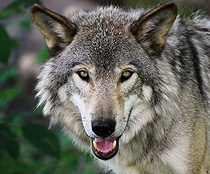
Wolf Canada
iStock
In the last five years, Alberta has spent more than $1 million poisoning wolves and shooting them from the air.
Alberta officials have defended the killing of wolves in regions where woodland caribou numbers have plummeted, yet these officials acknowledge that preserving habitat is essential.

“Scientists recognize that wolf control is a legitimate means of managing caribou populations that are in trouble,” said Darcy Whiteside, spokesman for the Alberta Sustainable Resources Department. “This is definitely needed to save that [Little Smoky River caribou] population. It has definitely stabilized that population. However, we also recognize that it is only a short-term solution and that habitat protection is key to saving caribou in the long run.”

Wolves have long been used as scapegoats for wildlife management problems. For much of the 20th century, the U.S. and Canadian governments systematically targeted wolves. Initially, wildlife managers used bounties to encourage people to kill wolves. Then they used poison, leghold traps, and marksmen from helicopters to wipe out the predators. In extreme cases, such as in northern Minnesota, men were sent to dig out dens and strangle wolf pups.

Sometimes, these predator control programs worked too well, as in Yellowstone and Banff National Park in the Canadian Rockies, where wolves also were completely extirpated. (They have since come back to Banff, albeit in small numbers). Most times though, the programs failed because biologists underestimated just how quickly a wolf population can rebound as long as there is prey for them to exploit.

These heavily criticized wolf eradication programs were discontinued almost everywhere in North America — except in Alberta and Alaska. The
Scientists have long warned about the consequences of fracturing old growth forest.
only difference now is that wildlife managers think they have a better handle on how to make wolf control programs work: Kill at least 60 percent — 80 percent is preferable — of the wolves in an area, according to the formula that most predator control experts rely on, and you begin to see a rebound in prey species after several years, as long as there is suitable habitat in which the species can recover.

The issue in Alberta is much different than in Alaska, where wolf control is done largely to enhance hunting opportunities for caribou. Because of intense logging and oil and gas development in Alberta, there is too much good habitat for wolves and not enough for caribou. That may sound strange, but in the unprotected areas of Alberta the old growth forest that used to support moderate numbers of wolves and caribou is increasingly being carved up. At last count, 34,773 wells, 66,489 kilometers of seismic lines, 11,591 kilometers of pipelines, and 12,283 kilometers of roads had been built in caribou country in west central and northern Alberta. That doesn’t include the vast areas of forest that have been logged. Open areas such as these favor moose, elk, and especially deer. As the number of these creatures expand, so do the number of wolves. More often than not, caribou, which rely on old growth forests for lichen and predator protection, are nothing more than passing targets as wolves move easily from one clear cut to another through the shrinking old growth forest.

For more than two decades, scientists have been warning the Alberta government about the consequences of fracturing old growth forest in this way. The latest to weigh in on this issue was a team of 30 boreal forest scientists commissioned by the Canadian government to review the data and habitat conditions of caribou in Alberta. In 2008, they recommended that cut lines, well sites, and roads that favor wolves need to be reforested if caribou are going to have a chance of surviving in oil and gas country.

The Canadian government, which is ultimately responsible for the country’s endangered species, deferred taking action, claiming that not enough is known about the “spatial distribution” of caribou to warrant identification
Wildlife experts say killing wolves makes no sense if habitat is not restored.
of critical habitat. But then last August, the federal government came up with a recovery plan that opened the door for the wolf control program in Alberta to continue. Noting that “human-induced habitat alterations have upset the natural balance between boreal caribou and their predators,” the report said that wolf eradication programs “will be required... to stabilize individual local populations in the short term.” In the long term, the report said, caribou populations can only be self-sustaining if their habitat is preserved.

Lu Carbyn, scientist emeritus with the Canadian Wildlife Service and adjunct professor at the University of Alberta, has been studying wolves in North America for more than 40 years. While he is not a big supporter of predator control programs, he says they can be a very effective way of reviving ungulate populations that are under stress. But Carbyn believes there is no sense killing wolves if habitat is not restored in highly disturbed oil and gas regions.

University of Alberta biologist Boutin notes that no matter how many wolves have been killed in the territory of the Little Smoky caribou herd, the wolves keep bouncing back. “They’re spending an awful lot of money killing a lot of wolves in order to keep a handful of caribou calves alive,” said Boutin. “Sooner than later, this strategy is going to fail them.”

Boutin; Richard Schneider, executive director of the Alberta Center for Boreal Research; and University of Alberta natural resource economists Vic Adamowicz and Grant Hauer have estimated that it would be possible to preserve half of Alberta’s caribou habitat while giving up less than 1 percent of potential revenues from resource development.

The Crucial Role of Predators:
A New Perspective on Ecology

The Crucial Role of Predators: A New Perspective on Ecology
Scientists have begun to understand the vital role played by top predators in ecosystems and the impacts that occur when those predators are wiped out. Now, author Caroline Fraser writes, researchers are citing new evidence that shows the importance of lions, wolves, sharks, and other creatures at the top of the food chain.
READ MORE
Recently, criticism of wolf eradication programs has come from an unexpected source — Bob Hayes, a biologist who led the Yukon government’s wolf control programs in the 1980s and 1990s. By his own count, Hayes has killed 851 wolves and sterilized many others in the name of science and conservation biology. Despite sharp professional disagreements, hate mail from environmentalists, and threats from eco-terrorists, Hayes says he has never doubted that he was doing what needed to be done to protect caribou, moose, and other prey species in the Yukon Territory.

But Hayes, author of Wolves of the Yukon, now believes that wolf eradication programs merely buy time and do little to address the real reason why ungulates are in decline. “I spent 18 years studying the effects of lethal wolf control on prey populations,” says Hayes. “The science clearly shows killing wolves is biologically wrong... When we kill wolves, we’re killing the very thing that makes the natural world wild.”

POSTED ON 27 Oct 2011 IN Biodiversity Business & Innovation Energy Forests Policy & Politics Europe North America 

COMMENTS


Wolves are such a profound part of our mythologies, our culture, our sense of the wild places in the world to which we are drawn. In our arrogance and lust for fuel, we are collectively losing our sense of place in this world.

There is only one word for what's going on in Canada, and what is so brilliantly highlighted in this piece: heartbreaking.

Posted by Dominique Browning on 27 Oct 2011


I remember learning about the population cycles of foxes and rabbits in grade school and assume this pattern can be applied elsewhere. Also I recall similar culls of other species instead enacted for reasons of encroachment on human interests. African Elephants. Kangaroos.

'Wolf control.' This rhetoric assumes the premise that wolves are a 'problem' that is possibly 'out of control'. The problem of too few caribous is caused not by wolves but rather by 'development' (search and replace all with 'destruction'), although I suspect poison or marksmen would be equally effective.

Scientists recognize there is no hope for saving a dying ecosystem from the very teeth of Industrialization (read profit and further power concentration) and acquiesce to constrain this ecosystem to a continually reduced volume; granted an ecosystem is not a sound board and there is no master fader.

Sustain: to hold without falling.

Diminuendo: a gradual decrease in volume.

With the passenger pigeon and bison under our belts, I suspect we can handle a few wolves. The corporate stranglehold is another story.

Posted by Josh Balik on 27 Oct 2011


The wolf-hunts have resumed in Idaho, Montana and Wyoming. Sarah Palin, the governor of Alaska has proposed legislation and cash incentives to encourage aerial wolf hunting.

The modern 'War of Terror' has re-vitalized the 'War on Wolves'.

As documented by John T. Colemen's 'Vicious' for 300 years Europeans, especially North American settlers, have engaged in "unspeakable sadistic behaviour" toward wolves - burning them alive, wiring their mouths and penises shut, feeding them metal hooks and poisons, letting dogs tear them apart, dragging them behind horses, ect...

The killing of wolves is always cloaked in the technocratic language of agricultural management but their is an undeniable dark psychological elements in these slaughters that resembles the 'moral panics' identified by sociologists and the 'scape-goating' of Norman Cohn.

When have entered an era where the brutalization of others (both human and animal) to satisfy our illusions and fears is publicly lauded and encouraged.

Posted by Luther Blee on 27 Oct 2011


When and animal is destroyed the balance of nature is destroyed as well. Once again, humans through greed and ignorance will only know to do what they do best, kill. How sad.

Posted by Elva Aldridge on 28 Oct 2011


incredible. the top predators in an ecosystem have the crucial role of culling herds of the consumer animals. with destruction of the habitat, there will be less for the consumers to eat and by eliminating the cullers, there will too many and many will starve. humans, especially decision-makers continue to think like humans 10 kya -- the world is not infinitely exploitable. I am sorry for all us.

Posted by BURTON MAC-HOLMES on 28 Oct 2011


Thank you for bringing this senseless practice to light. If more Albertans knew this was happening we might have a chance of changing this ridiculous government policy, which is obviously not backed up by science but corporate interests. I urge you to try and get this story picked up by mainstream media.

Posted by Justine Cooke on 28 Oct 2011


When the last Homo sapien on earth whimpers his last, I suspect Mother nature will breathe a
sigh of relief and be thankful the unsuccessful experiment is ended. The majority of humans have never been intelligent enough to accept the world as it is---as G-d made it. It appears that we are headed toward a new "old dark age"

Because we are too ignorant to appreciate and protect what is here naturally. Some of us are even happy there are now 7 billions of us on earth, which is about 3.5 times more than the carrying capacity of our wonderful blue planet.

It will be sad, for some of us, when we have killed off all the wolves and other creatures.

Posted by G.Chris on 28 Oct 2011


We in Canada are inundated with advertising about how nicely some exploited tar sand sites have been regenerated, while ads in the US trumpet the benefits of "our" democratic and nearby oil. Little things like species being extirpated locally aren't on the radar screen.

It may be time to cull the bears from our financial avenues and the sacred cows from the fattening yards of our legislatures.

Posted by Paul Fitzpatrick on 30 Oct 2011


Whenever you have to kill an animal like this, it's a sign that you're doing something wrong in the first place. This is just one tragedy in a downward spiral that was initiated by greed-especially for oil. Invest in new energy technology, or change your lifestyle (slightly, at least) and help preserve the part of the world that makes life worth living.

This is genocide, and like countries that have committed genocide on humans, Canada is trying to hide it. And it's not just detrimental to the environment, it's detrimental to our perception of the world and our happiness.

Sometimes I think people forget how much their happiness depends on the state of the environment.

Posted by Nathaniel S on 30 Oct 2011


I found the content of this article very disturbing. What gives "man" the right to decide that mining and other stripping of natural commodities from the earth can be ONLY for HIS benefit?! Womankind I feel would not act in this way, but of course "man" has got in on the act first!

Wolves and caribou were around long before we were. Left to themselves, they would be here long after we are gone. Please God, we will be gone soon!

Posted by Christine Downey on 31 Oct 2011


There are apparently 7 billion of us now... if scientists, moralists, psychologists, environmentalists, capitalists want to address and manage the curse of a 'destructive' population... go look in a mirror and do it honestly.

Posted by phileen on 31 Oct 2011


On November 5 in Spokane, Washington our WSDFW (WA State Dept. of Fish & Wildlife) will hold a hearing on the latest draft of our Gray Wolf Management Plan. The anti-wolf crowd in WA is trying everything they can to gut the plan after over three years of writing, re-writing, taking a wealth of public comment, and tweaking it to satisfy the anti-science, anti-wolf community, most of whom live east of the Cascade Mountains or are paid lobbyists for associations representing the cattle industry, sheepgrowers, or hunters. Please read the information provided on the websites of "Conservation Northwest" and "Wolf Haven" and send your comments to the WDFW. It would be very helpful if you would reference what you know, think, or feel on this issue. Thank you!

Posted by Rebecca Wolfe on 01 Nov 2011


NOTE: My e-mail address implies that I am a devout wolf lover. I have loads of wolf statues, pictures, books and almost everything related to wolves around and in my house EXCEPT a real live wolf, I would never have one because it would be cruel and selfish of me to keep one of these beautiful majestic mysterious phantoms of the night captive.

After reading this article I openly wept at the insane and horrifying idea of killing these awesome creatures. Don't you understand that killing all the wolves on earth will NOT solve the problem? Instead of cutting down on the lands where caribou range and 'culling' (nice words for MURDER) the wolves so there is more carribou try to cut down on your greed for oil! Surely there must be a better way.?

Posted by Christine Gardiner on 03 Nov 2011


People are complaining because the government is spending money to keep wolves under control?? Caribou are a renewable resource.... wolves are not endangered, not even close! It makes me ill the way some people protect this animal ..... for the most part it comes from the anti-hunting anti-ranching community! They would rather that there be so many wolves that it takes an army of depredation managers to keep them at bay from livestock!

The environmental obstructionists are the ones that need to be managed. Endangered species laws need to be changed to keep them under control.

Posted by Reality22 on 03 Nov 2011


This must categorically be stopped immediately. Wolves are crucial predators, for the well-being of the prey species and for endangered predators as well. because of their inherent need for one another. This is a crucial circle of life need that must be preserved to preserve both the predators and the prey they prune and are thus crucially necessary to one another.

Ms. Kirsten Speer

Posted by Ms. Kirsten Speer on 04 Nov 2011


Poor Creatures, Its just tragic that such a beautiful animal is in so much danger. Whats wrong with government spending money to protect these wolves.

I for one want my tax dollars going toward preserving life.

Posted by Jon on 04 Nov 2011


Just another way we screw up the environmental balance. Care for a coyote anybody? We have lots of them in the GTA but nothing to regulate them. New England has lots of small, sickly dear that overpopulate but don't have enough sustenance. How about a bear? We've got an extra few in Ontario thanks to the shutting down of the Spring Bear Hunt. I know that won't be popular with some but the only predator a bear has is us and other bears and we're not allowed to hunt them. Take away the wolf and there will be nothing to naturally regulate the Caribou which will then become sickly and possibly disappear; affecting of course the First Nation peoples who depend upon them. Maybe that's part of the plan; get rid of the pesky red-man?

Posted by Michael Kirkby on 19 Nov 2011


Killing wolves with poison is disgusting. Not only do the wolves die in agony but animals and birds that feed on the body also die. Humane killing traps and shooting should do the job. Some animals like the caribou and polar bear are going to be extinct, that is the way of life. We humans are the ultimate killers and destroyers of nature if we went extinct the balace of nature would be restored!!

Posted by Mike(man mountain)Martin on 28 Jan 2012


Stop this cruelty ...

Posted by Evy on 03 Mar 2012


I am totally disgusted by this! If the wolf is extinct the caribou will over graze and no plants will thrive. how can someone live with themselves if they have killed such a beautiful creature? there are millions of caribou out there and only a couple of hundred wolves!

STOP THIS MADNESS NOW!

Posted by lauren on 05 Apr 2012


POST A COMMENT

Comments are moderated and will be reviewed before they are posted to ensure they are on topic, relevant, and not abusive. They may be edited for length and clarity. By filling out this form, you give Yale Environment 360 permission to publish this comment.

Name 
Email address 
Comment 
 

ed struzikABOUT THE AUTHOR
Canadian author and photographer Ed Struzik has been writing on the Arctic for three decades. He was the 2007 recipient of the Atkinson Fellowship in Public Policy and was a finalist for the Grantham Prize for Excellence in Reporting on the Environment in 2008. In previous articles for Yale Environment 360, he has written about the need for an Arctic Ocean treaty and about how southern species are increasingly roaming north as the Arctic warms.
MORE BY THIS AUTHOR


RELATED ARTICLES


The Vital Chain: Connecting
The Ecosystems of Land and Sea

A new study from a Pacific atoll reveals the links between native trees, bird guano, and the giant manta rays that live off the coast. In unraveling this intricate web, the researchers point to the often little-understood interconnectedness between terrestrial and marine ecosystems.
READ MORE

Africa’s Ambitious Experiment
To Preserve Threatened Wildlife

Five nations in southern Africa are joining together to create a huge conservation area that will extend across their borders and expand critical territory for elephants. But can these new protections reverse decades of decline for area wildlife while also benefiting the people who live there?
READ MORE

Fighting A Last-Ditch Battle
To Save the Rare Javan Rhino

Rhinoceroses worldwide are under siege as their habitat shrinks and poachers slaughter hundreds annually for their valuable horns. Now, in Indonesia, conservation groups are engaged in a desperate struggle to save the last 40 Javan rhinos on earth.
READ MORE

Monitoring A Grim Rise
In the Illegal Ivory Trade

For two decades, TRAFFIC’s Tom Milliken has tracked the illicit ivory trade that has led to the continued slaughter of Africa’s elephants. In an interview with Yale Environment 360, Milliken talks about the recent increase in ivory seizures and the criminal gangs that supply Asia’s black market for ivory.
READ MORE

A Defender of World’s Whales
Sees Only a Tenuous Recovery

Biologist Roger Payne played a key role in helping end the wholesale slaughter of whales. In an interview with Yale Environment 360, Payne discusses the mysteries of these legendary marine mammals and the threats they continue to face.
READ MORE


MORE IN Reports


Africa’s Ambitious Experiment
To Preserve Threatened Wildlife

by caroline fraser
Five nations in southern Africa are joining together to create a huge conservation area that will extend across their borders and expand critical territory for elephants. But can these new protections reverse decades of decline for area wildlife while also benefiting the people who live there?
READ MORE

Melting Sea Ice Could Lead
To Pressure on Arctic Fishery

by ed struzik
With melting sea ice opening up previously inaccessible parts of the Arctic Ocean, the fishing industry sees a potential bonanza. But some scientists and government officials have begun calling for a moratorium on fishing in the region until the true state of the Arctic fishery is assessed.
READ MORE

Solar Windows: Transforming
Buildings Into Energy Producers

by dave levitan
The vast amount of glass in skyscrapers and office buildings represents enormous potential for an emerging technology that turns windows into solar panels. But major questions remain as to whether solar windows can be sufficiently inexpensive and efficient to be widely adopted.
READ MORE

Fighting A Last-Ditch Battle
To Save the Rare Javan Rhino

by rhett butler
Rhinoceroses worldwide are under siege as their habitat shrinks and poachers slaughter hundreds annually for their valuable horns. Now, in Indonesia, conservation groups are engaged in a desperate struggle to save the last 40 Javan rhinos on earth.
READ MORE

Insurance Companies Face
Increased Risks from Warming

by ben schiller
If the damages related to climate change mount in the coming decades, insurance companies may face the prospect of paying larger disaster claims and being dragged into global warming lawsuits. But many firms, especially in the U.S., have barely begun to confront the risks.
READ MORE

Hopes Fade for Cleanup
In Nigeria’s Oil-Rich Delta

by fred pearce
The Ogoniland region of Nigeria has long been badly polluted by decades of oil production that has fouled the delta and contaminated drinking water. A United Nations report has recommended a massive recovery initiative, but so far the Nigerian government has shown few signs it will agree to the cleanup project.
READ MORE

Betting on Technology to
Help Turn Consumers Green

by marc gunther
U.S. consumers tell researchers they want to buy environmentally friendly products, but so far they haven’t been doing that on a large scale. Now a host of companies and nonprofits are trying to use new technology — from smartphones to social networking — to make it easier for buyers to make the green choice.
READ MORE

U.S. Fossil Fuel Boom
Dims Glow of Clean Energy

by keith schneider
A surge in gas and oil drilling in the U.S. is helping drive the economic recovery and is enhancing energy security. But as the situation in Ohio shows, cheaper energy prices and the focus on fossil fuels has been bad news for the renewable energy industry.
READ MORE

Can Reforming the Farm Bill
Help Change U.S. Agriculture?

by jim robbins
For decades, farm bills in the U.S. Congress have supported large-scale agriculture. But with the 2012 Farm Bill now up for debate, advocates say seismic shifts in the way the nation views food production may lead to new policies that tilt more toward local, sustainable agriculture.
READ MORE

Scientists Warn of Low-Dose
Risks of Chemical Exposure

by elizabeth grossman
A new study finds that even low doses of hormone-disrupting chemicals — used in everything from plastics to pesticides – can have serious effects on human health. These findings, the researchers say, point to the need for basic changes in how chemical safety testing is conducted.
READ MORE


e360 digest
Yale
Yale Environment 360 is
a publication of the
Yale School of Forestry
& Environmental Studies
.

SEARCH e360


Donate to Yale Environment 360

CONNECT

Twitter: YaleE360
e360 on Facebook
Donate to e360
View mobile site
Bookmark
Share e360
Email newsletter
Subscribe to our feed:
rss


ABOUT

About e360
Contact
Submission Guidelines
Reprints

e360 VIDEO

Warriors of Qiugang
The Warriors of Qiugang, a Yale Environment 360 video that chronicles the story of a Chinese village’s fight against a polluting chemical plant, was nominated for a 2011 Academy Award for Best Documentary (Short Subject). Watch the video.


DEPARTMENTS

Opinion
Reports
Analysis
Interviews
e360 Digest
Video Reports

TOPICS

Biodiversity
Business & Innovation
Climate
Energy
Forests
Oceans
Policy & Politics
Pollution & Health
Science & Technology
Sustainability
Urbanization
Water

REGIONS

Antarctica and the Arctic
Africa
Asia
Australia
Central & South America
Europe
Middle East
North America

e360 VIDEO REPORT

When the Water Ends
As temperatures rise and water supplies dry up, tribes in East Africa increasingly are coming into conflict. A Yale Environment 360 video reports on a phenomenon that could become more common: how worsening drought will pit groups — and nations — against one another. Watch the video.

e360 MOBILE

Mobile
The latest
from Yale
Environment 360
is now available for mobile devices at e360.yale.edu/mobile.


header image
Top Image: aerial view of Iceland. © Google & TerraMetrics.

e360 VIDEO REPORT

Leveling Appalachia
Leveling Appalachia: The Legacy of Mountaintop Removal Mining, an e360 video examining the environmental and human impacts of this mining practice, won the award for best video in the 2010 National Magazine Awards for Digital Media. Watch the video.


OF INTEREST


Yale