Lynn Goldman, a pediatrician and epidemiologist, has spent her professional life trying to understand and alleviate threats from environmental sources, including the impact of chemical exposures on children. Her interest in the field dates back to her childhood in Galveston, Texas, where she grew up along the Gulf of Mexico surrounded by oil refineries and chemical plants that lit up the night sky with eerie blue, green, and orange hues.
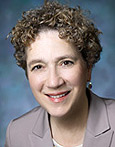
In an interview with Yale Environment 360, Goldman — a former assistant administrator of the U.S. Environmental Protection Agency under President Bill Clinton — discusses the many challenges that remain. They range from the continuing health toll exacted by air pollution, to the threat posed by endocrine disrupting chemicals found in everyday products. One thing is certain, says Goldman: Without bipartisan political support, urgently needed legislative action to deal with 21st century environmental health threats will never come to pass.
“I can’t point to a single successful piece of environmental legislation that was enacted by one party,” Goldman told Yale e360 contributor, Lizzie Grossman. “Environmental protection has always been the concern of both parties.”
Yale Environment 360: Based on your experience working in environmental and public health, what do you consider to be the greatest current threats to Americans’ health, and do environmental factors play a role in this? If so, how?
Lynn Goldman: There are a lot of very important environmental health issues and I would place near the top, in terms of immediate risk, air pollution and the fact that every day it’s causing people to prematurely have heart attacks and get respiratory disease — both chronic in adults, and asthma in kids. I would also say our inability to control the risks of toxic chemicals, and the fact that toxic chemicals are on the market without appropriate assessment. It’s a daily risk that we face. And then I would say in the longer term — and it’s really not that long term at this point — the risks of global warming, and the health impacts from that.
It’s very hard to say that there’s just one thing. Public health generally, and environmental health in particular, tends to be overlooked by policy makers. We’re willing to spend vast sums on medical care, but we’re not willing to make very modest steps for prevention.
e360: Can you characterize how great a role chemical exposure plays in Americans’ health, and in particular children’s health?
Goldman: It plays a significant role. I think we are learning that with diseases that we thought were genetic, where we’re not easily finding causes, that while there are genetic susceptibilities, the environment is also playing a major role: in cancer, in learning disabilities in children, in chronic diseases over a lifetime. The exposure we have in the environment, not only to chemicals but also to other exposures like [second-hand] tobacco smoke, we’ve just ignored them at our own peril.
e360: What do we need to do?
The law requires a tremendous amount of analysis and the EPA has frankly been paralyzed by the analysis.
Goldman: The Toxic Substances Control Act [TSCA] is more than 30 years old. It was really meant to establish a workable framework for the EPA [Environmental Protection Agency]. And I think the intention of Congress was very clear in the preamble of the act of what it expected, and it didn’t get it. But we’ve learned a lot about environmental protection over the last 30 years. On almost every other statute since that time, Congress has revised its approach, sometimes several times, as in the case of the Clean Air Act and the Pesticide Act.
The way that TSCA works, and the way the courts have interpreted this authority, [means] that the amount of analysis EPA has to do in order to take action is overly burdensome and has resulted in EPA taking very little action. Other statutes that have been written since the 1970s, like the Clean Air Act, have tended to be more specific in terms of directing EPA to take action in certain riskier situations.
The Clean Air Act has empowered people outside of the government to be able to hold the agency [accountable] through the courts. There just aren’t those levers in TSCA. TSCA could and should direct EPA toward addressing some of the worst risks. What are those risks? Maybe carcinogens; maybe reproductive toxicants; maybe chemicals that are endocrine active; maybe chemicals to which children are exposed; maybe [chemicals] found in pregnant women or found in the environment where women live. The agency needs to have priorities set for it, and Congress did not clearly lay out any priorities.
The other thing I would say is that standards for action need to be changed. The standards for action are not public health standards. They require the agency to weigh the costs and benefits. And the way that the statute has been written, it requires a tremendous amount of analysis, and EPA has frankly been paralyzed by the analysis. The statute also says that the EPA, in managing the risks of its chemicals, has to take the least burdensome approach. If you think about that, it’s not easy to do.
Last but not least, there are just numerous places where the statute needs to make it more possible not only for the EPA to collect information about chemicals, but also to share that information with the public and with the states. A tremendous amount of information is held as confidential by the EPA. If you’re a state, you can’t even know that certain chemicals are produced within your borders or even that the chemicals are there. In much of the reporting, the name of the chemical, the location where it’s manufactured, is confidential business information. That makes it very difficult to assure that you’re protecting the public.
e360: The fact that we regulate chemicals one at a time has created all sorts of obvious difficulties. What can we do about that?
All 62,000 chemicals that were grandfathered under the Toxic Substances Control Act were not evaluated at all.
Goldman: The use of chemicals is a really important issue in terms of that one-of-a-kind thing. If you’re going to restrict the use of certain chemicals as flame retardants, it’s really helpful to know what the alternatives are. It’s very different than in the world of pesticides, where a chemical is registered for a use. So I know that when I’m looking at a label on a pesticide, that pesticide is for use on corn to control insects, and I know what are the other pesticides that are used on corn to control insects. But if you’re looking at chemicals — say you’re looking at a flame retardant or something used to make a plastic baby bottle — it’s very helpful to know what are the other chemicals being marketed for that use. The industry has been very reluctant to provide that information to the EPA.
That kind of information is being provided in the European Union [EU] now. All of that goes into confidential systems that U.S. regulators can’t access because they work for the U.S. government and not for the EU. So much information that’s now being generated for Europe could be required under U.S. law without making companies do any more work than they’re already doing to get their approvals for the EU. That’s something the U.S. Congress could capitalize on.
e360: How much have we learned in the past 10 to 20 years about how chemicals behave and where they’re coming from, in terms of sources? How do we keep up with rapidly expanding knowledge about how chemicals behave?
Goldman: What happened with pesticides is the concept of registration renewal — that decisions wouldn’t be made in perpetuity and there would be a predictable schedule in which registrations are renewed. You could do this with chemicals, as well. What I think you can’t do in terms of working with industry is have things changing all the time. You can’t have a situation where a regulator establishes a standard, and the next day there’s a study published, and you redo the standard. There has to be a systematic way for revising things, unless something happens that’s an emergency. Science doesn’t stand still over time. Things change. You need a process that provides for systematic re-evalution on a periodic basis.
All the chemicals that were grandfathered in TSCA were not evaluated at all and that’s 62,000. So we need to be sure we actually have a process where they receive a periodic evaluation.
e360: How do you respond to the industry perspective that says that these chemicals are well tested, with no record of anyone becoming sick? Given the difficulty of proving cause and effect in health outcomes, how do you respond to that?
If there are gobs of chemicals coming across the Pacific from China or India, we can still be impacted by them.
Goldman: Any formulation that says the only risks worth acting upon are acute risks with very high exposures, and acute effects that are immediately observable — what that implies is all we’re going to be concerned about is basically poisoning. Any reasonable assessment of risk is going to have to look at lower dose exposures, impacts that occur chronically over a number of years, or maybe acutely with birth defects. But you’re not going to be able to determine that without doing either really thorough toxicological testing or, if it’s already on the market, possibly epidemiological studies.
e360: How do we make these changes?
Goldman: That concept already has been in place for a long time. Risk evaluation has evolved, including risks from lower-dose exposures across the population and risks that occur over years. I think for a long time that’s been embedded in the scientific concepts and what’s taught in the field of toxicology. I think that the challenge is bringing that into the legal framework in a way that is effective. People are trying. We have good examples in Europe and Canada now.
There hasn’t been a shortage of ideas, but a shortage of political will to actually take on the statute. There are a few people in Congress really committed to this who have been determined to get something done, but frankly there needs to be a much larger groundswell of support, particularly right now. We need to see some Republicans engaged. The chemical industry itself has put forth principles and they are supporting the idea of reforming TSCA, but I don’t think it’s getting Republican support.
If it isn’t bipartisan it won’t happen. I can’t point to a single successful piece of environmental legislation that was enacted by one party. Environmental protection has always been the concern of both parties. It’s about all of us, it’s not about some specific group. That’s the critical issue. I don’t think there’s a lack of imagination about how you can do this differently or better, but where is the real commitment on Capitol Hill to get something done?
e360: States have been passing chemical regulation bills with bipartisan support. What’s so different at the state level from the federal?
Goldman: I think what’s different is that state legislators are very close to the people who elect them, and it is very different for them to be in opposition to legislation that is protecting populations that they serve from a risk that those populations seem to have clearly identified as serious. Whereas I think Washington is a step removed from all of that and it is easier to procrastinate. The political process in Washington is more isolated from the people.
e360: So many chemicals are environmentally mobile, but we need to regulate on the basis of political boundaries and jurisdictions. How do we deal with this globally?
Goldman: The important answer to that is the Stockholm Convention on Persistent Organic Pollutants [POPs], negotiated in the 1990s. Negotiations were finalized in 2000, and in 2001 President Bush signed it. Then the U.S. Congress never ratified it. But it is a global process, ratified now by more than 90 countries, successfully reviewing chemicals from the perspective of their ability to persist and on the basis of trans-boundary movements.
The POPs treaty established criteria on how chemicals accumulate, their mobility and toxicity. It started [the list of] the “Dirty Dozen” chemicals. I think it’s a good start. Yet we could do all we can to ban these things in the U.S., but if there are gobs of it coming across the Pacific from China, India, or Pakistan, which have huge growing chemical industries and are polluting our environment, we can still be impacted by them. So it is in our interest to have international control over these things. Other countries don’t have the expertise we have and don’t have strong regulatory systems.
e360: How did you personally get interested in all this?
Goldman: I grew up in and around Galveston, Texas, on the Gulf of Mexico, surrounded by communities that had massive oil refineries and chemical plants. I was always very interested, not just in the massiveness of it, but at night orange smoke, blue smoke, green stuff — all the emissions coming off of these plants. Then when I was a little older, they started offshore oil drilling on the island where I grew up. We started seeing oil tar on the beach and that was an eye opener for me.
We were bird watchers, and some of the birds were disappearing, probably related to the DDT. When I was in college, it was the first Earth Day. In my last two years in college I became interested in environmental health. The National Cancer Institute published the first cancer mortality atlas and the rates of cancer deaths were really high right where I was from, especially bladder cancer and a couple of other cancers that are environmentally related. I actually went to public health school before medical school, and very early on moved into thinking that it would be really interesting to look at how these things impact children.