11 Feb 2010: Opinion

‘Rewilding’ the World:
A Bright Spot for Biodiversity

As burgeoning human populations place greater pressure on wild areas, a strategy is emerging for preserving threatened lands and wildlife. Known as ‘rewilding,’ it involves expanding core wilderness areas, connecting them via corridors that allow humans and animals to co-exist, and protecting and reintroducing top predators.

by caroline fraser

Five years ago, when I began researching a book about efforts to stem biodiversity loss, environmental politics was dominated — as it still is — by climate change, a parallel crisis that greatly exacerbates damage to ecosystems and loss of species. Essential as the emphasis on climate is, however, it has engendered a kind of despair among biodiversity specialists, casting a shadow over this other fundamental issue. Talk to people in the conservation trenches, and they will agree with Rodrigo Fuentes, director of a biodiversity center in the Philippines: “Biodiversity loss is a forgotten crisis. It rarely makes the headlines.”

Clearly, we understand the gravity of the biodiversity problem better than we understand the solutions. Despite numerous campaigns by the United Nations and other organizations to stem the loss of habitat and species, the world’s biodiversity — and the ecosystem services supported by it, including carbon sequestration and flood control — is approaching what Hilary Benn, the U.K.’s environment secretary, has called “a point of no return.”

Happily, however, there is more to the story. A group of solutions is emerging under the rubric of “rewilding,” and this new movement has
These efforts have expanded the reach of conservation, which cannot rely on parks alone.
made considerable progress over the past decade. A Marshall Plan for the environment, rewilding promotes the expansion of core wilderness areas on a vast scale, the restoration of corridors between them (to fight the “island” effect of isolated parks and protected areas), and the reintroduction or protection of top predators.

Known by a shorthand formula — “cores, corridors, and carnivores” — rewilding was first proposed in 1998 by the founder of conservation biology, Michael Soulé, and his fellow conservation biologist, Reed Noss. It was quickly adopted by grassroots initiatives, such as the Yellowstone to Yukon Conservation Initiative (Y2Y), a plan to protect and restore connectivity of ecosystems throughout the Rocky Mountains.

Since then, its central tenets have found their way into the programs of international conservation organizations, which have embraced “continental-scale” conservation and growing bolder in the size of their preservationist programs. As both a conservation method and a grassroots movement, rewilding has taken hold in every inhabited continent, with projects stretching from densely-populated western Europe (the European Green Belt, on the path of the former Iron Curtain) to the remote reaches of southern Africa. What’s more: It has proven an adaptable model, bringing conservation to people and places outside the traditional system of parks and protected areas that lack the resources to succeed on their own.

Encouraging new revenue streams and conservation on private lands, rewilding has achieved notable successes, along with instructive failures. In northern Kenya, an area plagued by lawlessness and drought, the Craig family turned their struggling cattle ranch into the Lewa Wildlife Conservancy, protecting endangered rhinos and building a popular ecotourism business. Then Ian Craig, the family’s third generation — tutored as a teenager in the Kenyan bush by a young Maasai man, Kinanjui Lesenteria — promoted the conservancy model among the Maasai, Samburu, and Meru people on group ranches who had seen their pastoralist lifestyle crippled by successive droughts.
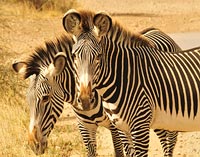
Grevy's zebras
iStockphoto
In Kenya, conservationists are seeing a marked improvement in formerly overgrazed areas, including the return of the endangered Grevy’s zebra.
Eleven group ranches have since joined the Northern Rangelands Trust, with eight of those creating their own conservancies, setting aside a percentage of their grazing land for wildlife and planning eco-lodges. Those with lodges have already dedicated revenue for community improvements, such as schools and medical clinics. A million-and-a-half acres of northern Kenya have thus been set aside for wildlife management, and security for people and wildlife has improved. The Lewa conservancy provides technical assistance and equipment for patrolling Trust lands.

Conservationists in Kenya are seeing a marked improvement in formerly overgrazed areas. Elephants have rebounded from the poaching of years past, resuming their migratory routes, and the highly endangered Grevy’s zebra — which suffered severe habitat loss in recent decades — is returning to old haunts. Lewa now serves as a model for other conservancies in southern Kenya, and visitors from Uganda, Tanzania, and Ethiopia have come to study it. A similar community forestry program in Nepal is restoring corridors there for tigers, the one-horned rhino, and the Asian elephant.

In the American Southwest, galvanized by surprise sightings of jaguars, conservationists have banded together to buy private land in northern Mexico, establishing a core wilderness area to keep that species — and a host of other unique wildlife — viable. They have also reached out to the reserve’s neighbors: Mexican ranchers, like American ones, have always shot big predators on sight, but biologists with Defenders of Wildlife designed a clever contest, equipping ranches with remote camera traps. For every picture of a live jaguar, mountain lion, or other cat, participating ranchers who promised to leave the animals unmolested were paid a handsome sum — $500 for a jaguar, $100 for a mountain lion. Asked what he would do with the money, one rancher said, “Buy more cats!”

Rewilding groups are also learning from their failures. In southern Africa, the Peace Parks Foundation (PPF), which has launched several of the biggest planned conservation projects on the planet, got off on the wrong foot with its Great Limpopo Peace Park, designed to link parks in South Africa, Mozambique, and Zimbabwe. The group released elephants, lions, and other dangerous wildlife into an area where unwitting villagers had yet to be informed of the program. Years later, the organization is still struggling to relocate those villagers affected. International funding agencies attacked the approach and, for a time, cut funding; since then, the PPF has realigned its priorities, making sure to engage communities in prolonged consultations about their needs. No additional projects have called for shifting populations.

Conservation on private lands, wildlife conservancies, community-forests: These efforts have significantly expanded the reach of conservation, which cannot rely on parks alone. Another innovation has been in new approaches to financing. Breaking away from the standard fund-raising
Rewilding opens up areas to conservation management and puts people to work.
model — a never-ending cycle, since most money is spent immediately on short-term grants and projects — several rewilding groups have embraced the endowment as a way of supporting conservation’s long-term needs. University of Pennsylvania biologist Daniel Janzen has been instrumental in the phenomenal success of the Area de Conservación Guanacaste (ACG) in northwestern Costa Rica, which accomplished what was once thought impossible by restoring former cattle ranches to dry tropical forest and rainforest. ACG thrives on the interest from its $30 million endowment. Janzen is now seeking a half-billion dollars to endow the entire Costa Rican park system in perpetuity.

But rewilding’s greatest potential may lie in the creation of green jobs. ACG pioneered “parataxonomy,” providing local people with a six-month “bioliteracy” training course in collecting and processing insect specimens that could then be passed on to taxonomists for identification. The parataxonomists are valued contributors to Costa Rica’s National Biodiversity Institute and instrumental in the country’s massive effort to compile an inventory of its extraordinary biodiversity. They have served as foot soldiers in “bioprospecting,” the collection of specimens that may prove useful in medicines or cosmetics: Extracts from the quassia tree, for example, have yielded both a treatment for stomachaches and a promising natural pesticide. The parataxonomy program has been copied in other biodiverse areas in Central Africa and Papua New Guinea.

In several projects, job creation is paired with carbon sequestration. The Baviaanskloof Mega-reserve Project in South Africa has created hundreds of jobs in ecotourism and restoration, training workers to remove invasives and plant native bush in a delicate Cape habitat overgrazed by goats. In Australia, ecological restoration of salt-damaged wheat farms conducted by the Gondwana Link project has provided carbon sequestration while regrowing native bush.

More from Yale e360

Why Africa’s National Parks
Are Failing to Save Wildlife

The traditional parks model of closing off areas and keeping people out simply may not work in Africa, where human demands on the land are great. Instead, what’s needed is an approach that finds ways to enable people and animals to co-exist.

The Growing Specter of
Africa Without Wildlife

Recent studies show that wildlife in some African nations is declining even in national parks, as poaching increases and human settlements hem in habitat. With the continent expected to add more than a billion people by 2050, do these trends portend an Africa devoid of wild animals?
In the United States, the restoration of wetlands is generating jobs, from Chesapeake Bay in the east to Puget Sound in the west. The Puget Sound Partnership, a network of environmental groups and state agencies — tasked with cleaning up decades of pollutants — represents one of the most massive ecological restoration projects in the nation’s history: The partnership recently identified a half-a-billion dollars worth of “shovel-ready” stimulus projects, from removing tons of fishing nets and other debris to restoring tidal salt marsh habitat, itself a powerfully-effective means of sequestering carbon.

Rewilding represents what Dan Janzen has termed “sustainable conservation”: It opens up significant areas to conservation management, and it puts people to work. What international agencies and NGOs need to do is identify rewilding programs that are demonstrably working, support them, and replicate them. As it stands now, even the most successful are not big enough to make the difference for biodiversity. But they could be — and for considerably less money than it will cost to replace the ecosystem services we are destroying, estimated at two to five trillion dollars a year worldwide. What conservation has been doing for decades is simply not working. It’s time to move forward with something bigger, something proven, something new.

POSTED ON 11 Feb 2010 IN Climate Science & Technology 

COMMENTS


Freedom to Roam is a great corridors and connectivity initiative in North America. Check
them out: Freedomtoroam.org

Thanks for the great article.

Posted by Elizabeth Baker on 25 Feb 2010


I agree on your campaign on rewilding the world. But unfortunately, as long as the world's population keeps soaring that rewilding efforts will not last. We need to synergize these efforts made by conservationists with strict control on human population growth. Not only by emphasizing on the use of contraception, but also by changing the mindset. By saying this I champion education as the most effective solution. Human development goes hand in hand with natural conservation? Why not?
Salute!

Posted by Jual Rumah on 10 Mar 2010


I recently finished reading the book Rewilding the World and I was duly impressed. I enjoyed this book immensely and highly recommend it.

Posted by Janet Palma on 17 Aug 2010


I was hoping for details of an urban case of rewilding since the author mentioned "densely-populated western Europe (the European Green Belt, on the path of the former Iron Curtain."

Would you consider restoration projects in NYC to be cases of rewilding?
See http://nymag.com/news/features/68087/ and http://urbanomnibus.net/2010/09/canal-nest-colony/.

Posted by Georgia / http://localecologist.blogspot.com on 16 Sep 2010


Comments have been closed on this feature.
caroline fraserABOUT THE AUTHOR
Caroline Fraser traveled on six continents to write Rewilding the World: Dispatches from the Conservation Revolution (Metropolitan Books). Her first book, God's Perfect Child: Living and Dying in the Christian Science Church, was selected as a New York Times Book Review Notable Book and a Los Angeles Times Book Review Best Book. She has written widely about animal rights, natural history, and the environment, and her work has appeared in The New Yorker, The ­New York Review of Books, and Outside magazine, among others.
MORE BY THIS AUTHOR


RELATED ARTICLES


The Vital Chain: Connecting
The Ecosystems of Land and Sea

A new study from a Pacific atoll reveals the links between native trees, bird guano, and the giant manta rays that live off the coast. In unraveling this intricate web, the researchers point to the often little-understood interconnectedness between terrestrial and marine ecosystems.
READ MORE

Africa’s Ambitious Experiment
To Preserve Threatened Wildlife

Five nations in southern Africa are joining together to create a huge conservation area that will extend across their borders and expand critical territory for elephants. But can these new protections reverse decades of decline for area wildlife while also benefiting the people who live there?
READ MORE

Fighting A Last-Ditch Battle
To Save the Rare Javan Rhino

Rhinoceroses worldwide are under siege as their habitat shrinks and poachers slaughter hundreds annually for their valuable horns. Now, in Indonesia, conservation groups are engaged in a desperate struggle to save the last 40 Javan rhinos on earth.
READ MORE

Monitoring A Grim Rise
In the Illegal Ivory Trade

For two decades, TRAFFIC’s Tom Milliken has tracked the illicit ivory trade that has led to the continued slaughter of Africa’s elephants. In an interview with Yale Environment 360, Milliken talks about the recent increase in ivory seizures and the criminal gangs that supply Asia’s black market for ivory.
READ MORE

A Defender of World’s Whales
Sees Only a Tenuous Recovery

Biologist Roger Payne played a key role in helping end the wholesale slaughter of whales. In an interview with Yale Environment 360, Payne discusses the mysteries of these legendary marine mammals and the threats they continue to face.
READ MORE


MORE IN Opinion


The Clean Water Act at 40:
There’s Still Much Left to Do

by paul greenberg
The Clean Water Act of 1972, one of the boldest environmental laws ever enacted, turns 40 this year, with an impressive record of cleaning up America's waterways. But from New York Harbor to Alaska’s Bristol Bay, key challenges remain.
READ MORE

Besieged by Climate Deniers,
A Scientist Decides to Fight Back

by michael e. mann
Climate scientist Michael Mann, who has faced years of attacks from climate-change skeptics, explains why he believes bad-faith assaults on science have no place in a functioning democracy and why the truth about global warming will inevitably gain wide acceptance.
READ MORE

The Folly of Big Agriculture:
Why Nature Always Wins

by verlyn klinkenborg
Large-scale industrial agriculture depends on engineering the land to ensure the absence of natural diversity. But as the recent emergence of herbicide-tolerant weeds on U.S. farms has shown, nature ultimately finds a way to subvert uniformity and assert itself.
READ MORE

Shunning Nuclear Power
Will Lead to a Warmer World

by spencer r. weart
A physicist argues that if we allow our overblown and often irrational fears of nuclear energy to block the building of a significant number of new nuclear plants, we will be choosing a far more perilous option: the intensified burning of planet-warming fossil fuels.
READ MORE

Innovation is Not Enough:
Why Polluters Must Pay

by gernot wagner
Innovative energy technologies are certainly essential if the world is to curb carbon emissions. But in response to a recent e360 article by the co-founders of the Breakthrough Institute, an economist argues we must also cap emissions or put a price on carbon in order to avoid the worst impacts of climate change.
READ MORE

Beyond Cap and Trade,
A New Path to Clean Energy

by ted nordhaus and michael shellenberger
Putting a price and a binding cap on carbon is not the panacea that many thought it to be. The real road to cutting U.S. emissions, two iconoclastic environmentalists argue, is for the government to help fund the development of cleaner alternatives that are better and cheaper than natural gas.
READ MORE

On the Road Back to Rio,
Green Direction Has Been Lost

by fred pearce
Twenty years ago, an historic environmental summit in Rio de Janeiro produced groundbreaking treaties and high hopes that pressing issues would be addressed. But as organizers prepare for the Rio+20 conference in June, there is little on the agenda to suggest any substantive action will be taken.
READ MORE

As Roads Spread in Rainforests,
The Environmental Toll Grows

by william laurance
From Brazil to Borneo, new roads are being built into tropical forests at a dizzying pace, putting previously intact wilderness at risk. If we hope to preserve rainforests, a leading researcher says, new strategies must be adopted to limit the number of roads and reduce their impacts.
READ MORE

Solar Power Off the Grid:
Energy Access for World’s Poor

by carl pope
More than a billion people worldwide lack access to electricity. The best way to bring it to them — while reducing greenhouse gas emissions — is to launch a global initiative to provide solar panels and other forms of distributed renewable power to poor villages and neighborhoods.
READ MORE

In Australia’s New Carbon Tax,
A Host of Missed Opportunities

by richard denniss
The Australian government will begin imposing a tax on carbon emissions in mid-2012. But large giveaways to industry mean Australia’s scheme doesn’t go nearly far enough in reducing the nation’s CO2 emissions or providing economic stimulus.
READ MORE


e360 digest
Yale
Yale Environment 360 is
a publication of the
Yale School of Forestry
& Environmental Studies
.

SEARCH e360


Donate to Yale Environment 360

CONNECT

Twitter: YaleE360
e360 on Facebook
Donate to e360
View mobile site
Bookmark
Share e360
Email newsletter
Subscribe to our feed:
rss


ABOUT

About e360
Contact
Submission Guidelines
Reprints

e360 VIDEO

Warriors of Qiugang
The Warriors of Qiugang, a Yale Environment 360 video that chronicles the story of a Chinese village’s fight against a polluting chemical plant, was nominated for a 2011 Academy Award for Best Documentary (Short Subject). Watch the video.


DEPARTMENTS

Opinion
Reports
Analysis
Interviews
e360 Digest
Video Reports

TOPICS

Biodiversity
Business & Innovation
Climate
Energy
Forests
Oceans
Policy & Politics
Pollution & Health
Science & Technology
Sustainability
Urbanization
Water

REGIONS

Antarctica and the Arctic
Africa
Asia
Australia
Central & South America
Europe
Middle East
North America

e360 VIDEO REPORT

When the Water Ends
As temperatures rise and water supplies dry up, tribes in East Africa increasingly are coming into conflict. A Yale Environment 360 video reports on a phenomenon that could become more common: how worsening drought will pit groups — and nations — against one another. Watch the video.

e360 MOBILE

Mobile
The latest
from Yale
Environment 360
is now available for mobile devices at e360.yale.edu/mobile.


header image
Top Image: aerial view of Iceland. © Google & TerraMetrics.

e360 VIDEO REPORT

Leveling Appalachia
Leveling Appalachia: The Legacy of Mountaintop Removal Mining, an e360 video examining the environmental and human impacts of this mining practice, won the award for best video in the 2010 National Magazine Awards for Digital Media. Watch the video.


OF INTEREST


Yale