Region: Central & South America
e360 Video
Into the Heart of Ecuador’s Yasuni
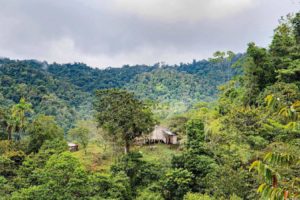
Few places on earth harbor as much biodiversity as Ecuador’s Yasuni Biosphere Reserve, which sits atop vast deposits of oil and now faces intense development pressure. In a Yale Environment 360 video, filmmaker Ryan Killackey travels to the heart of Yasuni with scientists inventorying its stunning wildlife and plants. The researchers hope their work will bolster initiatives to preserve this threatened land.
Report
Grisly Trend: Green Activists
Are Facing Deadly Dangers
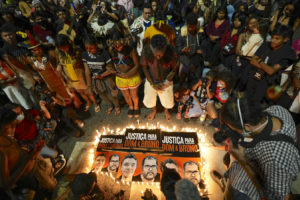
With activists killed in Brazil, Cambodia, the Philippines, and elsewhere, 2012 may have been the worst year yet for violence against those working to protect the environment. So far, little has been done to halt this chilling development.
Report
In the Land of the Maya,
A Battle for a Vital Forest
In Guatemala’s vast Maya Biosphere Reserve, conservation groups are battling to preserve a unique rainforest now under threat from Mexican drug cartels, Salvadoran drug gangs, and Chinese-backed groups illegally logging prime tropical hardwoods.
Report
At Edge of Peruvian Andes,
Tracking Impacts of Warming
The Andes in eastern Peru, with steep slopes and remarkable biodiversity, are what one scientist calls a “perfect laboratory” for studying the effects of climate change. E360 contributor Elizabeth Kolbert trekked there with researchers seeking to determine if tree populations can move uphill fast enough to survive warming temperatures.
Report
In Bolivia, A Battle Over
A Highway and a Way of Life
Growing conflicts over development in South America have come to a head in Bolivia, where indigenous groups are resisting a highway project that would slice through a national park. How Bolivia resolves this showdown could point the way for other regions seeking to balance economic growth and the environment.
Interview
The Imperative of Thinking Big
In Global Conservation Efforts
In his 12 years as president of the Wildlife Conservation Society, Steven E. Sanderson oversaw major projects in Gabon, Chile, South Sudan, and elsewhere. In an interview with Yale Environment 360, Sanderson explains why conservation groups need to better coordinate work across large, human-influenced landscapes and more effectively marshal science to fight their battles.
Interview
Looking for Solutions in the
Fight to Preserve Biodiversity
At the Rio+20 conference this week, conservation biologist Thomas Lovejoy received the prestigious Blue Planet Prize. Before traveling to Brazil, Lovejoy talked with Yale Environment 360 about the loss of biodiversity and about whether it is too late for the world to do something about it.
Report
Digital Defenders: Tribal People
Use GPS to Protect Their Lands
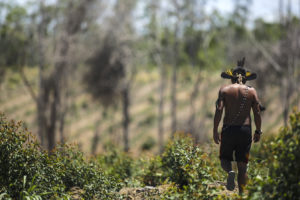
From the rainforests of central Africa to the Australian outback, indigenous people armed with GPS devices are surveying their territories and producing maps they can use to protect them from logging and other outside development.
Interview
In Fight to Save Coral Reefs,
Finding Strategies that Work
In four decades as a marine biologist, Nancy Knowlton has played a key role in documenting the biodiversity of coral reefs and the threats they increasingly face. In an interview with Yale Environment 360, she assesses the state of the world’s corals and highlights conservation projects that offer hope of saving these irreplaceable ecosystems.
Opinion
On the Road Back to Rio,
Green Direction Has Been Lost
Twenty years ago, an historic environmental summit in Rio de Janeiro produced groundbreaking treaties and high hopes that pressing issues would be addressed. But as organizers prepare for the Rio+20 conference in June, there is little on the agenda to suggest any substantive action will be taken.
Opinion
As Roads Spread in Rainforests,
The Environmental Toll Grows
From Brazil to Borneo, new roads are being built into tropical forests at a dizzying pace, putting previously intact wilderness at risk. If we hope to preserve rainforests, a leading researcher says, new strategies must be adopted to limit the number of roads and reduce their impacts.
Interview
A Defender of World’s Whales
Sees Only a Tenuous Recovery
Biologist Roger Payne played a key role in helping end the wholesale slaughter of whales. In an interview with Yale Environment 360, Payne discusses the mysteries of these legendary marine mammals and the threats they continue to face.
Report
A Rise in Fungal Diseases is
Taking Growing Toll on Wildlife
In an increasingly interconnected world, fungal diseases are spreading at an alarming rate and have led to deadly outbreaks in amphibian, bat, and bee populations. And in the last decade, researchers note, some of the most virulent strains have infected people.
Report
A Revolutionary Technology is
Unlocking Secrets of the Forest
A new imaging system that uses a suite of airborne sensors is capable of providing detailed, three-dimensional pictures of tropical forests — including the species they contain and the amount of CO2 they store — at astonishing speed. These advances could play a key role in preserving the world’s beleaguered rainforests.
Analysis
In Brazil, Palm Oil Plantations
Could Help Preserve the Amazon
In recent years, palm oil development in Malaysia and Indonesia has devastated tropical forests there. With Brazil on the verge of its own palm oil boom, can sustainable cultivation of the crop actually help save the rainforest, rather than hastening its destruction?
Analysis
The World’s Tropical Forests
Are Already Feeling the Heat
Much attention has been paid to how global warming is affecting the world’s polar regions and glaciers. But a leading authority on tropical forests warns that rising temperatures could have an equally profound impact on rainforests and are already taking a toll on some tropical species.
Report
The Cerrado: Brazil’s Other
Biodiverse Region Loses Ground
While Brazil touts its efforts to slow destruction of the Amazon, another biodiverse region of the country is being cleared for large-scale farming. But unlike the heralded rainforest it borders, the loss of the cerrado and its rich tropical savanna so far has failed to attract much notice.
Interview
A Scientist Extols the Value
Of Forests Shaped by Humans
Political ecologist Susanna Hecht has incurred the wrath of some conservationists by arguing that the notion of the primeval forest is largely a myth and that disturbed forests play a vital ecological function. In an interview with Yale Environment 360, she makes the case for a “new rurality” that places less emphasis on protected forests and more on the areas where people live.
Report
Threat of Mercury Poisoning
Rises With Gold Mining Boom
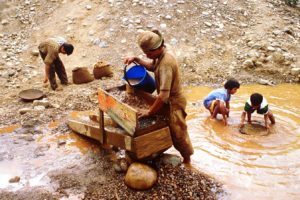
With high gold prices fueling a global gold rush, millions of people in the developing world are turning to small-scale gold mining. In many countries, including Colombia, miners are putting themselves and those who live nearby at risk by using highly toxic mercury in the refining process.
Opinion
Did Cancun Prove the UN
Irrelevant in Tackling Climate?
The Cancun conference is being credited with keeping international climate talks alive. But the real potential for bringing emissions under control may lie in a Plan B, with nations acting on their own in moving toward a low-carbon economy.
Report
Deep in Ecuador’s Rainforest,
A Plan to Forego an Oil Bonanza
Ecuador's Yasuni National Park is one of the most biodiverse places on Earth and is home to remote Indian tribes. It also sits atop a billion barrels of oil. Now, Ecuador and the United Nations are forging an ambitious plan to walk away from drilling in the park in exchange for payments from the international community.
Report
Spurred by Warming World,
Beetles Threaten Coffee Crops
Coffee production has long been vulnerable to drought or excess rains. But recently, a tiny insect that thrives in warmer temperatures — the coffee berry borer — has been spreading steadily, devastating coffee plants in Africa, Latin America, and around the world.
Analysis
In the Fight to Save Forests,
Activists Target Corporations
Large corporations, not small-scale farmers, are now the major forces behind the destruction of the world’s tropical forests. From the Amazon to Madagascar, activists have been directing their actions at these companies — so far with limited success.
Analysis
Will REDD Preserve Forests
Or Merely Provide a Fig Leaf?
The tropical forest conservation plan, known as REDD, has the potential to significantly reduce deforestation and carbon dioxide emissions worldwide. But unless projects are carefully designed and monitored, the program could be undercut by shady dealings at all levels, from the forests to global carbon markets.
Opinion
Coping With Climate Change:
Which Societies Will Do Best?
As the world warms, how different societies fare in dealing with rising seas and changing weather patterns will have as much to do with political, social, and economic factors as with a changing climate.
Report
Controlling the Ranching Boom
that Threatens the Amazon
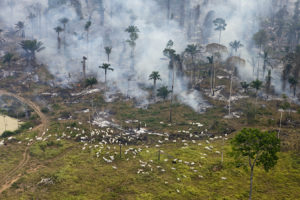
Clearing land for cattle is responsible for 80 percent of rainforest loss in the Brazilian Amazon. But with Amazon ranching now a multi-billion dollar business, corporate buyers of beef and leather, including Wal-Mart, are starting to demand that the destruction of the forest be halted.
Report
Hailed as a Miracle Biofuel,
Jatropha Falls Short of Hype
The scrubby jatropha tree has been touted as a wonder biofuel with unlimited potential. But questions are now emerging as to whether widespread jatropha cultivation is really feasible or whether it will simply displace badly-needed food crops in the developing world.
Report
Retreat of Andean Glaciers
Foretells Global Water Woes
Bolivia accounts for a tiny fraction of global greenhouse gas emissions. But it will soon be paying a disproportionately high price for a major consequence of global warming: the rapid loss of glaciers and a subsequent decline in vital water supplies.
Report
As Rain Forests Disappear,
A Market Solution Emerges
Despite the creation of protected areas in the Amazon and other tropical regions, rain forests worldwide are still being destroyed for a simple reason: They are worth more cut down than standing. But with deforestation now a leading driver of global warming, a movement is growing to pay nations and local people to keep their rain forests intact.
Opinion
Has the Population Bomb Been Defused?
Paul Ehrlich still believes that overpopulation imperils the Earth’s future. But the good news is we are approaching a demographic turning point: Birth rates have been falling dramatically, and population is expected to peak later this century — after that, for the first time in modern history, the world's population should actually start to decline.
Report
Global Commodities Boom
Fuels New Assault on Amazon
With soaring prices for agricultural goods and new demand for biofuels, the clearing of the world's largest rain forest has accelerated dramatically. Unless forceful measures are taken, half of the Brazilian Amazon could be cut, burned or dried out within 20 years.
Opinion
The Ethics of Climate Change
When it comes to setting climate change policy, science can only tell us so much. Ultimately, a lead report author for the Intergovernmental Panel on Climate Change writes, it comes down to making judgments about what is fair, equitable, and just.
Report
DNA Technology:
Discovering New Species
By taking bits of a single gene, scientists are using DNA barcoding to identify new species. If a portable hand-held scanning device can be developed, one ecologist says, it could “do for biodiversity what the printing press did for literacy.”