Region: North America


The Clean Water Act at 40:<br /> There’s Still Much Left to Do

Opinion

The Clean Water Act at 40:
There’s Still Much Left to Do

by paul greenberg
The Clean Water Act of 1972, one of the boldest environmental laws ever enacted, turns 40 this year, with an impressive record of cleaning up America's waterways. But from New York Harbor to Alaska’s Bristol Bay, key challenges remain.
READ MORE

The Vital Chain: Connecting<br /> The Ecosystems of Land and Sea

Analysis

The Vital Chain: Connecting
The Ecosystems of Land and Sea

by carl zimmer
A new study from a Pacific atoll reveals the links between native trees, bird guano, and the giant manta rays that live off the coast. In unraveling this intricate web, the researchers point to the often little-understood interconnectedness between terrestrial and marine ecosystems.
READ MORE

Taking Green Chemistry Out<br /> Of The Lab and into Products

Interview

Taking Green Chemistry Out
Of The Lab and into Products

by roger cohn
Paul Anastas pioneered the concept of green chemistry and has led the effort to rethink the way we design and make the products we use. In an interview with Yale Environment 360, he talks about the challenges of bringing this approach to policy making and the frustrations of tackling environmental issues in a politically polarized era.
READ MORE

Solar Windows: Transforming<br /> Buildings Into Energy Producers

Report

Solar Windows: Transforming
Buildings Into Energy Producers

by dave levitan
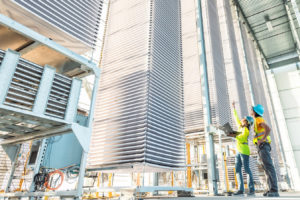
The vast amount of glass in skyscrapers and office buildings represents enormous potential for an emerging technology that turns windows into solar panels. But major questions remain as to whether solar windows can be sufficiently inexpensive and efficient to be widely adopted.
READ MORE

Waging the Battle to Build the<br /> U.S.’s First Offshore Wind Farm

Interview

Waging the Battle to Build the
U.S.’s First Offshore Wind Farm

by doug struck
After a decade seeking approval to build the U.S.’s first offshore wind farm, Cape Wind president Jim Gordon is on the verge of beginning construction. In an interview with Yale Environment 360, he describes why his struggle has been good for clean energy — and why the fight is still not over.
READ MORE

Insurance Companies Face<br /> Increased Risks from Warming

Report

Insurance Companies Face
Increased Risks from Warming

by ben schiller
If the damages related to climate change mount in the coming decades, insurance companies may face the prospect of paying larger disaster claims and being dragged into global warming lawsuits. But many firms, especially in the U.S., have barely begun to confront the risks.
READ MORE

Besieged by Climate Deniers,<br /> A Scientist Decides to Fight Back

Opinion

Besieged by Climate Deniers,
A Scientist Decides to Fight Back

by michael e. mann
Climate scientist Michael Mann, who has faced years of attacks from climate-change skeptics, explains why he believes bad-faith assaults on science have no place in a functioning democracy and why the truth about global warming will inevitably gain wide acceptance.
READ MORE

The Folly of Big Agriculture:<br /> Why Nature Always Wins

Opinion

The Folly of Big Agriculture:
Why Nature Always Wins

by verlyn klinkenborg
Large-scale industrial agriculture depends on engineering the land to ensure the absence of natural diversity. But as the recent emergence of herbicide-tolerant weeds on U.S. farms has shown, nature ultimately finds a way to subvert uniformity and assert itself.
READ MORE

Betting on Technology to<br /> Help Turn Consumers Green

Report

Betting on Technology to
Help Turn Consumers Green

by marc gunther
U.S. consumers tell researchers they want to buy environmentally friendly products, but so far they haven’t been doing that on a large scale. Now a host of companies and nonprofits are trying to use new technology — from smartphones to social networking — to make it easier for buyers to make the green choice.
READ MORE

Bill McKibben on Keystone,<br /> Congress, and Big-Oil Money

Interview

Bill McKibben on Keystone,
Congress, and Big-Oil Money

by elizabeth kolbert
Author/activist Bill McKibben says environmentalists cannot ease up after their recent victory in the fight against the Keystone XL pipeline. In a conversation with Yale Environment 360 contributor Elizabeth Kolbert, he talks about what he’s learned about the power of the fossil fuel industry — and why the battle over Keystone is far from over.
READ MORE

U.S. Fossil Fuel Boom<br /> Dims Glow of Clean Energy

Report

U.S. Fossil Fuel Boom
Dims Glow of Clean Energy

by keith schneider
A surge in gas and oil drilling in the U.S. is helping drive the economic recovery and is enhancing energy security. But as the situation in Ohio shows, cheaper energy prices and the focus on fossil fuels has been bad news for the renewable energy industry.
READ MORE

Shunning Nuclear Power<br /> Will Lead to a Warmer World

Opinion

Shunning Nuclear Power
Will Lead to a Warmer World

by spencer r. weart
A physicist argues that if we allow our overblown and often irrational fears of nuclear energy to block the building of a significant number of new nuclear plants, we will be choosing a far more perilous option: the intensified burning of planet-warming fossil fuels.
READ MORE

Can Reforming the Farm Bill<br /> Help Change U.S. Agriculture?

Report

Can Reforming the Farm Bill
Help Change U.S. Agriculture?

by jim robbins
For decades, farm bills in the U.S. Congress have supported large-scale agriculture. But with the 2012 Farm Bill now up for debate, advocates say seismic shifts in the way the nation views food production may lead to new policies that tilt more toward local, sustainable agriculture.
READ MORE

Scientists Warn of Low-Dose<br /> Risks of Chemical Exposure

Report

Scientists Warn of Low-Dose
Risks of Chemical Exposure

by elizabeth grossman
A new study finds that even low doses of hormone-disrupting chemicals — used in everything from plastics to pesticides – can have serious effects on human health. These findings, the researchers say, point to the need for basic changes in how chemical safety testing is conducted.
READ MORE

In Fight to Save Coral Reefs,<br /> Finding Strategies that Work

Interview

In Fight to Save Coral Reefs,
Finding Strategies that Work

by kevin dennehy
In four decades as a marine biologist, Nancy Knowlton has played a key role in documenting the biodiversity of coral reefs and the threats they increasingly face. In an interview with Yale Environment 360, she assesses the state of the world’s corals and highlights conservation projects that offer hope of saving these irreplaceable ecosystems.
READ MORE

Innovation is Not Enough:<br /> Why Polluters Must Pay

Opinion

Innovation is Not Enough:
Why Polluters Must Pay

by gernot wagner
Innovative energy technologies are certainly essential if the world is to curb carbon emissions. But in response to a recent e360 article by the co-founders of the Breakthrough Institute, an economist argues we must also cap emissions or put a price on carbon in order to avoid the worst impacts of climate change.
READ MORE

California Takes the Lead<br /> With New Green Initiatives

Report

California Takes the Lead
With New Green Initiatives

by mark hertsgaard
Long ahead of the rest of the U.S. on environmental policy, California is taking bold steps to tackle climate change — from committing to dramatic reductions in emissions, to establishing a cap-and-trade system, to mandating an increase in zero-emission vehicles. The bottom line, say state officials, is to foster an economy where sustainability is profitable.
READ MORE

Linking Weird Weather to<br /> Rapid Warming of the Arctic

Analysis

Linking Weird Weather to
Rapid Warming of the Arctic

by jennifer francis
The loss of Arctic summer sea ice and the rapid warming of the Far North are altering the jet stream over North America, Europe, and Russia. Scientists are now just beginning to understand how these profound shifts may be increasing the likelihood of more persistent and extreme weather.
READ MORE

Beyond Cap and Trade,<br /> A New Path to Clean Energy

Opinion

Beyond Cap and Trade,
A New Path to Clean Energy

by ted nordhaus and michael shellenberger
Putting a price and a binding cap on carbon is not the panacea that many thought it to be. The real road to cutting U.S. emissions, two iconoclastic environmentalists argue, is for the government to help fund the development of cleaner alternatives that are better and cheaper than natural gas.
READ MORE

Rethinking Carbon Dioxide:<br /> From a Pollutant to an Asset

Analysis

Rethinking Carbon Dioxide:
From a Pollutant to an Asset

by marc gunther
Three startup companies led by prominent scientists are working on new technologies to remove carbon dioxide from the atmosphere. The scientific community is skeptical, but these entrepreneurs believe the process of CO2 removal can eventually be profitable and help cool an overheating planet.
READ MORE

Amory Lovins Lays Out<br /> His Clean Energy Plan

Interview

Amory Lovins Lays Out
His Clean Energy Plan

by fen montaigne
For four decades, Amory Lovins has been a leading proponent of a renewable power revolution that would wean the U.S. off fossil fuels and usher in an era of energy independence. In an interview with Yale Environment 360, he talks about his latest book, which describes his vision of how the world can attain a green energy future by 2050.
READ MORE

California’s ‘Clean Car’ Rules<br /> Help Remake U.S. Auto Industry

Interview

California’s ‘Clean Car’ Rules
Help Remake U.S. Auto Industry

by paul rogers
With the passage of strict new auto emission and air pollution standards, California has again demonstrated its role as the U.S.’s environmental pacesetter. In an interview with Yale Environment 360, Mary Nichols, chairwoman of the California Air Resources Board, explains how her state is helping drive a clean-car revolution.
READ MORE

For the Electric Car,<br /> A Slow Road to Success

Report

For the Electric Car,
A Slow Road to Success

by jim motavalli
The big electric car launches of 2011 failed to generate the consumer excitement that some had predicted. But as new battery technologies emerge and tougher mileage standards kick in, automakers and analysts still believe that electric vehicles have a bright future.
READ MORE

Building a Better Bulb:<br /> Lighting Revolution Advances

Report

Building a Better Bulb:
Lighting Revolution Advances

by dave levitan
With the industry’s support and despite political opposition, new U.S. lighting efficiency standards went into effect this month. This move, along with similar actions in Europe and China, is helping spur new technologies that will change the way the world's homes and businesses are illuminated.
READ MORE

Florida Counties Band Together<br /> To Ready for Warming’s Effects

Report

Florida Counties Band Together
To Ready for Warming’s Effects

by michael d. lemonick
While U.S. action on climate change remains stalled, four south Florida counties have joined forces to plan for how to deal with the impacts — some of which are already being felt — of rising seas, higher temperatures, and more torrential rains.
READ MORE

Putting a Price on<br /> The Real Value of Nature

Interview

Putting a Price on
The Real Value of Nature

by roger cohn
Indian banker Pavan Sukhdev has been grappling with the question of how to place a monetary value on nature. In an interview with Yale Environment 360, he discusses the ways natural ecosystems benefit people and why policymakers and businesses must rethink how they assess environmental costs and benefits.
READ MORE

What Rising Temperatures May<br /> Mean for World’s Wine Industry

Report

What Rising Temperatures May
Mean for World’s Wine Industry

by john mcquaid
Warming temperatures associated with climate change are already affecting vineyards from France to Chile, often in beneficial ways. But as the world continues to warm, some traditional winemaking regions are scrambling to adapt, while other areas see themselves as new wine frontiers.
READ MORE

A Defender of World’s Whales<br /> Sees Only a Tenuous Recovery

Interview

A Defender of World’s Whales
Sees Only a Tenuous Recovery

by christina m. russo
Biologist Roger Payne played a key role in helping end the wholesale slaughter of whales. In an interview with Yale Environment 360, Payne discusses the mysteries of these legendary marine mammals and the threats they continue to face.
READ MORE

As Coal Use Declines in U.S.,<br /> Coal Companies Focus on China

Analysis

As Coal Use Declines in U.S.,
Coal Companies Focus on China

by jonathan thompson
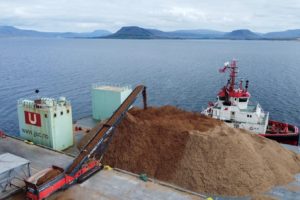
With aging coal-fired U.S. power plants shutting down, major American coal companies are exporting ever-larger amounts of coal to China. Now, plans to build two new coal-shipping terminals on the West Coast have set up a battle with environmentalists who want to steer the world away from fossil fuels.
READ MORE

Northwest Oyster Die-offs Show<br /> Ocean Acidification Has Arrived

Report

Northwest Oyster Die-offs Show
Ocean Acidification Has Arrived

by elizabeth grossman
The acidification of the world’s oceans from an excess of CO2 has already begun, as evidenced recently by the widespread mortality of oyster larvae in the Pacific Northwest. Scientists say this is just a harbinger of things to come if greenhouse gas emissions continue to soar.
READ MORE

Making the Case for the<br /> Value of Environmental Rules

Opinion

Making the Case for the
Value of Environmental Rules

by gernot wagner
Some U.S. politicians have been attacking environmental regulations, arguing that they hurt the economy and that the costs outweigh the benefits. But four decades of data refute that claim and show we need not choose between a clean environment and economic growth.
READ MORE

Military Bases Provide Unlikely<br /> Refuge For South’s Longleaf Pine

Report

Military Bases Provide Unlikely
Refuge For South’s Longleaf Pine

by bruce dorminey
The expanses of longleaf pine forest that once covered the southeastern United States have been whittled away to just 3 percent of their original range. But as scientists are discovering, this threatened forest ecosystem has found a sanctuary in an unexpected place — U.S. military installations.
READ MORE

A Power Company President<br /> Ties His Future to Green Energy

Interview

A Power Company President
Ties His Future to Green Energy

David Crane, the CEO of one of the nation’s largest electric companies, has become a leading proponent of renewable energy. In an interview with Yale Environment 360, he explains how, in the face of government paralysis, the private sector can help lead the shift away from fossil fuels.
READ MORE

Building Retrofits: Tapping<br /> The Energy-Saving Potential

Report

Building Retrofits: Tapping
The Energy-Saving Potential

by david biello
No more cost-effective way to make major cuts in energy use and greenhouse gas emissions exists than retrofitting buildings. Now, from New York to Mumbai to Melbourne, a push is on to overhaul older buildings to make them more energy efficient.
READ MORE

Can Vulnerable Species<br /> Outrun Climate Change?

Report

Can Vulnerable Species
Outrun Climate Change?

by emma marris
Recent studies shed light on the key question of whether certain species, including slow-moving amphibians, can move swiftly enough to new territories as their old habitats warm. The challenges are formidable, especially if human-caused warming continues at such a rapid rate.
READ MORE

The Triumph of King Coal:<br /> Hardening Our Coal Addiction

Analysis

The Triumph of King Coal:
Hardening Our Coal Addiction

by fred pearce
Despite all the talk about curbing greenhouse gas emissions, the world is burning more and more coal. The inconvenient truth is that coal remains a cheap and dirty fuel — and the idea of “clean” coal remains a distant dream.
READ MORE

Killing Wolves: A Product of<br /> Alberta’s Big Oil and Gas Boom

Report

Killing Wolves: A Product of
Alberta’s Big Oil and Gas Boom

by ed struzik
The development of the tar sands and other oil and gas fields in Alberta has carved up the Canadian province's boreal forest, threatening herds of woodland caribou. But rather than protect caribou habitat, officials have taken a controversial step: the large-scale killing of the wolves that prey on the caribou.
READ MORE

The Ethical Dimension of<br /> Tackling Climate Change

Opinion

The Ethical Dimension of
Tackling Climate Change

by stephen gardiner
The global challenge of climate change poses a perfect moral storm — by failing to take action to rein in carbon emissions, the current generation is spreading the costs of its behavior far into the future. Why should people in the future pay to clean up our mess?
READ MORE

Thinking the Unthinkable:<br /> Engineering Earth’s Climate

Interview

Thinking the Unthinkable:
Engineering Earth’s Climate

A U.S. panel has called for a concerted effort to study proposals to manipulate the climate to slow global warming — a heretical notion among some environmentalists. In an interview with Yale Environment 360, Jane C. S. Long, the group’s chairwoman, explains why we need to know more about the possibilities and perils of geoengineering.
READ MORE

With the Keystone Pipeline,<br /> Drawing a Line in the Tar Sands

Opinion

With the Keystone Pipeline,
Drawing a Line in the Tar Sands

by bill mckibben
For environmentalists protesting the Keystone XL pipeline, the battle is about more than just transporting tar sands oil from Alberta. It’s about whether the United States — and the rest of the world — will finally come to its senses about global warming.
READ MORE

Are Flame Retardants Safe?<br /> Growing Evidence Says ‘No’

Report

Are Flame Retardants Safe?
Growing Evidence Says ‘No’

by elizabeth grossman
New studies have underscored the potentially harmful health effects of the most widely used flame retardants, found in everything from baby blankets to carpets. Health experts are now calling for more aggressive action to limit these chemicals, including cutting back on highly flammable, petroleum-based materials used in many consumer products.
READ MORE

Colorado River: Running Near Empty

e360 Video Report

Colorado River: Running Near Empty

Photographer Pete McBride traveled along the Colorado River from its source high in the Rockies to its historic mouth at the Sea of Cortez. In a Yale Environment 360 video, he documents how increasing water demands have transformed the river that is the lifeblood for an arid Southwest.
READ MORE

How to Find Common Ground<br /> In the Bitter Climate Debate

Interview

How to Find Common Ground
In the Bitter Climate Debate

Even as the impacts of climate change intensify, many Americans remain confused by the issue. In an interview Yale Environment 360, climate scientist Katharine Hayhoe discusses what rising temperatures will mean for the U.S., how to talk with climate skeptics, and what she would say to Texas Gov. Rick Perry to prod him into action on global warming.
READ MORE

A Planetary Crisis Is<br /> A Terrible Thing to Waste

Opinion

A Planetary Crisis Is
A Terrible Thing to Waste

by christian schwägerl
There are striking similarities between the current economic and ecological crises — both involve indulgent over-consumption and a failure to consider the impacts on future generations. But it’s not too late to look to new economic and environmental models and to dramatically change course.
READ MORE

A Solar Panel on Every Roof?<br /> In U.S., Still a Distant Dream

Report

A Solar Panel on Every Roof?
In U.S., Still a Distant Dream

by dave levitan
Daunted by high up-front costs, U.S. homeowners continue to shy away from residential solar power systems, even as utility-scale solar projects are taking off. But with do-it-yourself kits and other innovative installation approaches now on the market, residential solar is having modest growth. 
READ MORE

Assessing Emerging Challenges<br /> In U.S. Environmental Health

Interview

Assessing Emerging Challenges
In U.S. Environmental Health

by elizabeth grossman
From understanding the cumulative impacts of widely used chemicals to preparing for life in a warming world, a host of environmental health issues now face medical experts. In an interview with Yale Environment 360, Lynn Goldman, dean of the George Washington University School of Public Health and Health Services, talks about meeting the challenges.
READ MORE

Forum: Assessing Obama’s <br /> Record on the Environment

Opinion

Forum: Assessing Obama’s
Record on the Environment

When Barack Obama won the presidency in 2008, environmentalists were optimistic that their issues would finally become a priority at the White House. So how is Obama doing? Yale Environment 360 asked a group of environmentalists and energy experts for their verdicts on the president's performance.
READ MORE

Tapping Social Media’s Potential<br /> To Muster a Vast Green Army

Report

Tapping Social Media’s Potential
To Muster a Vast Green Army

by caroline fraser
A rapidly expanding universe of citizens’ groups, researchers, and environmental organizations are making use of social media and smart phone applications to document changes in the natural world and to mobilize support for taking action.
READ MORE

As Alberta’s Tar Sands Boom,<br /> Foes Target Project’s Lifelines

Report

As Alberta’s Tar Sands Boom,
Foes Target Project’s Lifelines

by jim robbins
Exploiting North America’s largest oil deposit has destroyed vast stretches of Canada's boreal forest, arousing the ire of those opposed to this massive development of fossil fuels. Now those opponents are battling the Keystone XL pipeline, which would pass through environmentally sensitive Western lands as it moves the oil to market.
READ MORE

Brown to Green: A New Use<br /> For Blighted Industrial Sites

Report

Brown to Green: A New Use
For Blighted Industrial Sites

by dave levitan
Few places in the U.S. are as well suited to developing renewable energy as the contaminated sites known as “brownfields.” But as communities from Philadelphia to California are discovering, government support is critical to enable solar and wind entrepreneurs to make use of these abandoned lands.
READ MORE

New Model for Aquaculture<br /> Takes Hold Far from the Sea

Interview

New Model for Aquaculture
Takes Hold Far from the Sea

With ever-greater quantities of seafood coming from aquaculture operations, some companies are working on ways to reduce the environmental impact of fish farming. In an interview with Yale Environment 360, Josh Goldman of Australis Aquaculture talks about his highly praised closed-containment fish farm in Massachusetts.
READ MORE

Forum: Just How Safe <br /> Is ‘Fracking’ of Natural Gas?

Opinion

Forum: Just How Safe
Is ‘Fracking’ of Natural Gas?


New technologies for freeing natural gas from underground shale formations have led to a hydraulic fracturing boom across the U.S. that is now spreading to other countries. In a Yale Environment 360 forum, eight experts discuss whether “fracking” can be done without serious harm to water and air quality and what environmental safeguards may be needed.

READ MORE

The Unfulfilled Promise of the<br /> World’s Marine Protected Areas

Analysis

The Unfulfilled Promise of the
World’s Marine Protected Areas

by bruce barcott
Biologists and conservationists maintain that establishing marine reserves — areas where fishing is off-limits or severely restricted — offers the best hope for recovery for our overstressed oceans. So why is such a small area of the world's oceans protected?
READ MORE

Forum: Is Extreme Weather<br /> Linked to Global Warming?

Opinion

Forum: Is Extreme Weather
Linked to Global Warming?


In the past year, the world has seen a large number of extreme weather events, from the Russian heat wave last summer, to the severe flooding in Pakistan, to the recent tornadoes in the U.S. In a Yale Environment 360 forum, a panel of experts weighs in on whether the wild weather may be tied to increasing global temperatures.

READ MORE

Off the Pedestal: Creating a<br /> New Vision of Economic Growth

Opinion

Off the Pedestal: Creating a
New Vision of Economic Growth

by james gustave speth
The idea of economic growth as an unquestioned force for good is ingrained in the American psyche. But a longtime environmental leader argues it’s time for the U.S. to reinvent its economy into one that focuses on sustaining communities, family life, and the natural world.
READ MORE

Green Failure: What’s Wrong<br /> With Environmental Education?

Interview

Green Failure: What’s Wrong
With Environmental Education?

by michelle nijhuis
Marine conservationist Charles Saylan believes the U.S. educational system is failing to create responsible citizens who consider themselves stewards of the environment. To do that, he says in a Yale Environment 360 interview, educators need to go beyond rhetoric and make environmental values a central part of a public education.
READ MORE

Using CO2 to Make Fuel:<br /> A Long Shot for Green Energy

Report

Using CO2 to Make Fuel:
A Long Shot for Green Energy

by david biello
What if the ever-increasing amounts of carbon dioxide that are heating up the atmosphere could be used to produce an abundant supply of liquid fuels? The U.S. government and private labs are pursuing that Holy Grail of renewable energy — but for now the cost of large-scale production is prohibitive.
READ MORE

From the Fields to Inner City,<br /> Pesticides Affect Children’s IQ

Report

From the Fields to Inner City,
Pesticides Affect Children’s IQ

by elizabeth grossman
Scientists studying the effects of prenatal exposure to pesticides on the cognitive abilities of children have come to a troubling conclusion: Whether pregnant mothers are exposed to organophosphate pesticides in California fields or New York apartments, the chemicals appear to impair their children’s mental abilities.
READ MORE

Facing the Dirty Truth<br /> About Recyclable Plastics

Analysis

Facing the Dirty Truth
About Recyclable Plastics

by daniel goleman
The recyclable plastic bags you get at the green grocer are not biodegradable. But product life-cycle assessments, which are about to become more prominent in the marketplace, fail to consider whether those bags will break down in landfills or just end up as litter.
READ MORE

Nissan’s Carlos Ghosn Seeks<br /> Revenge for the Electric Car

Interview

Nissan’s Carlos Ghosn Seeks
Revenge for the Electric Car

Nissan chairman Carlos Ghosn believes the technology currently exists to produce affordable, all-electric cars that will find a global market. In an interview with Yale Environment 360, he talks about Nissan’s new Leaf and why he is confident that, despite earlier setbacks, the time for all-electric vehicles is now.
READ MORE

Energy Déjà Vu: Obama Must<br /> Break with Failed U.S. Policies

Opinion

Energy Déjà Vu: Obama Must
Break with Failed U.S. Policies

by michael graetz
Despite soaring rhetoric and some promising proposals, President Obama is repeating the same mistakes that have doomed U.S. energy policy to failure for 40 years. Until Obama and Congress finally put a true price on the fossil fuels America consumes, the U.S. will continue its addiction to foreign oil and domestic coal.
READ MORE

What’s With the Weather?<br /> Is Climate Change to Blame?

Analysis

What’s With the Weather?
Is Climate Change to Blame?

by alyson kenward
One of the thorniest questions facing climate scientists is whether human-induced climate change is leading to more heat waves, floods, and extreme weather events. Now, employing increasingly sophisticated methods of studying weather extremes, climatologists say they are closer to answering that key question.
READ MORE

One Year Later: Assessing the<br /> Lasting Impact of the Gulf Spill

Opinion

One Year Later: Assessing the
Lasting Impact of the Gulf Spill

by carl safina
On the anniversary of the Deepwater Horizon explosion, the worst fears about the long-term damage from the oil spill have not been realized. But the big challenge is more fundamental: repairing the harm from the dams, levees, and canals that are devastating the Mississippi Delta and the Louisiana coast.
READ MORE

Against the Odds: Saving<br /> Rhinos in a Troubled Land

Interview

Against the Odds: Saving
Rhinos in a Troubled Land

by christina m. russo
For three decades, Raoul du Toit has led the fight to protect black rhinos in Zimbabwe, a struggle that earned him a Goldman Environmental Prize this week. In an interview with Yale Environment 360, he talks about the challenge of saving this iconic African animal in the face of his country’s economic collapse and a new wave of poaching.
READ MORE

A New Pickens Plan: Good for<br /> The U.S. or Just for T. Boone?

Analysis

A New Pickens Plan: Good for
The U.S. or Just for T. Boone?

by fen montaigne
Three years after unveiling his plan for U.S. energy independence, which won praise from environmentalists for its reliance on wind power, Texas oilman T. Boone Pickens is back with a proposal to convert the U.S. trucking fleet to natural gas. But as his new plan gains traction, questions arise over how green it really is.
READ MORE

In Aeolus Cave, A Search for the<br /> Vanishing Bats of the Northeast

Report

In Aeolus Cave, A Search for the
Vanishing Bats of the Northeast

by elizabeth kolbert
When wildlife biologists ventured into a Vermont cave this month, they found disturbing evidence that white-nose syndrome was continuing to take its toll on once-abundant bat populations. But the question remains: What can be done to halt the spread of this still-mysterious ailment?
READ MORE

Examining the Missteps<br /> In Japan’s Nuclear Crisis

Interview

Examining the Missteps
In Japan’s Nuclear Crisis

A leading U.S. expert on nuclear energy discusses some of the fundamental failures that led to the intensifying nuclear drama in Japan and looks at what might lie in store for nuclear power worldwide.
READ MORE

Can Electric Vehicles Take Off?<br /> A Roadmap to Find the Answer

Opinion

Can Electric Vehicles Take Off?
A Roadmap to Find the Answer

by john d. graham and natalie messer
Electric cars are finally coming to market in the U.S., but what is the future potential for this much-touted technology? A good way to find out would be to launch demonstration projects in selected U.S. cities to determine if, given incentives and the proper infrastructure, the public will truly embrace plug-in vehicles.
READ MORE

U.S. High-Speed Rail: Time to<br /> Hop Aboard or Be Left Behind

Opinion

U.S. High-Speed Rail: Time to
Hop Aboard or Be Left Behind

by andy kunz
In recent months, several conservative governors have rejected federal funds to begin constructing high-speed rail lines in their states. But a high-speed rail advocate argues that such ideologically driven actions are folly, as other U.S. states and countries around the world are moving swiftly to embrace a technology that is essential for competitive 21st-century economies.
READ MORE

How Fisheries Can Gain From<br /> The Lessons of Sustainable Food

Opinion

How Fisheries Can Gain From
The Lessons of Sustainable Food

by john waldman
As agriculture and energy production have made strides toward becoming more sustainable, the world’s fisheries have lagged behind. But restoring our beleaguered oceans to health will require an emphasis on diversification and conservation — and a more sensible mix of fishing practices.
READ MORE

Growth of Wood Biomass Power<br /> Stokes Concern on Emissions

Report

Growth of Wood Biomass Power
Stokes Concern on Emissions

by dave levitan
Across the U.S., companies are planning scores of projects to burn trees and wood waste to produce electricity, claiming such biomass plants can be carbon-neutral. But critics contend that combusting wood is not really a form of green energy and are urging a go-slow approach until clear guidelines can be established.
READ MORE

In Novel Approach to Fisheries, <br />Fishermen Manage the Catch

Report

In Novel Approach to Fisheries,
Fishermen Manage the Catch

by bruce barcott
An increasingly productive way of restoring fisheries is based on the counter-intuitive concept of allowing fishermen to take charge of their own catch. But the success of this growing movement depends heavily on a strong leader who will look out not only for the fishermen, but for the resource itself.
READ MORE

Panel Chief on the Gulf Spill:<br /> Complacency Led to Disaster

Interview

Panel Chief on the Gulf Spill:
Complacency Led to Disaster

by john mcquaid
William Reilly led the national commission that investigated the Deepwater Horizon oil spill and says he was struck by the totally inadequate response plans that were in place. In an interview with Yale Environment 360, he talks about why it’s crucial to carry out the reforms needed to prevent future disasters.
READ MORE

Green Energy’s Big Challenge:<br />  The Daunting Task of Scaling Up

Report

Green Energy’s Big Challenge:
The Daunting Task of Scaling Up

by david biello
To shift the global economy from fossil fuels to renewable energy will require the construction of wind, solar, nuclear, and other installations on a vast scale, significantly altering the face of the planet. Can these new forms of energy approach the scale needed to meet the world’s energy demands?
READ MORE

A Fierce Advocate for Grizzlies<br /> Sees Warning Signs for the Bear

Interview

A Fierce Advocate for Grizzlies
Sees Warning Signs for the Bear

Doug Peacock has been tireless defender of the Yellowstone grizzly for decades, but he believes the bear may now be facing its toughest threat yet. In an interview with Yale Environment 360, Peacock talks about the insect infestation that is destroying a key food source for grizzlies and recalls some of his closest encounters with the bears.
READ MORE

Can We Trust Climate Models?<br /> Increasingly, the Answer is ‘Yes’

Analysis

Can We Trust Climate Models?
Increasingly, the Answer is ‘Yes’

by michael d. lemonick
Forecasting what the Earth’s climate might look like a century from now has long presented a huge challenge to climate scientists. But better understanding of the climate system, improved observations of the current climate, and rapidly improving computing power are slowly leading to more reliable methods.
READ MORE

Did Cancun Prove the UN<br /> Irrelevant in Tackling Climate?

Opinion

Did Cancun Prove the UN
Irrelevant in Tackling Climate?

by fred pearce
The Cancun conference is being credited with keeping international climate talks alive. But the real potential for bringing emissions under control may lie in a Plan B, with nations acting on their own in moving toward a low-carbon economy.
READ MORE

Refilling the Carbon Sink:<br /> Biochar’s Potential and Pitfalls

Report

Refilling the Carbon Sink:
Biochar’s Potential and Pitfalls

by dave levitan
The idea of creating biochar by burning organic waste in oxygen-free chambers — and then burying it — is being touted as a way to cool the planet. But while it already is being produced on a small scale, biochar’s proponents and detractors are sharply divided over whether it can help slow global warming.
READ MORE

New Mission for U.S. Military:<br /> Breaking its Dependence on Oil

Interview

New Mission for U.S. Military:
Breaking its Dependence on Oil

by louis peck
As head of a new energy office at the Pentagon, Sharon Burke is charged with finding ways for the U.S. armed forces to cut its dangerous reliance on oil. In an interview with Yale Environment 360, she talks about what new technologies are being tested and why the military considers energy use a key strategic issue in the field.
READ MORE

Green Roofs are Starting<br /> To Sprout in American Cities

Report

Green Roofs are Starting
To Sprout in American Cities

by bruce stutz
Long a proven technology in Europe, green roofs are becoming increasingly common in U.S. cities, with major initiatives in Chicago, Portland, and Washington, D.C. While initially more expensive than standard coverings, green roofs offer some major environmental — and economic — benefits.
READ MORE

A Warning by Key Researcher<br /> On Risks of BPA in Our Lives

Interview

A Warning by Key Researcher
On Risks of BPA in Our Lives

by elizabeth kolbert
The synthetic chemical, BPA — found in everything from plastic bottles to cash register receipts — is a potent, estrogen-mimicking compound. In an interview with Yale Environment 360, biologist Frederick vom Saal harshly criticizes U.S. corporations and government regulators for covering up — or ignoring — the many health risks of BPA.
READ MORE

After a Strong Counterattack, <br />Big Coal Makes a Comeback

Opinion

After a Strong Counterattack,
Big Coal Makes a Comeback

by jeff goodell
With an aggressive campaign focused on advertising, lobbying, and political contributions, America’s coal industry has succeeded in beating back a challenge from environmentalists and clean-energy advocates. The dirty truth is that Big Coal is more powerful today than ever.
READ MORE

Hatch-22: The Problem with<br /> The Pacific Salmon Resurgence

Report

Hatch-22: The Problem with
The Pacific Salmon Resurgence

by bruce barcott
The number of salmon in the Pacific Ocean is twice what it was 50 years ago. But there is a downside to this bounty, as growing numbers of hatchery-produced salmon are flooding the Pacific and making it hard for threatened wild salmon species to find enough food to survive.
READ MORE

In California’s Mojave Desert,<br /> Solar-Thermal Projects Take Off

Interview

In California’s Mojave Desert,
Solar-Thermal Projects Take Off

by todd woody
By year’s end, regulators are expected to approve a host of solar energy projects in California that could eventually produce as much electricity as several nuclear plants. In an interview with Yale Environment 360, John Woolard, the CEO of the company that has begun construction on the world’s largest solar-thermal project, discusses the promise — and challenges — of this green energy boom.
READ MORE

Hungary’s Red Sludge Spill:<br /> The Media and the Eco-Disaster

Opinion

Hungary’s Red Sludge Spill:
The Media and the Eco-Disaster

by elisabeth rosenthal
The sludge spill in Hungary dominated world news for days, as horrific images of red-mud rivers appeared nonstop on the Internet, newspaper front pages, and TV screens. Yet other environmental threats — less visible, but potentially more devastating — often go largely unnoticed.
READ MORE

The Promise of Fusion:<br /> Energy Miracle or Mirage?

Report

The Promise of Fusion:
Energy Miracle or Mirage?

by alex salkever
The U.S. has invested billions of dollars trying to create a controlled form of nuclear fusion that could be the energy source for an endless supply of electricity. But as a federal laboratory prepares for a key test, major questions remain about pulling off this long-dreamed-of technological feat.
READ MORE

How One Small Business<br /> Cut Its Energy Use and Costs

Opinion

How One Small Business
Cut Its Energy Use and Costs

by tom bowman
How significant would it be if America’s 29 million small businesses increased their energy efficiency and reduced their emissions? Judging from the example of one California entrepreneur, the impact could be far greater than you might expect.
READ MORE

A High-Risk Energy Boom<br /> Sweeps Across North America

Analysis

A High-Risk Energy Boom
Sweeps Across North America

by keith schneider
Energy companies are rushing to develop unconventional sources of oil and gas trapped in carbon-rich shales and sands throughout the western United States and Canada. So far, government officials have shown little concern for the environmental consequences of this new fossil-fuel development boom.
READ MORE

Forging a Landmark Agreement<br /> To Save Canada’s Boreal Forest

Interview

Forging a Landmark Agreement
To Save Canada’s Boreal Forest

Last spring, conservation groups and timber companies signed an historic agreement to protect a large swath of Canada’s boreal forest. In an interview with Yale Environment 360, the Pew Environment Group's Steven E. Kallick, a key player in the agreement, explains why the accord is integral to a larger plan to eventually preserve half of Canada’s extensive boreal forests.
READ MORE

Exploring the Links Between<br /> Hurricanes and Ocean Warming

Interview

Exploring the Links Between
Hurricanes and Ocean Warming

One of the more contentious issues facing climate scientists is whether rising ocean temperatures will cause more frequent and powerful hurricanes. In an interview with Yale Environment 360, Kerry Emanuel, of the Massachusetts Institute of Technology, says that amid the uncertainty, one thing seems likely: an increase in the most potent — and destructive — storms.
READ MORE

A Symbolic Solar Road Trip <br />To Reignite a Climate Movement

Opinion

A Symbolic Solar Road Trip
To Reignite a Climate Movement

by bill mckibben
An activist caravan to bring one of Jimmy Carter’s solar panels back to the White House symbolizes the time that the U.S. has lost in developing new energy technologies – and the urgent need for taking action on climate.
READ MORE

A Steady, Steep Decline for<br /> The Lowly, Uncharismatic Eel

Report

A Steady, Steep Decline for
The Lowly, Uncharismatic Eel

by james prosek
The freshwater eel, which spawns in the middle of the ocean, was once abundant in much of the world. But the proliferation of dams, coastal development, and overfishing have drastically reduced eel populations, with few defenders coming to the aid of these fascinating — though still not fully understood — creatures.
READ MORE

The Effect of Clouds on Climate:<br /> A Key Mystery for Researchers

Analysis

The Effect of Clouds on Climate:
A Key Mystery for Researchers

by michael d. lemonick
As climate scientists wrestle with the complexities of how the planet will react to rising greenhouse-gas levels, no variable is more difficult to decipher than the impact of clouds. But thanks to new satellite data and other technologies, clues are emerging that may help solve the puzzle.
READ MORE

How Marketplace Economics<br /> Can Help Build a Greener World

Analysis

How Marketplace Economics
Can Help Build a Greener World

by daniel goleman
Consumers now have little information about the true ecological impacts of what they buy. But that may be about to change, as new technologies that track supply chains are emerging and companies as diverse as Unilever and Google look to make their products more sustainable.
READ MORE

LEED Building Standards<br /> Fail to Protect Human Health

Opinion

LEED Building Standards
Fail to Protect Human Health

by john wargo
LEED certification has emerged as the green standard of approval for new buildings in the United States. But the criteria used for determining the ratings largely ignore factors relating to human health, particularly the use of potentially toxic building materials.
READ MORE

The Sierra Club’s New Leader On<br /> Charting a More Assertive Course

Interview

The Sierra Club’s New Leader On
Charting a More Assertive Course

by todd woody
Earlier this year, 38-year-old environmental activist Michael Brune was named the unlikely choice to take over as head of the Sierra Club, the largest U.S. conservation organization. In an interview with Yale Environment 360 Brune says it’s time to move beyond overly accommodating strategies like those that failed to win passage of U.S. climate legislation.
READ MORE

The Legacy of the Gulf Spill:<br /> What to Expect for the Future?

Report

The Legacy of the Gulf Spill:
What to Expect for the Future?

by john mcquaid
The Gulf of Mexico’s capacity to recover from previous environmental assaults — especially the 1979 Ixtoc explosion — provides encouragement about the prospects for its post-Deepwater future. But scientists remain worried about the BP spill's long-term effects on the health of the Gulf and its sea life.
READ MORE

A Looming Oxygen Crisis and<br /> Its Impact on World’s Oceans

Analysis

A Looming Oxygen Crisis and
Its Impact on World’s Oceans

by carl zimmer
As warming intensifies, scientists warn, the oxygen content of oceans across the planet could be more and more diminished, with serious consequences for the future of fish and other sea life.
READ MORE

Are Cell Phones Safe?<br /> The Verdict is Still Out

Report

Are Cell Phones Safe?
The Verdict is Still Out

by bruce stutz
While some studies have suggested that frequent use of cell phones causes increased risk of brain and mouth cancers, others have found no such links. But since cell phones are relatively new and brain cancers grow slowly, many experts are now recommending taking steps to reduce exposure.
READ MORE

In Wreckage of Climate Bill,<br /> Some Clues for Moving Forward

Analysis

In Wreckage of Climate Bill,
Some Clues for Moving Forward

by eric pooley
Ample blame exists for the demise of climate legislation in the U.S. Senate, from President Obama’s lack of political courage, to the environmental community’s overly ambitious strategy, to Republican intransigence. A way forward exists, however, to build on the rubble of the Senate’s failure to cap carbon emissions.
READ MORE

Enlisting Endangered Species<br /> As a Tool to Combat Warming

Report

Enlisting Endangered Species
As a Tool to Combat Warming

by todd woody
Environmentalists in the U.S. are increasingly trying to use the Endangered Species Act to ease the impact of global warming on numerous animals and plants, including the American pika. The goal is not only to protect the habitat of at-risk species but also to force reductions in greenhouse gas emissions.
READ MORE

With a Boost from Innovation,<br /> Small Wind Is Powering Ahead

Report

With a Boost from Innovation,
Small Wind Is Powering Ahead

by alex salkever
New technologies, feed-in tariffs, and tax credits are helping propel the small wind industry, especially in the United States. Once found mostly in rural areas, small wind installations are now starting to pop up on urban rooftops.
READ MORE

Natural Gas as Panacea:<br /> Dubious Path to a Green Future

Opinion

Natural Gas as Panacea:
Dubious Path to a Green Future

by daniel b. botkin
Many energy experts contend natural gas is the ideal fuel as the world makes the transition to renewable energy. But since much of that gas will come from underground shale, potentially at high environmental cost, it would be far better to skip the natural gas phase and move straight to massive deployment of solar and wind power.
READ MORE

The Nuclear Power Resurgence:<br /> How Safe Are the New Reactors?

Report

The Nuclear Power Resurgence:
How Safe Are the New Reactors?

by susan q. stranahan
As utilities seek to build new nuclear power plants in the U.S. and around the world, the latest generation of reactors feature improvements over older technologies. But even as attention focuses on nuclear as an alternative to fossil fuels, questions remain about whether the newer reactors are sufficiently foolproof to be adopted on a large scale.
READ MORE

A Louisiana Bird Expert<br /> Assesses Damage from the Spill

Interview

A Louisiana Bird Expert
Assesses Damage from the Spill

The images of pelicans and other Gulf of Mexico seabirds drenched in oil have stirred sadness and outrage around the world. But, says conservationist Melanie Driscoll, the unseen effects are probably far greater, with some birds perishing out of sight, far from shore, and others facing spill-related declines in the fish on which they depend.
READ MORE

Global Warming Deniers and<br /> Their Proven Strategy of Doubt

Opinion

Global Warming Deniers and
Their Proven Strategy of Doubt

by naomi oreskes and erik m. conway
For years, free-market fundamentalists opposed to government regulation have sought to create doubt in the public’s mind about the dangers of smoking, acid rain, and ozone depletion. Now they have turned those same tactics on the issue of global warming and on climate scientists, with significant success.
READ MORE

The Oil Spill’s Growing Toll<br /> On Sea Life in the Gulf of Mexico

Interview

The Oil Spill’s Growing Toll
On Sea Life in the Gulf of Mexico

by david biello
A prominent marine biologist says the impacts of the oil gushing into the Gulf of Mexico will persist for years, no matter when the flow finally stops. What’s more, scientist Thomas Shirley says that most of the damage remains out of sight below the surface, as creatures succumb to the toxic effects of the rapidly spreading tide of oil.
READ MORE

Under Pressure to Block Oil,<br /> A Rush To Dubious Projects

Opinion

Under Pressure to Block Oil,
A Rush To Dubious Projects

by rob young
In response to the widening disaster in the Gulf of Mexico, government officials have approved a plan to intercept the oil by building a 45-mile sand berm. But scientists fear the project is a costly boondoggle that will inflict further environmental damage and do little to keep oil off the coast.
READ MORE

Eyeing the Difficult Path<br /> To a Sustainable Future

Interview

Eyeing the Difficult Path
To a Sustainable Future

Environmentalist David Orr says the easy part of helping the United States live within its ecological limits may be passing laws, such as one that puts a price on carbon. The hard part, he maintains in an interview with Yale Environment 360, is changing a culture of consumption that causes extensive environmental damage — and unhappiness.
READ MORE

Energy Sleuths in Pursuit<br /> Of the Truly Green Building

Report

Energy Sleuths in Pursuit
Of the Truly Green Building

by richard conniff
The practice of “commissioning,” in which an engineer monitors the efficiency of a building from its design through its initial operation, just may be the most effective strategy for reducing long-term energy usage, costs, and greenhouse gas emissions from buildings. So why is it so seldom used?
READ MORE

Companies Put Restrictions<br /> On Research into GM Crops

Report

Companies Put Restrictions
On Research into GM Crops

by bruce stutz
A battle is quietly being waged between the industry that produces genetically modified seeds and scientists trying to investigate the environmental impacts of engineered crops. Although companies such as Monsanto have recently given ground, researchers say these firms are still loath to allow independent analyses of their patented — and profitable — seeds.
READ MORE

Anatomy of the BP Oil Spill:<br /> An Accident Waiting to Happen

Analysis

Anatomy of the BP Oil Spill:
An Accident Waiting to Happen

by john mcquaid
The oil slick spreading across the Gulf of Mexico has shattered the notion that offshore drilling had become safe. A close look at the accident shows that lax federal oversight, complacency by BP and the other companies involved, and the complexities of drilling a mile deep all combined to create the perfect environmental storm.
READ MORE

Under Threat in the Gulf,<br /> A Refuge Created by Roosevelt

Report

Under Threat in the Gulf,
A Refuge Created by Roosevelt

by douglas brinkley
Among the natural treasures at risk from the oil spill in the Gulf of Mexico is the Breton National Wildlife Refuge, created by Theodore Roosevelt to halt a grave threat to birds in his era — the lucrative trade in plumage. Now, oil from the BP spill is starting to wash up on beaches where Roosevelt once walked.
READ MORE

The Greening of Silicon Valley:<br /> It Looks Like the Next Big Thing

Report

The Greening of Silicon Valley:
It Looks Like the Next Big Thing

by todd woody
California’s high-tech giants have long used renewable energy to help power their Silicon Valley headquarters. Now, companies such as Google, Adobe Systems, and eBay are preparing for the next step — investing in off-site solar and wind installations and innovative technologies that will supply their offices and data centers with green electricity.
READ MORE

The Consumption Conundrum:<br /> Driving the Destruction Abroad

Analysis

The Consumption Conundrum:
Driving the Destruction Abroad

by oswald j. schmitz and thomas e. graedel
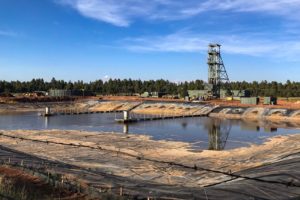
Our high-tech products increasingly make use of rare metals, and mining those resources can have devastating environmental consequences. But if we block projects like the proposed Pebble Mine in Alaska, are we simply forcing mining activity to other parts of the world where protections may be far weaker?
READ MORE

As Pharmaceutical Use Soars,<br /> Drugs Taint Water and Wildlife

Report

As Pharmaceutical Use Soars,
Drugs Taint Water and Wildlife

by sonia shah
With nearly $800 billion in drugs sold worldwide, pharmaceuticals are increasingly being released into the environment. The “green pharmacy” movement seeks to reduce the ecological impact of these drugs, which have caused mass bird die-offs and spawned antibiotic-resistant pathogens.
READ MORE

Beyond the Limits of Earth Day:<br /> Turning Up the Heat on Climate

Opinion

Beyond the Limits of Earth Day:
Turning Up the Heat on Climate

by denis hayes
This April marks the 40th anniversary of Earth Day, an event that has attracted millions to environmental causes. But winning passage of meaningful legislation on climate change requires more than slogans and green talk — it demands intense, determined political action. 
READ MORE

The Natural World Vanishes:<br /> How Species Cease To Matter

Analysis

The Natural World Vanishes:
How Species Cease To Matter

by john waldman
Once, on both sides of the Atlantic, fish such as salmon, eels, and, shad were abundant and played an important role in society, feeding millions and providing a livelihood for tens of thousands. But as these fish have steadily dwindled, humans have lost sight of their significance, with each generation accepting a diminished environment as the new norm.
READ MORE

A Hard Look at the Perils and<br /> Potential of Geoengineering

Analysis

A Hard Look at the Perils and
Potential of Geoengineering

by jeff goodell
The Asilomar conference on geoengineering had been touted as a potentially historic event. What emerged, however, were some unexpected lessons about the possibilities and pitfalls of manipulating the Earth’s climate to offset global warming.
READ MORE

Freeing Energy Policy From<br /> The Climate Change Debate

Opinion

Freeing Energy Policy From
The Climate Change Debate

by ted nordhaus and michael shellenberger
Environmentalists have long sought to use the threat of catastrophic global warming to persuade the public to embrace a low-carbon economy. But recent events, including the tainting of some climate research, have shown the risks of trying to link energy policy to climate science.
READ MORE

A Controversial Drilling Practice<br /> Hits Roadblock in New York

Report

A Controversial Drilling Practice
Hits Roadblock in New York

by bruce stutz
Hydro fracturing is a profitable method of natural gas extraction that uses large quantities of water and chemicals to free gas from underground rock formations. But New York City’s concerns that the practice would threaten its water supply have slowed a juggernaut that has been sweeping across parts of the northeastern United States.
READ MORE

The Secret of Sea Level Rise:<br /> It Will Vary Greatly By Region

Analysis

The Secret of Sea Level Rise:
It Will Vary Greatly By Region

by michael d. lemonick
As the world warms, sea levels could easily rise three to six feet this century. But increases will vary widely by region, with prevailing winds, powerful ocean currents, and even the gravitational pull of the polar ice sheets determining whether some coastal areas will be inundated while others stay dry.
READ MORE

What’s Killing the Great<br /> Forests of the American West?

Report

What’s Killing the Great
Forests of the American West?

by jim robbins
Across western North America, huge tracts of forest are dying off at an extraordinary rate, mostly because of outbreaks of insects. Scientists are now seeing such forest die-offs around the world and are linking them to changes in climate.  
READ MORE

A High-Tech Entrepreneur<br /> On the Front Lines of Solar

Interview

A High-Tech Entrepreneur
On the Front Lines of Solar

by todd woody
After making his fortune with Idealab and a host of technology start-ups, Bill Gross has turned his attention to renewable energy. In an interview with Yale Environment 360, Gross talks about the solar power plant technology his company eSolar is developing and about the future of solar.
READ MORE

The U.S. Chamber: A Record of<br /> Obstruction on Climate Action

Opinion

The U.S. Chamber: A Record of
Obstruction on Climate Action

by shaun goho
The U.S. Chamber of Commerce has been fighting climate-change legislation and is now opposing federal efforts to regulate CO2 emissions. Its actions stand in stark contrast to an earlier business group, which more than a century ago fought to create New York’s vast Adirondack Park.
READ MORE

CO2 Capture and Storage<br /> Gains a Growing Foothold

Report

CO2 Capture and Storage
Gains a Growing Foothold

by david biello
The drive to extract and store CO2 from coal-fired power plants is gaining momentum, with the Obama administration backing the technology and the world’s first capture and sequestration project now operating in the U.S. Two questions loom: Will carbon capture and storage be affordable? And will it be safe?
READ MORE

It’s Green Against Green<br /> In Mojave Desert Solar Battle

Report

It’s Green Against Green
In Mojave Desert Solar Battle

by todd woody
Few places are as well suited for large-scale solar projects as California’s Mojave Desert. But as mainstream environmental organizations push plans to turn the desert into a center for renewable energy, some green groups — concerned about spoiling this iconic Western landscape — are standing up to oppose them.
READ MORE

A Journalist Reflects on the<br /> Rising Heat in Climate Debate

Interview

A Journalist Reflects on the
Rising Heat in Climate Debate

Although he writes one of the most popular blogs on the environment, Dot Earth author Andrew Revkin recognizes both the drawbacks and potential of the Web for exploring complex issues.  In an interview with Yale Environment 360, Revkin explains why the rhetoric surrounding climate change has gotten so hot.audio
READ MORE

The Electric Car Revolution<br /> Will Soon Take to the Streets

Report

The Electric Car Revolution
Will Soon Take to the Streets

by jim motavalli
For years, the promise and hype surrounding electric cars failed to materialize. But as this year’s Detroit auto show demonstrated, major car companies and well-funded startups — fueled by federal clean-energy funding and rapid improvement in lithium-ion batteries — are now producing electric vehicles that will soon be in showrooms.
READ MORE

Arctic Tundra is Being Lost<br /> As Far North Quickly Warms

Report

Arctic Tundra is Being Lost
As Far North Quickly Warms

by bill sherwonit
The treeless ecosystem of mosses, lichens, and berry plants is giving way to shrub land and boreal forest. As scientists study the transformation, they are discovering that major warming-related events, including fires and the collapse of slopes due to melting permafrost, are leading to the loss of tundra in the Arctic.
READ MORE

 Behind Mass Die-Offs,<br /> Pesticides Lurk as Culprit

Report

Behind Mass Die-Offs,
Pesticides Lurk as Culprit

by sonia shah
In the past dozen years, three new diseases have decimated populations of amphibians, honeybees, and — most recently — bats. Increasingly, scientists suspect that low-level exposure to pesticides could be contributing to this rash of epidemics.
READ MORE

Copenhagen: Things Fall Apart<br /> and an Uncertain Future Looms

Opinion

Copenhagen: Things Fall Apart
and an Uncertain Future Looms

by bill mckibben
The Copenhagen summit turned out to be little more than a charade, as the major nations refused to make firm commitments or even engage in an honest discussion of the consequences of failing to act.
READ MORE

The Dangerous Allure of<br /> Global Warming Technofixes

Opinion

The Dangerous Allure of
Global Warming Technofixes

by dianne dumanoski
As the world weighs how to deal with warming, the idea of human manipulation of climate systems is gaining attention. Yet beyond the environmental and technical questions looms a more practical issue: How could governments really commit to supervising geoengineering schemes for centuries?
READ MORE

Bringing Hope to Copenhagen<br /> With a Novel Investment Idea

Opinion

Bringing Hope to Copenhagen
With a Novel Investment Idea

by orville schell
Governments from the developed world will never come up with enough money to help poorer nations adapt to global warming and implement renewable energy technologies. The solution may lie in using a modest allocation of government funds to spur private sector investment in green energy projects in Africa, Asia, and Latin America.
READ MORE

Opinion

Copenhagen: The Gap Between
Climate Rhetoric and Reality

by bill mckibben
As the UN conference enters its second and decisive week, the calls for strong global action to deal with climate change do not appear to be penetrating inside Copenhagen’s Bella Center.
READ MORE

Climategate: Anatomy of<br /> A Public Relations Disaster

Opinion

Climategate: Anatomy of
A Public Relations Disaster

by fred pearce
The way that climate scientists have handled the fallout from the leaking of hacked e-mails is a case study in how not to respond to a crisis. But it also points to the need for climate researchers to operate with greater transparency and to provide more open access to data.
READ MORE

The Case Against the Skeptics<br /> Stirring Up the Warming Debate

Interview

The Case Against the Skeptics
Stirring Up the Warming Debate

The recent controversy over hacked e-mails in the climate science community has emboldened global warming skeptics who dismiss the notion that humanity is dangerously heating up the planet. But James Hoggan, founder of the Desmogblog, is taking on the deniers, accusing them of cynically obfuscating an issue long ago settled by mainstream science.
READ MORE

In Search of New Waters,<br /> Fish Farming Moves Offshore

Report

In Search of New Waters,
Fish Farming Moves Offshore

by john mcquaid
As wild fish stocks continue to dwindle, aquaculture is becoming an increasingly important source of protein worldwide. Now, a growing number of entrepreneurs are raising fish in large pens in the open ocean, hoping to avoid the many environmental problems of coastal fish farms.
READ MORE

Courting Controversy with<br /> a New View on Exotic Species

Report

Courting Controversy with
a New View on Exotic Species

by greg breining
A number of biologists are challenging the long-held orthodoxy that alien species are inherently bad. In their contrarian view, many introduced species have proven valuable and useful and have increased the diversity and resiliency of native ecosystems.
READ MORE

Apocalypse Fatigue: Losing<br /> the Public on Climate Change

Opinion

Apocalypse Fatigue: Losing
the Public on Climate Change

by ted nordhaus and michael shellenberger
Even as the climate science becomes more definitive, polls show that public concern in the United States about global warming has been declining. What will it take to rally Americans behind the need to take strong action on cutting carbon emissions?
READ MORE

Pervasive Plastics: Why the U.S.<br /> Needs New and Tighter Controls

Opinion

Pervasive Plastics: Why the U.S.
Needs New and Tighter Controls

by john wargo
Long a ubiquitous part of modern life, plastics are now in everything from diapers to water bottles to cell phones. But given the proven health threats of some plastics — as well as the enormous environmental costs — the time has come for the U.S. to pass a comprehensive plastics control law.
READ MORE

The Pursuit of New Ways<br /> to Boost Solar Development

Report

The Pursuit of New Ways
to Boost Solar Development

by jon r. luoma
The solar power boom in Germany, Spain, and parts of the United States has been fueled by government subsidies. But now some U.S. states — led by New Jersey, of all places — are pioneering a different approach: issuing tradable credits that can be sold on the open market. So far, the results have been promising.
READ MORE

The Nitrogen Fix:<br /> Breaking a Costly Addiction

Analysis

The Nitrogen Fix:
Breaking a Costly Addiction

by fred pearce
Over the last century, the intensive use of chemical fertilizers has saturated the Earth’s soils and waters with nitrogen. Now scientists are warning that we must move quickly to revolutionize agricultural systems and greatly reduce the amount of nitrogen we put into the planet's ecosystems.
READ MORE

The Greenest Place in the U.S.<br /> May Not Be Where You Think

Opinion

The Greenest Place in the U.S.
May Not Be Where You Think

by david owen
Green rankings in the U.S. don’t tell the full story about the places where the human footprint is lightest. If you really want the best environmental model, you need to look at the nation’s biggest — and greenest — metropolis: New York City.
READ MORE

Geoengineering the Planet:<br /> The Possibilities and the Pitfalls

Interview

Geoengineering the Planet:
The Possibilities and the Pitfalls

Interfering with the Earth’s climate system to counteract global warming is a controversial concept. But in an interview with Yale Environment 360, climate scientist Ken Caldeira talks about why he believes the world needs to better understand which geoengineering schemes might work and which are fantasy — or worse.audio
READ MORE

The Economic Case for<br /> Slashing Carbon Emissions

Opinion

The Economic Case for
Slashing Carbon Emissions

by frank ackerman
Amid a growing call for reducing atmospheric concentrations of CO2 to 350 parts per million, a group of economists maintains that striving to meet that target is a smart investment — and the best insurance policy humanity could buy.
READ MORE

Leveling Appalachia: The Legacy<br /> of Mountaintop Removal Mining

e360 Video Report

Leveling Appalachia: The Legacy
of Mountaintop Removal Mining

During the last two decades, mountaintop removal mining in Appalachia has destroyed or severely damaged more than a million acres of forest and buried nearly 2,000 miles of streams. Leveling Appalachia: The Legacy of Mountaintop Removal Mining, a video report produced by Yale Environment 360 in collaboration with MediaStorm, focuses on the environmental and social impacts of this practice and examines the long-term effects on the region’s forests and waterways.

READ MORE

A Blueprint for Restoring<br /> the World’s Oceans

Interview

A Blueprint for Restoring
the World’s Oceans

In her long career as an oceanographer, Sylvia Earle has witnessed the damage that humanity has done to the Earth’s oceans. But in an interview with Yale Environment 360, she says there's still time to pull the seas back from the brink.
READ MORE

Pulling CO2 from the Air:<br /> Promising Idea, Big Price Tag

Report

Pulling CO2 from the Air:
Promising Idea, Big Price Tag

by david biello
Of the various geoengineering schemes being proposed to cool an overheated planet, one approach — extracting carbon dioxide from the atmosphere using “artificial trees” — may have the most potential. But both questions and big hurdles remain before this emerging technology could be widely deployed.
READ MORE

The <em>Other</em> Inconvenient Truth:<br /> The Crisis in Global Land Use

Opinion

The Other Inconvenient Truth:
The Crisis in Global Land Use

by jonathan foley
As the international community focuses on climate change as the great challenge of our era, it is ignoring another looming problem — the global crisis in land use. With agricultural practices already causing massive ecological impact, the world must now find new ways to feed its burgeoning population and launch a "Greener" Revolution.
READ MORE

A Timely Reminder of<br /> the Real Limits to Growth

Opinion

A Timely Reminder of
the Real Limits to Growth

by bill mckibben
It has been more than 30 years since a groundbreaking book predicted that if growth continued unchecked, the Earth’s ecological systems would be overwhelmed within a century. The latest study from an international team of scientists should serve as an eleventh-hour warning that cannot be ignored.
READ MORE

What Makes Europe<br /> Greener than the U.S.?

Opinion

What Makes Europe
Greener than the U.S.?

by elisabeth rosenthal
The average American produces three times the amount of CO2 emissions as a person in France. A U.S. journalist now living in Europe explains how she learned to love her clothesline and sweating in summer.
READ MORE

Why I Still Oppose<Br> Genetically Modified Crops

Opinion

Why I Still Oppose
Genetically Modified Crops

by verlyn klinkenborg
Introduced more than a decade ago, genetically modified crops are now planted on millions of acres throughout the world. But the fundamental questions about them remain — both about their safety and their long-term impact on global food security and the environment.
READ MORE

Green Intelligence: Toward<br /> True Ecological Transparency

Analysis

Green Intelligence: Toward
True Ecological Transparency

by daniel goleman
Wal-Mart’s push to develop a sustainability index for the products it carries could prove to be a pivotal moment in the effort to make consumers aware of the environmental impacts of what they buy.
READ MORE

New York City Girds Itself<br /> for Heat and Rising Seas

Report

New York City Girds Itself
for Heat and Rising Seas

by bruce stutz
By the end of the century, New York’s climate could resemble that of present-day Raleigh, North Carolina and its harbor could easily rise by two feet or more. Faced with this prospect, the city is among the first urban centers to begin changing the way it builds its infrastructure — and the way it thinks about its future.
READ MORE

Pumping Up the Grid:<br /> Key Step to Green Energy

Opinion

Pumping Up the Grid:
Key Step to Green Energy

by michael noble
The U.S. can build all the wind turbines and solar arrays it wants, but until it does something about improving its outmoded electricity grid, renewable energy will never reach its potential. What we need is a new electricity transmission system, with the costs shared by all.
READ MORE

Reconnecting with Nature<br /> Through Green Architecture

Interview

Reconnecting with Nature
Through Green Architecture

by richard conniff
Stephen Kellert, a social ecologist, is a passionate advocate for the need to incorporate aspects of the natural world into our built environment. In an interview with Yale Environment 360, he explains what we can learn from cathedrals, why flowers in a hospital can heal, and how green design can boost a business’s bottom line.audio
READ MORE

Solar Power from Space:<br /> Moving Beyond Science Fiction

Report

Solar Power from Space:
Moving Beyond Science Fiction

by michael d. lemonick
For more than 40 years, scientists have dreamed of collecting the sun’s energy in space and beaming it back to Earth. Now, a host of technological advances, coupled with interest from the U.S. military, may be bringing that vision close to reality.
READ MORE

A ‘Dow Jones’ for Climate:<br /> The Case for a Warming Index

Opinion

A ‘Dow Jones’ for Climate:
The Case for a Warming Index

by daniel r. abbasi
If a cap-and-trade bill passes Congress this year, it may include weak emissions targets and will likely need to be strengthened in the years to come. One way to guide future policy: create a Global Climate Change Index that could be used to track global warming’s impacts.
READ MORE

Finding Common Ground on<br /> Protecting Montana Wilderness

Opinion

Finding Common Ground on
Protecting Montana Wilderness

by rick bass
In the Yaak Valley of Montana, environmentalists have been talking to loggers, snowmobilers and other longtime opponents of wilderness protection about the future of public lands. Their accord is part of a cooperative effort that could lead to the first wilderness-area designation in the state in a quarter century.
READ MORE

Obama’s Science Adviser<br /> Urges Leadership on Climate

Interview

Obama’s Science Adviser
Urges Leadership on Climate

by elizabeth kolbert
John Holdren, the president’s top science adviser, is playing a key role in shaping the Obama administration’s strategy to combat global warming. In an interview with Yale Environment 360, Holdren discusses the prospects for achieving key breakthroughs on climate change, both in Congress and at upcoming talks in Copenhagen.audio
READ MORE

First Comes Global Warming,<br /> Then an Evolutionary Explosion

Report

First Comes Global Warming,
Then an Evolutionary Explosion

by carl zimmer
In a matter of years or decades, researchers believe, animals and plants already are adapting to life in a warmer world. Some species will be unable to change quickly enough and will go extinct, but others will evolve, as natural selection enables them to carry on in an altered environment.
READ MORE

The Folly of ‘Magical Solutions’<br /> for Targeting Carbon Emissions

Opinion

The Folly of ‘Magical Solutions’
for Targeting Carbon Emissions

by roger a. pielke jr.
Setting unattainable emissions targets is not a policy — it’s an act of wishful thinking, argues one political scientist. Instead, governments and society should focus money and attention on workable solutions for improving energy efficiency and de-carbonizing our economies.
READ MORE

Sen. Kerry on Climate Bill:<br /> ‘We’re Going to Get It Done’

Interview

Sen. Kerry on Climate Bill:
‘We’re Going to Get It Done’

by darren samuelsohn
In an interview with Yale Environment 360, John Kerry praises the carbon cap-and-trade legislation now being debated in the U.S. Senate, describes its importance to upcoming climate talks in Copenhagen, and explains how he plans to help the landmark legislation clear the Senate and become law.audio
READ MORE

Mountaintop Mining Legacy:<br /> Destroying Appalachia’s Streams

Report

Mountaintop Mining Legacy:
Destroying Appalachia’s Streams

by john mcquaid
The environmental damage caused by mountaintop removal mining across Appalachia has been well documented. But scientists are now beginning to understand that the mining operations’ most lasting damage may be caused by the massive amounts of debris dumped into valley streams.
READ MORE

Its Economy In Shambles,<br /> the Midwest Goes Green

Report

Its Economy In Shambles,
the Midwest Goes Green

by keith schneider
It took awhile, but the U.S. Midwest finally has recognized that the industries that once powered its economy will never return.  Now leaders in the region are looking to renewable energy manufacturing and technologies as key to the heartland’s renaissance.
READ MORE

The Challenge for Green Energy:<br /> How to Store Excess Electricity

Report

The Challenge for Green Energy:
How to Store Excess Electricity

by jon r. luoma
For years, the stumbling block for making renewable energy practical and dependable has been how to store electricity for days when the sun isn't shining and the wind isn't blowing. But new technologies suggest this goal may finally be within reach.
READ MORE

NOAA’s New Chief on Restoring<br /> Science to U.S. Climate Policy

Interview

NOAA’s New Chief on Restoring
Science to U.S. Climate Policy

by elizabeth kolbert
Marine biologist Jane Lubchenco now heads one of the U.S. government’s key agencies researching climate change — the National Oceanic and Atmospheric Administration. In an interview with Yale Environment 360, Lubchenco discusses the central role her agency is playing in understanding the twin threats of global warming and ocean acidification.
READ MORE

Report Gives Sobering View<br /> of Warming’s Impact on U.S.

Analysis

Report Gives Sobering View
of Warming’s Impact on U.S.

by michael d. lemonick
A new U.S. government report paints a disturbing picture of the current and future effects of climate change and offers a glimpse of what the nation’s climate will be like by century’s end.
READ MORE

A Plea to President Obama: <br/>End Mountaintop Coal Mining

Opinion

A Plea to President Obama:
End Mountaintop Coal Mining

by james hansen
Tighter restrictions on mountaintop removal mining are simply not enough. Instead, a leading climate scientist argues, the Obama administration must prohibit this destructive practice, which is devastating vast stretches of Appalachia.
READ MORE

The Waxman-Markey Bill:<br /> A Good Start or a Non-Starter?

Opinion

The Waxman-Markey Bill:
A Good Start or a Non-Starter?

As carbon cap-and-trade legislation works it way through Congress, the environmental community is intensely debating whether the Waxman-Markey bill is the best possible compromise or a fatally flawed initiative. Yale Environment 360 asked 11 prominent people in the environmental and energy fields for their views on this controversial legislation.
READ MORE

The Challenge of Copenhagen:<br /> Bridging the U.S.-China Divide

Opinion

The Challenge of Copenhagen:
Bridging the U.S.-China Divide

by orville schell
The United States powered its rise to affluence with fossil fuels, and China resents being told it should not be free to do the same. So as negotiators prepare for crucial climate talks this December, the prospects for reaching agreement remain far from certain.
READ MORE

Report

Beyond Abstraction: Moving
the Public on Climate Action

by doug struck
Most Americans believe climate change is a serious problem but are not committed to making the hard choices needed to deal with it. Recent research begins to explain some of the reasons why.
READ MORE

Analysis

Regional Climate Pact’s Lesson:
Avoid Big Giveaways to Industry

by keith schneider
As Congress struggles over a bill to limit carbon emissions, a cap-and-trade program is already operating in 10 Northeastern states. But the regional project's mixed success offers a cautionary warning to U.S. lawmakers on how to proceed.
READ MORE

Previous Eras of Warming<br /> Hold Warnings for Our Age

Interview

Previous Eras of Warming
Hold Warnings for Our Age

by carl zimmer
By 2100, the world will probably be hotter than it’s been in 3 million years. In an interview with Yale Environment 360, paleoecologist Anthony D. Barnosky describes the unprecedented challenges that many species will face in this era of intensified warming.audio
READ MORE

The Flawed Logic of<br /> the Cap-and-Trade Debate

Opinion

The Flawed Logic of
the Cap-and-Trade Debate

by ted nordhaus and michael shellenberger
Two prominent — and iconoclastic — environmentalists argue that current efforts to tax or cap carbon emissions are doomed to failure and that the answer lies not in making dirty energy expensive but in making clean energy cheap.
READ MORE

Yellowstone’s Grizzly Bears<br /> Face Threats on Two Fronts

Opinion

Yellowstone’s Grizzly Bears
Face Threats on Two Fronts

by doug peacock
The magnificent creature at the heart of the Greater Yellowstone Ecosystem now confronts two grave perils: the loss of its key food source because of rising temperatures, and increased killing by humans. A renowned grizzly expert argues that it’s time to once again protect Yellowstone’s grizzlies under the Endangered Species Act.
READ MORE

The Razing of Appalachia:<br /> Mountaintop Removal Revisited

Report

The Razing of Appalachia:
Mountaintop Removal Revisited

by john mcquaid
Over the past two decades, mountaintop removal mining in Appalachia has obliterated or severely damaged more than a million acres of forest and buried more than 1,000 miles of streams. Now, the Obama administration is showing signs it plans to crack down on this destructive practice.
READ MORE

Putting a Price on Carbon:<br /> An Emissions Cap or a Tax?

Opinion

Putting a Price on Carbon:
An Emissions Cap or a Tax?

The days of freely dumping greenhouse gases into the atmosphere are coming to an end, but how best to price carbon emissions remains in dispute. As the U.S. Congress debates the issue, Yale Environment 360 asked eight experts to discuss the merits of a cap-and-trade system versus a carbon tax.
READ MORE

Hailed as a Miracle Biofuel,<br /> Jatropha Falls Short of Hype

Report

Hailed as a Miracle Biofuel,
Jatropha Falls Short of Hype

by jon r. luoma
The scrubby jatropha tree has been touted as a wonder biofuel with unlimited potential. But questions are now emerging as to whether widespread jatropha cultivation is really feasible or whether it will simply displace badly-needed food crops in the developing world.
READ MORE

To Make Clean Energy Cheaper,<br /> U.S. Needs Bold Research Push

Opinion

To Make Clean Energy Cheaper,
U.S. Needs Bold Research Push

by mark muro and teryn norris
For spurring the transformation to a low-carbon economy, the federal and state governments, universities, and the private sector must join together to create a network of energy research institutes that could speed development of everything from advanced batteries to biofuels.
READ MORE

A Potential Breakthrough<br /> in Harnessing the Sun’s Energy

Report

A Potential Breakthrough
in Harnessing the Sun’s Energy

by david biello
New solar thermal technology overcomes a major challenge facing solar power – how to store the sun’s heat for use at night or on a rainy day. As researchers tout its promise, solar thermal plants are under construction or planned from Spain to Australia to the American Southwest.
READ MORE

Bill McKibben on Building<br /> a Climate Action Movement

Interview

Bill McKibben on Building
a Climate Action Movement

In an interview with Yale Environment 360, Bill McKibben explains why he’s now focused on organizing a citizens movement around climate change — and why he believes this effort is critical for spurring world leaders into action.
READ MORE

Analysis

Using Peer Pressure as a Tool
to Promote Greener Choices

by richard conniff
Environmentalists, utilities, and green businesses are turning to behavioral economics to find innovative ways of influencing people to do the right thing when it comes to the environment. Is this approach really good for the planet or just a fad?
READ MORE

Despite Economy, the Prospects for Green Energy Remain Strong

Analysis

Despite Economy, the Prospects for Green Energy Remain Strong

by jackson robinson and elizabeth levy
The economic downturn need not halt the development of green energy. In fact, with renewable technologies improving dramatically and new U.S. policies emerging, continued progress toward an energy revolution is inevitable.
READ MORE

Twenty Years Later, Impacts<br />  of the Exxon Valdez Linger

Report

Twenty Years Later, Impacts
of the Exxon Valdez Linger

by doug struck
Two decades after the Exxon Valdez spilled 11 million gallons of crude oil into Alaska’s waters, the Prince William Sound, its fishermen, and its wildlife have still not fully recovered.
READ MORE

Analysis

With Temperatures Rising,
Here Comes ‘Global Weirding’

by john waldman
They’re calling it “global weirding” – the way in which rising temperatures are causing species to change their ranges, the timing of their migrations, and the way they interact with other living things. And the implications of all this are only beginning to be understood.
READ MORE

An Army of Lobbyists Readies <br /> for Battle on the Climate Bill

Report

An Army of Lobbyists Readies
for Battle on the Climate Bill

by marianne lavelle
With carbon cap-and-trade legislation now on Washington’s agenda, companies and interest groups have been hiring lobbyists at a feverish pace. For every member of Congress, there are now four climate lobbyists, many of them hoping to derail or water down the effort to reduce greenhouse gas emissions.
READ MORE

A Reporter’s Field Notes on <br />the Coverage of Climate Change

Interview

A Reporter’s Field Notes on
the Coverage of Climate Change

For nearly a decade, The New Yorker’s Elizabeth Kolbert has been reporting on climate change.  In an interview with Yale Environment 360, she talked about the responsibility of both the media and scientists to better inform the public about the realities of a warming world.
READ MORE

Pursuing the Elusive Goal<br />  of a Carbon-Neutral Building

Analysis

Pursuing the Elusive Goal
of a Carbon-Neutral Building

by richard conniff
Yale University’s recently opened Kroon Hall is a state-of-the-art model of where the green building movement is headed. Yet even this showcase for renewable energy highlights the difficulties of creating a building that is 100 percent carbon neutral.
READ MORE

Why I’ll Get Arrested<br /> to Stop the Burning of Coal

Opinion

Why I’ll Get Arrested
to Stop the Burning of Coal

by bill mckibben
On March 2, environmentalist Bill McKibben joined demonstrators who marched on a coal-fired power plant in Washington D.C. In this article for Yale Environment 360, he explains why he was ready to go to jail to protest the continued burning of coal.
READ MORE

Clinton’s China Visit Opens<br />  Door on Climate Change

Opinion

Clinton’s China Visit Opens
Door on Climate Change

by orville schell
Secretary of State Hillary Clinton’s trip to China could be the first step in forging a partnership between the world’s largest emitters of greenhouse gases. A leading China expert sets forth a blueprint for how the U.S. and China can slow global warming – and strengthen their crucial relationship.
READ MORE

The New Urbanists: <br />Tackling Europe’s Sprawl

Analysis

The New Urbanists:
Tackling Europe’s Sprawl

by bruce stutz
In the last few decades, urban sprawl, once regarded as largely a U.S. phenomenon, has spread across Europe. Now an emerging group of planners is promoting a new kind of development — mixed-use, low-carbon communities that are pedestrian-friendly and mass-transit-oriented.
READ MORE

What Obama Must Do<br /> on the Road to Copenhagen

Opinion

What Obama Must Do
on the Road to Copenhagen

by michael northrop and david sassoon
If crucial climate negotiations later this year in Copenhagen are to have any chance of success, the U.S. must take the lead. To do that, President Obama needs to act boldly in the coming months.
READ MORE

Opinion

A Call for Tougher Standards
on Mercury Levels in Fish

by jane hightower
In response to industry pressure, the U.S. Food and Drug Administration has failed to set adequate restrictions on mercury levels in fish. Now the Obama administration must move forcefully to tighten those standards and warn the public which fish are less safe to eat.
READ MORE

Opinion

Moving the U.S. Off Carbon
With Less Pain, More Gain

by carl pope
Many environmentalists assume that putting a price on carbon and creating a renewable energy economy will require major public sacrifice. But the Sierra Club’s Carl Pope argues that a well-designed package of market reforms — not austerity — will lead to a prosperous, low-carbon future.
READ MORE

Obama’s Plan: Clean Energy<br /> Will Help Drive a Recovery

Analysis

Obama’s Plan: Clean Energy
Will Help Drive a Recovery

by keith schneider
In a bold departure from past U.S. policies, President Barack Obama sees clean energy and “green jobs” as critical components of an economic stimulus strategy.
READ MORE

Opinion

As Europe Fiddles, U.S. May
Take Lead on Climate Change

by fred pearce
Europe’s backpedaling last month on toughening its carbon trading system may have signaled the end of its leadership on climate change. Now, with a new administration and Congress, America appears ready to commit itself to tackling global warming.
READ MORE

Is it Time to Consider<br /> Manipulating the Planet?

Interview

Is it Time to Consider
Manipulating the Planet?

by jeff goodell
Although he finds the possibility unsettling, Canadian climate scientist David Keith believes large-scale geoengineering will eventually be deployed to offset global warming. In an interview with Yale Environment 360, Keith explains why scientists must begin researching an “emergency response strategy” for cooling an overheated planet.audio
READ MORE

Plugging in to the<br /> Electric Car Revolution

Report

Plugging in to the
Electric Car Revolution

by jim motavalli
The potential for electric vehicles has been talked about for decades. But a former Israeli software entrepreneur is developing a game-changing infrastructure that could finally make them feasible — a standardized network of charging stations where drivers can plug right in.
READ MORE

Exploring the Economics of Global Climate Change

Interview

Exploring the Economics of Global Climate Change

Gary Yohe is spending a lot of time these days studying the economic issues surrounding climate change. In an interview with Yale Environment 360, the Wesleyan University economist talked about why the world needs to start taking steps to adapt to climate change and why strong action must be taken despite uncertainty about the extent of the warming and its ultimate effects.audio
READ MORE

Opinion

A Green Agenda for the
President’s First 100 Days

Environmentalists – from Bill McKibben and Paul Hawken, to Fred Krupp and Frances Beinecke – offer President Obama their advice on the priorities he should set for the first 100 days of his administration.
READ MORE

Opinion

A Green Scorecard for
Stimulating the Economy

by richard conniff
In evaluating an economic recovery package, the new U.S. administration and Congress must weigh any proposed spending – on highways or mass transit or wind-power transmission routes – on the basis of clear criteria that would assess just how green the projects will be.
READ MORE

Regulators Are Pushing<br /> Bluefin Tuna to the Brink

Opinion

Regulators Are Pushing
Bluefin Tuna to the Brink

by carl safina
The international commission charged with protecting the giant bluefin tuna is once again failing to do its job. Its recent decision to ignore scientists’ recommendations for reducing catch limits may spell doom for this magnificent – and endangered – fish.
READ MORE

Amory Lovins on Why<br /> Energy Efficiency is the Key

Interview

Amory Lovins on Why
Energy Efficiency is the Key

In an interview with Yale Environment 360, Amory Lovins, co-founder and chairman of Rocky Mountain Institute, says that world's biggest untapped energy source is efficiency. And retooling for energy efficiency will require "barrier-busting" at many levels. And government, Lovins says, "should steer, not row." audio
READ MORE

A Detroit Bailout Must<br /> Include a Green Makeover

Analysis

A Detroit Bailout Must
Include a Green Makeover

by jim motavalli
Any federal assistance package for U.S. automakers must require that they finally commit to retooling their industry to produce cleaner, more fuel-efficient cars.
READ MORE

Analysis

Obama is Ready to Move
on a Clean-Energy Economy

by keith schneider
For four decades, American politicians have talked about ending U.S. dependence on foreign oil. But during the campaign and since his election victory, Barack Obama has made it clear that he finally intends to change the way America powers itself.
READ MORE

Offshore Drilling in Alaska:<br /> Time to Slow the Rush

Opinion

Offshore Drilling in Alaska:
Time to Slow the Rush

by margaret williams
In the last eight years, vast areas of offshore Alaska have been opened to oil drilling. Now, a conservationist argues, the Obama administration must reverse the Bush-era policies if the state is to avoid irreparable harm to Arctic wildlife and to some of the most biologically productive waters on earth.
READ MORE

Analysis

The Greenhouse Gas That Nobody Knew

by richard conniff
When industry began using NF3 in high-tech manufacturing, it was hailed as a way to fight global warming. But new research shows that this gas has 17,000 times the warming potential of carbon dioxide and is rapidly increasing in the atmosphere – and that's turning an environmental success story into a public relations disaster.
READ MORE

Opinion

President Obama’s Big Climate Challenge

by bill mckibben
As he assumes the presidency, Barack Obama must make climate-change legislation and investment in green energy top priorities. And he must be ready to take bold — and politically unpopular — action to address global warming.
READ MORE

Opinion

The Clean Air Act:
Jump-Starting Climate Action

by michael northrop and david sassoon
The next U.S. president should not wait for Congress to act on climate-change legislation. Instead, he should make use of the Clean Air Act to begin controlling greenhouse gas emissions and to implement a national cap-and-trade program.
READ MORE

Despite Global Recession, Focus on Climate Change Critical

Interview

Despite Global Recession, Focus on Climate Change Critical

Stavros Dimas, environmental commissioner for the European Union, says the global economic crisis is no reason to lose focus on efforts to fight climate change. In an interview with Yale Environment 360, he talked about the lessons of the EU's emissions trading system, and why the U.S. should not give away permits in a cap-and-trade system — it should get something for them.audio
READ MORE

Report

Deep Geothermal: The Untapped Renewable Energy Source

by david biello
Until now, geothermal technology has only been used on a small scale to produce power. But with major new projects now underway, deep geothermal systems may soon begin making a significant contribution to the world’s energy needs.
READ MORE

Environmental Failure: <br/> A Case for a New Green Politics

Opinion

Environmental Failure:
A Case for a New Green Politics

by james gustave speth
The U.S. environmental movement is failing – by any measure, the state of the earth has never been more dire. What’s needed, a leading environmentalist writes, is a new, inclusive green politics that challenges basic assumptions about consumerism and unlimited growth.
READ MORE

Green Strategies Spur <br />Rebirth of American Cities

Analysis

Green Strategies Spur
Rebirth of American Cities

by keith schneider
U.S. cities have been using green planning to spark economic development, helping create a real urban renaissance in America. With a new administration soon to arrive in Washington, these same approaches may finally start being used on a national scale.
READ MORE

Thomas Friedman: Hope in a Hot, Flat and Crowded World

Interview

Thomas Friedman: Hope in a Hot, Flat and Crowded World

by elizabeth kolbert
In an exclusive interview with Yale Environment 360, best-selling author Thomas Friedman talks with Elizabeth Kolbert about his new book and about why he’s optimistic that an energy-technology revolution can revitalize the United States and set the world on a new, greener path. audio
READ MORE

Report

Financial Crisis Dims Chances
for U.S. Climate Legislation

by margaret kriz
Environmentalists had been looking to a new president and a new Congress to pass legislation dealing with global warming next year. But with tough economic times looming, the passage of a sweeping climate change bill now appears far less likely.
READ MORE

A Corporate Approach to <br />Rescuing the World’s Fisheries

Report

A Corporate Approach to
Rescuing the World’s Fisheries

by nicholas day
The commitment by Wal-Mart, McDonald’s, and other major companies to buy only sustainably-caught seafood is an encouraging sign in an otherwise bleak global fisheries picture. After decades of government inaction and ineffective consumer campaigns, corporate pressure may finally be starting to turn the tide on reckless overfishing.
READ MORE

Analysis

Carbon Offsets:
The Indispensable Indulgence

by richard conniff
Despite the potential for abuse, the concept of paying others to compensate for our environmental sins can be a valuable tool in helping reduce carbon emissions. But the world can’t simply buy its way out of global warming.
READ MORE

Revenge of the Electric Car

Report

Revenge of the Electric Car

by jeff goodell
After years of false starts and failures, the electric car may finally be poised to go big-time. With automakers from GM to Chrysler to Nissan preparing to roll out new plug-in hybrids or all-electric models, it looks like the transition from gasoline to electricity is now irreversible.
READ MORE

The Corn Ethanol Juggernaut

Opinion

The Corn Ethanol Juggernaut

by robert bryce
Oil isn't America's only fuel addiction. Inefficient and environmentally damaging, the corn-ethanol boondoggle will nonetheless be hard to stop.
READ MORE

Alaska’s Pebble Mine:<br /> Fish Versus Gold

Report

Alaska’s Pebble Mine:
Fish Versus Gold

by bill sherwonit
With the support of Gov. Sarah Palin, mining interests have defeated an Alaska ballot measure that could have blocked a huge proposed mining project. Now, plans are moving forward to exploit the massive gold and copper deposit at Bristol Bay, home of one of the world’s greatest salmon runs.
READ MORE

Solar and Wind Power <br />Held Hostage – Again

Opinion

Solar and Wind Power
Held Hostage – Again

by denis hayes
Congress has repeatedly failed to extend the tax credits for renewable energy, which expire at the end of this year. The gridlock is discouraging investment in renewables and jeopardizing major solar and wind projects throughout the country.
READ MORE

A Reality Check on <br />the Pickens Energy Plan

Analysis

A Reality Check on
the Pickens Energy Plan

by vaclav smil
Texas billionaire T. Boone Pickens has always been one to think big. But his sweeping 10-year energy plan for America faces obstacles that may be insurmountable.
READ MORE

The U.S. and China: <br />Common Ground on Climate

Opinion

The U.S. and China:
Common Ground on Climate

by orville schell
The crackdown on dissent surrounding the Beijing Olympics has been a reminder of China’s lingering authoritarianism. Yet for all our differences, the U.S. and China — the world’s two largest emitters of carbon dioxide — have no choice but to work together to tackle climate change.
READ MORE

Report

Solar’s Time Has Finally Arrived

by jon r. luoma
After years of optimistic predictions and false starts, it looks like solar's moment is here at last. Analysts say a pattern of rapid growth, technological breakthroughs, and falling production costs has put solar power on the brink of becoming the world's dominant electricity source.
READ MORE

Analysis

Coal’s New Technology:
Panacea or Risky Gamble?

by jeff goodell
The coal industry, political leaders, and some environmentalists have high hopes for the concept of carbon sequestration, which takes carbon dioxide emissions from coal plants and buries them underground. But so far, this new technology does not live up to the hype.
READ MORE

The Arctic Resource Rush is On

Report

The Arctic Resource Rush is On

by ed struzik
As the Arctic's sea ice melts, energy and mining companies are moving into previously inaccessible regions to tap the abundant riches that lie beneath the permafrost and the ocean floor. The potential environmental impacts are troubling.
READ MORE

Michael Pollan on What’s <br />Wrong with Environmentalism

Interview

Michael Pollan on What’s
Wrong with Environmentalism

In an interview with Yale Environment 360, best-selling author Michael Pollan talks about biofuels and the food crisis, the glories of grass-fed beef, and why environmentalists must look beyond wilderness to sustainability.audio
READ MORE

Analysis

After Bush, Restoring Science
to Environmental Policy

by chris mooney
The Bush administration has been widely criticized for placing politics over science when it comes to environmental policy-making. The next president must act to reverse that trend.
READ MORE

Analysis

Nanotech: The Unknown Risks

by carole bass
Nanotechnology, now used in everything from computers to toothpaste, is booming. But concern is growing that its development is outpacing our understanding of how to use it safely.
READ MORE

As Energy Prices Rise, <br />the Pressure to Drill Builds

Opinion

As Energy Prices Rise,
the Pressure to Drill Builds

by eugene linden
President Bush is urging Congress to open the U.S. coasts and the Arctic National Wildlife Refuge to oil and gas drilling. But America must ultimately wean itself off fossil fuels. The question is whether it makes the transition now — or waits until every last one of its unspoiled places has been drilled.
READ MORE

The Limits of Climate Modeling

Report

The Limits of Climate Modeling

by fred pearce
As the public seeks answers about the future impacts of climate change, some climatologists are growing increasingly uneasy about the localized predictions they are being asked to make.
READ MORE

Biodiversity in the Balance

Analysis

Biodiversity in the Balance

by carl zimmer
Paleontologists and geologists are looking to the ancient past for clues about whether global warming will result in mass extinctions. What they're finding is not encouraging.
READ MORE

Opinion

Climate Solutions:
Charting a Bold Course

by denis hayes
A cap-and-trade system is not the answer, according to a leading alternative-energy advocate. To really tackle climate change, the United States must revolutionize its entire energy strategy.
READ MORE

Analysis

Water Scarcity: The Real Food Crisis

by fred pearce
In the discussion of the global food emergency, one underlying factor is barely mentioned: The world is running out of water. A British science writer, who authored a major book on water resources, here explores the nexus between water overconsumption and current food shortages.
READ MORE

The Myth of Clean Coal

Opinion

The Myth of Clean Coal

by richard conniff
The coal industry and its allies are spending more than $60 million to promote the notion that coal is clean. But so far, “clean coal” is little more than an advertising slogan.
READ MORE

Opinion

States Take the Lead on Climate

by michael northrop and david sassoon
With the Bush Administration and Congress failing to act, many states are devising sweeping climate and energy policies that could be a blueprint for a future national climate policy.
READ MORE

Opinion

The Ethics of Climate Change

by richard c. j. somerville
When it comes to setting climate change policy, science can only tell us so much. Ultimately, a lead report author for the Intergovernmental Panel on Climate Change writes, it comes down to making judgments about what is fair, equitable, and just.
READ MORE

e360 digest

RELATED e360 DIGEST ITEMS


21 May 2012: Pebble Mine Could Devastate
Critical Alaskan Salmon Habitat, EPA Warns

The U.S. Environmental Protection Agency warns that the proposed large-scale Pebble Mine development in the hills above Alaska’s Bristol Bay could cause devastating habitat loss for the world’s largest sockeye salmon fishery. In a draft report, EPA officials calculate that proposals to mine the region — which include an open-pit mine producing 2 billion to 6.5 billion metric tons of copper, gold, and molybdenum ore — could destroy up to 87 miles of streams and nearly seven square miles of wetlands. The EPA also said large-scale mining could make the region vulnerable to catastrophic accidents — including the possible release of acid, metals, and other waste from the mine sites — that could potentially destroy more than 30 miles of salmon-bearing streams leading into Bristol Bay, which hosts runs of roughly 30 million salmon annually. “We conclude that, at a minimum, mining at this scale would cause the loss of spawning and rearing habitat for multiple species of anadromous and resident fish,” the draft assessment states. Even before its release, the 339-page assessment was denounced by critics, including some in Congress who question the EPA’s authority to regulate the mine proposal.
PERMALINK


21 May 2012: Methane Sources Found
Bubbling Up from Melting Ice Caps

U.S. scientists report that they have discovered new sources of methane percolating up from underground reservoirs as glaciers, ice caps, and permafrost melt in the Arctic. University of Alaska researchers, conducting aerial and ground surveys, said they have discovered 150,000 methane seeps in Alaska alone near the margins of retreating glaciers or thawing permafrost. In Greenland, the seeps tended to be concentrated around the margins of ice caps that have been retreating for the past 150 years, the scientists said. Katey M. Walter Anthony, lead author of the study, published in Nature Geoscience, said these seeps in the earth’s frozen zones, or cryosphere, are not currently a major source of methane emissions. But, she added, “As the cryosphere degrades further, it could be a really big source.” Methane is a far more potent greenhouse gas than carbon dioxide, and researchers are concerned rapid warming of the Arctic could trigger a methane “time bomb” as thawing permafrost, vegetation, and land ice result in the release of huge quantities of methane.
PERMALINK


18 May 2012: Apple’s Main Data Center
Will Use Only Green Power by 2013

Apple Inc. has received approval to build two solar power installations at its main data center in North Carolina, allowing the technology giant to run the center entirely with renewable energy by next year. The two solar farms, which will cover 250 acres near its core data center in Maiden, N.C., will utilize high-efficiency solar cells and an advanced solar-tracking system provided by SunPower Corp and startup Bloom Energy. The solar arrays will generate 84 million kWh of electricity per year. Apple, which produces the popular iPhone and iPad, says that all three of its main data centers ultimately will be powered by coal-free electricity. “I’m not aware of any other company producing energy onsite at this scale,” Apple CFO Peter Oppenheimer told Reuters. The company is also developing a 5-megawatt fuel cell facility on the Maiden site. A recent Greenpeace report cited Apple, whose data centers require an ever-expanding amount of power, for lagging behind in efforts to use clean energy.
PERMALINK


17 May 2012: Human-made Pollutants May Be
Expanding Tropical Zone, Study Says

U.S. scientists say emissions in the Northern Hemisphere of black carbon aerosols and ozone, both of which absorb solar radiation, are likely causing the hemisphere’s tropical regions to expand poleward. After comparing observations of tropic expansion — which suggest that the tropics have widened 0.7 degrees per decade since 1970, largely because of global warming — with climate models, researchers at University of California, Riverside, found that the climate models tended to underestimate that shift by about a third. But when they included either black carbon or tropospheric ozone — or both — into the models, the simulations mimicked observations better, suggesting that the emissions are playing a role in tropical expansion because of their radiation-absorbing effect. “If the tropics are moving poleward, then the subtropics will become even drier,” said Robert J. Allen, a professor Earth sciences and lead author of the study, published in the journal Nature. “If a poleward displacement of the mid-latitude storm tracks also occurs, this will shift mid-latitude precipitation poleward, impacting regional agriculture, economy, and society.”
PERMALINK


17 May 2012: Retreat of Columbia Glacier
Vividly Captured in NASA Satellite Images

Two false-color thermal images taken by NASA satellites depict the rapid retreat of the Columbia Glacier in Alaskaover the past 25 years. Since 1986, the

Click to enlarge
Columbia Glacier NASA Satellite

NASA
Alaska’s Columbia Glacier, 1986—2011
glacier’s end-point, or terminus, has retreated 12 miles up an inlet in Prince William Sound, and the glacier has lost about half its total thickness and volume. The top image, taken by a Landsat 5 satellite in 1986, shows two branches of the glacier joining together just north of Heather Island. By 2011, the terminus had retreated far up the inlet, and is identifiable in the bottom image. The blue in the water below the 2011 terminus is floating ice that has calved off the leading edge of the Columbia Glacier, which descends from a 10,000-foot ice field. By 2011, the two branches of the glacier had become separated. The turquoise in the images is snow, and it is more prevalent in 2011 because that image was taken in May, while the top image was shot in July.
PERMALINK


16 May 2012: State Oversight Helps Reduce
Effects of Fracking, Study Says

A new study conducted by the University of Buffalo has found that state regulation helped reduce environmental problems associated with unconventional forms of natural gas drilling in Pennsylvania since 2008. In an analysis of 2,988 violations at nearly 4,000 Pennsylvania hydraulic fracturing drill sites, university researchers found that roughly 38 percent (845 violations) were environmental in nature. Among these violations, 25 were classified as “major” — including site restoration failures, contamination of water supplies, land spills, blowouts, and venting and gas migration. As the number of drilling sites increased, the percentage of environmental violations compared to the number of wells drilled dropped from 58.2 percent in 2008 to 30.5 percent in 2010, largely as a result of increased state oversight, the study said. But the total number of environmental incidents tripled from 2008 to 2011 as the number of wells increased. The report’s three lead authors have energy industry ties, but lead author John Martin said the report was funded entirely by the university.
PERMALINK


Interview: Taking Green Chemistry
Out of the Lab and into Products

Paul Anastas is credited with coining the term “green chemistry,” the movement to make chemicals and industrial processes more environmentally friendly, and during two stints in Washington, D.C., he has worked to
Paul Anastas
Michael Marsland/
Yale University
Paul Anastas
promote those principles at the U.S. Environmental Protection. Anastas, 49, recently left his post as EPA assistant administrator and science advisor to return to teaching at the Yale School of Forestry & Environmental Studies. In an interview with Yale Environment 360, he talks about his role in EPA’s decision to approve the use of chemical dispersants after the BP oil spill, why a chemical-by-chemical approach to toxicity testing is not the best model for protecting the environment or human health, and why companies are increasingly applying the concepts of green chemistry to the design of materials and products. “For every one process or product that’s being reinvented using green chemistry and green engineering,” he says, “there may be a hundred or a thousand that have yet to be rethought under these terms.”
Read the interview
PERMALINK


15 May 2012: Record Number of Fish Stocks
‘Rebuilt’ in 2011, NOAA Study Says

U.S. officials say a record number of fish stocks recovered to healthy population numbers in 2011 while a declining number of species were subject to overfishing. In a reportto Congress, the U.S. National Oceanic and Atmospheric
Chinook Salmon
Wikimedia Commons
Chinook salmon
Administration (NOAA) declared that six species have been “rebuilt,” including the Bering Sea snow crab, the summer flounder found on the mid-Atlantic coast, the haddock in the Gulf of Maine, the Chinook salmon on the northern California coast, the Coho salmon on the Washington coast, and the Widow rockfish on the Pacific coast. Meanwhile, the number of stocks subject to overfishing decreased by four, and overfished stocks declined by three compared with the 2010 report. Samuel D. Rauch III, a NOAA deputy assistant administrator, said the findings underscore the fact that fisheries management — including sometimes unpopular catch limits — has been effective.
PERMALINK


14 May 2012: Americans Willing to Pay
Slightly More For Clean Energy, Study Says

A new study finds that the average American would be willing to pay slightly more for clean energy in support of government initiatives to promote low-carbon electricity generation. In a national survey conducted last year, researchers from Yale and Harvard universities found that Americans, on average, would be willing to pay $162 more per year for their electricity bills — an average increase of about 13 percent — as part of a policy requiring 80 percent of energy come from green sources by 2035. However, that willingness varies greatly depending on political affiliation, age, and geographic region, according to the study published in the journal Nature Climate Change. For instance, support was significantly lower among Republicans, independents, and those with no party affiliation — by 25, 13, and 25 percentage points, respectively. Also, according to the analysis, researchers found that the additional cost per household for clean energy would have to fall below $59 per year to pass the current U.S. Senate, and drop below $48 per year to get through the U.S. House of Representatives.
PERMALINK


10 May 2012: Lack of Profitability Drives
U.S. Company Out of Biofuels Business

A U.S.-based company that used genetic engineering to develop a technology to convert sugar into biofuel has announced that it will stop producing the fuel, at least temporarily, because the process simply isn’t profitable. Amyris, a San Francisco firm that also produces cosmetic products, had engineered a type of yeast that can eat sugar and secrete an oil similar to diesel. While the company had some success using this process in the production of biofuels, including for use by buses in Brazil, it achieved greater profits selling the chemicals for use in other products, such as moisturizers and fragrances, according to a report by MIT’s Technology Review. According to the report, the average selling price for the company’s products is about $7.70 per liter ($29 per gallon), which is far higher than the cost of petroleum-based diesel. And even the $7.70 price was propped up by the amount the company can earn by producing moisturizers. According to Amyris officials, the company will stop producing biodiesels by mid-year, but the firm remains interested in developing commercial-scale fuel plants in the future.
PERMALINK


10 May 2012: New Interactive Website
Maps Distribution of Global Species

U.S. scientists this week unveiled a new online resource that maps the distribution of species worldwide and will ultimately allow users to update or add species data. The so-called “Map of Life” project — which draws on
Map of Life Biodiversity
Map of Life
The “Map of Life”
millions of known locations of various species, expert range maps, World Wildlife Fund data, and the databases of individual scientists — allows users to view distribution records for any terrestrial vertebrate species or fish worldwide, and generate a listing of all species within a 50- to 1,000-kilometer range. An updated version of the site, expected later this year, will include data on plants, trees, and selected invertebrate groups. Ultimately, users will be able to flag and edit data, update their own data sets, and provide feedback on the data. The project, which is funded in part by the U.S. National Science Foundation, is described online in the journal Trends in Ecology & Evolution.
PERMALINK


08 May 2012: Standard EV Charging System
Adopted by U.S., German Automakers

Eight U.S. and German automakers have agreed on a standardized technology system for electric-vehicle charging, a coordinated approach they say will allow drivers to rapidly re-charge their vehicles at most charging stations regardless of power source. The announcement is an important breakthrough for the electric vehicle industry, introducing a common technology that could foster the spread of a recharging infrastructure at gas stations, malls, office buildings, and other locations — a critical step if consumers are to adopt electric vehicle technology. The integrated single-port system — which will be utilized by Audi, BMW, Chrysler, Daimler, Ford, General Motors, Porsche, and Volkswagen — allows drivers to use numerous charging technologies, including AC- and DC-charging, with one vehicle inlet. The system, which will be unveiled at the Electric Vehicle Symposium 26 in Los Angeles, will reportedly be able to recharge an electric vehicle in 15 to 20 minutes.
PERMALINK


07 May 2012: Japanese Tsunami Debris
Is Increasingly Washing Ashore in Alaska

Debris from last year’s tsunami in Japan, including some potentially toxic materials, is increasingly being discovered along the Alaska coastline. Since January, millions of pieces of debris have washed ashore along the Alaska coast, from soccer balls and buoys to motorcycles and large drums containing unknown materials, according to the Marine Conservation Alliance Foundation (MCAF), a Juneau-based group monitoring the debris. In some areas, the group has observed mysterious sludge that apparently had leaked from the containers. “So we’re looking at a potential large-scale environmental problem, and what we’re dealing with now is just the start of it,” Merrick Burden, director of the MCAF, told the Juneau Daily News. Much of the debris that has reached Alaska so far was likely pushed by west-to-east winds, and larger materials, driven by ocean currents, will start to reach the coast next year, officials say. To help state officials better understand the future threats, MCAF is urging mariners, fishing boats, and beachcombers to take photos when they spot debris and report it to their project and the federal government.
PERMALINK


03 May 2012: Earth Observation Satellites
Threatened by Budget Shortfalls in U.S.

Budget shortfalls, launch failures, and mission changes have caused a decline in U.S. earth observation satellites over the last five years, a trend that could undermine the nation’s ability to forecast weather and monitor natural disasters and climate change, according to a new report. The report, published by the National Research Council (NRC), said that a lack of satellite-based earth monitoring technologies “will have profound consequences on science and society.” One factor slowing progress is a shortage of reliable medium-class launchers to send satellites into space, the NRC said. The report said that NASA is making up for some of the shortfalls in earth observation systems by increasing sub-orbital missions and jet flights, and by cooperating on missions with other countries that have launched earth observation satellites. “It’s likely our capabilities will decline fairly precipitously at just the time they’re most needed,” Dennis Hartmann, a professor of atmospheric sciences at the University of Washington and chair of the committee that wrote the report, told the New York Times.
PERMALINK


02 May 2012: Polar Bears Taking Long Swims
In Absence of Summer Sea Ice, Study Says

A six-year study has found that polar bears are capable of swimming great distances when foraging for food, an increasingly critical skill as Arctic sea ice declines in summer. Using GPS collars attached to 52 adult females in the southern Beaufort and Chukchi seas from 2004 to 2009, scientists from the U.S. Geological Survey (USGS) found that about a third of the bears — including some with cubs — completed swims greater than 30 miles. Writing in the Canadian Journal of Zoology, the scientists found that in the case of 50 long-distance swims, the bears traveled an average of 96 miles, swimming from one to 10 days; one bear swam 220 miles. While such stamina will become increasingly important for polar bears as a warming climate makes resting on summer sea ice a less available option, the researchers expressed concern that traveling such great distances takes a greater energy toll on the animals. The study sample was too small to draw conclusions about the fate of entire populations, and it is unclear whether such long swims are a new behavior.
PERMALINK


02 May 2012: Fracking Fluid Can Migrate
Into Marcellus Aquifers, New Study Says

A new study estimates that fluids used in the hydraulic fracturing of natural gas in the Marcellus Shale region can migrate into underground drinking water supplies far more quickly than experts have previously estimated. The study, based on computer modeling and funded by opponents of fracking, concluded that natural faults and fractures in the Marcellus shale, exacerbated by the effects of hydraulic fracturing, or “fracking,” could allow chemicals to reach shallow drinking water supplies in as little as “just a few years.” Companies involved in fracking for natural gas have maintained that impermeable layers of rock in the Marcellus Shale formation would keep fracking fluids safely locked nearly a mile below water supplies. But independent hydrologist Tom Myers, who published his study in the journal Ground Water, says his modeling shows that is not the case. “Simply put, [the rock layers] are not impermeable,” said Myers. The Marcellus Shale underlies large portions of the northeastern U.S., and thousands of fracking wells have been drilled in recent years. The study was funded by two organizations opposed to gas fracking, and some scientists strongly disagree with its conclusions.
PERMALINK


Interview: The Long Battle to Build
The U.S.’s First Offshore Wind Farm

More than a decade after he announced plans to build the nation's first offshore wind farm off Cape Cod, Cape Wind president Jim Gordon is on the verge of finally starting construction. During a 10-year fight to get
Cape Wind President Jim Gordon
Cape Wind
Jim Gordon
approval for the project, Gordon has faced no shortage of challenges, including bitter public squabbles, a regulatory gauntlet of 17 government agencies, court challenges, and now, as he prepares to plant the first turbine, a glut of cheap natural gas that is undercutting renewable energy prices. But backed by Massachusetts laws that require utilities to buy from renewable sources, Gordon is confident the logic of wind power will prevail. In an interview with Yale Environment 360, Gordon describes why he has stuck with this project through a decade of turmoil and why he believes Cape Wind’s long struggle will ultimately be good for the clean energy sector. “It was painful, it was costly, it was frustrating,” Gordon says. “But you know something, if it makes it easier for others after me, I take some pride in that.”
Read the interview
PERMALINK


30 Apr 2012: Leaf-Mimicking Design
Boosts Output of Solar Panels

By adding microscopic folds onto the surface of photovoltaic materials, a design variation borrowed from a natural leaf, researchers say they have been able to boost the solar output of flexible plastic solar cells by 47 percent. According to the scientists, who published their
Leaf Mimicking Solar Panel
Frank Wojciechowski
Folded solar cell
findings in the journal Nature Photonics, the folds acted as a sort of “wave guide,” channeling light waves and increasing the material’s exposure to light. “I expected that it would increase the photocurrent because the folded surface is quite similar to the morphology of leaves, a natural system with high light harvesting efficiency,” said Jong Bok Kim, a researcher from Princeton University and lead author of the study. “However, when I actually constructed solar cells on top of the folded surface, its effect was better than my expectations.” And since the researchers used relatively inexpensive plastic materials — as opposed to the more expensive silicon commonly used in panels — they hope their findings will help lead to a cheaper and efficient source of solar power.
PERMALINK


27 Apr 2012: Warming Climate Has Caused
Water Cycle to Intensify, Study Says

A new study published in the journal Science suggests that the cycle of evaporation and rainfall over the world’s oceans has accelerated 4 percent in the last half-century as a result of global warming, a development that could portend more extreme weather in the decades to come. In an analysis of salinity in oceans from 1950 to 2000, scientists from Lawrence Livermore National Laboratory in California found that the salty areas of the ocean have gotten saltier and fresher areas have gotten fresher, a phenomenon they attribute to stronger patterns of evaporation and precipitation over the ocean. The researchers suggest a 1-degree F increase in global temperatures during that period was enough to trigger the 4 percent intensification of the water cycle. If that trend continues, they say, projected increases in temperatures by 2100 could cause the water cycle to intensify by as much as 20 percent, which means regions already receiving a lot of rainfall will receive even more and areas prone to drought will be even drier.
PERMALINK


25 Apr 2012: A State-by-State Roadmap
To Climate-Friendly Automobiles

The U.S.’s continued reliance on coal and natural gas to generate electricity makes efficient gasoline-powered vehicles a lower-carbon alternative to electric vehicles in

Click to enlarge
Climate Central EVs vs hybrids

Climate Central
A state-by-state roadmap to climate-friendly cars
most states, according to a new report by Climate Central. In an analysis of life-cycle emissions from vehicles, based on how electricity is generated in each state, researchers found that the hybrid Toyota Prius remains a more fuel-efficient option than the all-electric Nissan Leaf in 36 states because the electricity used to charge the Leaf in most states comes largely from the burning of fossil fuels. In fact, the Climate Central study said that in the 10 states where electricity generation is most heavily reliant on coal, 20 hybrid and fuel-efficient gas-powered cars produce fewer CO2 emissions than the Leaf. The report’s authors say the findings suggest the importance of “fuel-efficient, gasoline-powered vehicles as a practical, immediate, and technologically viable” strategy to reduce carbon emissions.
PERMALINK


Yale
Yale Environment 360 is
a publication of the
Yale School of Forestry
& Environmental Studies
.

SEARCH e360


Donate to Yale Environment 360

CONNECT

Twitter: YaleE360
e360 on Facebook
Donate to e360
View mobile site
Bookmark
Share e360
Email newsletter
Subscribe to our feed:
rss


ABOUT

About e360
Contact
Submission Guidelines
Reprints

e360 VIDEO

Warriors of Qiugang
The Warriors of Qiugang, a Yale Environment 360 video that chronicles the story of a Chinese village’s fight against a polluting chemical plant, was nominated for a 2011 Academy Award for Best Documentary (Short Subject). Watch the video.


DEPARTMENTS

Opinion
Reports
Analysis
Interviews
e360 Digest
Video Reports

TOPICS

Biodiversity
Business & Innovation
Climate
Energy
Forests
Oceans
Policy & Politics
Pollution & Health
Science & Technology
Sustainability
Urbanization
Water

REGIONS

Antarctica and the Arctic
Africa
Asia
Australia
Central & South America
Europe
Middle East
North America

e360 VIDEO REPORT

When the Water Ends
As temperatures rise and water supplies dry up, tribes in East Africa increasingly are coming into conflict. A Yale Environment 360 video reports on a phenomenon that could become more common: how worsening drought will pit groups — and nations — against one another. Watch the video.

e360 MOBILE

Mobile
The latest
from Yale
Environment 360
is now available for mobile devices at e360.yale.edu/mobile.


header image
Top Image: aerial view of Iceland. © Google & TerraMetrics.

e360 VIDEO REPORT

Leveling Appalachia
Leveling Appalachia: The Legacy of Mountaintop Removal Mining, an e360 video examining the environmental and human impacts of this mining practice, won the award for best video in the 2010 National Magazine Awards for Digital Media. Watch the video.


OF INTEREST


Yale