Topic: Business & Innovation


For Africa’s Solar Sisters,<br /> Off-Grid Electricity is Power

Interview

For Africa’s Solar Sisters,
Off-Grid Electricity is Power

by diane toomey
U.S. businesswoman Katherine Lucey is working with a network of women entrepreneurs in sub-Saharan Africa to sell inexpensive, household solar energy systems. In an interview with Yale Environment 360, Lucey explains how solar electricity can transform lives, particularly those of rural women and girls.
READ MORE

In Post-Tsunami Japan, A Push<br /> To Rebuild Coast in Concrete

Report

In Post-Tsunami Japan, A Push
To Rebuild Coast in Concrete

by winifred bird
In the wake of the 2011 tsunami, the Japanese government is forgoing an opportunity to sustainably protect its coastline and is instead building towering concrete seawalls and other defenses that environmentalists say will inflict serious damage on coastal ecosystems.
READ MORE

Will Electric Bicycles Get<br /> Americans to Start Pedaling?

Report

Will Electric Bicycles Get
Americans to Start Pedaling?

by marc gunther
Electric bicycles are already popular in Europe and in China, which has more e-bikes than cars on its roads. Now, manufacturers are marketing e-bikes in the U.S., promoting them as a "green" alternative to driving.
READ MORE

Harnessing Citizen Power to<br /> Fund a U.S. Solar Revolution

Interview

Harnessing Citizen Power to
Fund a U.S. Solar Revolution

by todd woody
Environmental activist Billy Parish believes the best way to fight climate change is to fund the renewable energy projects that will supplant fossil fuels. In an interview with Yale Environment 360, he discusses how “crowdfunding” can help lead to the widespread adoption of solar power.
READ MORE

Will Global Coal Boom Go Bust<br /> As Climate Concerns Increase?

The Future of Coal: An e360 Report

Will Global Coal Boom Go Bust
As Climate Concerns Increase?

by fen montaigne
The surge in global coal consumption, driven largely by China and India, has climate scientists deeply worried. But environmentalists and a growing number of financial experts say that alarm over global warming may halt the seemingly inevitable rise of the coal industry.
READ MORE

Copenhagen’s Ambitious Push<br /> To Be Carbon Neutral by 2025

Report

Copenhagen’s Ambitious Push
To Be Carbon Neutral by 2025

by justin gerdes
The Danish capital is moving rapidly toward a zero-carbon future, as it erects wind farms, transforms its citywide heating systems, promotes energy efficiency, and lures more people out of their cars and onto public transportation and bikes.
READ MORE

How Ontario Is Putting an End<br /> To Coal-Burning Power Plants

Report

How Ontario Is Putting an End
To Coal-Burning Power Plants

by keith schneider
Ontario is on the verge of becoming the first industrial region in North America to eliminate all coal-fired electrical generation. Here’s how Canada’s most populous province did it — and what the U.S. and others can learn from it.
READ MORE

An Advocate in Pursuit of<br /> Environmental Justice at EPA

Interview

An Advocate in Pursuit of
Environmental Justice at EPA

by ben goldfarb
Matthew Tejada is taking over the EPA’s Office of Environmental Justice after helping low-income communities in Houston fight air pollution in their neighborhoods. He talks to Yale Environment 360 about how his work in Texas prepared him for the challenges of his new post.
READ MORE

Why a Highly Promising<br /> Electric Car Start-Up Is Failing

Report

Why a Highly Promising
Electric Car Start-Up Is Failing

by marc gunther
Better Place was touted as one of the world’s most innovative electric vehicle start-ups when it launched six years ago. But after selling fewer than 750 cars in a major initiative in Israel and losing more than $500 million, the company’s experience shows that EVs are still not ready for primetime.
READ MORE

Will Reform Finally End The<br /> Plunder of Europe’s Fisheries?

Analysis

Will Reform Finally End The
Plunder of Europe’s Fisheries?

by christian schwägerl
Maria Damanaki, Europe’s crusading fisheries minister, is making major headway in changing a cozy, “old boys” network that over-subsidized the European fishing industry and brought about the severe overfishing of the continent’s marine bounty.
READ MORE

To Control Floods, The Dutch<br /> Turn to Nature for Inspiration

Report

To Control Floods, The Dutch
Turn to Nature for Inspiration

by cheryl katz
The Netherlands’ system of dikes and sea gates has long been the best in the world. But as the country confronts the challenges of climate change, it is increasingly relying on techniques that mimic natural systems and harness nature’s power to hold back the sea.
READ MORE

A Conservative Who Believes<br /> That Climate Change Is Real

Interview

A Conservative Who Believes
That Climate Change Is Real

by roger cohn
Republican Bob Inglis’ statement that he believed in human-caused climate change helped cost him his seat in Congress. In a Yale Environment 360 interview, Inglis explains why he is now trying to persuade his fellow conservatives that their principles can help save the planet.
READ MORE

Probing Impact of Warming<br /> On the World's Food Supply

Interview

Probing Impact of Warming
On the World's Food Supply

by olive heffernan
One of the few potential advantages attributed to soaring carbon dioxide levels has been enhanced crop growth. But in an interview with Yale Environment 360, botanist Stephen Long talks about his research showing why rising temperatures and an increase in agricultural pests may offset any future productivity gains.
READ MORE

To Tackle Runoff, Cities<br /> Turn to Green Initiatives

Report

To Tackle Runoff, Cities
Turn to Green Initiatives

by dave levitan
Urban stormwater runoff is a serious problem, overloading sewage treatment plants and polluting waterways. Now, various U.S. cities are creating innovative green infrastructure — such as rain gardens and roadside plantings — that mimics the way nature collects and cleanses water.
READ MORE

Charting a New Course for<br /> The U.S. and the Environment

Interview

Charting a New Course for
The U.S. and the Environment

by roger cohn
After more than four decades as a leading environmentalist, Gus Speth is disillusioned with what has been accomplished. What’s needed now, he says in an interview with Yale Environment 360, is a transformative change in America’s political economy that will benefit both society and the planet.
READ MORE

Proposed Energy Exploration<br /> Sparks Worry on Ocean Canyons

Report

Proposed Energy Exploration
Sparks Worry on Ocean Canyons

by paul greenberg
The Atlantic Canyons off the Northeastern U.S. plunge as deep as 15,000 feet and harbor diverse and fragile marine ecosystems. Now, the Obama administration’s plans to consider offshore oil and gas exploration in the canyons is troubling conservationists.
READ MORE

In U.S., the Lure of Export May<br /> Further Fuel Natural Gas Boom

Opinion

In U.S., the Lure of Export May
Further Fuel Natural Gas Boom

by shaun goho
As the United States experiences a glut of natural gas, a host of facilities are being proposed that would convert gas to a liquid and export it. But before embracing a gas export boom, the nation should carefully weigh the implications for both the economy and the environment.
READ MORE

Should Environmentalists<br /> Just Say No to Eating Beef?

Report

Should Environmentalists
Just Say No to Eating Beef?

by marc gunther
Conservation organizations are working with industry to try to make beef production more sustainable. But some are questioning whether green groups should be accepting funds from the beef industry or whether they should instead be urging consumers to stop eating beef.
READ MORE

Designing the Urban Landscape<br /> To Meet 21st Century Challenges

Interview

Designing the Urban Landscape
To Meet 21st Century Challenges

by diane toomey
Martha Schwartz, a professor at Harvard’s Graduate School of Design, explains in a Yale Environment 360 interview how creative landscape architecture can help cities become models of sustainability in a world facing daunting environmental challenges.
READ MORE

How Data and Social Pressure<br /> Can Reduce Home Energy Use

Report

How Data and Social Pressure
Can Reduce Home Energy Use

by dave levitan
With the relationship between utilities and their customers changing in unprecedented ways, new companies are deploying vast amounts of data and social psychology techniques to try to persuade people to use less electricity in their homes.
READ MORE

Will President Obama Seize<br /> Moment on Climate Change?

Opinion

Will President Obama Seize
Moment on Climate Change?

by william becker
Climate change received scant attention in the election campaign. But with public concern about global warming growing in the wake of Hurricane Sandy, President Obama has an unprecedented opportunity to take bold action on climate and clean energy.
READ MORE

Why Are Environmentalists<br /> Taking Anti-Science Positions?

Opinion

Why Are Environmentalists
Taking Anti-Science Positions?

by fred pearce
On issues ranging from genetically modified crops to nuclear power, environmentalists are increasingly refusing to listen to scientific arguments that challenge standard green positions. This approach risks weakening the environmental movement and empowering climate contrarians.
READ MORE

What’s Wrong with<br /> Putting a Price on Nature?

Analysis

What’s Wrong with
Putting a Price on Nature?

by richard conniff
The concept of pricing ecosystem services and allowing them to be bought and sold has gained wide acceptance among conservationists in recent years. But does this approach merely obscure nature’s true value and put the natural world at even greater risk?
READ MORE

Green Crude: The Quest to <br /> Unlock Algae’s Energy Potential

Report

Green Crude: The Quest to
Unlock Algae’s Energy Potential

by marc gunther
A host of startup companies are pursuing new technologies that they claim will soon lead to large-scale commercialization of biofuels made from algae. But questions remain about the viability and environmental benefits of what some of its developers are calling “green crude.”
READ MORE

High-Altitude Wind Energy:<br /> Huge Potential — And Hurdles

Report

High-Altitude Wind Energy:
Huge Potential — And Hurdles

by dave levitan
A host of start-up companies are exploring ways to harness the enormous amount of wind energy flowing around the earth, especially at high altitudes. But as these innovators are discovering, the engineering and regulatory challenges of what is known as airborne wind power are daunting.
READ MORE

Beyond Big Dams: Turning to<br /> Grass Roots Solutions on Water

Report

Beyond Big Dams: Turning to
Grass Roots Solutions on Water

by fred pearce
Mega-dams and massive government-run irrigation projects are not the key to meeting world’s water needs, a growing number of experts now say. For developing nations, the answer may lie in small-scale measures such as inexpensive water pumps and other readily available equipment.
READ MORE

For Electric Car Batteries, <br /> The Race for a Rapid Charge

Report

For Electric Car Batteries,
The Race for a Rapid Charge

by dave levitan
The amount of time it takes to recharge lithium-ion batteries has been a major impediment to consumer acceptance of electric vehicles. But a host of companies and researchers are working intensively to develop a battery that can recharge in 10 minutes and power a car for hundreds of miles.
READ MORE

Report

In Bolivia, A Battle Over
A Highway and a Way of Life

by jean friedman-rudovsky
Growing conflicts over development in South America have come to a head in Bolivia, where indigenous groups are resisting a highway project that would slice through a national park. How Bolivia resolves this showdown could point the way for other regions seeking to balance economic growth and the environment.
READ MORE

With Funding Tight, Cities are<br /> Turning to Green Infrastructure

Report

With Funding Tight, Cities are
Turning to Green Infrastructure

by jim robbins
From Seattle to Sweden, an ever-growing number of city and regional governments are using roof gardens, specially designed wetlands, and other forms of “green infrastructure” to rein in pollution from countless diffuse sources — and to save money.
READ MORE

Easing The Collateral Damage<br /> That Fisheries Inflict on Seabirds

Report

Easing The Collateral Damage
That Fisheries Inflict on Seabirds

by jeremy hance
Two recent studies highlight the harm that industrial fisheries are doing to the world’s seabirds, either by overharvesting the birds’ favorite prey or by drowning birds hooked on longlines. But tighter regulations and innovative technologies are starting to significantly reduce seabird “bycatch,” slashing it by 90 percent in some regions.
READ MORE

Shrimp Farms’ Tainted Legacy<br /> Is Target of Certification Drive

Report

Shrimp Farms’ Tainted Legacy
Is Target of Certification Drive

by marc gunther
As shrimp aquaculture has boomed globally to keep pace with surging demand, the environmental toll on mangroves and other coastal ecosystems has been severe. Now, conservation groups and some shrimp farmers are creating a certification scheme designed to clean up the industry and reward sustainable producers.
READ MORE

Dreaming of a Place<br /> Where the Buffalo Roam

Interview

Dreaming of a Place
Where the Buffalo Roam

by hillary rosner
Former Silicon Valley entrepreneur Sean Gerrity is trying to turn a swath of northeastern Montana into a prairie reserve teeming with herds of bison. In an interview with Yale Environment 360, Gerrity talks about the challenges of reclaiming a landscape long dominated by agriculture.
READ MORE

Are Fast-Breeder Reactors<br /> A Nuclear Power Panacea?

Analysis

Are Fast-Breeder Reactors
A Nuclear Power Panacea?

by fred pearce
Proponents of this nuclear technology argue that it can eliminate large stockpiles of nuclear waste and generate huge amounts of low-carbon electricity. But as the battle over a major fast-breeder reactor in the UK intensifies, skeptics warn that fast-breeders are neither safe nor cost-effective.
READ MORE

Melting Glaciers May Worsen<br/> Northwest China’s Water Woes

Report

Melting Glaciers May Worsen
Northwest China’s Water Woes

by mike ives
In China’s sprawling Xinjiang region, where the population is growing and cotton farming is booming, a key river has been running dry in summer. Now a team of international scientists is grappling with a problem facing the Tarim River basin and other mountainous regions — how to secure water supplies as demands increase and glaciers melt.
READ MORE

Self-Driving Cars: Coming <br />Soon to a Highway Near You

Report

Self-Driving Cars: Coming
Soon to a Highway Near You

by dave levitan
Vehicles that virtually drive themselves are no longer the stuff of science fiction, with Google and other companies working to develop self-driving cars. These automated vehicles not only offer improved safety and fewer traffic jams, but real environmental benefits as well.
READ MORE

Will Fish-Loving Japan <br />Embrace Sustainable Seafood?

Report

Will Fish-Loving Japan
Embrace Sustainable Seafood?

by winifred bird
In fish-crazed Japan, where eating seafood is a vital part of the nation's culture, conservation groups are working with companies to persuade more Japanese to eat certified, sustainably caught seafood. It's an uphill struggle, but one that could have significant impact on the world's fisheries.
READ MORE

Cooling a Warming Planet:<br /> A Global Air Conditioning Surge

Analysis

Cooling a Warming Planet:
A Global Air Conditioning Surge

by stan cox
The U.S. has long used more energy for air conditioning than all other nations combined. But as demand increases in the world’s warmer regions, global energy consumption for air conditioning is expected to continue to rise dramatically and could have a major impact on climate change.
READ MORE

Helping U.S. Farmers Increase<br /> Production and Protect the Land

Analysis

Helping U.S. Farmers Increase
Production and Protect the Land

by julie menter
American agriculture is steeped in a chemical-intensive system that wastes money and pollutes the environment. But by making use of new technology and innovative approaches, farmers can boost production and profits — while at the same time improving soil quality, enhancing biodiversity, and protecting habitat.
READ MORE

Can Environmentalists Learn<br /> To Love a Texas Coal Plant?

Report

Can Environmentalists Learn
To Love a Texas Coal Plant?

by marc gunther
A planned carbon capture and storage plant in West Texas is being billed as the “cleanest coal plant in the world.” But can the $3 billion project help move the global power industry toward the elusive goal of low-carbon electricity, or is it just another way of perpetuating fossil fuels?
READ MORE

The Pollution Fallout From<br /> Zimbabwe’s Blood Diamonds

Report

The Pollution Fallout From
Zimbabwe’s Blood Diamonds

by andrew mambondiyani
The regime of President Robert Mugabe has been accused of profiting from the Marange diamond fields in eastern Zimbabwe, garnering illicit funds that could be used to bolster his oppressive security forces. Now critics are alleging the government is failing to stop mining-waste pollution that is sickening livestock and local villagers.
READ MORE

Global Scarcity: Scramble for<br /> Dwindling Natural Resources

Interview

Global Scarcity: Scramble for
Dwindling Natural Resources

by diane toomey
National security expert Michael Klare believes the struggle for the world’s resources will be one of the defining political and environmental realities of the 21st century. In an interview with Yale Environment 360, he discusses the threat this scramble poses to the natural world and what can be done to sustainably meet the resource challenge.
READ MORE

The Clean Water Act at 40:<br /> There’s Still Much Left to Do

Opinion

The Clean Water Act at 40:
There’s Still Much Left to Do

by paul greenberg
The Clean Water Act of 1972, one of the boldest environmental laws ever enacted, turns 40 this year, with an impressive record of cleaning up America's waterways. But from New York Harbor to Alaska’s Bristol Bay, key challenges remain.
READ MORE

Taking Green Chemistry Out<br /> Of The Lab and into Products

Interview

Taking Green Chemistry Out
Of The Lab and into Products

by roger cohn
Paul Anastas pioneered the concept of green chemistry and has led the effort to rethink the way we design and make the products we use. In an interview with Yale Environment 360, he talks about the challenges of bringing this approach to policy making and the frustrations of tackling environmental issues in a politically polarized era.
READ MORE

Solar Windows: Transforming<br /> Buildings Into Energy Producers

Report

Solar Windows: Transforming
Buildings Into Energy Producers

by dave levitan
The vast amount of glass in skyscrapers and office buildings represents enormous potential for an emerging technology that turns windows into solar panels. But major questions remain as to whether solar windows can be sufficiently inexpensive and efficient to be widely adopted.
READ MORE

Waging the Battle to Build the<br /> U.S.’s First Offshore Wind Farm

Interview

Waging the Battle to Build the
U.S.’s First Offshore Wind Farm

by doug struck
After a decade seeking approval to build the U.S.’s first offshore wind farm, Cape Wind president Jim Gordon is on the verge of beginning construction. In an interview with Yale Environment 360, he describes why his struggle has been good for clean energy — and why the fight is still not over.
READ MORE

China’s Looming Conflict<br /> Between Energy and Water

Analysis

China’s Looming Conflict
Between Energy and Water

by christina larson
In its quest to find new sources of energy, China is increasingly looking to its western provinces. But the nation’s push to develop fossil fuel and alternative sources has so far ignored a basic fact — western China simply lacks the water resources needed to support major new energy development.
READ MORE

The Folly of Big Agriculture:<br /> Why Nature Always Wins

Opinion

The Folly of Big Agriculture:
Why Nature Always Wins

by verlyn klinkenborg
Large-scale industrial agriculture depends on engineering the land to ensure the absence of natural diversity. But as the recent emergence of herbicide-tolerant weeds on U.S. farms has shown, nature ultimately finds a way to subvert uniformity and assert itself.
READ MORE

Betting on Technology to<br /> Help Turn Consumers Green

Report

Betting on Technology to
Help Turn Consumers Green

by marc gunther
U.S. consumers tell researchers they want to buy environmentally friendly products, but so far they haven’t been doing that on a large scale. Now a host of companies and nonprofits are trying to use new technology — from smartphones to social networking — to make it easier for buyers to make the green choice.
READ MORE

U.S. Fossil Fuel Boom<br /> Dims Glow of Clean Energy

Report

U.S. Fossil Fuel Boom
Dims Glow of Clean Energy

by keith schneider
A surge in gas and oil drilling in the U.S. is helping drive the economic recovery and is enhancing energy security. But as the situation in Ohio shows, cheaper energy prices and the focus on fossil fuels has been bad news for the renewable energy industry.
READ MORE

California Takes the Lead<br /> With New Green Initiatives

Report

California Takes the Lead
With New Green Initiatives

by mark hertsgaard
Long ahead of the rest of the U.S. on environmental policy, California is taking bold steps to tackle climate change — from committing to dramatic reductions in emissions, to establishing a cap-and-trade system, to mandating an increase in zero-emission vehicles. The bottom line, say state officials, is to foster an economy where sustainability is profitable.
READ MORE

Rethinking Carbon Dioxide:<br /> From a Pollutant to an Asset

Analysis

Rethinking Carbon Dioxide:
From a Pollutant to an Asset

by marc gunther
Three startup companies led by prominent scientists are working on new technologies to remove carbon dioxide from the atmosphere. The scientific community is skeptical, but these entrepreneurs believe the process of CO2 removal can eventually be profitable and help cool an overheating planet.
READ MORE

Amory Lovins Lays Out<br /> His Clean Energy Plan

Interview

Amory Lovins Lays Out
His Clean Energy Plan

by fen montaigne
For four decades, Amory Lovins has been a leading proponent of a renewable power revolution that would wean the U.S. off fossil fuels and usher in an era of energy independence. In an interview with Yale Environment 360, he talks about his latest book, which describes his vision of how the world can attain a green energy future by 2050.
READ MORE

California’s ‘Clean Car’ Rules<br /> Help Remake U.S. Auto Industry

Interview

California’s ‘Clean Car’ Rules
Help Remake U.S. Auto Industry

by paul rogers
With the passage of strict new auto emission and air pollution standards, California has again demonstrated its role as the U.S.’s environmental pacesetter. In an interview with Yale Environment 360, Mary Nichols, chairwoman of the California Air Resources Board, explains how her state is helping drive a clean-car revolution.
READ MORE

In Fast-Track Technology, Hope<br /> For a Second Green Revolution

Report

In Fast-Track Technology, Hope
For a Second Green Revolution

by richard conniff
With advances in a technique known as fast-track breeding, researchers are developing crops that can produce more and healthier food and can adapt and thrive as the climate shifts.
READ MORE

A Vast Canadian Wilderness<br /> Poised for a Uranium Boom

Report

A Vast Canadian Wilderness
Poised for a Uranium Boom

by ed struzik
Canada’s Nunavut Territory is the largest undisturbed wilderness in the Northern Hemisphere. It also contains large deposits of uranium, generating intense interest from mining companies and raising concerns that a mining boom could harm the caribou at the center of Inuit life.
READ MORE

For the Electric Car,<br /> A Slow Road to Success

Report

For the Electric Car,
A Slow Road to Success

by jim motavalli
The big electric car launches of 2011 failed to generate the consumer excitement that some had predicted. But as new battery technologies emerge and tougher mileage standards kick in, automakers and analysts still believe that electric vehicles have a bright future.
READ MORE

Building a Better Bulb:<br /> Lighting Revolution Advances

Report

Building a Better Bulb:
Lighting Revolution Advances

by dave levitan
With the industry’s support and despite political opposition, new U.S. lighting efficiency standards went into effect this month. This move, along with similar actions in Europe and China, is helping spur new technologies that will change the way the world's homes and businesses are illuminated.
READ MORE

As Roads Spread in Rainforests,<br /> The Environmental Toll Grows

Opinion

As Roads Spread in Rainforests,
The Environmental Toll Grows

by william laurance
From Brazil to Borneo, new roads are being built into tropical forests at a dizzying pace, putting previously intact wilderness at risk. If we hope to preserve rainforests, a leading researcher says, new strategies must be adopted to limit the number of roads and reduce their impacts.
READ MORE

Putting a Price on<br /> The Real Value of Nature

Interview

Putting a Price on
The Real Value of Nature

by roger cohn
Indian banker Pavan Sukhdev has been grappling with the question of how to place a monetary value on nature. In an interview with Yale Environment 360, he discusses the ways natural ecosystems benefit people and why policymakers and businesses must rethink how they assess environmental costs and benefits.
READ MORE

Solar Power Off the Grid:<br /> Energy Access for World’s Poor

Opinion

Solar Power Off the Grid:
Energy Access for World’s Poor

by carl pope
More than a billion people worldwide lack access to electricity. The best way to bring it to them — while reducing greenhouse gas emissions — is to launch a global initiative to provide solar panels and other forms of distributed renewable power to poor villages and neighborhoods.
READ MORE

A Development Expert Relies<br /> On the Resilience of Villagers

Interview

A Development Expert Relies
On the Resilience of Villagers

by keith kloor
Geographer Edward Carr has worked extensively in sub-Saharan Africa, where climate change and other environmental threats present a growing challenge. In an interview with Yale Environment 360, Carr talks about why any outside aid to the developing world must build on the inherent capability of the local residents.
READ MORE

Can ‘Climate-Smart’ Agriculture<br /> Help Both Africa and the Planet?

Report

Can ‘Climate-Smart’ Agriculture
Help Both Africa and the Planet?

by fred pearce
One idea promoted at the Durban talks was “climate-smart agriculture," which could make crops less vulnerable to heat and drought and turn depleted soils into carbon sinks. The World Bank and African leaders are backing this new approach, but some critics are skeptical that it will benefit small-scale African farmers.
READ MORE

A Power Company President<br /> Ties His Future to Green Energy

Interview

A Power Company President
Ties His Future to Green Energy

David Crane, the CEO of one of the nation’s largest electric companies, has become a leading proponent of renewable energy. In an interview with Yale Environment 360, he explains how, in the face of government paralysis, the private sector can help lead the shift away from fossil fuels.
READ MORE

Building Retrofits: Tapping<br /> The Energy-Saving Potential

Report

Building Retrofits: Tapping
The Energy-Saving Potential

by david biello
No more cost-effective way to make major cuts in energy use and greenhouse gas emissions exists than retrofitting buildings. Now, from New York to Mumbai to Melbourne, a push is on to overhaul older buildings to make them more energy efficient.
READ MORE

A Once-Polluted Chinese City<br /> Is Turning from Gray to Green

Report

A Once-Polluted Chinese City
Is Turning from Gray to Green

by christina larson
Shenyang — once a key in Mao Zedong’s push to industrialize China — has begun to emerge from its smoggy past, cleaning up its factories and expanding its green spaces. In doing so, this city of 8 million people has been in the forefront of a growing environmental consciousness in urban China.
READ MORE

A Revolutionary Technology is<br /> Unlocking Secrets of the Forest

Report

A Revolutionary Technology is
Unlocking Secrets of the Forest

by rhett butler
A new imaging system that uses a suite of airborne sensors is capable of providing detailed, three-dimensional pictures of tropical forests — including the species they contain and the amount of CO2 they store — at astonishing speed. These advances could play a key role in preserving the world’s beleaguered rainforests.
READ MORE

Are Flame Retardants Safe?<br /> Growing Evidence Says ‘No’

Report

Are Flame Retardants Safe?
Growing Evidence Says ‘No’

by elizabeth grossman
New studies have underscored the potentially harmful health effects of the most widely used flame retardants, found in everything from baby blankets to carpets. Health experts are now calling for more aggressive action to limit these chemicals, including cutting back on highly flammable, petroleum-based materials used in many consumer products.
READ MORE

In Berlin, Bringing Bees<br /> Back to the Heart of the City

Report

In Berlin, Bringing Bees
Back to the Heart of the City

by christian schwägerl
In Germany’s capital — and in cities as diverse as Hong Kong and Chicago — raising bees on rooftops and in small gardens has become increasingly popular, as urban beekeepers find they can reconnect with nature and maybe even make a profit.
READ MORE

A Planetary Crisis Is<br /> A Terrible Thing to Waste

Opinion

A Planetary Crisis Is
A Terrible Thing to Waste

by christian schwägerl
There are striking similarities between the current economic and ecological crises — both involve indulgent over-consumption and a failure to consider the impacts on future generations. But it’s not too late to look to new economic and environmental models and to dramatically change course.
READ MORE

A Solar Panel on Every Roof?<br /> In U.S., Still a Distant Dream

Report

A Solar Panel on Every Roof?
In U.S., Still a Distant Dream

by dave levitan
Daunted by high up-front costs, U.S. homeowners continue to shy away from residential solar power systems, even as utility-scale solar projects are taking off. But with do-it-yourself kits and other innovative installation approaches now on the market, residential solar is having modest growth. 
READ MORE

Assessing Emerging Challenges<br /> In U.S. Environmental Health

Interview

Assessing Emerging Challenges
In U.S. Environmental Health

by elizabeth grossman
From understanding the cumulative impacts of widely used chemicals to preparing for life in a warming world, a host of environmental health issues now face medical experts. In an interview with Yale Environment 360, Lynn Goldman, dean of the George Washington University School of Public Health and Health Services, talks about meeting the challenges.
READ MORE

Tapping Social Media’s Potential<br /> To Muster a Vast Green Army

Report

Tapping Social Media’s Potential
To Muster a Vast Green Army

by caroline fraser
A rapidly expanding universe of citizens’ groups, researchers, and environmental organizations are making use of social media and smart phone applications to document changes in the natural world and to mobilize support for taking action.
READ MORE

As Alberta’s Tar Sands Boom,<br /> Foes Target Project’s Lifelines

Report

As Alberta’s Tar Sands Boom,
Foes Target Project’s Lifelines

by jim robbins
Exploiting North America’s largest oil deposit has destroyed vast stretches of Canada's boreal forest, arousing the ire of those opposed to this massive development of fossil fuels. Now those opponents are battling the Keystone XL pipeline, which would pass through environmentally sensitive Western lands as it moves the oil to market.
READ MORE

Brown to Green: A New Use<br /> For Blighted Industrial Sites

Report

Brown to Green: A New Use
For Blighted Industrial Sites

by dave levitan
Few places in the U.S. are as well suited to developing renewable energy as the contaminated sites known as “brownfields.” But as communities from Philadelphia to California are discovering, government support is critical to enable solar and wind entrepreneurs to make use of these abandoned lands.
READ MORE

New Model for Aquaculture<br /> Takes Hold Far from the Sea

Interview

New Model for Aquaculture
Takes Hold Far from the Sea

With ever-greater quantities of seafood coming from aquaculture operations, some companies are working on ways to reduce the environmental impact of fish farming. In an interview with Yale Environment 360, Josh Goldman of Australis Aquaculture talks about his highly praised closed-containment fish farm in Massachusetts.
READ MORE

Forum: Just How Safe <br /> Is ‘Fracking’ of Natural Gas?

Opinion

Forum: Just How Safe
Is ‘Fracking’ of Natural Gas?


New technologies for freeing natural gas from underground shale formations have led to a hydraulic fracturing boom across the U.S. that is now spreading to other countries. In a Yale Environment 360 forum, eight experts discuss whether “fracking” can be done without serious harm to water and air quality and what environmental safeguards may be needed.

READ MORE

Toxics in the ‘Clean Rooms’:<br /> Are Samsung Workers at Risk?

Report

Toxics in the ‘Clean Rooms’:
Are Samsung Workers at Risk?

by elizabeth grossman
Workers groups in South Korea report an unusually high incidence of cancers and other serious diseases among employees at Samsung’s semiconductor and other electronics plants. While the company denies any link, the pattern of illnesses is disturbingly similar to that seen at semiconductor facilities in the U.S. and Europe.
READ MORE

Off the Pedestal: Creating a<br /> New Vision of Economic Growth

Opinion

Off the Pedestal: Creating a
New Vision of Economic Growth

by james gustave speth
The idea of economic growth as an unquestioned force for good is ingrained in the American psyche. But a longtime environmental leader argues it’s time for the U.S. to reinvent its economy into one that focuses on sustaining communities, family life, and the natural world.
READ MORE

Using CO2 to Make Fuel:<br /> A Long Shot for Green Energy

Report

Using CO2 to Make Fuel:
A Long Shot for Green Energy

by david biello
What if the ever-increasing amounts of carbon dioxide that are heating up the atmosphere could be used to produce an abundant supply of liquid fuels? The U.S. government and private labs are pursuing that Holy Grail of renewable energy — but for now the cost of large-scale production is prohibitive.
READ MORE

Germany’s Unlikely Champion<br /> Of a Radical Green Energy Path

Report

Germany’s Unlikely Champion
Of a Radical Green Energy Path

by christian schwägerl
The disaster at the Fukushima plant in Japan convinced German Chancellor Angela Merkel that nuclear power would never again be a viable option for her country. Now Merkel has embarked on the world’s most ambitious plan to power an industrial economy on renewable sources of energy.
READ MORE

Nissan’s Carlos Ghosn Seeks<br /> Revenge for the Electric Car

Interview

Nissan’s Carlos Ghosn Seeks
Revenge for the Electric Car

Nissan chairman Carlos Ghosn believes the technology currently exists to produce affordable, all-electric cars that will find a global market. In an interview with Yale Environment 360, he talks about Nissan’s new Leaf and why he is confident that, despite earlier setbacks, the time for all-electric vehicles is now.
READ MORE

Against the Odds: Saving<br /> Rhinos in a Troubled Land

Interview

Against the Odds: Saving
Rhinos in a Troubled Land

by christina m. russo
For three decades, Raoul du Toit has led the fight to protect black rhinos in Zimbabwe, a struggle that earned him a Goldman Environmental Prize this week. In an interview with Yale Environment 360, he talks about the challenge of saving this iconic African animal in the face of his country’s economic collapse and a new wave of poaching.
READ MORE

Tracking the Destructive Power<br /> Of the Pacific Ocean’s Tsunamis

Interview

Tracking the Destructive Power
Of the Pacific Ocean’s Tsunamis

The devastating tsunami in northeastern Japan is only one of many that have battered Japan over the eons. In an interview with Yale Environment 360, tsunami and earthquake expert Lori Dengler describes the historic and paleological record of tsunamis across the Pacific, and what it may mean in the future for Japan and the western United States.
READ MORE

Anatomy of a Nuclear Crisis:<br /> A Chronology of Fukushima

Analysis

Anatomy of a Nuclear Crisis:
A Chronology of Fukushima

by david biello
The world’s worst nuclear reactor mishap in 25 years was caused by a massive natural calamity but compounded by what appear to be surprising mistakes by Japanese engineers. The result has been a fast-moving disaster that has left officials careening from one emergency to the next.
READ MORE

Japan’s Once-Powerful<br /> Nuclear Industry is Under Siege

Report

Japan’s Once-Powerful
Nuclear Industry is Under Siege

by caroline fraser
The disaster at the Fukushima-Daiichi nuclear power plant has highlighted the importance of nuclear energy to Japan and the power long wielded by the nuclear sector. But that influence now is sure to wane, to the relief of opponents who have fought for years to check nuclear's rapid growth.
READ MORE

Can Electric Vehicles Take Off?<br /> A Roadmap to Find the Answer

Opinion

Can Electric Vehicles Take Off?
A Roadmap to Find the Answer

by john d. graham and natalie messer
Electric cars are finally coming to market in the U.S., but what is the future potential for this much-touted technology? A good way to find out would be to launch demonstration projects in selected U.S. cities to determine if, given incentives and the proper infrastructure, the public will truly embrace plug-in vehicles.
READ MORE

U.S. High-Speed Rail: Time to<br /> Hop Aboard or Be Left Behind

Opinion

U.S. High-Speed Rail: Time to
Hop Aboard or Be Left Behind

by andy kunz
In recent months, several conservative governors have rejected federal funds to begin constructing high-speed rail lines in their states. But a high-speed rail advocate argues that such ideologically driven actions are folly, as other U.S. states and countries around the world are moving swiftly to embrace a technology that is essential for competitive 21st-century economies.
READ MORE

‘Fracking’ Comes to Europe,<br /> Sparking Rising Controversy

Report

‘Fracking’ Comes to Europe,
Sparking Rising Controversy

by ben schiller
As concerns grow in the U.S. about the environmental impact of hydraulic fracturing, or “fracking,” to extract natural gas from shale, companies have set their sights on Europe and its abundant reserves of this “unconventional” gas. But from Britain to Poland, critics warn of the potentially high environmental cost of this looming energy boom.
READ MORE

How Fisheries Can Gain From<br /> The Lessons of Sustainable Food

Opinion

How Fisheries Can Gain From
The Lessons of Sustainable Food

by john waldman
As agriculture and energy production have made strides toward becoming more sustainable, the world’s fisheries have lagged behind. But restoring our beleaguered oceans to health will require an emphasis on diversification and conservation — and a more sensible mix of fishing practices.
READ MORE

Green Energy’s Big Challenge:<br />  The Daunting Task of Scaling Up

Report

Green Energy’s Big Challenge:
The Daunting Task of Scaling Up

by david biello
To shift the global economy from fossil fuels to renewable energy will require the construction of wind, solar, nuclear, and other installations on a vast scale, significantly altering the face of the planet. Can these new forms of energy approach the scale needed to meet the world’s energy demands?
READ MORE

Refilling the Carbon Sink:<br /> Biochar’s Potential and Pitfalls

Report

Refilling the Carbon Sink:
Biochar’s Potential and Pitfalls

by dave levitan
The idea of creating biochar by burning organic waste in oxygen-free chambers — and then burying it — is being touted as a way to cool the planet. But while it already is being produced on a small scale, biochar’s proponents and detractors are sharply divided over whether it can help slow global warming.
READ MORE

New Mission for U.S. Military:<br /> Breaking its Dependence on Oil

Interview

New Mission for U.S. Military:
Breaking its Dependence on Oil

by louis peck
As head of a new energy office at the Pentagon, Sharon Burke is charged with finding ways for the U.S. armed forces to cut its dangerous reliance on oil. In an interview with Yale Environment 360, she talks about what new technologies are being tested and why the military considers energy use a key strategic issue in the field.
READ MORE

Green Roofs are Starting<br /> To Sprout in American Cities

Report

Green Roofs are Starting
To Sprout in American Cities

by bruce stutz
Long a proven technology in Europe, green roofs are becoming increasingly common in U.S. cities, with major initiatives in Chicago, Portland, and Washington, D.C. While initially more expensive than standard coverings, green roofs offer some major environmental — and economic — benefits.
READ MORE

A Warning by Key Researcher<br /> On Risks of BPA in Our Lives

Interview

A Warning by Key Researcher
On Risks of BPA in Our Lives

by elizabeth kolbert
The synthetic chemical, BPA — found in everything from plastic bottles to cash register receipts — is a potent, estrogen-mimicking compound. In an interview with Yale Environment 360, biologist Frederick vom Saal harshly criticizes U.S. corporations and government regulators for covering up — or ignoring — the many health risks of BPA.
READ MORE

China Turns to Biogas to<br /> Ease Impact of Factory Farms

Report

China Turns to Biogas to
Ease Impact of Factory Farms

by eliza barclay
In China, millions of tons of waste from livestock farms are causing severe water pollution and massive emissions of methane. Now, some large livestock operators are turning to biogas fuel production in hopes of creating “ecological” factory farms.
READ MORE

After a Strong Counterattack, <br />Big Coal Makes a Comeback

Opinion

After a Strong Counterattack,
Big Coal Makes a Comeback

by jeff goodell
With an aggressive campaign focused on advertising, lobbying, and political contributions, America’s coal industry has succeeded in beating back a challenge from environmentalists and clean-energy advocates. The dirty truth is that Big Coal is more powerful today than ever.
READ MORE

In California’s Mojave Desert,<br /> Solar-Thermal Projects Take Off

Interview

In California’s Mojave Desert,
Solar-Thermal Projects Take Off

by todd woody
By year’s end, regulators are expected to approve a host of solar energy projects in California that could eventually produce as much electricity as several nuclear plants. In an interview with Yale Environment 360, John Woolard, the CEO of the company that has begun construction on the world’s largest solar-thermal project, discusses the promise — and challenges — of this green energy boom.
READ MORE

Hungary’s Red Sludge Spill:<br /> The Media and the Eco-Disaster

Opinion

Hungary’s Red Sludge Spill:
The Media and the Eco-Disaster

by elisabeth rosenthal
The sludge spill in Hungary dominated world news for days, as horrific images of red-mud rivers appeared nonstop on the Internet, newspaper front pages, and TV screens. Yet other environmental threats — less visible, but potentially more devastating — often go largely unnoticed.
READ MORE

Rising Hopes that Electric Cars<br /> Can Play a Key Role on the Grid

Report

Rising Hopes that Electric Cars
Can Play a Key Role on the Grid

by dave levitan
Will electric cars one day become part of a network of rechargeable batteries that can help smooth out the intermittent nature of wind and solar power? Many experts believe so, pointing to programs in Europe and the U.S. that demonstrate the promise of vehicle-to-grid technology.
READ MORE

The Promise of Fusion:<br /> Energy Miracle or Mirage?

Report

The Promise of Fusion:
Energy Miracle or Mirage?

by alex salkever
The U.S. has invested billions of dollars trying to create a controlled form of nuclear fusion that could be the energy source for an endless supply of electricity. But as a federal laboratory prepares for a key test, major questions remain about pulling off this long-dreamed-of technological feat.
READ MORE

How One Small Business<br /> Cut Its Energy Use and Costs

Opinion

How One Small Business
Cut Its Energy Use and Costs

by tom bowman
How significant would it be if America’s 29 million small businesses increased their energy efficiency and reduced their emissions? Judging from the example of one California entrepreneur, the impact could be far greater than you might expect.
READ MORE

A High-Risk Energy Boom<br /> Sweeps Across North America

Analysis

A High-Risk Energy Boom
Sweeps Across North America

by keith schneider
Energy companies are rushing to develop unconventional sources of oil and gas trapped in carbon-rich shales and sands throughout the western United States and Canada. So far, government officials have shown little concern for the environmental consequences of this new fossil-fuel development boom.
READ MORE

Steady Growth of Wind Industry <br />Moves EU Closer to Green Goals

Interview

Steady Growth of Wind Industry
Moves EU Closer to Green Goals

by fen montaigne
Europe is in the midst of a wind energy boom, with the continent now installing more wind power capacity than any other form of energy. In an interview with Yale Environment 360, the European Wind Energy Association's Christian Kjaer describes his vision of how wind can lead the way in making Europe’s electricity generation 100 percent renewable by 2050.
READ MORE

A Symbolic Solar Road Trip <br />To Reignite a Climate Movement

Opinion

A Symbolic Solar Road Trip
To Reignite a Climate Movement

by bill mckibben
An activist caravan to bring one of Jimmy Carter’s solar panels back to the White House symbolizes the time that the U.S. has lost in developing new energy technologies – and the urgent need for taking action on climate.
READ MORE

How Marketplace Economics<br /> Can Help Build a Greener World

Analysis

How Marketplace Economics
Can Help Build a Greener World

by daniel goleman
Consumers now have little information about the true ecological impacts of what they buy. But that may be about to change, as new technologies that track supply chains are emerging and companies as diverse as Unilever and Google look to make their products more sustainable.
READ MORE

Are Cell Phones Safe?<br /> The Verdict is Still Out

Report

Are Cell Phones Safe?
The Verdict is Still Out

by bruce stutz
While some studies have suggested that frequent use of cell phones causes increased risk of brain and mouth cancers, others have found no such links. But since cell phones are relatively new and brain cancers grow slowly, many experts are now recommending taking steps to reduce exposure.
READ MORE

With a Boost from Innovation,<br /> Small Wind Is Powering Ahead

Report

With a Boost from Innovation,
Small Wind Is Powering Ahead

by alex salkever
New technologies, feed-in tariffs, and tax credits are helping propel the small wind industry, especially in the United States. Once found mostly in rural areas, small wind installations are now starting to pop up on urban rooftops.
READ MORE

Climate Intervention Schemes<br /> Could Be Undone by Geopolitics

Opinion

Climate Intervention Schemes
Could Be Undone by Geopolitics

by mike hulme
As global warming intensifies, demands for human manipulation of the climate system are likely to grow. But carrying out geoengineering plans could prove daunting, as conflicts erupt over the unintended regional consequences of climate intervention and over who is entitled to deploy climate-altering technologies.
READ MORE

The Greening of Silicon Valley:<br /> It Looks Like the Next Big Thing

Report

The Greening of Silicon Valley:
It Looks Like the Next Big Thing

by todd woody
California’s high-tech giants have long used renewable energy to help power their Silicon Valley headquarters. Now, companies such as Google, Adobe Systems, and eBay are preparing for the next step — investing in off-site solar and wind installations and innovative technologies that will supply their offices and data centers with green electricity.
READ MORE

The Consumption Conundrum:<br /> Driving the Destruction Abroad

Analysis

The Consumption Conundrum:
Driving the Destruction Abroad

by oswald j. schmitz and thomas e. graedel
Our high-tech products increasingly make use of rare metals, and mining those resources can have devastating environmental consequences. But if we block projects like the proposed Pebble Mine in Alaska, are we simply forcing mining activity to other parts of the world where protections may be far weaker?
READ MORE

A High-Tech Entrepreneur<br /> On the Front Lines of Solar

Interview

A High-Tech Entrepreneur
On the Front Lines of Solar

by todd woody
After making his fortune with Idealab and a host of technology start-ups, Bill Gross has turned his attention to renewable energy. In an interview with Yale Environment 360, Gross talks about the solar power plant technology his company eSolar is developing and about the future of solar.
READ MORE

CO2 Capture and Storage<br /> Gains a Growing Foothold

Report

CO2 Capture and Storage
Gains a Growing Foothold

by david biello
The drive to extract and store CO2 from coal-fired power plants is gaining momentum, with the Obama administration backing the technology and the world’s first capture and sequestration project now operating in the U.S. Two questions loom: Will carbon capture and storage be affordable? And will it be safe?
READ MORE

America’s Unfounded Fears of<br /> A Green-Tech Race with China

Analysis

America’s Unfounded Fears of
A Green-Tech Race with China

by christina larson
There has been growing talk about a clean-tech race between China and the U.S., often cast in ominous tones. But the quest to develop and implement renewable energy can be one where both nations win.
READ MORE

The Electric Car Revolution<br /> Will Soon Take to the Streets

Report

The Electric Car Revolution
Will Soon Take to the Streets

by jim motavalli
For years, the promise and hype surrounding electric cars failed to materialize. But as this year’s Detroit auto show demonstrated, major car companies and well-funded startups — fueled by federal clean-energy funding and rapid improvement in lithium-ion batteries — are now producing electric vehicles that will soon be in showrooms.
READ MORE

The Dangerous Allure of<br /> Global Warming Technofixes

Opinion

The Dangerous Allure of
Global Warming Technofixes

by dianne dumanoski
As the world weighs how to deal with warming, the idea of human manipulation of climate systems is gaining attention. Yet beyond the environmental and technical questions looms a more practical issue: How could governments really commit to supervising geoengineering schemes for centuries?
READ MORE

In Search of New Waters,<br /> Fish Farming Moves Offshore

Report

In Search of New Waters,
Fish Farming Moves Offshore

by john mcquaid
As wild fish stocks continue to dwindle, aquaculture is becoming an increasingly important source of protein worldwide. Now, a growing number of entrepreneurs are raising fish in large pens in the open ocean, hoping to avoid the many environmental problems of coastal fish farms.
READ MORE

The Pursuit of New Ways<br /> to Boost Solar Development

Report

The Pursuit of New Ways
to Boost Solar Development

by jon r. luoma
The solar power boom in Germany, Spain, and parts of the United States has been fueled by government subsidies. But now some U.S. states — led by New Jersey, of all places — are pioneering a different approach: issuing tradable credits that can be sold on the open market. So far, the results have been promising.
READ MORE

Pulling CO2 from the Air:<br /> Promising Idea, Big Price Tag

Report

Pulling CO2 from the Air:
Promising Idea, Big Price Tag

by david biello
Of the various geoengineering schemes being proposed to cool an overheated planet, one approach — extracting carbon dioxide from the atmosphere using “artificial trees” — may have the most potential. But both questions and big hurdles remain before this emerging technology could be widely deployed.
READ MORE

Why I Still Oppose<Br> Genetically Modified Crops

Opinion

Why I Still Oppose
Genetically Modified Crops

by verlyn klinkenborg
Introduced more than a decade ago, genetically modified crops are now planted on millions of acres throughout the world. But the fundamental questions about them remain — both about their safety and their long-term impact on global food security and the environment.
READ MORE

Pumping Up the Grid:<br /> Key Step to Green Energy

Opinion

Pumping Up the Grid:
Key Step to Green Energy

by michael noble
The U.S. can build all the wind turbines and solar arrays it wants, but until it does something about improving its outmoded electricity grid, renewable energy will never reach its potential. What we need is a new electricity transmission system, with the costs shared by all.
READ MORE

Reconnecting with Nature<br /> Through Green Architecture

Interview

Reconnecting with Nature
Through Green Architecture

by richard conniff
Stephen Kellert, a social ecologist, is a passionate advocate for the need to incorporate aspects of the natural world into our built environment. In an interview with Yale Environment 360, he explains what we can learn from cathedrals, why flowers in a hospital can heal, and how green design can boost a business’s bottom line.audio
READ MORE

Solar Power from Space:<br /> Moving Beyond Science Fiction

Report

Solar Power from Space:
Moving Beyond Science Fiction

by michael d. lemonick
For more than 40 years, scientists have dreamed of collecting the sun’s energy in space and beaming it back to Earth. Now, a host of technological advances, coupled with interest from the U.S. military, may be bringing that vision close to reality.
READ MORE

Its Economy In Shambles,<br /> the Midwest Goes Green

Report

Its Economy In Shambles,
the Midwest Goes Green

by keith schneider
It took awhile, but the U.S. Midwest finally has recognized that the industries that once powered its economy will never return.  Now leaders in the region are looking to renewable energy manufacturing and technologies as key to the heartland’s renaissance.
READ MORE

The Challenge for Green Energy:<br /> How to Store Excess Electricity

Report

The Challenge for Green Energy:
How to Store Excess Electricity

by jon r. luoma
For years, the stumbling block for making renewable energy practical and dependable has been how to store electricity for days when the sun isn't shining and the wind isn't blowing. But new technologies suggest this goal may finally be within reach.
READ MORE

From the Sewage Plant,<br /> the Promise of Biofuel

Report

From the Sewage Plant,
the Promise of Biofuel

by greg breining
Researchers throughout the world are working to produce biofuel from algae. But a few are trying a decidedly novel approach: Using an abundant and freely available source — human waste — to make the fuel of the future while also treating sewage.
READ MORE

For Greening Aviation, <br /> Are Biofuels the Right Stuff?

Report

For Greening Aviation,
Are Biofuels the Right Stuff?

by david biello
Biofuels – made from algae and non-food plants – are emerging as a potentially viable alternative to conventional jet fuels. Although big challenges remain, the reductions in greenhouse gas emissions could be major.
READ MORE

The Flawed Logic of<br /> the Cap-and-Trade Debate

Opinion

The Flawed Logic of
the Cap-and-Trade Debate

by ted nordhaus and michael shellenberger
Two prominent — and iconoclastic — environmentalists argue that current efforts to tax or cap carbon emissions are doomed to failure and that the answer lies not in making dirty energy expensive but in making clean energy cheap.
READ MORE

To Make Clean Energy Cheaper,<br /> U.S. Needs Bold Research Push

Opinion

To Make Clean Energy Cheaper,
U.S. Needs Bold Research Push

by mark muro and teryn norris
For spurring the transformation to a low-carbon economy, the federal and state governments, universities, and the private sector must join together to create a network of energy research institutes that could speed development of everything from advanced batteries to biofuels.
READ MORE

Despite Economy, the Prospects for Green Energy Remain Strong

Analysis

Despite Economy, the Prospects for Green Energy Remain Strong

by jackson robinson and elizabeth levy
The economic downturn need not halt the development of green energy. In fact, with renewable technologies improving dramatically and new U.S. policies emerging, continued progress toward an energy revolution is inevitable.
READ MORE

Surviving Two Billion Cars:<br /> China Must Lead the Way

Analysis

Surviving Two Billion Cars:
China Must Lead the Way

by deborah gordon and daniel sperling
The number of vehicles worldwide is expected to reach two billion in the next two decades. Surprisingly, China – where the demand for cars has been skyrocketing – just may offer the best hope of creating a new, greener transportation model.
READ MORE

Pursuing the Elusive Goal<br />  of a Carbon-Neutral Building

Analysis

Pursuing the Elusive Goal
of a Carbon-Neutral Building

by richard conniff
Yale University’s recently opened Kroon Hall is a state-of-the-art model of where the green building movement is headed. Yet even this showcase for renewable energy highlights the difficulties of creating a building that is 100 percent carbon neutral.
READ MORE

Obama’s Plan: Clean Energy<br /> Will Help Drive a Recovery

Analysis

Obama’s Plan: Clean Energy
Will Help Drive a Recovery

by keith schneider
In a bold departure from past U.S. policies, President Barack Obama sees clean energy and “green jobs” as critical components of an economic stimulus strategy.
READ MORE

Report

U.S. Automakers Worry that
Greener Cars May Not Sell

by jim motavalli
Even as they debut the next generation of hybrids and battery-powered cars, auto company executives are not confident that the American public will buy them.
READ MORE

The High-Tech Search for <br />a Cleaner Biofuel Alternative

Analysis

The High-Tech Search for
a Cleaner Biofuel Alternative

by carl zimmer
A number of companies, including one headed by biologist and entrepreneur Craig Venter, are developing genetically engineered biofuels that they say will provide a greener alternative to oil. But some environmentalists are far from convinced.
READ MORE

Plugging in to the<br /> Electric Car Revolution

Report

Plugging in to the
Electric Car Revolution

by jim motavalli
The potential for electric vehicles has been talked about for decades. But a former Israeli software entrepreneur is developing a game-changing infrastructure that could finally make them feasible — a standardized network of charging stations where drivers can plug right in.
READ MORE

Capturing the Ocean’s Energy

Report

Capturing the Ocean’s Energy

by jon r. luoma
Despite daunting challenges, technology to harness the power of the waves and tides is now being deployed around the world – from Portugal to South Korea to New York’s East River. These projects, just beginning to produce electricity, are on the cutting edge of renewable energy’s latest frontier: hydrodynamic power.
READ MORE

A Detroit Bailout Must<br /> Include a Green Makeover

Analysis

A Detroit Bailout Must
Include a Green Makeover

by jim motavalli
Any federal assistance package for U.S. automakers must require that they finally commit to retooling their industry to produce cleaner, more fuel-efficient cars.
READ MORE

Report

Deep Geothermal: The Untapped Renewable Energy Source

by david biello
Until now, geothermal technology has only been used on a small scale to produce power. But with major new projects now underway, deep geothermal systems may soon begin making a significant contribution to the world’s energy needs.
READ MORE

Green Strategies Spur <br />Rebirth of American Cities

Analysis

Green Strategies Spur
Rebirth of American Cities

by keith schneider
U.S. cities have been using green planning to spark economic development, helping create a real urban renaissance in America. With a new administration soon to arrive in Washington, these same approaches may finally start being used on a national scale.
READ MORE

Thomas Friedman: Hope in a Hot, Flat and Crowded World

Interview

Thomas Friedman: Hope in a Hot, Flat and Crowded World

by elizabeth kolbert
In an exclusive interview with Yale Environment 360, best-selling author Thomas Friedman talks with Elizabeth Kolbert about his new book and about why he’s optimistic that an energy-technology revolution can revitalize the United States and set the world on a new, greener path. audio
READ MORE

Revenge of the Electric Car

Report

Revenge of the Electric Car

by jeff goodell
After years of false starts and failures, the electric car may finally be poised to go big-time. With automakers from GM to Chrysler to Nissan preparing to roll out new plug-in hybrids or all-electric models, it looks like the transition from gasoline to electricity is now irreversible.
READ MORE

Solar and Wind Power <br />Held Hostage – Again

Opinion

Solar and Wind Power
Held Hostage – Again

by denis hayes
Congress has repeatedly failed to extend the tax credits for renewable energy, which expire at the end of this year. The gridlock is discouraging investment in renewables and jeopardizing major solar and wind projects throughout the country.
READ MORE

A Reality Check on <br />the Pickens Energy Plan

Analysis

A Reality Check on
the Pickens Energy Plan

by vaclav smil
Texas billionaire T. Boone Pickens has always been one to think big. But his sweeping 10-year energy plan for America faces obstacles that may be insurmountable.
READ MORE

Report

Solar’s Time Has Finally Arrived

by jon r. luoma
After years of optimistic predictions and false starts, it looks like solar's moment is here at last. Analysts say a pattern of rapid growth, technological breakthroughs, and falling production costs has put solar power on the brink of becoming the world's dominant electricity source.
READ MORE

Analysis

Nanotech: The Unknown Risks

by carole bass
Nanotechnology, now used in everything from computers to toothpaste, is booming. But concern is growing that its development is outpacing our understanding of how to use it safely.
READ MORE

Opinion

Climate Solutions:
Charting a Bold Course

by denis hayes
A cap-and-trade system is not the answer, according to a leading alternative-energy advocate. To really tackle climate change, the United States must revolutionize its entire energy strategy.
READ MORE

The Myth of Clean Coal

Opinion

The Myth of Clean Coal

by richard conniff
The coal industry and its allies are spending more than $60 million to promote the notion that coal is clean. But so far, “clean coal” is little more than an advertising slogan.
READ MORE

e360 digest

RELATED e360 DIGEST ITEMS


23 May 2013: China Poised to Launch
Much-Anticipated Carbon-Trading Project

China has revealed details of a carbon cap-and-trade pilot project that will be launched next month, a much-anticipated market attempt to rein in carbon dioxide emissions by the world’s biggest emitter. The first phase of the program, which will be implemented in the southern city of Shenzhen, will cover 638 companies that produce 38 percent of the city’s carbon emissions, according to the city branch of the government’s National Development and Reform Commission (NDRC). The system will impose caps on the companies’ CO2 emissions and establish a market for the buying and selling of emissions permits. Eventually, the program will be expanded to include the transportation, manufacturing, and construction sectors, the Guardian reports. By 2014, the experimental scheme will be expanded into six other designated cities and provinces, including Beijing and Shanghai. Earlier this week, the Chinese newspaper 21st Century Business Herald reported that the NDRC is contemplating a nationwide system to control CO2 emissions by 2020.
PERMALINK


21 May 2013: Large Majority of Americans
Believe Global Warming Should be a Priority

Roughly 70 percent of Americans say global warming should be a priority for President Obama and Congress and 61 percent support requiring fossil fuel companies to pay a carbon tax that would be used to help reduce the national debt, according to a new survey by the Yale Project on Climate Change Communication. In a national survey conducted in April, 87 percent of respondents said that the president and Congress should make developing clean sources of energy a priority, 68 percent favored regulating carbon dioxide as a pollutant, and 71 percent supported providing tax rebates for people who buy solar panels and energy-efficient vehicles. Seventy percent said global warming should be at least a “medium” priority, while 28 percent said it should be a low priority. The poll showed that 7 in 10 Americans support funding more research into green energy sources.
PERMALINK


Interview: For Solar Sisters,
Off-Grid Electricity is Power

For Katherine Lucey, the lack of electricity in many parts of the developing world is not just an economic issue, it is a gender issue. A former investment banker,
Solar Sister Africa
Solar Sister
Mother in Uganda with a solar lamp.
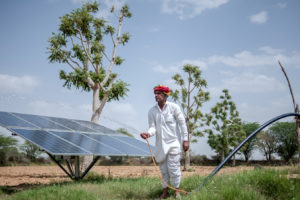
Lucey is the founder and CEO of Solar Sister, a nonprofit that uses a market-based approach to provide solar power to communities in sub-Saharan Africa through a network of women entrepreneurs. Access to energy is critical to alleviating poverty, and women must be at the heart of any solution, says Lacey, since they are the family’s “energy managers,” responsible for cooking and heating needs. In an interview with Yale Environment 360, Lucey explains how Solar Sister’s operations rely on selling inexpensive solar energy systems to households to power lamps and recharge cell phones. Since 2010, Solar Sister has created a network of 401 businesswomen in three countries that has provided electricity to 54,000 people. Lucey says the model can be rapidly expanded and can transform lives. “We’ve got to find a way to tap into market resources and let people in their own communities solve their own problems," she says.
Read the interview
PERMALINK


20 May 2013: System Converts Pig Waste
Into Biogas at Chinese Pig Farms

An international team of researchers has developed a system that will help Chinese farmers convert massive amounts of pig waste into a renewable source of energy
Pig Waste Biogas
Getty Images
and fertilizer. The project, led by Australia-based Cooperative Research Centre for Contamination Assessment and Remediation of the Environment (CRC CARE), uses a two-step anaerobic biodigester that is able to treat 73,000 tons of waste annually, producing 380 cubic meters of biogas daily and about 5,600 tons of fertilizer per year. According to its developers, it will also provide a solution to a growing waste disposal challenge in China, where pigs generate more than 1.4 million tons of excrement annually. “Only 10 percent of this waste is currently treated, posing a considerable disposal headache, as well as health and water quality risks,” said Ravi Naidu, managing director of CRC CARE. While the system is being introduced at pig farms across China, Naidu says the technology could eventually help solve critical waste management challenges worldwide and make the pork industry more sustainable.
PERMALINK


17 May 2013: ‘Artificial Forest’ Nanosystem
Mimics Photosynthesis, Researchers Say

U.S. scientists have developed what they say is the first integrated nanosystem capable of replicating the process of photosynthesis, a sort of “artificial forest” that could one day lead to the production of hydrogen that could be used to power fuel cells. Composed of nanowire structures — including silicon “trunks” and titanium oxide “branches” — the system mimics the role played by chloroplasts in promoting photosynthesis in green plants. By assembling the “trees” in a dense array, resembling a miniature forest, the network lowers sunlight reflection and provides more surface area for hydrogen-producing reactions, the scientists say. “We’ve integrated our nanowire nanoscale heterostructure into a functional system that mimics the integration in chloroplasts and provides a conceptual blueprint for better solar-to-fuel conversion efficiencies in the future,” said Peidong Yang, a chemist with the Lawrence Berkeley National Laboratory and co-author of the study, published in the journal NANO Letters. The lab of Daniel Nocera at Harvard University is doing related research into so-called artificial leaves.
PERMALINK


09 May 2013: Third Coal Export Proposal
Falls By Wayside in Pacific Northwest

A large U.S. pipeline developer has dropped plans to build a $200-million coal export facility in northern Oregon, the third major terminal proposal to be shelved or canceled in the Pacific Northwest. Officials at Houston-based Kinder Morgan say the Columbia River site could not optimally accommodate the 30 million tons of coal that were expected to run through the site annually, largely for markets in Asia. While the company said the decision had nothing to do with public opposition to transporting massive amounts of coal from the Powder River Basin in Wyoming to the coast, critics of the plan say growing protests affected the decision. “If that site didn’t meet their physical constraints, they would have known that… years ago when they proposed this,” Brett VandenHeuvel, director of the group Columbia Riverkeeper, told the Los Angeles Times. Thousands of residents have signed petitions to block the project, citing concerns that the coal trains would cause pollution from coal dust and create traffic congestion. Three other coal export projects — two in Washington and one in Oregon — are still on the table.
PERMALINK


07 May 2013: Battery-Equipped Wind Turbine
Better Integrates Green Energy Onto Grid

General Electric recently introduced a wind turbine equipped with a storage battery, creating a type of “hybrid” turbine that industry leaders hope will improve the integration of intermittent energy sources onto the grid and reduce the costs of wind power. The GE battery is able to store less than one minute of the turbine’s energy potential, but by pairing the battery with advanced wind-forecasting algorithms, wind farm operators could guarantee a certain amount of power output for up to an hour, MIT’s Technology Review reports. Even small amounts of storage are able to compensate for rapid changes in output from renewable sources — such as when wind speeds fall — and thus exert less stress on conventional power plants in responding to the variability of wind and solar. This flexibility will become increasingly important as renewable energy accounts for a greater share of grid capacity, since major shifts in output can trigger voltage problems or blackouts.
PERMALINK


06 May 2013: Solar-Powered Airplane Finishes
First Leg of Coast-to-Coast U.S. Trip

A Swiss pilot this weekend completed the first portion of a five-leg trip across the U.S. in an airplane powered by solar energy. The so-called Solar Impulse aircraft, which runs on energy collected from 12,000 solar cells
Solar Impulse
Solar Impulse
View from the cockpit
in its long wings, flew from San Francisco to Phoenix in 18 hours and 18 minutes. The solar cells simultaneously power four batteries with the storage capacity of an electric car, which allows the plane to fly in darkness. The airplane, with a 208-foot wingspan, is made of lightweight, carbon fiber materials that help it conserve energy, but its spindly structure also makes the plane unable to fly in windy or stormy conditions. Project organizers hope the five-leg journey — which will include stops in Dallas, St. Louis, and Washington and end in New York — will demonstrate the feasibility of long-distance air travel without fuel. By 2015, the project's co-founders, Bertrand Piccard and Andre Borschberg, hope to complete a flight around the world.
PERMALINK


03 May 2013: Seawater Energy Technology
Is Focus of Pilot Project in China

The U.S. defense and aerospace giant, Lockheed Martin, is partnering with a major Chinese company to build a pilot project off the southern Chinese coast that will use temperature differentials between the deep and shallow ocean to generate electricity. The technology, known as ocean thermal energy conversion (OTEC), uses the heat from warm surface waters to boil a fluid with a low boiling point, such as ammonia, producing steam to drive turbines. Colder water is then pumped from 2,500 to 3,000 feet under the sea, which condenses the steam into liquid; the liquid can then be boiled again to produce more steam and power. Lockheed Martin and its Chinese Partner, the Beijing-based Reignwood Group, said their project — the largest OTEC plant ever built — will produce 10 megawatts of power when it opens in 2017, enough to provide electricity for a large, planned resort that Reignwood is building.
PERMALINK


30 Apr 2013: U.S. Government Backs
New Way to Make Diesel from Biomass

The U.S. Energy Department is investing up to $4.3 million in a pilot biomass project that will convert the stalks and leaves of corn plants into diesel fuel using a new chemical process. The pilot plant in Indiana will be run by Mercurius Biofuels, whose goal is to convert the corn biomass into fuel at prices cheap enough to compete with petroleum. Mercurius’s process uses recyclable acids to break down cellulose and make a chemical called chloromethylfurfural, which can be converted into diesel or jet fuel. The inventor of the process, Mark Mascal, a professor of chemistry at the University of California, Davis, says the technology makes more efficient use of the carbon in cellulose and avoids the significant releases of carbon dioxide involved in a common way of making fuel from biomass — converting the cellulose into sugar and fermenting it to make ethanol. Mercurius says the corn stalks and leaves can be converted into chloromethylfurfural at small, local plants and then shipped to larger refineries to make diesel fuel, thus avoiding the high cost of shipping the biomass itself to a central refinery.
PERMALINK


26 Apr 2013: NASA Tests Affirm Viability
Of Biofuel-Powered Commercial Jets

In recent test flights, NASA researchers have confirmed that commercial airliners can safely fly on an alternative jet fuel blend and that under some conditions the biofuel mix produced 30 percent fewer emissions than
NASA Biofuel Test Flight
NASA
Contrails from a NASA DC-8 aircraft
typical jet fuel. After flying DC-8 aircraft using a biofuel blend containing 50 percent camelina plant oil, scientists from Langley Research Center in Virginia say they observed no noticeable difference in the jets’ engine performance. And specially equipped planes that measured the exhaust emissions from the jets’ contrails found the biofuel blend produced fewer emissions, according to NASA. “In terms of these fuels being acceptable for use in commercial aircraft, they’re quite acceptable,” Bruce Anderson, a senior research scientist at Langley Research Center, told the Associated Press. “But we’re still digging into the data.” But while camelina plant oil might eventually emerge as an attractive biofuel source, since it can be grown in arid regions, researchers noted that it is currently cost-prohibitive. Currently, Anderson said, camelina oil costs about $18 per gallon, compared to $4 per gallon for typical jet fuel.
PERMALINK


25 Apr 2013: Metal Demand Could Increase
Nine-Fold as Developing Economies Grow

Global demand for metals could increase nine-fold in the coming years as the world’s developing economies continue to grow, a trend that could have profound negative environmental impacts, a new UN report says. As populations in these countries continue to adopt modern technologies, and nations increasingly construct metal-intensive renewable energy projects, the need for raw metal materials will likely be three to nine times larger than the current global demand, said Achim Steiner, executive director of the United Nations Environment Program (UNEP). While the current demand is typically met by mining for more metals, large-scale mining operations can have adverse environmental consequences, and the supply of some rare earth metals is running low. Saying that there is an urgent need for a more sophisticated approach to recycling the planet's increasingly sophisticated products, the UN suggested that mining companies be enlisted to help sort out valuable metals when the products reach the end of their usefulness.
PERMALINK


22 Apr 2013: Green Energy Investments
To Triple by 2030, Analysis Predicts

Annual investment in renewable energy is predicted to triple between now and 2030, according to a report by Bloomberg New Energy Finance. In an analysis of several factors shaping the global energy future —
First Solar Panels
First Solar Inc.
including economic conditions, market demands, and the evolution of technologies — the group predicted that annual spending may increase from $190 billion last year to $630 billion by 2030. A key factor in the growth is the plunging cost of wind and solar energy, which in the short term has bankrupted many manufacturers. The Bloomberg report also forecast significant growth in hydropower, geothermal, and biomass sources of energy. In the most likely scenario, 70 percent of new power generation capacity between 2012 and 2030 would come from renewable sources — with wind and solar accounting for 30 and 24 percent, respectively — while only 25 percent would come from fossil fuel sources.
PERMALINK


19 Apr 2013: New Solar Cell Process
Achieves Record Efficiency, MIT Says

Researchers at the Massachusetts Institute of Technology (MIT) say they have achieved a major breakthrough in the conversion of sunlight into electricity, surpassing what was long believed to be an absolute limit to the efficiency of solar cell devices. While the process used in the typical photovoltaic (PV) cell process knocks loose one electron inside the PV material to produce an electrical current — but wastes any excess energy carried by a photon — a new process described in the journal Science utilizes that extra energy to produce two electrons. That exploits so-called singlet exciton fission and makes the process far more efficient, creating more electrical energy. An exciton is the excited state of a molecule after absorbing energy. While the material used in the organic solar cell, known as pentacene, was previously known to produce two so-called excitons from one photon, researchers say this is the first time anyone has demonstrated the principle within a photovoltaic device. While the typical solar panel achieves efficiencies no greater than 25 percent, the scientists believe this process can be utilized to achieve efficiencies of more than 30 percent.
PERMALINK


Interview: Using Citizen Power
To Fund a U.S. Solar Revolution

Billy Parish is the president of Mosaic, an Internet “crowdfunding” service that lets individual investors put their money into commercial solar projects and earn a rate of return that
Billy Parish Solar Mosaic
Billy Parish
currently beats anything offered by a bank. This month, California regulators authorized Mosaic to offer up to $100 million in loans for solar projects. Its first loan under that authorization, $157,750 to install a 114-kilowatt array on the Ronald McDonald House in San Diego, was funded within six hours by 171 investors. Parish, 31, a co-founder of the Energy Action Coalition, decided after the failure of the 2009 climate talks in Copenhagen that the best way to drive a clean energy transition was to dive into the renewable energy business. In an interview with Yale Environment 360, Parish talks about why his generation has pursued environmental goals through entrepreneurship, how crowdfunding can fuel the solar revolution, and how he discovered “that sweet spot where making money and doing good overlap.”
Read the interview
PERMALINK


16 Apr 2013: U.S. Offshore Seismic Testing
Threatens Many Marine Species, Study Says

The proposed use of seismic air guns in the search for offshore oil and gas reserves along the U.S. East Coast could injure or kill nearly 140,000 marine animalsannually and disrupt the vital activities of other species,
North Atlantic right whale
Moira Brown/New England Aquarium
North Atlantic right whale
a new study says. The seismic testing, in which guns filled with compressed air are fired repeatedly over deep-sea target areas to provide energy companies an image of the deposits below, would threaten marine species of all sizes, from tiny fish eggs to large whales, according to an analysis by the conservation group Oceana. The group said that the powerful air gun blasts, which it describes as “100,000 times more intense than a jet engine,” could disturb the breathing, feeding, and mating habits for dolphins and whales and cause injury or death to endangered species such as the North Atlantic right whale. The analysis comes as the U.S. Interior Department’s Bureau of Ocean Energy Management completes a study of the potential impacts of seismic activities from Delaware to Florida. Oil industry officials point to other research that shows seismic testing is unlikely to threaten marine mammals.
PERMALINK


15 Apr 2013: Renewable Energy Generated
70 % Of Portugal’s Electricity in Quarter

Portugal generated more than 70 percent of its electricity from renewable sources of energy during the first quarter of 2013, a record amount fueled largely by hydroelectric and wind energy sources, according to a report from the country’s grid operator. Hydroelectric generation provided 37 percent of the nation’s electricity from January to March, a 312-percent increase compared to last year, while wind energy accounted for 27 percent, a 60-percent increase, Redes Energéticas Nacionais (REN) reported. While favorable weather helped drive the record levels in wind and hydroelectric power, the results also reflect Portugal’s investment in renewable energy projects — including wind farms, hydroelectric, solar and wave energy — and an improved electricity grid that allows green energy providers to connect into the system. Nearly 45 percent of the country’s electricity will come from green sources this year compared with just 17 percent five years ago, ThinkProgress reports.
PERMALINK


09 Apr 2013: Artificial Leaf’s ‘Self Healing’
Could Expand Its Practical Use Globally

The so-called “artificial leaf,” a solar cell being developed by MIT and Harvard scientists to produce low-cost electricity, is now capable of “self healing” the damage that occurs during energy production, clearing
Artificial Leaf
Dominick Reuter/MIT
The artificial leaf
a hurdle to deploying the device in the developing world, the researchers say. When dipped into water, the leaf — which is actually a catalyst-coated wafer of silicon about the size of a playing card — is able to split water into its two components, hydrogen and oxygen, which can then be collected and used as fuel to power a fuel cell. “Surprisingly, some of the catalysts we’ve developed for use in the artificial leaf device actually heal themselves,” Daniel Nocera of Harvard, the leader of the research team, told a meeting of the American Chemical Society. While earlier versions of the device required pure water, the self-healing properties enable users to operate the leaf using impure, bacteria-contaminated water. According to the researchers, the leaf is now able to generate 100 watts of electricity 24 hours a day with just a quart of water.
PERMALINK


08 Apr 2013: Project to Test Promise of
Small, Vertical-Axis Wind Turbines

A wind farm being planned in a remote Alaska village will seek to demonstrate that small, vertical-axis turbines can produce more energy than conventional wind turbines and cause less environmental damage.
Small Vertical Axis Wind Turbines
Caltech
Vertical-axis wind turbines
While the turbines used in most standard wind farm projects can produce turbulence that actually decreases the output of the turbines downstream, John Dabiri, a California Institute of Technology professor, says that small, vertical-axis turbines can create a wake that actually boosts the output of adjacent turbines if positioned strategically. In addition, the smaller turbines can be placed closer together without causing aerodynamic interference, are cheaper to produce, and are less likely to kill birds, Dabiri told MIT’s Technology Review. Dabiri says he hopes his Alaska project, which could eventually include 70 turbines in the village of Igiugig, can generate as much energy as the diesel generators currently used by the community. Critics argue that the vertical-axis turbines aren’t as efficient as conventional turbines.
PERMALINK


04 Apr 2013: U.S. Company Shelves Solar
Thermal Plant as Utility Cancels Contract

U.S.-based BrightSource Energy has shelved its second major solar thermal project this year as the company and Pacific Gas and Electric terminated the utility’s contract to buy power generated by the plant in south-central California. In an email, a BrightSource spokesman said the $2.9 billion Hidden Hills project, which would have been built in Inyo County near the Nevada border, was suspended due to “uncertainty around the timing of transmission upgrades,” Bloomberg News reports, although regulators' environmental concerns also seemed to play a role. Like another project canceled by BrightSource earlier this year, the 500-megawatt Hidden Hills plant would have utilized thousands of mirrors reflecting sunlight onto central towers to produce steam. The California Energy Commission, which was reviewing the project, found last year that the solar installation would have “significant” environmental impacts, suggesting that the use of photovoltaic solar panels would be “environmentally superior.” Officials at BrightSource, which recently completed a solar thermal plant in the Mojave desert, disputed that analysis.
PERMALINK


Yale
Yale Environment 360 is
a publication of the
Yale School of Forestry
& Environmental Studies
.

SEARCH e360


Donate to Yale Environment 360

CONNECT

Twitter: YaleE360
e360 on Facebook
Donate to e360
View mobile site
Bookmark
Share e360
Email newsletter
Subscribe to our feed:
rss


ABOUT

About e360
Contact
Submission Guidelines
Reprints

e360 PHOTO GALLERY

To Catch a Rhino Welz
South African photojournalist Adam Welz documents the harrowing relocation of six white rhinos to a region that has lost all its rhinos to poaching. View the gallery.


DEPARTMENTS

Opinion
Reports
Analysis
Interviews
e360 Digest
Podcasts
Video Reports

TOPICS

Biodiversity
Business & Innovation
Climate
Energy
Forests
Oceans
Policy & Politics
Pollution & Health
Science & Technology
Sustainability
Urbanization
Water

REGIONS

Antarctica and the Arctic
Africa
Asia
Australia
Central & South America
Europe
Middle East
North America

e360 VIDEO

Into Heart of Ecuador Yasuni
A Yale Environment 360 video explores Ecuador’s threatened Yasuni Biosphere Reserve with scientists inventorying its stunning forests and wildlife. Watch the video.

e360 MOBILE

Mobile
The latest
from Yale
Environment 360
is now available for mobile devices at e360.yale.edu/mobile.

e360 VIDEO

Colorado River Video
In a Yale Environment 360 video, photographer Pete McBride documents how increasing water demands have transformed the Colorado River, the lifeblood of the arid Southwest. Watch the video.


header image
Top Image: aerial view of Iceland. © Google & TerraMetrics.

e360 VIDEO

Warriors of Qiugang
The Warriors of Qiugang, a Yale Environment 360 video that chronicles the story of a Chinese village’s fight against a polluting chemical plant, was nominated for a 2011 Academy Award for Best Documentary (Short Subject). Watch the video.


OF INTEREST


Yale