Topic: Forests
Interview
Monitoring A Grim Rise
In the Illegal Ivory Trade
For two decades, TRAFFIC’s Tom Milliken has tracked the illicit ivory trade that has led to the continued slaughter of Africa’s elephants. In an interview with Yale Environment 360, Milliken talks about the recent increase in ivory seizures and the criminal gangs that supply Asia’s black market for ivory.
Opinion
As Roads Spread in Rainforests,
The Environmental Toll Grows
From Brazil to Borneo, new roads are being built into tropical forests at a dizzying pace, putting previously intact wilderness at risk. If we hope to preserve rainforests, a leading researcher says, new strategies must be adopted to limit the number of roads and reduce their impacts.
Analysis
China’s Reforestation Programs:
Big Success or Just an Illusion?
China has undertaken ambitious reforestation initiatives that have increased its forest cover dramatically in the last decade. But scientists are now raising questions about just how effective these grand projects will turn out to be.
Report
Sweden’s Green Veneer Hides
Unsustainable Logging Practices
Sweden has a reputation as being one of the world’s most environmentally progressive nations. But its surprisingly lax forestry laws often leave decisions about logging to the timber companies — and as a result, large swaths of biologically-rich boreal forest are being lost.
Analysis
China’s Appetite for Wood
Takes a Heavy Toll on Forests
More than half of the timber now shipped globally is destined for China. But unscrupulous Chinese companies are importing huge amounts of illegally harvested wood, prompting conservation groups to step up boycotts against rapacious timber interests.
Report
Military Bases Provide Unlikely
Refuge For South’s Longleaf Pine
The expanses of longleaf pine forest that once covered the southeastern United States have been whittled away to just 3 percent of their original range. But as scientists are discovering, this threatened forest ecosystem has found a sanctuary in an unexpected place — U.S. military installations.
Report
Killing Wolves: A Product of
Alberta’s Big Oil and Gas Boom
The development of the tar sands and other oil and gas fields in Alberta has carved up the Canadian province's boreal forest, threatening herds of woodland caribou. But rather than protect caribou habitat, officials have taken a controversial step: the large-scale killing of the wolves that prey on the caribou.
Report
Can Wildlife Corridors
Heal Fragmented Landscapes?
Conservationists have long called for creating ecological corridors that would enable large mammals and other wildlife to roam more freely across an increasingly developed planet. But now scientists are taking a closer look at just how well these corridors are working and what role they might play in a warming world.
Report
A Revolutionary Technology is
Unlocking Secrets of the Forest
A new imaging system that uses a suite of airborne sensors is capable of providing detailed, three-dimensional pictures of tropical forests — including the species they contain and the amount of CO2 they store — at astonishing speed. These advances could play a key role in preserving the world’s beleaguered rainforests.
Report
The Big Payback from
Bringing Back Peat Bogs
The draining and burning of peat bogs is a major global source of CO2 emissions. Now, a pilot project in Russia — where wildfires burned vast areas of dried-out bogs last summer — is looking to re-flood and restore tens of thousands of acres to their natural state.
Analysis
The Crucial Role of Predators:
A New Perspective on Ecology
Scientists have recently begun to understand the vital role played by top predators in ecosystems and the profound impacts that occur when those predators are wiped out. Now, researchers are citing new evidence that shows the importance of lions, wolves, sharks, and other creatures at the top of the food chain.
Report
A Huge Oil Palm Plantation
Puts African Rainforest at Risk
As global agricultural companies turn to Africa, a U.S. firm is planning a massive oil palm plantation in Cameroon that it says will benefit local villagers. But critics argue that the project would destroy some of the key remaining forests in the West African nation and threaten species-rich reserves.
Report
Saving Ancient Walnut Forests
In the Valleys of Central Asia
The former Soviet republic of Kyrgyzstan is home to some of the world’s largest remaining forests of walnut and wild fruit trees. In an effort to sustainably manage this global resource, an international project has focused on ending Soviet-style management and giving power — and a profit incentive — to local farmers.
Report
Tapping Social Media’s Potential
To Muster a Vast Green Army
A rapidly expanding universe of citizens’ groups, researchers, and environmental organizations are making use of social media and smart phone applications to document changes in the natural world and to mobilize support for taking action.
Analysis
In Brazil, Palm Oil Plantations
Could Help Preserve the Amazon
In recent years, palm oil development in Malaysia and Indonesia has devastated tropical forests there. With Brazil on the verge of its own palm oil boom, can sustainable cultivation of the crop actually help save the rainforest, rather than hastening its destruction?
Analysis
The World’s Tropical Forests
Are Already Feeling the Heat
Much attention has been paid to how global warming is affecting the world’s polar regions and glaciers. But a leading authority on tropical forests warns that rising temperatures could have an equally profound impact on rainforests and are already taking a toll on some tropical species.
Interview
A Scientist Extols the Value
Of Forests Shaped by Humans
Political ecologist Susanna Hecht has incurred the wrath of some conservationists by arguing that the notion of the primeval forest is largely a myth and that disturbed forests play a vital ecological function. In an interview with Yale Environment 360, she makes the case for a “new rurality” that places less emphasis on protected forests and more on the areas where people live.
Report
As Larger Animals Decline,
Forests Feel Their Absence
With giant tortoises, elephants, and other fruit-eating animals disappearing from many of the world’s tropical woodlands, forests are suffering from the loss of a key function performed by these creatures: the dispersal of tree seeds. But a new experiment shows that introduced species may be able to fulfill this vital ecological role.
Interview
A Fierce Advocate for Grizzlies
Sees Warning Signs for the Bear
Doug Peacock has been tireless defender of the Yellowstone grizzly for decades, but he believes the bear may now be facing its toughest threat yet. In an interview with Yale Environment 360, Peacock talks about the insect infestation that is destroying a key food source for grizzlies and recalls some of his closest encounters with the bears.
Analysis
Indonesia’s Corruption Legacy
Clouds a Forest Protection Plan
Norway and other nations have vowed to invest billions of dollars to help preserve Indonesia’s remaining tropical forests. But can foreign involvement stem the tide of graft and uncontrolled logging that has steadily decimated one of the world’s largest areas of rainforest?
Analysis
Sustainable Palm Oil:
Rainforest Savior or Fig Leaf?
The push to promote sustainable palm oil is turning into a test case for green consumerism. The outcome could help determine the future of the rainforests of Asia and Africa — and whether consumer pressure can really sway corporate giants.
Report
With Tigers Near Extinction,
A Last-Ditch Strategy Emerges
In the past century, populations of wild tigers have plummeted from 100,000 to 3,500. Now the World Bank and conservationists have launched an eleventh-hour effort to save this great predator, focusing on reining in the black market for tiger parts and ending the destruction of tiger habitat.
Report
In War-Scarred Landscape,
Vietnam Replants Its Forests
With large swaths of forest destroyed by wartime defoliants, and even larger areas lost to post-war logging, Vietnam has set an ambitious goal for regenerating its woodlands. But proponents of reintroducing native tree species face resistance from a timber industry that favors fast-growing exotics like acacia.
Opinion
Hungary’s Red Sludge Spill:
The Media and the Eco-Disaster
The sludge spill in Hungary dominated world news for days, as horrific images of red-mud rivers appeared nonstop on the Internet, newspaper front pages, and TV screens. Yet other environmental threats — less visible, but potentially more devastating — often go largely unnoticed.
Interview
Forging a Landmark Agreement
To Save Canada’s Boreal Forest
Last spring, conservation groups and timber companies signed an historic agreement to protect a large swath of Canada’s boreal forest. In an interview with Yale Environment 360, the Pew Environment Group's Steven E. Kallick, a key player in the agreement, explains why the accord is integral to a larger plan to eventually preserve half of Canada’s extensive boreal forests.
Report
A Troubling Decline in the
Caribou Herds of the Arctic
Across the Far North, populations of caribou — an indispensable source of food and clothing for indigenous people — are in steep decline. Scientists point to rising temperatures and a resource-development boom as the prime culprits.
Report
In Scotland’s Search for Roots,
A Push to Restore Wild Lands
As Scotland asserts its identity and its autonomy, environmentalists are working to restore its denuded landscape – planting native forests, creating wildlife corridors, and reintroducing species that were wiped out centuries ago.
Report
Deep in Ecuador’s Rainforest,
A Plan to Forego an Oil Bonanza
Ecuador's Yasuni National Park is one of the most biodiverse places on Earth and is home to remote Indian tribes. It also sits atop a billion barrels of oil. Now, Ecuador and the United Nations are forging an ambitious plan to walk away from drilling in the park in exchange for payments from the international community.
Interview
As Madagascar is Plundered,
A Staunch Defender Fights Back
Primatologist Patricia Wright has spent the past 25 years studying — and protecting — Madagascar’s rich yet highly threatened biodiversity. Now, as many of the island’s remaining forests are being felled in the wake of a 2009 coup, Wright describes how she is helping organize the local residents and international conservation organizations to fight back.
Analysis
In the Fight to Save Forests,
Activists Target Corporations
Large corporations, not small-scale farmers, are now the major forces behind the destruction of the world’s tropical forests. From the Amazon to Madagascar, activists have been directing their actions at these companies — so far with limited success.
Analysis
Will REDD Preserve Forests
Or Merely Provide a Fig Leaf?
The tropical forest conservation plan, known as REDD, has the potential to significantly reduce deforestation and carbon dioxide emissions worldwide. But unless projects are carefully designed and monitored, the program could be undercut by shady dealings at all levels, from the forests to global carbon markets.
Report
What’s Killing the Great
Forests of the American West?
Across western North America, huge tracts of forest are dying off at an extraordinary rate, mostly because of outbreaks of insects. Scientists are now seeing such forest die-offs around the world and are linking them to changes in climate.
Report
Arctic Tundra is Being Lost
As Far North Quickly Warms
The treeless ecosystem of mosses, lichens, and berry plants is giving way to shrub land and boreal forest. As scientists study the transformation, they are discovering that major warming-related events, including fires and the collapse of slopes due to melting permafrost, are leading to the loss of tundra in the Arctic.
Report
Madagascar’s Political Chaos
Threatens Conservation Gains
Since the government's collapse after a coup last March, Madagascar's rainforests have been plundered for their precious wood and unique wildlife. But now there are a few encouraging signs, as officials promise a crackdown on illegal logging and ecotourists begin to return to the island.
Report
In Japan’s Managed Landscape,
a Struggle to Save the Bears
Although it is a heavily urbanized nation, fully two-thirds of Japan remains woodlands. Yet many of the forests are timber plantations inhospitable to wildlife, especially black bears, which are struggling to survive in one of the most densely populated countries on Earth.
Report
The Spread of New Diseases
and the Climate Connection
As humans increasingly encroach on forested lands and as temperatures rise, the transmission of disease from animals and insects to people is growing. Now a new field, known as “conservation medicine,” is exploring how ecosystem disturbance and changing interactions between wildlife and humans can lead to the spread of new pathogens.
e360 Video Report
Leveling Appalachia: The Legacy
of Mountaintop Removal Mining
During the last two decades, mountaintop removal mining in
Appalachia has destroyed or severely damaged more than a million acres
of forest and buried nearly 2,000 miles of streams. Leveling Appalachia: The Legacy of Mountaintop Removal Mining, a video report produced by Yale Environment 360 in collaboration with MediaStorm,
focuses on the environmental and social impacts of this practice and
examines the long-term effects on the region’s forests and waterways.
Opinion
Finding Common Ground on
Protecting Montana Wilderness
In the Yaak Valley of Montana, environmentalists have been talking to loggers, snowmobilers and other longtime opponents of wilderness protection about the future of public lands. Their accord is part of a cooperative effort that could lead to the first wilderness-area designation in the state in a quarter century.
Report
Controlling the Ranching Boom
that Threatens the Amazon
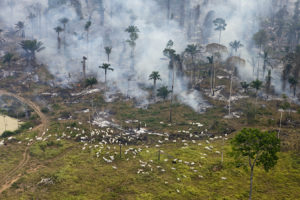
Clearing land for cattle is responsible for 80 percent of rainforest loss in the Brazilian Amazon. But with Amazon ranching now a multi-billion dollar business, corporate buyers of beef and leather, including Wal-Mart, are starting to demand that the destruction of the forest be halted.
Report
Mountaintop Mining Legacy:
Destroying Appalachia’s Streams
The environmental damage caused by mountaintop removal mining across Appalachia has been well documented. But scientists are now beginning to understand that the mining operations’ most lasting damage may be caused by the massive amounts of debris dumped into valley streams.
Report
With the Clearing of Forests,
Baby Orangutans Are Marooned
As Borneo's rain forests are razed for oil palm plantations, wildlife centers are taking in more and more orphaned orangutans and preparing them for reintroduction into the wild. But the endangered primates now face a new threat — there is not enough habitat where they can be returned.
Opinion
A Plea to President Obama:
End Mountaintop Coal Mining
Tighter restrictions on mountaintop removal mining are simply not enough. Instead, a leading climate scientist argues, the Obama administration must prohibit this destructive practice, which is devastating vast stretches of Appalachia.
Opinion
Yellowstone’s Grizzly Bears
Face Threats on Two Fronts
The magnificent creature at the heart of the Greater Yellowstone Ecosystem now confronts two grave perils: the loss of its key food source because of rising temperatures, and increased killing by humans. A renowned grizzly expert argues that it’s time to once again protect Yellowstone’s grizzlies under the Endangered Species Act.
Report
The Razing of Appalachia:
Mountaintop Removal Revisited
Over the past two decades, mountaintop removal mining in Appalachia has obliterated or severely damaged more than a million acres of forest and buried more than 1,000 miles of streams. Now, the Obama administration is showing signs it plans to crack down on this destructive practice.
Report
Laos Emerges as Key Source
in Asia’s Illicit Wildlife Trade
Long an isolated land with abundant forests and biodiversity, Laos is rapidly developing as China and other Asian nations exploit its resources. One of the first casualties has been the wildlife, now being rapidly depleted by a thriving black-market trade.
Report
As Rain Forests Disappear,
A Market Solution Emerges
Despite the creation of protected areas in the Amazon and other tropical regions, rain forests worldwide are still being destroyed for a simple reason: They are worth more cut down than standing. But with deforestation now a leading driver of global warming, a movement is growing to pay nations and local people to keep their rain forests intact.
Opinion
Offshore Drilling in Alaska:
Time to Slow the Rush
In the last eight years, vast areas of offshore Alaska have been opened to oil drilling. Now, a conservationist argues, the Obama administration must reverse the Bush-era policies if the state is to avoid irreparable harm to Arctic wildlife and to some of the most biologically productive waters on earth.
Report
Global Commodities Boom
Fuels New Assault on Amazon
With soaring prices for agricultural goods and new demand for biofuels, the clearing of the world's largest rain forest has accelerated dramatically. Unless forceful measures are taken, half of the Brazilian Amazon could be cut, burned or dried out within 20 years.


Tom Milliken

Pavan Sukhdev