Topic: Oceans
Report
In Post-Tsunami Japan, A Push
To Rebuild Coast in Concrete
In the wake of the 2011 tsunami, the Japanese government is forgoing an opportunity to sustainably protect its coastline and is instead building towering concrete seawalls and other defenses that environmentalists say will inflict serious damage on coastal ecosystems.
Report
A Key Experiment to Probe the
Future of Our Acidifying Oceans
In a Swedish fjord, European researchers are conducting an ambitious experiment aimed at better understanding how ocean acidification will affect marine life. Ultimately, these scientists hope to determine which species might win and which might lose in a more acidic ocean.
Opinion
As Final U.S. Decision Nears,
A Lively Debate on GM Salmon
In an online debate for Yale Environment 360, Elliot Entis, whose company has created a genetically modified salmon that may soon be for sale in the U.S., discusses the environmental and health impacts of this controversial technology with author Paul Greenberg, a critic of GM fish.
Interview
A Leading Marine Biologist
Works to Create a ‘Wired Ocean’
Stanford University scientist Barbara Block heads a program that has placed satellite tags on thousands of sharks, bluefin tuna, and other marine predators to better understand their life cycles. Now, using data available on mobile devices, she hopes to enlist public support for protecting these threatened creatures.
Analysis
Will Reform Finally End The
Plunder of Europe’s Fisheries?
Maria Damanaki, Europe’s crusading fisheries minister, is making major headway in changing a cozy, “old boys” network that over-subsidized the European fishing industry and brought about the severe overfishing of the continent’s marine bounty.
Report
To Control Floods, The Dutch
Turn to Nature for Inspiration
The Netherlands’ system of dikes and sea gates has long been the best in the world. But as the country confronts the challenges of climate change, it is increasingly relying on techniques that mimic natural systems and harness nature’s power to hold back the sea.
Report
Proposed Energy Exploration
Sparks Worry on Ocean Canyons
The Atlantic Canyons off the Northeastern U.S. plunge as deep as 15,000 feet and harbor diverse and fragile marine ecosystems. Now, the Obama administration’s plans to consider offshore oil and gas exploration in the canyons is troubling conservationists.
Opinion
Hurricane Sandy Relief Bill
Fails to Face Coastal Realities
As part of the sorely-needed aid package to help victims of Hurricane Sandy, Congress is also considering spending billions on ill-advised and environmentally damaging beach and coastal rebuilding projects that ignore the looming threats of rising seas and intensifying storms.
Interview
What’s Damaging Marshes on
U.S. Coast and Why It Matters
A nine-year study led by researcher Linda Deegan points to the damage that human-caused nutrients inflict on salt marshes along the U.S. East Coast. In a Yale Environment 360 interview, she describes what these findings mean for an ecosystem that provides critical services, from nourishing marine life to buffering the coast from storms like Sandy.
Report
Too Big to Flood? Megacities
Face Future of Major Storm Risk
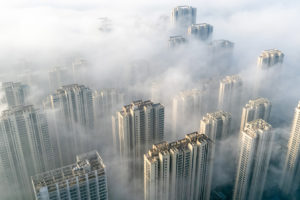
As economic activity and populations continue to expand in coastal urban areas, particularly in Asia, hundreds of trillions of dollars of infrastructure, industrial and office buildings, and homes are increasingly at risk from intensifying storms and rising sea levels.
Report
How Fishing Gear is Killing
Whales in the North Atlantic
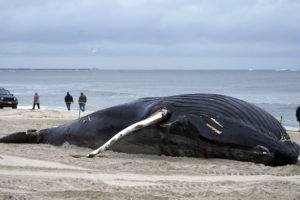
Researchers have been documenting the deadly threat that fishing lines and ropes pose to large whales that become entangled in them. Now, new studies are pointing to another disturbing fact: the ensnared whales endure enormous pain and prolonged suffering.
Report
Easing The Collateral Damage
That Fisheries Inflict on Seabirds
Two recent studies highlight the harm that industrial fisheries are doing to the world’s seabirds, either by overharvesting the birds’ favorite prey or by drowning birds hooked on longlines. But tighter regulations and innovative technologies are starting to significantly reduce seabird “bycatch,” slashing it by 90 percent in some regions.
Report
Shrimp Farms’ Tainted Legacy
Is Target of Certification Drive
As shrimp aquaculture has boomed globally to keep pace with surging demand, the environmental toll on mangroves and other coastal ecosystems has been severe. Now, conservation groups and some shrimp farmers are creating a certification scheme designed to clean up the industry and reward sustainable producers.
Report
Will Fish-Loving Japan
Embrace Sustainable Seafood?
In fish-crazed Japan, where eating seafood is a vital part of the nation's culture, conservation groups are working with companies to persuade more Japanese to eat certified, sustainably caught seafood. It's an uphill struggle, but one that could have significant impact on the world's fisheries.
Analysis
The Vital Chain: Connecting
The Ecosystems of Land and Sea
A new study from a Pacific atoll reveals the links between native trees, bird guano, and the giant manta rays that live off the coast. In unraveling this intricate web, the researchers point to the often little-understood interconnectedness between terrestrial and marine ecosystems.
Report
Melting Sea Ice Could Lead
To Pressure on Arctic Fishery
With melting sea ice opening up previously inaccessible parts of the Arctic Ocean, the fishing industry sees a potential bonanza. But some scientists and government officials have begun calling for a moratorium on fishing in the region until the true state of the Arctic fishery is assessed.
Interview
In Fight to Save Coral Reefs,
Finding Strategies that Work
In four decades as a marine biologist, Nancy Knowlton has played a key role in documenting the biodiversity of coral reefs and the threats they increasingly face. In an interview with Yale Environment 360, she assesses the state of the world’s corals and highlights conservation projects that offer hope of saving these irreplaceable ecosystems.
Dispatch
Mysteries of Killer Whales
Uncovered in the Antarctic
Two of the world’s leading experts on the world’s top marine predator are now in Antarctica, tagging and photographing a creature whose remarkably cooperative hunting behavior and transmission of knowledge across generations may be rivaled only by humans.
Report
Northwest Oyster Die-offs Show
Ocean Acidification Has Arrived
The acidification of the world’s oceans from an excess of CO2 has already begun, as evidenced recently by the widespread mortality of oyster larvae in the Pacific Northwest. Scientists say this is just a harbinger of things to come if greenhouse gas emissions continue to soar.
Analysis
A World Centered on Sea Ice
Is Changing Swiftly at the Poles
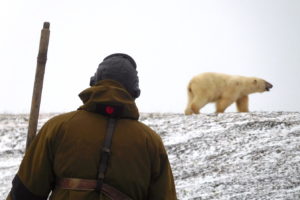
For eons, the polar marine food chain has been closely linked to the seasonal formation and retreat of sea ice. Now, as that ice rapidly melts in the Arctic and along the Antarctic Peninsula, this intricate web of life is undergoing major shifts, benefiting some creatures and putting others at risk.
Interview
New Model for Aquaculture
Takes Hold Far from the Sea
With ever-greater quantities of seafood coming from aquaculture operations, some companies are working on ways to reduce the environmental impact of fish farming. In an interview with Yale Environment 360, Josh Goldman of Australis Aquaculture talks about his highly praised closed-containment fish farm in Massachusetts.
Analysis
The Unfulfilled Promise of the
World’s Marine Protected Areas
Biologists and conservationists maintain that establishing marine reserves — areas where fishing is off-limits or severely restricted — offers the best hope for recovery for our overstressed oceans. So why is such a small area of the world's oceans protected?
Report
As Arctic Sea Ice Retreats,
Storms Take Toll on the Land
For millennia, the blanket of ice covering the Arctic Ocean protected the shore from damaging storms. But as that ice buffer disappears, increasingly powerful storm surges are eroding the coastline and sending walls of seawater inland, devastating Arctic ecosystems that support abundant wildlife.
Opinion
One Year Later: Assessing the
Lasting Impact of the Gulf Spill
On the anniversary of the Deepwater Horizon explosion, the worst fears about the long-term damage from the oil spill have not been realized. But the big challenge is more fundamental: repairing the harm from the dams, levees, and canals that are devastating the Mississippi Delta and the Louisiana coast.
Essay
After the Great Quake,
Living with Earth’s Uncertainty
The Japanese earthquake and tsunami remind us that we exist in geologic time and in a world where catastrophic events beyond our predicting may occur. These events — and the growing specter of climate change — show how precariously we exist on the surface of a volatile planet.
Interview
Tracking the Destructive Power
Of the Pacific Ocean’s Tsunamis
The devastating tsunami in northeastern Japan is only one of many that have battered Japan over the eons. In an interview with Yale Environment 360, tsunami and earthquake expert Lori Dengler describes the historic and paleological record of tsunamis across the Pacific, and what it may mean in the future for Japan and the western United States.
Interview
Deep-Sea Mining is Coming:
Assessing the Potential Impacts
Numerous companies are moving ahead rapidly with plans to mine copper, gold, and other minerals near hydrothermal vents on the ocean floor. But in an interview with Yale Environment 360, marine biologist Cindy Lee Van Dover warns that without environmental safeguards the unique ecosystems of deep-sea vents could be severely damaged.
Opinion
How Fisheries Can Gain From
The Lessons of Sustainable Food
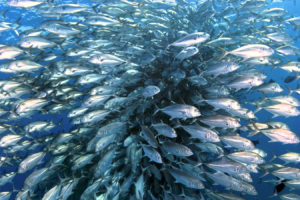
As agriculture and energy production have made strides toward becoming more sustainable, the world’s fisheries have lagged behind. But restoring our beleaguered oceans to health will require an emphasis on diversification and conservation — and a more sensible mix of fishing practices.
Report
In Novel Approach to Fisheries,
Fishermen Manage the Catch
An increasingly productive way of restoring fisheries is based on the counter-intuitive concept of allowing fishermen to take charge of their own catch. But the success of this growing movement depends heavily on a strong leader who will look out not only for the fishermen, but for the resource itself.
Report
Massive Outbreak of Jellyfish
Could Spell Trouble for Fisheries
The world’s oceans have been experiencing enormous blooms of jellyfish, apparently caused by overfishing, declining water quality, and rising sea temperatures. Now, scientists are trying to determine if these outbreaks could represent a “new normal” in which jellyfish increasingly supplant fish.
Analysis
Is the End in Sight for
The World’s Coral Reefs?
It is a difficult idea to fathom. But the science is clear: Unless we change the way we live, the Earth's coral reefs will be utterly destroyed within our children's lifetimes.
Report
Hatch-22: The Problem with
The Pacific Salmon Resurgence
The number of salmon in the Pacific Ocean is twice what it was 50 years ago. But there is a downside to this bounty, as growing numbers of hatchery-produced salmon are flooding the Pacific and making it hard for threatened wild salmon species to find enough food to survive.
Interview
Exploring the Links Between
Hurricanes and Ocean Warming
One of the more contentious issues facing climate scientists is whether rising ocean temperatures will cause more frequent and powerful hurricanes. In an interview with Yale Environment 360, Kerry Emanuel, of the Massachusetts Institute of Technology, says that amid the uncertainty, one thing seems likely: an increase in the most potent — and destructive — storms.
Report
A Steady, Steep Decline for
The Lowly, Uncharismatic Eel
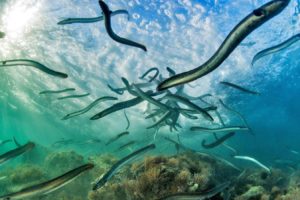
The freshwater eel, which spawns in the middle of the ocean, was once abundant in much of the world. But the proliferation of dams, coastal development, and overfishing have drastically reduced eel populations, with few defenders coming to the aid of these fascinating — though still not fully understood — creatures.
Report
The Legacy of the Gulf Spill:
What to Expect for the Future?
The Gulf of Mexico’s capacity to recover from previous environmental assaults — especially the 1979 Ixtoc explosion — provides encouragement about the prospects for its post-Deepwater future. But scientists remain worried about the BP spill's long-term effects on the health of the Gulf and its sea life.
Analysis
A Looming Oxygen Crisis and
Its Impact on World’s Oceans
As warming intensifies, scientists warn, the oxygen content of oceans across the planet could be more and more diminished, with serious consequences for the future of fish and other sea life.
Report
High Above the Earth,
Satellites Track Melting Ice
The surest sign of a warming Earth is the steady melting of its ice zones, from disappearing sea ice in the Arctic to shrinking glaciers worldwide. Now, scientists are using increasingly sophisticated satellite technology to measure the extent, thickness, and height of ice, assembling an essential picture of a planet in transition.
Analysis
As the Far North Melts,
Calls Grow for Arctic Treaty
The massive oil spill in the Gulf of Mexico is a warning, conservationists say, of what could happen in the Arctic as melting sea ice opens the Arctic Ocean to oil and gas drilling. Many experts argue that the time has come to adopt an Arctic Treaty similar to the one that has safeguarded Antarctica for half a century.
Interview
The Oil Spill’s Growing Toll
On Sea Life in the Gulf of Mexico
A prominent marine biologist says the impacts of the oil gushing into the Gulf of Mexico will persist for years, no matter when the flow finally stops. What’s more, scientist Thomas Shirley says that most of the damage remains out of sight below the surface, as creatures succumb to the toxic effects of the rapidly spreading tide of oil.
Opinion
Under Pressure to Block Oil,
A Rush To Dubious Projects
In response to the widening disaster in the Gulf of Mexico, government officials have approved a plan to intercept the oil by building a 45-mile sand berm. But scientists fear the project is a costly boondoggle that will inflict further environmental damage and do little to keep oil off the coast.
Analysis
The Microbe Factor and
Its Role in Our Climate Future
Within the planet’s oceans and soils are trillions of bacteria that store and release far more carbon dioxide than all of the Earth’s trees and plants. Now, scientists are attempting to understand how the world’s bacteria will influence — and be influenced by — a warming climate.
Analysis
Anatomy of the BP Oil Spill:
An Accident Waiting to Happen
The oil slick spreading across the Gulf of Mexico has shattered the notion that offshore drilling had become safe. A close look at the accident shows that lax federal oversight, complacency by BP and the other companies involved, and the complexities of drilling a mile deep all combined to create the perfect environmental storm.
Opinion
After Two Decades of Delay,
A Chance to Save Bluefin Tuna
The obscenely profitable market for bluefin tuna in Japan has led to years of overfishing and left the world’s bluefin population badly depleted. A ban on the bluefin trade, if adopted at international talks this month, would go a long way toward giving this magnificent fish a chance to recover.
Analysis
An Ominous Warning on the
Effects of Ocean Acidification
A new study says the seas are acidifying ten times faster today than 55 million years ago when a mass extinction of marine species occurred. And, the study concludes, current changes in ocean chemistry due to the burning of fossil fuels may portend a new wave of die-offs.
Opinion
How High Will Seas Rise?
Get Ready for Seven Feet
As governments, businesses, and homeowners plan for the future, they should assume that the world’s oceans will rise by at least two meters — roughly seven feet — this century. But far too few agencies or individuals are preparing for the inevitable increase in sea level that will take place as polar ice sheets melt.
Report
In Search of New Waters,
Fish Farming Moves Offshore
As wild fish stocks continue to dwindle, aquaculture is becoming an increasingly important source of protein worldwide. Now, a growing number of entrepreneurs are raising fish in large pens in the open ocean, hoping to avoid the many environmental problems of coastal fish farms.
Analysis
The Nitrogen Fix:
Breaking a Costly Addiction
Over the last century, the intensive use of chemical fertilizers has saturated the Earth’s soils and waters with nitrogen. Now scientists are warning that we must move quickly to revolutionize agricultural systems and greatly reduce the amount of nitrogen we put into the planet's ecosystems.
Opinion
A Total Ban on Whaling?
New Studies May Hold the Key
As the International Whaling Commission debates whether to ban all whaling or to expand the limited hunts now underway, recent research has convinced some scientists that the world’s largest mammal should never be hunted again.
Interview
NOAA’s New Chief on Restoring
Science to U.S. Climate Policy
Marine biologist Jane Lubchenco now heads one of the U.S. government’s key agencies researching climate change — the National Oceanic and Atmospheric Administration. In an interview with Yale Environment 360, Lubchenco discusses the central role her agency is playing in understanding the twin threats of global warming and ocean acidification.
Report
Twenty Years Later, Impacts
of the Exxon Valdez Linger
Two decades after the Exxon Valdez spilled 11 million gallons of crude oil into Alaska’s waters, the Prince William Sound, its fishermen, and its wildlife have still not fully recovered.
Opinion
A Call for Tougher Standards
on Mercury Levels in Fish
In response to industry pressure, the U.S. Food and Drug Administration has failed to set adequate restrictions on mercury levels in fish. Now the Obama administration must move forcefully to tighten those standards and warn the public which fish are less safe to eat.
Opinion
Regulators Are Pushing
Bluefin Tuna to the Brink
The international commission charged with protecting the giant bluefin tuna is once again failing to do its job. Its recent decision to ignore scientists’ recommendations for reducing catch limits may spell doom for this magnificent – and endangered – fish.
Report
A Corporate Approach to
Rescuing the World’s Fisheries
The commitment by Wal-Mart, McDonald’s, and other major companies to buy only sustainably-caught seafood is an encouraging sign in an otherwise bleak global fisheries picture. After decades of government inaction and ineffective consumer campaigns, corporate pressure may finally be starting to turn the tide on reckless overfishing.
Report
Alaska’s Pebble Mine:
Fish Versus Gold
With the support of Gov. Sarah Palin, mining interests have defeated an Alaska ballot measure that could have blocked a huge proposed mining project. Now, plans are moving forward to exploit the massive gold and copper deposit at Bristol Bay, home of one of the world’s greatest salmon runs.
Report
The Arctic Resource Rush is On
As the Arctic's sea ice melts, energy and mining companies are moving into previously inaccessible regions to tap the abundant riches that lie beneath the permafrost and the ocean floor. The potential environmental impacts are troubling.
Analysis
Carbon’s Burden on the World’s Oceans
The burgeoning amount of carbon dioxide in oceans is affecting a lot more than coral reefs. It is also damaging marine life and, most ominously, threatening the future survival of marine populations.