Topic: Science & Technology
Dispatch
Mysteries of Killer Whales
Uncovered in the Antarctic
Two of the world’s leading experts on the world’s top marine predator are now in Antarctica, tagging and photographing a creature whose remarkably cooperative hunting behavior and transmission of knowledge across generations may be rivaled only by humans.
Interview
Putting a Price on
The Real Value of Nature
Indian banker Pavan Sukhdev has been grappling with the question of how to place a monetary value on nature. In an interview with Yale Environment 360, he discusses the ways natural ecosystems benefit people and why policymakers and businesses must rethink how they assess environmental costs and benefits.
Report
What Rising Temperatures May
Mean for World’s Wine Industry
Warming temperatures associated with climate change are already affecting vineyards from France to Chile, often in beneficial ways. But as the world continues to warm, some traditional winemaking regions are scrambling to adapt, while other areas see themselves as new wine frontiers.
Report
Can ‘Climate-Smart’ Agriculture
Help Both Africa and the Planet?
One idea promoted at the Durban talks was “climate-smart agriculture," which could make crops less vulnerable to heat and drought and turn depleted soils into carbon sinks. The World Bank and African leaders are backing this new approach, but some critics are skeptical that it will benefit small-scale African farmers.
Interview
A Defender of World’s Whales
Sees Only a Tenuous Recovery
Biologist Roger Payne played a key role in helping end the wholesale slaughter of whales. In an interview with Yale Environment 360, Payne discusses the mysteries of these legendary marine mammals and the threats they continue to face.
Report
Camera Traps Emerge as
Key Tool in Wildlife Research
Scientists and conservationists are increasingly relying on heat- and motion-activated camera traps to study rare or reclusive species in remote habitats. And the striking images they provide are proving to be a boon for raising conservation awareness worldwide.
Report
A Rise in Fungal Diseases is
Taking Growing Toll on Wildlife
In an increasingly interconnected world, fungal diseases are spreading at an alarming rate and have led to deadly outbreaks in amphibian, bat, and bee populations. And in the last decade, researchers note, some of the most virulent strains have infected people.
Interview
Thinking the Unthinkable:
Engineering Earth’s Climate
A U.S. panel has called for a concerted effort to study proposals to manipulate the climate to slow global warming — a heretical notion among some environmentalists. In an interview with Yale Environment 360, Jane C. S. Long, the group’s chairwoman, explains why we need to know more about the possibilities and perils of geoengineering.
Report
Climate Relicts: Seeking Clues
On How Some Species Survive
In pockets ranging from mountain peaks to bogs, scientists are discovering plants and animals that survived previous eras of climate change. Now, conservation biologists say, these climate “relicts” could shed light on how some species may hang on in the coming centuries.
Analysis
The Long Strange Journey
Of Earth’s Traveling Microbes
Airborne microbes can travel thousands of miles and high into the stratosphere. Now scientists are beginning to understand the possible role of these microbes — such as bacteria, fungal spores, and tiny algae — in creating clouds, causing rain, spreading disease, and even changing climate.
Analysis
Probing the Role of the Sun
In an Era of Global Warming
Some skeptics have suggested the real culprit behind rising temperatures is increased solar activity. But a wide variety of data and experiments still provide no solid evidence to refute the scientific consensus that greenhouse gas emissions are the major reason the planet is heating up.
Report
Tapping Social Media’s Potential
To Muster a Vast Green Army
A rapidly expanding universe of citizens’ groups, researchers, and environmental organizations are making use of social media and smart phone applications to document changes in the natural world and to mobilize support for taking action.
Report
Phosphate: A Critical Resource
Misused and Now Running Low
Phosphate has been essential to feeding the world since the Green Revolution, but its excessive use as a fertilizer has led to widespread pollution and eutrophication. Now, many of the world’s remaining reserves are starting to be depleted.
Report
Brown to Green: A New Use
For Blighted Industrial Sites
Few places in the U.S. are as well suited to developing renewable energy as the contaminated sites known as “brownfields.” But as communities from Philadelphia to California are discovering, government support is critical to enable solar and wind entrepreneurs to make use of these abandoned lands.
Interview
Using the Power of the Web
To Protect Africa’s Wildlife
Paula Kahumbu runs a conservation organization with a distinctly 21st-century mission: Posting field blogs from conservationists to attract global support for wildlife protection. In an interview with Yale Environment 360, Kahumbu talks about her group’s triumphs and struggles as it battles to preserve Africa’s magnificent animals.
Opinion
Forum: Is Extreme Weather
Linked to Global Warming?
Report
Using CO2 to Make Fuel:
A Long Shot for Green Energy
What if the ever-increasing amounts of carbon dioxide that are heating up the atmosphere could be used to produce an abundant supply of liquid fuels? The U.S. government and private labs are pursuing that Holy Grail of renewable energy — but for now the cost of large-scale production is prohibitive.
Analysis
Facing the Dirty Truth
About Recyclable Plastics
The recyclable plastic bags you get at the green grocer are not biodegradable. But product life-cycle assessments, which are about to become more prominent in the marketplace, fail to consider whether those bags will break down in landfills or just end up as litter.
Interview
Nissan’s Carlos Ghosn Seeks
Revenge for the Electric Car
Nissan chairman Carlos Ghosn believes the technology currently exists to produce affordable, all-electric cars that will find a global market. In an interview with Yale Environment 360, he talks about Nissan’s new Leaf and why he is confident that, despite earlier setbacks, the time for all-electric vehicles is now.
Analysis
The World’s Tropical Forests
Are Already Feeling the Heat
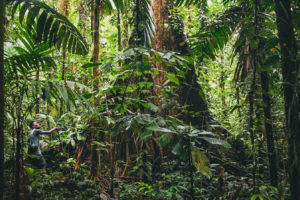
Much attention has been paid to how global warming is affecting the world’s polar regions and glaciers. But a leading authority on tropical forests warns that rising temperatures could have an equally profound impact on rainforests and are already taking a toll on some tropical species.
Analysis
What’s With the Weather?
Is Climate Change to Blame?
One of the thorniest questions facing climate scientists is whether human-induced climate change is leading to more heat waves, floods, and extreme weather events. Now, employing increasingly sophisticated methods of studying weather extremes, climatologists say they are closer to answering that key question.
Report
In Aeolus Cave, A Search for the
Vanishing Bats of the Northeast
When wildlife biologists ventured into a Vermont cave this month, they found disturbing evidence that white-nose syndrome was continuing to take its toll on once-abundant bat populations. But the question remains: What can be done to halt the spread of this still-mysterious ailment?
Interview
Tracking the Destructive Power
Of the Pacific Ocean’s Tsunamis
The devastating tsunami in northeastern Japan is only one of many that have battered Japan over the eons. In an interview with Yale Environment 360, tsunami and earthquake expert Lori Dengler describes the historic and paleological record of tsunamis across the Pacific, and what it may mean in the future for Japan and the western United States.
Analysis
Anatomy of a Nuclear Crisis:
A Chronology of Fukushima
The world’s worst nuclear reactor mishap in 25 years was caused by a massive natural calamity but compounded by what appear to be surprising mistakes by Japanese engineers. The result has been a fast-moving disaster that has left officials careening from one emergency to the next.
Opinion
U.S. High-Speed Rail: Time to
Hop Aboard or Be Left Behind
In recent months, several conservative governors have rejected federal funds to begin constructing high-speed rail lines in their states. But a high-speed rail advocate argues that such ideologically driven actions are folly, as other U.S. states and countries around the world are moving swiftly to embrace a technology that is essential for competitive 21st-century economies.
Report
‘Fracking’ Comes to Europe,
Sparking Rising Controversy
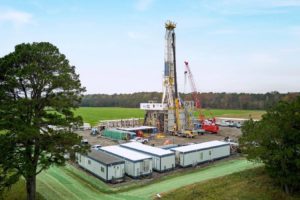
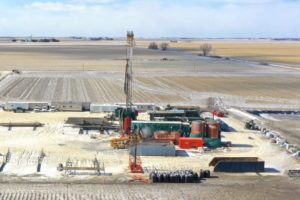
As concerns grow in the U.S. about the environmental impact of hydraulic fracturing, or “fracking,” to extract natural gas from shale, companies have set their sights on Europe and its abundant reserves of this “unconventional” gas. But from Britain to Poland, critics warn of the potentially high environmental cost of this looming energy boom.
Report
Alien Species Reconsidered:
Finding a Value in Non-Natives
One of the tenets of conservation management holds that alien species are ecologically harmful. But a new study is pointing to research that demonstrates that some non-native plants and animals can have beneficial impacts.
Opinion
Living in the Anthropocene:
Toward a New Global Ethos
A decade ago, Nobel Prize-winning scientist Paul Crutzen first suggested we were living in the “Anthropocene,” a new geological epoch in which humans had altered the planet. Now, in an article for Yale Environment 360, Crutzen and a coauthor explain why adopting this term could help transform the perception of our role as stewards of the Earth.
Analysis
Can We Trust Climate Models?
Increasingly, the Answer is ‘Yes’
Forecasting what the Earth’s climate might look like a century from now has long presented a huge challenge to climate scientists. But better understanding of the climate system, improved observations of the current climate, and rapidly improving computing power are slowly leading to more reliable methods.
Report
Green Roofs are Starting
To Sprout in American Cities
Long a proven technology in Europe, green roofs are becoming increasingly common in U.S. cities, with major initiatives in Chicago, Portland, and Washington, D.C. While initially more expensive than standard coverings, green roofs offer some major environmental — and economic — benefits.
Report
China Turns to Biogas to
Ease Impact of Factory Farms
In China, millions of tons of waste from livestock farms are causing severe water pollution and massive emissions of methane. Now, some large livestock operators are turning to biogas fuel production in hopes of creating “ecological” factory farms.
Report
China Takes First Steps
In the Fight Against Acid Rain
Amid China’s seemingly boundless emissions of industrial pollutants, there are signs of hope. Discharges of sulfur dioxide, which causes acid rain, have actually decreased, offering some evidence that China is starting to establish a culture of pollution monitoring and control.
Report
Rising Hopes that Electric Cars
Can Play a Key Role on the Grid
Will electric cars one day become part of a network of rechargeable batteries that can help smooth out the intermittent nature of wind and solar power? Many experts believe so, pointing to programs in Europe and the U.S. that demonstrate the promise of vehicle-to-grid technology.
Analysis
Climate Forecasts: The Case
For Living with Uncertainty
As climate science advances, predictions about the extent of future warming and its effects are likely to become less — not more — precise. That may make it more difficult to convince the public of the reality of climate change, but it hardly diminishes the urgency of taking action.
Report
New Hope for Pavlovsk Station
And Russia’s Rare Plant Reserve
In the early 20th century, Russian botanist Nikolai Vavilov created a preserve outside St. Petersburg that today contains one of the world’s largest collections of rare seeds and crops. Now, scientists and conservationists are waging an international campaign to save the reserve’s fields from being bulldozed for housing development.
Analysis
The Effect of Clouds on Climate:
A Key Mystery for Researchers
As climate scientists wrestle with the complexities of how the planet will react to rising greenhouse-gas levels, no variable is more difficult to decipher than the impact of clouds. But thanks to new satellite data and other technologies, clues are emerging that may help solve the puzzle.
Report
High Above the Earth,
Satellites Track Melting Ice
The surest sign of a warming Earth is the steady melting of its ice zones, from disappearing sea ice in the Arctic to shrinking glaciers worldwide. Now, scientists are using increasingly sophisticated satellite technology to measure the extent, thickness, and height of ice, assembling an essential picture of a planet in transition.
Analysis
The Microbe Factor and
Its Role in Our Climate Future
Within the planet’s oceans and soils are trillions of bacteria that store and release far more carbon dioxide than all of the Earth’s trees and plants. Now, scientists are attempting to understand how the world’s bacteria will influence — and be influenced by — a warming climate.
Analysis
The Anthropocene Debate:
Marking Humanity’s Impact
Is human activity altering the planet on a scale comparable to major geological events of the past? Scientists are now considering whether to officially designate a new geological epoch to reflect the changes that homo sapiens have wrought: the Anthropocene.
Report
Companies Put Restrictions
On Research into GM Crops
A battle is quietly being waged between the industry that produces genetically modified seeds and scientists trying to investigate the environmental impacts of engineered crops. Although companies such as Monsanto have recently given ground, researchers say these firms are still loath to allow independent analyses of their patented — and profitable — seeds.
Report
Turning to Greener Weapons
In the Battle Against Malaria
Insecticides such as DDT have long been used to combat the scourge of malaria in the developing world. But with the disease parasite becoming increasingly adept at resisting the chemical onslaught, some countries are achieving striking success by eliminating the environmental conditions that give rise to malarial mosquitoes.
Opinion
The Case Against Biofuels:
Probing Ethanol’s Hidden Costs
Despite strong evidence that growing food crops to produce ethanol is harmful to the environment and the world’s poor, the Obama administration is backing subsidies and programs that will ensure that half of the U.S.’s corn crop will soon go to biofuel production. It’s time to recognize that biofuels are anything but green.
Interview
A High-Tech Entrepreneur
On the Front Lines of Solar
After making his fortune with Idealab and a host of technology start-ups, Bill Gross has turned his attention to renewable energy. In an interview with Yale Environment 360, Gross talks about the solar power plant technology his company eSolar is developing and about the future of solar.
Opinion/Climate Science Under Fire
Major Change Is Needed
If the IPCC Hopes to Survive
Well before the recent controversies, the work of the Intergovernmental Panel on Climate Change was marred by an unwillingness to listen to dissenting points of view, an inadequate system for dealing with errors, conflicts of interest, and political advocacy. The latest allegations of inaccuracies should be an impetus for sweeping reform.
Analysis
Network Theory: A Key to
Unraveling How Nature Works
In the last two decades, network theory has emerged as a way of making sense of everything from the World Wide Web to the human brain. Now, as ecologists have begun applying this theory to ecosystems, they are gaining insights into how species are interconnected and how to foster biodiversity.
Interview
Geoengineering the Planet:
The Possibilities and the Pitfalls
Interfering with the Earth’s climate system to counteract global warming is a controversial concept. But in an interview with Yale Environment 360, climate scientist Ken Caldeira talks about why he believes the world needs to better understand which geoengineering schemes might work and which are fantasy — or worse.
Opinion
Why I Still Oppose
Genetically Modified Crops
Introduced more than a decade ago, genetically modified crops are now planted on millions of acres throughout the world. But the fundamental questions about them remain — both about their safety and their long-term impact on global food security and the environment.
Report
New York City Girds Itself
for Heat and Rising Seas
By the end of the century, New York’s climate could resemble that of present-day Raleigh, North Carolina and its harbor could easily rise by two feet or more. Faced with this prospect, the city is among the first urban centers to begin changing the way it builds its infrastructure — and the way it thinks about its future.
Report
Solar Power from Space:
Moving Beyond Science Fiction
For more than 40 years, scientists have dreamed of collecting the sun’s energy in space and beaming it back to Earth. Now, a host of technological advances, coupled with interest from the U.S. military, may be bringing that vision close to reality.
Interview
Obama’s Science Adviser
Urges Leadership on Climate
John Holdren, the president’s top science adviser, is playing a key role in shaping the Obama administration’s strategy to combat global warming. In an interview with Yale Environment 360, Holdren discusses the prospects for achieving key breakthroughs on climate change, both in Congress and at upcoming talks in Copenhagen.

Report
First Comes Global Warming,
Then an Evolutionary Explosion
In a matter of years or decades, researchers believe, animals and plants already are adapting to life in a warmer world. Some species will be unable to change quickly enough and will go extinct, but others will evolve, as natural selection enables them to carry on in an altered environment.
Report
The Challenge for Green Energy:
How to Store Excess Electricity
For years, the stumbling block for making renewable energy practical and dependable has been how to store electricity for days when the sun isn't shining and the wind isn't blowing. But new technologies suggest this goal may finally be within reach.
Report
From the Sewage Plant,
the Promise of Biofuel
Researchers throughout the world are working to produce biofuel from algae. But a few are trying a decidedly novel approach: Using an abundant and freely available source — human waste — to make the fuel of the future while also treating sewage.
Report
Hailed as a Miracle Biofuel,
Jatropha Falls Short of Hype
The scrubby jatropha tree has been touted as a wonder biofuel with unlimited potential. But questions are now emerging as to whether widespread jatropha cultivation is really feasible or whether it will simply displace badly-needed food crops in the developing world.
Report
Satellites and Google Earth
Prove Potent Conservation Tool
Armed with vivid images from space and remote sensing data, scientists, environmentalists, and armchair conservationists are now tracking threats to the planet and making the information available to anyone with an Internet connection.
Opinion
On His Bicentennial,
Mr. Darwin’s Questions Endure
Charles Darwin brought an insatiable inquisitiveness to his view of the natural world. On the bicentennial of his birth, author Verlyn Klinkenborg reflects on what Darwin’s most fundamental observations mean to us.
Report
What’s Killing
the Tasmanian Devil?
Scientists have been trying to identify the cause of a cancer epidemic that is wiping out Australia’s Tasmanian devils. Now new research points to an alarming conclusion: because of the species’ low genetic diversity, the cancer is contagious and is spreading from one devil to another.
Analysis
Saving the Seeds of the
Next Green Revolution
With food prices skyrocketing and climate change looming, the world needs a green revolution like the one a generation ago. But many valuable seed varieties have been lost – and scientists now are scrambling to protect those that remain before they vanish down the genetic drain.
Report
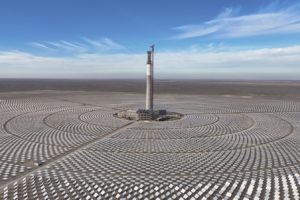
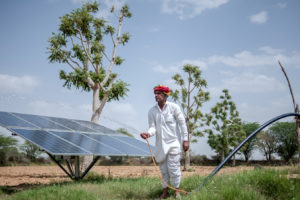
Solar’s Time Has Finally Arrived
After years of optimistic predictions and false starts, it looks like solar's moment is here at last. Analysts say a pattern of rapid growth, technological breakthroughs, and falling production costs has put solar power on the brink of becoming the world's dominant electricity source.
Analysis
After Bush, Restoring Science
to Environmental Policy
The Bush administration has been widely criticized for placing politics over science when it comes to environmental policy-making. The next president must act to reverse that trend.
Analysis
Nanotech: The Unknown Risks
Nanotechnology, now used in everything from computers to toothpaste, is booming. But concern is growing that its development is outpacing our understanding of how to use it safely.
Report
The Limits of Climate Modeling
As the public seeks answers about the future impacts of climate change, some climatologists are growing increasingly uneasy about the localized predictions they are being asked to make.
Opinion
Climate Solutions:
Charting a Bold Course
A cap-and-trade system is not the answer, according to a leading alternative-energy advocate. To really tackle climate change, the United States must revolutionize its entire energy strategy.
Analysis
Carbon’s Burden on the World’s Oceans
The burgeoning amount of carbon dioxide in oceans is affecting a lot more than coral reefs. It is also damaging marine life and, most ominously, threatening the future survival of marine populations.
Opinion
The Ethics of Climate Change
When it comes to setting climate change policy, science can only tell us so much. Ultimately, a lead report author for the Intergovernmental Panel on Climate Change writes, it comes down to making judgments about what is fair, equitable, and just.
Report
DNA Technology:
Discovering New Species
By taking bits of a single gene, scientists are using DNA barcoding to identify new species. If a portable hand-held scanning device can be developed, one ecologist says, it could “do for biodiversity what the printing press did for literacy.”