Region: Europe


What Rising Temperatures May<br /> Mean for World’s Wine Industry

Report

What Rising Temperatures May
Mean for World’s Wine Industry

by john mcquaid
Warming temperatures associated with climate change are already affecting vineyards from France to Chile, often in beneficial ways. But as the world continues to warm, some traditional winemaking regions are scrambling to adapt, while other areas see themselves as new wine frontiers.
READ MORE

Sweden’s Green Veneer Hides<br /> Unsustainable Logging Practices

Report

Sweden’s Green Veneer Hides
Unsustainable Logging Practices

by erik hoffner
Sweden has a reputation as being one of the world’s most environmentally progressive nations. But its surprisingly lax forestry laws often leave decisions about logging to the timber companies — and as a result, large swaths of biologically-rich boreal forest are being lost.
READ MORE

The New Story of Stuff:<br /> Can We Consume Less?

Analysis

The New Story of Stuff:
Can We Consume Less?

by fred pearce
A new study finds that Britons are consuming less than they did a decade ago, with similar patterns being seen across Europe. Could this be the beginning of a trend in developed countries? Might we be reaching “peak stuff”?
READ MORE

Britain’s Mark Lynas Riles<br /> His Green Movement Allies

Interview

Britain’s Mark Lynas Riles
His Green Movement Allies

by keith kloor
Activist Mark Lynas has alienated his green colleagues by renouncing long-held views and becoming an advocate for nuclear power and genetically modified crops. In an interview with Yale Environment 360, he explains why he rethought his positions and turned to technology for solutions.
READ MORE

The Big Payback from<br /> Bringing Back Peat Bogs

Report

The Big Payback from
Bringing Back Peat Bogs

by fred pearce
The draining and burning of peat bogs is a major global source of CO2 emissions. Now, a pilot project in Russia — where wildfires burned vast areas of dried-out bogs last summer — is looking to re-flood and restore tens of thousands of acres to their natural state.
READ MORE

In Berlin, Bringing Bees<br /> Back to the Heart of the City

Report

In Berlin, Bringing Bees
Back to the Heart of the City

by christian schwägerl
In Germany’s capital — and in cities as diverse as Hong Kong and Chicago — raising bees on rooftops and in small gardens has become increasingly popular, as urban beekeepers find they can reconnect with nature and maybe even make a profit.
READ MORE

Climate Relicts: Seeking Clues<br /> On How Some Species Survive

Report

Climate Relicts: Seeking Clues
On How Some Species Survive

by carl zimmer
In pockets ranging from mountain peaks to bogs, scientists are discovering plants and animals that survived previous eras of climate change. Now, conservation biologists say, these climate “relicts” could shed light on how some species may hang on in the coming centuries.
READ MORE

A Planetary Crisis Is<br /> A Terrible Thing to Waste

Opinion

A Planetary Crisis Is
A Terrible Thing to Waste

by christian schwägerl
There are striking similarities between the current economic and ecological crises — both involve indulgent over-consumption and a failure to consider the impacts on future generations. But it’s not too late to look to new economic and environmental models and to dramatically change course.
READ MORE

On Biking, Why Can’t the U.S.<br /> Learn Lessons from Europe?

Opinion

On Biking, Why Can’t the U.S.
Learn Lessons from Europe?

by elisabeth rosenthal
Building bike paths alone will not get people out of their cars in the U.S. and onto bicycles. To create a thriving bike culture in America’s cities, people must begin to view bicycling as Europeans do — not just as a way of exercising, but as a serious form of urban mass transportation.
READ MORE

Germany’s Unlikely Champion<br /> Of a Radical Green Energy Path

Report

Germany’s Unlikely Champion
Of a Radical Green Energy Path

by christian schwägerl
The disaster at the Fukushima plant in Japan convinced German Chancellor Angela Merkel that nuclear power would never again be a viable option for her country. Now Merkel has embarked on the world’s most ambitious plan to power an industrial economy on renewable sources of energy.
READ MORE

Europe’s CO2 Trading Scheme:<br /> Is It Time for a Major Overhaul?

Report

Europe’s CO2 Trading Scheme:
Is It Time for a Major Overhaul?

by ben schiller
Now in its seventh year, the EU’s carbon emissions trading system is the only international program designed to use market mechanisms to control CO2 emissions. But critics contend it has done little to slow the release of CO2 and argue that it should be significantly reformed — or scrapped.
READ MORE

Along Scar from Iron Curtain,<br /> A Green Belt Rises in Germany

Report

Along Scar from Iron Curtain,
A Green Belt Rises in Germany

by christian schwägerl
A forbidding, 870-mile network of fences and guard towers once ran the length of Germany, separating East and West. Now, one of the world’s most unique nature reserves is being created along the old “Death Strip,” turning a monument to repression into a symbol of renewal.
READ MORE

‘Fracking’ Comes to Europe,<br /> Sparking Rising Controversy

Report

‘Fracking’ Comes to Europe,
Sparking Rising Controversy

by ben schiller
As concerns grow in the U.S. about the environmental impact of hydraulic fracturing, or “fracking,” to extract natural gas from shale, companies have set their sights on Europe and its abundant reserves of this “unconventional” gas. But from Britain to Poland, critics warn of the potentially high environmental cost of this looming energy boom.
READ MORE

‘Perverse’ Carbon Payments<br /> Send Flood of Money to China

Report

‘Perverse’ Carbon Payments
Send Flood of Money to China

by mark schapiro
To offset their own carbon emissions, European companies have been overpaying China to incinerate a powerful greenhouse gas known as hfc 23. And in a bizarre twist, those payments have spurred the manufacture of a harmful refrigerant that is being smuggled into the U.S. and used illegally.
READ MORE

New Hope for Pavlovsk Station<br /> And Russia’s Rare Plant Reserve

Report

New Hope for Pavlovsk Station
And Russia’s Rare Plant Reserve

by fred pearce
In the early 20th century, Russian botanist Nikolai Vavilov created a preserve outside St. Petersburg that today contains one of the world’s largest collections of rare seeds and crops. Now, scientists and conservationists are waging an international campaign to save the reserve’s fields from being bulldozed for housing development.
READ MORE

In Scotland’s Search for Roots, <br />A Push to Restore Wild Lands

Report

In Scotland’s Search for Roots,
A Push to Restore Wild Lands

by caroline fraser
As Scotland asserts its identity and its autonomy, environmentalists are working to restore its denuded landscape – planting native forests, creating wildlife corridors, and reintroducing species that were wiped out centuries ago.
READ MORE

Steady Growth of Wind Industry <br />Moves EU Closer to Green Goals

Interview

Steady Growth of Wind Industry
Moves EU Closer to Green Goals

by fen montaigne
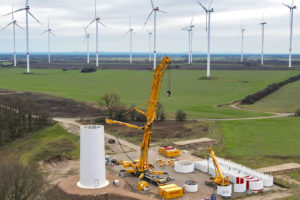
Europe is in the midst of a wind energy boom, with the continent now installing more wind power capacity than any other form of energy. In an interview with Yale Environment 360, the European Wind Energy Association's Christian Kjaer describes his vision of how wind can lead the way in making Europe’s electricity generation 100 percent renewable by 2050.
READ MORE

A Steady, Steep Decline for<br /> The Lowly, Uncharismatic Eel

Report

A Steady, Steep Decline for
The Lowly, Uncharismatic Eel

by james prosek
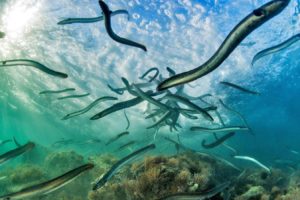
The freshwater eel, which spawns in the middle of the ocean, was once abundant in much of the world. But the proliferation of dams, coastal development, and overfishing have drastically reduced eel populations, with few defenders coming to the aid of these fascinating — though still not fully understood — creatures.
READ MORE

Climategate: Anatomy of<br /> A Public Relations Disaster

Opinion

Climategate: Anatomy of
A Public Relations Disaster

by fred pearce
The way that climate scientists have handled the fallout from the leaking of hacked e-mails is a case study in how not to respond to a crisis. But it also points to the need for climate researchers to operate with greater transparency and to provide more open access to data.
READ MORE

The Pursuit of New Ways<br /> to Boost Solar Development

Report

The Pursuit of New Ways
to Boost Solar Development

by jon r. luoma
The solar power boom in Germany, Spain, and parts of the United States has been fueled by government subsidies. But now some U.S. states — led by New Jersey, of all places — are pioneering a different approach: issuing tradable credits that can be sold on the open market. So far, the results have been promising.
READ MORE

What Makes Europe<br /> Greener than the U.S.?

Opinion

What Makes Europe
Greener than the U.S.?

by elisabeth rosenthal
The average American produces three times the amount of CO2 emissions as a person in France. A U.S. journalist now living in Europe explains how she learned to love her clothesline and sweating in summer.
READ MORE

New York City Girds Itself<br /> for Heat and Rising Seas

Report

New York City Girds Itself
for Heat and Rising Seas

by bruce stutz
By the end of the century, New York’s climate could resemble that of present-day Raleigh, North Carolina and its harbor could easily rise by two feet or more. Faced with this prospect, the city is among the first urban centers to begin changing the way it builds its infrastructure — and the way it thinks about its future.
READ MORE

Solar Power from Space:<br /> Moving Beyond Science Fiction

Report

Solar Power from Space:
Moving Beyond Science Fiction

by michael d. lemonick
For more than 40 years, scientists have dreamed of collecting the sun’s energy in space and beaming it back to Earth. Now, a host of technological advances, coupled with interest from the U.S. military, may be bringing that vision close to reality.
READ MORE

A Potential Breakthrough<br /> in Harnessing the Sun’s Energy

Report

A Potential Breakthrough
in Harnessing the Sun’s Energy

by david biello
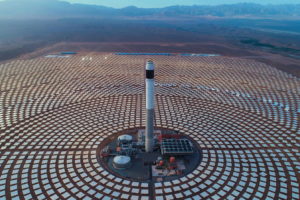
New solar thermal technology overcomes a major challenge facing solar power – how to store the sun’s heat for use at night or on a rainy day. As researchers tout its promise, solar thermal plants are under construction or planned from Spain to Australia to the American Southwest.
READ MORE

The New Urbanists: <br />Tackling Europe’s Sprawl

Analysis

The New Urbanists:
Tackling Europe’s Sprawl

by bruce stutz
In the last few decades, urban sprawl, once regarded as largely a U.S. phenomenon, has spread across Europe. Now an emerging group of planners is promoting a new kind of development — mixed-use, low-carbon communities that are pedestrian-friendly and mass-transit-oriented.
READ MORE

Opinion

As Europe Fiddles, U.S. May
Take Lead on Climate Change

by fred pearce
Europe’s backpedaling last month on toughening its carbon trading system may have signaled the end of its leadership on climate change. Now, with a new administration and Congress, America appears ready to commit itself to tackling global warming.
READ MORE

Regulators Are Pushing<br /> Bluefin Tuna to the Brink

Opinion

Regulators Are Pushing
Bluefin Tuna to the Brink

by carl safina
The international commission charged with protecting the giant bluefin tuna is once again failing to do its job. Its recent decision to ignore scientists’ recommendations for reducing catch limits may spell doom for this magnificent – and endangered – fish.
READ MORE

Melting Arctic Ocean Raises Threat of ‘Methane Time Bomb’

Report

Melting Arctic Ocean Raises Threat of ‘Methane Time Bomb’

by susan q. stranahan
Scientists have long believed that thawing permafrost in Arctic soils could release huge amounts of methane, a potent greenhouse gas. Now they are watching with increasing concern as methane begins to bubble up from the bottom of the fast-melting Arctic Ocean.
READ MORE

Despite Global Recession, Focus on Climate Change Critical

Interview

Despite Global Recession, Focus on Climate Change Critical

Stavros Dimas, environmental commissioner for the European Union, says the global economic crisis is no reason to lose focus on efforts to fight climate change. In an interview with Yale Environment 360, he talked about the lessons of the EU's emissions trading system, and why the U.S. should not give away permits in a cap-and-trade system — it should get something for them.audio
READ MORE

Report

Deep Geothermal: The Untapped Renewable Energy Source

by david biello
Until now, geothermal technology has only been used on a small scale to produce power. But with major new projects now underway, deep geothermal systems may soon begin making a significant contribution to the world’s energy needs.
READ MORE

A Corporate Approach to <br />Rescuing the World’s Fisheries

Report

A Corporate Approach to
Rescuing the World’s Fisheries

by nicholas day
The commitment by Wal-Mart, McDonald’s, and other major companies to buy only sustainably-caught seafood is an encouraging sign in an otherwise bleak global fisheries picture. After decades of government inaction and ineffective consumer campaigns, corporate pressure may finally be starting to turn the tide on reckless overfishing.
READ MORE

Opinion

Has the Population Bomb Been Defused?

by fred pearce
Paul Ehrlich still believes that overpopulation imperils the Earth’s future. But the good news is we are approaching a demographic turning point: Birth rates have been falling dramatically, and population is expected to peak later this century — after that, for the first time in modern history, the world's population should actually start to decline.
READ MORE

Report

Solar’s Time Has Finally Arrived

by jon r. luoma
After years of optimistic predictions and false starts, it looks like solar's moment is here at last. Analysts say a pattern of rapid growth, technological breakthroughs, and falling production costs has put solar power on the brink of becoming the world's dominant electricity source.
READ MORE

Analysis

Nanotech: The Unknown Risks

by carole bass
Nanotechnology, now used in everything from computers to toothpaste, is booming. But concern is growing that its development is outpacing our understanding of how to use it safely.
READ MORE

The Limits of Climate Modeling

Report

The Limits of Climate Modeling

by fred pearce
As the public seeks answers about the future impacts of climate change, some climatologists are growing increasingly uneasy about the localized predictions they are being asked to make.
READ MORE

Biodiversity in the Balance

Analysis

Biodiversity in the Balance

by carl zimmer
Paleontologists and geologists are looking to the ancient past for clues about whether global warming will result in mass extinctions. What they're finding is not encouraging.
READ MORE

Opinion

The Ethics of Climate Change

by richard c. j. somerville
When it comes to setting climate change policy, science can only tell us so much. Ultimately, a lead report author for the Intergovernmental Panel on Climate Change writes, it comes down to making judgments about what is fair, equitable, and just.
READ MORE

e360 digest

RELATED e360 DIGEST ITEMS


18 May 2012: EU Fisheries Observers
Are Intimidated, Bribed by Crews

Observers placed on European Union fishing boats to reduce the amount of illegal and unreported catches are often subject to threats, intimidation, and bribes when they try to do their jobs, according to a report in the Guardian. After interviewing more than 20 former and current fisheries observers and examining EU records, the newspaper said that the threats and harassment are common on Spanish and Portuguese fishing boats, which are notorious for egregious overfishing. The observers told the Guardian that crew members would steal their records of fishing violations, threaten them with an “accident” at sea, kick their cabin doors to keep them awake at night, and take elaborate steps — including making illegal hauls while observers were eating — to conceal the extent of overfishing. Independent observers are placed aboard every vessel operating in the Northwest Atlantic Fishery Organization. But because of fishing industry pressure, observers who spot violations are only allowed to summon an inspector on board, but cannot provide the inspector with any details or records of infractions.
PERMALINK


11 May 2012: Eel Breeding Innovation
Sought to Conserve Wild Populations

Japanese biologists are racing to develop a type of food that would enable fish farmers to breed eels on a commercial scale using for the first time larvae produced in captivity, a step that could reduce pressures on collapsing eel populations worldwide. While farmers have long bred captive eels — a popular delicacy in many countries — until now they have only been able to do so on a commercial scale using baby eels trapped in the wild, a step that has exacerbated the catastrophic decline in wild eel populations from the Far East to North America. The reason, scientists say, is that it has been difficult and expensive to produce the foodstuff critical to the development of eel larvae: a mixture of marine detritus known as “marine snow.” Scientists so far have considered a wide range of possible ingredients, including the yolk from shark’s eggs. “Whoever gets there first has made a tremendous discovery; you’re recovering a cultural tradition,” David Righton, a scientist with the UK-based Cefas marine laboratory, told the Guardian. “Whoever does this is culturally important as well as becoming very rich.”
PERMALINK


09 May 2012: Warming Waters Attract
New Fish Species to British Waters

Warming ocean temperatures have changed the distribution of many critical marine species off the British coast, as warm water fish are increasingly expanding into northern waters and cold-water species are swimming to colder depths, according to a new report. The report of the Marine Climate Change Impacts Partnership, published by the UK and Scottish governments, found that warm water species such as the bluefin tuna and thresher sharks are more frequently appearing in the waters off southwest England and squid have become increasingly abundant in the North Sea. One southern species, the bib, has moved north by 212 miles (342 kilometers) in the last two decades, while common North Sea species such as cod and lemon sole are swimming at an average of 5.5 meters deeper per decade. The report, based on an analysis of scientific studies, warns these changes pose potential threats for native species and the commercial fishing industry as changing water temperatures could introduce invasive species and new diseases.
PERMALINK


09 May 2012: Groundwater Pumping Emerges
As a Factor in Sea Level Rise, Study Says

The vast amounts of water pumped out of the ground for irrigation, drinking water, and industrial uses will increasingly contribute to global sea level rise in the coming decades, according to a new study. According to researchers at Utrecht University, humans pumped about 204 cubic kilometers (49 cubic miles) of groundwater in 2000, much of which evaporated into the atmosphere before ultimately entering rivers, canals and, eventually, the world’s oceans. While in earlier decades the rise in sea level caused by groundwater removal was canceled out by the construction of dams, that changed by the 1990s as humans pumped more groundwater and built fewer dams. By 2000, groundwater extraction resulted in a sea level rise of about 0.57 millimeters annually — compared with about 0.035 millimeters in 1990. According to the study, published in Geophysical Research Letters, by 2050 the pumping of groundwater worldwide could cause sea levels to rise about 0.8 millimeters annually.
PERMALINK


08 May 2012: Standard EV Charging System
Adopted by U.S., German Automakers

Eight U.S. and German automakers have agreed on a standardized technology system for electric-vehicle charging, a coordinated approach they say will allow drivers to rapidly re-charge their vehicles at most charging stations regardless of power source. The announcement is an important breakthrough for the electric vehicle industry, introducing a common technology that could foster the spread of a recharging infrastructure at gas stations, malls, office buildings, and other locations — a critical step if consumers are to adopt electric vehicle technology. The integrated single-port system — which will be utilized by Audi, BMW, Chrysler, Daimler, Ford, General Motors, Porsche, and Volkswagen — allows drivers to use numerous charging technologies, including AC- and DC-charging, with one vehicle inlet. The system, which will be unveiled at the Electric Vehicle Symposium 26 in Los Angeles, will reportedly be able to recharge an electric vehicle in 15 to 20 minutes.
PERMALINK


01 May 2012: Oil and Gas Companies See
Offshore Wind Potential in North Sea

An increasing number of oil service companies are working with renewable energy companies to develop offshore wind projects in the North Sea as the region’s fossil fuel resources dwindle and demand for clean energy rises. According to a report by Bloomberg News, companies such as Technip and Subsea 7 are seizing on the similarities between developing deepsea oil installations and building offshore wind platforms. For wind energy developers, as much as 25 percent of capital spending includes services that can be performed by oil and gas companies, said Jayesh Parmar, a UK-based consultant at Baringa Partners LLP. “The synergies available between offshore wind and oil and gas are most apparent in the North Sea,” Parmar said. “It makes sense here to be operating in both areas.” With numerous offshore wind projects planned, the European Wind Energy Association predicts that more than 446,000 people will work in the North Sea’s offshore wind sector by the end of the decade, twice the current workforce.
PERMALINK


24 Apr 2012: European Satellite Provides
Precise Data On Arctic Sea Ice Thickness

The European Space Agency’s (ESA) CryoSat satellite is now providing highly accurate data on the thickness and volume of Arctic Ocean ice. Using a high-resolution synthetic aperture radar that sends down pulses of microwave energy, the satellite can measure the difference between the top of the ice and water in the cracks, or leads, that separate the floes. By measuring the height of the ice above water, which usually represents only one-eighth of total ice thickness, the satellite can provide data on ice thickness to within 10 to 20 centimeters, or 4 to 8 inches. The CryoSat satellite was launched in 2010, and since then scientists have been validating the measurements against other data from plane-based instruments and direct, on-ice measurements. "We now have a very powerful tool to monitor the changes taking place at the poles,” said Volker Liebig, the ESA’s director of Earth Observation.
PERMALINK


24 Apr 2012: ‘Glowing’ Fish Provides Insights
Into Effects of Endocrine Disruptors

UK researchers say they have genetically engineered a zebrafish to produce a fluorescent green glow under a special microscope in response to exposure to endocrine-disrupting chemicals, a technique that could provide new
University Exeter Glowing Zebrafish
University of Exeter
A microscopic view of the glowing zebrafish
insights into how these chemicals penetrate and impact systems within the human body. After inserting genetic markers designed to produce a fluorescent glow within areas affected by the chemicals, the scientists from the University of Exeter exposed young fish to different levels of known endocrine disruptors — including bisphenol A, or BPA, a synthetic chemical found in thousands of everyday products, and ethinyloestradiol, a chemical found in contraceptive pills. According to their findings, published in the journal Environmental Health Perspectives, the researchers were able to determine in real-time how different parts of the fish’s anatomy — including the liver, testes, ovaries, and brain — were lit up by the endocrine-disrupting chemicals.
PERMALINK


23 Apr 2012: Floating Wind Farm Research
Receives Boost from U.S., UK Leaders

U.S. and UK officials have announced plans to work together in developing floating wind turbine technology, an innovation that could open new areas of the world’s oceans to wind energy generation. In a collaboration announced in London, U.S. Energy Secretary Steven Chu and UK Energy Secretary Edward Davey said they would help fund research into floating platforms that would support turbines in waters as deep as 500 feet, where wind speeds are consistently higher than near-shore wind farm sites. Officials hope floating turbine technology will reduce the costs of offshore wind, avoiding expenses associated with building on seabed foundations and allowing turbine repairs to occur in port rather than on the water. “Floating wind turbines will allow us to exploit more of our wind resource, potentially more cheaply,” Davey said.
PERMALINK


17 Apr 2012: New Solar Panel System
Could Double as a Tinted Window

A German startup has developed a new type of lightweight solar panel its developers say can be integrated into the design of buildings and even used in electricity-producing tinted windows. Designed by Dresden-based Heliatek, the technology utilizes small, organic molecules in the production of the solar cells. While such organic solar cells have become commonplace, this technology uses molecules called oligomers. They are more stable than the commonly used polymers, which developers say will make the cells more efficient and longer-lived. Because they are lighter and have greater flexibility than most panels, the company hopes they can be integrated into building construction as a cheaper alternative to mounted panels, according to MIT’s Technology Review. The company also is working with a manufacturer to use the semi-transparent panels as windows.
PERMALINK


13 Apr 2012: Wind Farms Little Threat
To Most Bird Species, New Study Says

A new study has found that wind farms do not have long-term detrimental effects on most bird species, but that populations of some species can decline during site construction. In a long-term analysis of breeding and population trends for 10 bird species at 18 wind farms
Wind turbine bird safety
ABC
across the UK, a team of conservationists found that most species were able to co-exist with the wind turbines. They found, however, that population densities for three species living near wind farms — snipe, curlew, and red grouse — were lower during construction than before construction. While red grouse numbers recovered after construction was completed, the population densities for both snipe and curlew remained depressed, according to the study published in the Journal of Applied Ecology. “It shows that there can be serious species-level impacts in the construction phase, so construction in the right place is absolutely key,” Martin Harper, of the Royal Society for the Protection of Birds, told the Guardian. “But what it hasn’t shown is that windfarms are ‘bird blenders.’”
PERMALINK


10 Apr 2012: Loss of Large Predators
Altering Forest Ecosystems, Study Says

A new study has found that the decline in large predators, particularly wolves, in forest systems across the Northern Hemisphere has triggered major ecosystem disruptions and loss of biodiversity. In a survey of 42
Wolf
iStock
studies conducted over the past 50 years, scientists at Oregon State University (OSU) found that the loss of mammalian predators in forest ecosystems across North America, Europe and Asia — including killings to prevent ranching conflicts — has allowed an increase in populations of moose, deer, and other large herbivore species, which in turn has impaired the growth of young trees. According to the researchers, population densities of large herbivores were six times greater in areas without wolves. The researchers say the presence of predators not only limits the size of herbivore populations but affects their behavior, a factor they call the “ecology of fear.” “There’s consistent evidence that large predators help keep populations of large herbivores in check, with positive effects on ecosystem health,” said William Ripple, a professor of forestry at OSU and lead author of the study, published in the European Journal of Wildlife Research.
PERMALINK


04 Apr 2012: Cracking of Matterhorn
Is Linked to Warming Climate

An increase in glacial meltwater atop the Matterhorn is causing large pieces of rock to tumble from the iconic Alpine mountain, a new study has found. Using a series of monitoring devices on 17 areas, researchers from the University of Zurich found that an increasing amount of water has penetrated exposed cracks and fissures on the 14,690-foot mountain, which straddles the Swiss-Italian border. During subsequent cycles of freezing and thawing, that water is triggering subtle movements beneath the rock surface, causing wider fissures. “There has been a big increase in the number of rock falls in the past decade that can’t be explained simply by the fact that we’re looking out for them more now,” Stephan Gruber, lead author of the study, told The Independent. The findings, he said, may suggest that similar processes are occurring at the same altitude elsewhere in the Alps. The study, which was initiated after a massive rock fall from the mountain in 2003, is published in the Journal of Geophysical Research.
PERMALINK


03 Apr 2012: UK Revives £1 Billion Contest
To Boost Carbon Capture Sector

The UK has re-launched a £1 billion ($1.6 billion) competition to promote the large-scale adoption of carbon-capture technology, an investment that government officials hope will make the UK a global leader in the emerging low-carbon energy sector. Launched by the Department of Energy and Climate Change (DECC), the program will offer funding for the development of one or more plants capable of removing carbon emissions from coal-fired power plants and storing them underground. While some call such carbon capture and storage (CCS) technology a potentially critical part of reducing atmospheric levels of carbon dioxide, the sector remains unproven and costly at a large scale. Ed Davey, secretary of the DECC, predicted the sector could be worth £6.5 billion annually to the UK by the end of the 2020s and become operational at 12 to 20 large power plants, producing up to 30 gigawatts of power. An earlier CCS competition in the UK faltered when the final bidder withdrew because of disagreements over government funding.
PERMALINK


02 Apr 2012: Some Corals More Resilient
To Increased Acidification, Study Shows

Some coral species may be better able to cope with the increasingly acidic condition of the world’s oceans than previously believed, a new study says. Writing in the journal Nature Climate Change, an international team of scientists describes an internal mechanism by which many coral species are able to buffer against the rising pH levels and still form healthy skeletons. According to the scientists, coral species with skeletons made of aragonite — including the well-known Porites and Acropora corals — contain molecular “pumps” that enable them to regulate internal acid balance. Corals that form calcite skeletons, however, do not have this mechanism. Also, the researchers found that coralline algae — which they describe as the “glue” that holds coral reefs together — remain vulnerable to ocean acidification. In another study, scientists at the Scripps Institution of Oceanography have documented how temperatures in the upper regions of the world’s oceans have increased by an average of .59 degrees F (.33 degrees C) over the last 140 years, with the greatest temperature increases occurring at surface levels, where temperatures rose by an average of 1.1 degrees F.
PERMALINK


30 Mar 2012: Scientists Unlock Mystery
Of Where CO2 Was Hidden During Ice Ages

The question of why atmospheric concentrations of CO2 fall during ice ages, and where that CO2 is stored, seems to have been answered by Swiss and German scientists. Using a new method of measuring isotopes in CO2 trapped in Antarctic ice cores, the scientists determined that in periods of global cooling, the oceans absorb more CO2 and store it deep underwater. As the Earth warms because the tilt of its axis enables it to absorb more energy from the sun, changes in ocean circulation transport CO2 from the deep sea to the surface, where it is released into the atmosphere. The Swiss and German scientists were able to determine through an isotopic “CO2 fingerprint” that the released carbon dioxide came from the deep ocean. The research, published in Science, holds important lessons for climate science today, since atmospheric concentrations of CO2 — now close to 400 parts-per-million — are higher than they have been in 800,000 years and are warming the planet. Since warmer oceans absorb less CO2 than colder oceans, the mechanism of deep-sea storage of CO2 could be disrupted, further increasing carbon dioxide concentrations in the atmosphere.
PERMALINK


26 Mar 2012: Denmark Aims to Achieve
35 Percent Green Energy by 2020

The Danish government has approved a series of goals to significantly reduce its carbon emissions and increase its use of green energy by 2020, an “ambitious green transition” officials say will affect all levels of society. The agreement, which was approved by parliament last week, targets cutting greenhouse gas emissions by 34 percent by 2020, compared with 1990 levels, and reducing gross energy consumption by 12 percent compared with 2006 levels. By 2020, Denmark plans to obtain 35 percent of its energy from renewable sources and 50 percent of its electricity from wind power. To achieve these goals, the agreement calls for improvements to Denmark’s smart grid, the retrofitting of buildings, expansion of biogas, and increased use of electricity and biomass for the transportation sector. “This will prepare us for a future with increasing prices for oil and coal,” Martin Lidegaard, Denmark’s minister for Climate, Energy and Building, told the Guardian. The Danish government has set a target to meet all of its energy needs from renewable sources by 2050.
PERMALINK


21 Mar 2012: Proposed UK Plant Would
Capture 90 Percent of CO2 Emissions

A U.S.-led consortium has announced plans to build a new coal plant in Scotland that it says will be able to capture 90 percent of its carbon emissions. The so-called Caledonia Clean Energy Project, which would be built near Edinburgh, is perhaps the most ambitious carbon capture and storage (CCS) proposal so far in the UK, where earlier projects have struggled to get off the ground. The proposal — which would be developed by the Seattle-based Summit Power Group — received qualified endorsements from some UK environmental groups, but is expected to meet resistance since current plans would use some of the captured CO2 to increase oil production near the North Sea. Summit Power is already developing a similar $450 million project in Texas. In the UK, several carbon-capture projects have been dropped in recent years, and last year the government scrapped plans to invest £1 billion in a full-scale pilot project. While carbon-capture technology is in its early stages — and remains cost-prohibitive on a commercial scale — advocates say it could become a critical option in reducing CO2 concentrations in the atmosphere.
PERMALINK


09 Mar 2012: Some Shale Formations
Impervious To Fracking, CEO Says

Exxon Mobil CEO Rex Tillerson says that a drilling method that has made vast natural gas resources accessible across the U.S. has been unable to crack some shale rock formations in Europe and China. Speaking to energy analysts, Tillerson said two attempts to tap gas-rich shale fields in Poland through hydraulic fracturing techniques have been unsuccessful despite the use of high-pressure torrents of water and sand. The drilling technique, known as fracking, involves blasting a mix of water, sand, and chemicals deep underground to shatter shale formations and free natural gas trapped within. “Some of the shales don’t respond as well to hydraulic fracturing,” Tillerson told reporters, according to Bloomberg News. “It’s going to take research and time in the lab to understand that.” Tillerson said some shale formations in the U.S. have also been impervious to fracking, and that the company is studying whether the use of different fluids or pumping techniques will make a difference. The rapid spread of the drilling technique has caused increasing concern among environmentalists and some local residents, who contend it may pollute water supplies.
PERMALINK


05 Mar 2012: Protected Mediterranean Reefs
Show a Large Gain in Biomass and Diversity

A study of rocky reefs in the Mediterranean Sea shows that those accorded the highest protection, with all fishing prohibited, not only had a greater abundance and diversity of fish, but also demonstrated robust ecosystem health all the way down to the level of marine algae. Enric Sala, a National Geographic explorer-in-residence and marine ecologist at the Center for Advanced Studies of Blanes in Spain, led a study of rocky reefs in numerous regions of the Mediterranean. The study found “remarkable variation in the structure of rocky reef ecosystems,” with a three-decade-old protected area off of Catalonia in Spain showing large numbers of predatory and other fish, while unprotected reefs off the Greek and Turkish coasts were “bare.” The study, published in the journal PLoS ONE, found that that there was not a significant difference in ecological health between reefs that were partially protected, allowing some fishing and other activities, and those that had no protection at all. The conclusion, said Sala, is that to fully protect reefs and nurture biodiversity on them, “no take” fishing zones must be established and strictly enforced.
PERMALINK


Yale
Yale Environment 360 is
a publication of the
Yale School of Forestry
& Environmental Studies
.

SEARCH e360


Donate to Yale Environment 360

CONNECT

Twitter: YaleE360
e360 on Facebook
Donate to e360
View mobile site
Bookmark
Share e360
Email newsletter
Subscribe to our feed:
rss


ABOUT

About e360
Contact
Submission Guidelines
Reprints

e360 VIDEO

Warriors of Qiugang
The Warriors of Qiugang, a Yale Environment 360 video that chronicles the story of a Chinese village’s fight against a polluting chemical plant, was nominated for a 2011 Academy Award for Best Documentary (Short Subject). Watch the video.


DEPARTMENTS

Opinion
Reports
Analysis
Interviews
e360 Digest
Video Reports

TOPICS

Biodiversity
Business & Innovation
Climate
Energy
Forests
Oceans
Policy & Politics
Pollution & Health
Science & Technology
Sustainability
Urbanization
Water

REGIONS

Antarctica and the Arctic
Africa
Asia
Australia
Central & South America
Europe
Middle East
North America

e360 VIDEO REPORT

When the Water Ends
As temperatures rise and water supplies dry up, tribes in East Africa increasingly are coming into conflict. A Yale Environment 360 video reports on a phenomenon that could become more common: how worsening drought will pit groups — and nations — against one another. Watch the video.

e360 MOBILE

Mobile
The latest
from Yale
Environment 360
is now available for mobile devices at e360.yale.edu/mobile.


header image
Top Image: aerial view of Iceland. © Google & TerraMetrics.

e360 VIDEO REPORT

Leveling Appalachia
Leveling Appalachia: The Legacy of Mountaintop Removal Mining, an e360 video examining the environmental and human impacts of this mining practice, won the award for best video in the 2010 National Magazine Awards for Digital Media. Watch the video.


OF INTEREST


Yale