02 Nov 2011:
European Coalition Selects
Morocco for Massive Solar Plant
A German-led initiative to tap solar energy in the deserts of Northern Africa and the Middle East to meet Europe’s long-term energy needs
has targeted a site in Morocco for its first large-scale solar farm. The
Desertec Industrial Initiative (Dii) — whose members include
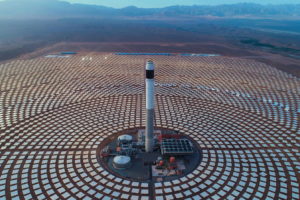
E.ON, Siemens, Munich Re and Deutsche Bank — announced during its annual conference that it will begin construction next year on a 500 megawatt solar farm. While the specific location was not disclosed, reports say it will likely be built near Ouarzazate, a city in southern Morocco known as “the door of the desert.” The €2 billion plant represents just the first step in a proposed €400 billion network of solar plants and wind farms the coalition hopes will provide 15 percent of Europe’s electricity by 2050. Negotiations are already underway with Tunisia for the next plant, with Algeria the next possible country. Coalition leaders say the project will represent a “win-win” for Europe and the nations of North Africa and the Middle East, since it will provide jobs and economic opportunity.
PERMALINK
17 Aug 2011:
Nations Set Heat Records
As Summer Temperatures Scorched Asia
Six nations across Asia, the Middle East, and Africa
experienced record high temperatures this summer, as for the second consecutive summer meteorologists reported some of the highest temperatures in
recorded history. According to the Weather Underground blog, the hottest undisputed temperatures ever recorded in Asia have occurred during the last two summers, including temperatures of 127.9 degrees F (53.3 degrees C) in Mitrabah, Kuwait on Aug. 3; 127.4 F in Tallil, Iraq, on Aug. 3; and 127.4 F in Dehloran, Iran on July 28. The hottest undisputed temperature ever recorded in Asia occurred on May 26, 2010, when the mercury hit 128.3 F in Moenjodaro, Pakistan. According to weather data, six nations have set temperature records this summer, including Armenia and the Republic of Congo. Twenty nations set records last summer. In Russia, scientists recorded the highest temperature at a manned reporting station — 111.7 F in the Kalmykia Republic on July 30. Three higher temperatures have been recorded at automated stations. According to the U.S. National Oceanic and Atmospheric Administration, this July was the seventh-warmest in recorded history; NASA’s Goddard Institute for Space Studies called it the third-warmest July on record.
PERMALINK
09 Aug 2011:
Israel Expands Desalination;
Study Touts New Salt-Removing Technology
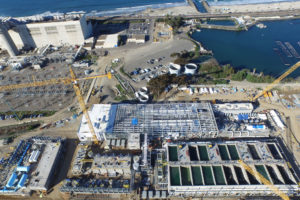
Israel has announced plans to build a $423 million (1.5 billion shekel) desalination plant in the Mediterranean coastal city of Ashdod that officials say
will provide 100 million cubic meters of water annually, or about 15 percent of the nation’s drinking water needs. When completed in 2013, the reverse osmosis plant will join four other Israel plants that combined will meet three-quarters of the nation’s household water needs. Finance Minister Yuval Steinitz said expansion of desalination operations is critical as Israel looks to prevent depletion of its main freshwater source, the Sea of Galilee.
Meanwhile, a recent Yale University study found that desalination technology could provide the best hope for meeting the world’s growing water needs. But rather than using reverse osmosis technology, which researchers say is nearing its potential for maximum energy efficiency, researchers suggest that the greatest efficiency gains could occur in pre- and post-treatment stages of desalination. “All of this will require new materials and a new chemistry, but we believe this is where we should focus our efforts going forward,” said Menachem Elimelech, a Yale professor of chemical and environmental engineering.
PERMALINK
06 Jul 2011:
New Electric Car in Israel
Includes Battery Swap Subscriptions
A California-based start-up will begin selling electric cars in Israel next month that
include a subscription package for a leased battery and the costs of recharging the vehicle. Instead of owning the batteries, consumers will be able to purchase a subscription for a certain

Better Place
A Better Place battery swap station
number of kilometers per year, much like cellphone owners purchase their minutes. The company,
Better Place, hopes the strategy will help the industry overcome one of the major challenges facing widespread adoption of electric cars: the limited range of existing battery technology. Better Place will sell an electric sedan, made by Renault, that will have a range of about 100 miles per charge; for longer trips, car owners will be able to exchange batteries at swap stations located across Israel. One package includes the cost of the vehicle and 25,000 miles per year for three years for $46,000. According to Better Place, that subscription would end up costing consumers 35 percent less than purchasing and fueling a gas-powered vehicle over three years.
PERMALINK
20 Jun 2011:
Pakistan Air Sensor Network
Provides Rare Access to Pollution Data
A Pakistan university has installed a network of inexpensive air sensors across the city of Lahore that measure air quality and automatically upload the information onto an online database, a pilot project officials hope will widen access to air quality data in the

VIEW
developing nation. The project, known as the Volunteer Internet-based Environment Watch (VIEW), currently utilizes solar-powered sensors in seven locations citywide to provide real-time data on levels of carbon monoxide, sulfur dioxide, and ozone, along with temperature, humidity, and dew point. The data is accessible online at
www.view.lums.edu.pk. In the next five years, project head Jahangir Ikram hopes to expand the number of sensors in Lahore to more than 50 and also install sensors in some other Pakistani cities. The project was launched by the Lahore University of Management Sciences (LUMS). “Data on air pollution in developing countries hardly exists and this is a way to get at that data,” said Agha Akram, who helped launch the program while a student at LUMS. “It’s not like you have to set up a big government bureaucracy.”
PERMALINK
29 Apr 2011:
Gulf Nations’ Social Policies
Playing Role in Oil Price Rises, Report Says
The generous social benefits being doled out by Saudi Arabia and other oil-rich Persian Gulf nations are
contributing to high oil prices, according to a report by the energy advisory firm, PFC Energy. The report said that populist spending programs, which have recently become even more generous in an effort to ward off the social unrest that has swept much of the Middle East, are forcing some Arab OPEC countries to keep oil prices high to pay for generous social policies. Such policies include high government salaries, direct payments to citizens, “payoffs” to the religious establishment, housing allowances, and large subsidies to keep gasoline prices low. “Today’s high oil prices facilitate the financing of the expansive spending packages that [Saudi] King Abdullah has recently announced to prevent outbreaks of popular unrest within the country,” said the report, prepared for the firm’s private clients. PFC Energy also citied the countries of the United Arab Emirates as funding growing social largesse with oil revenues. The report said increases in government spending among OPEC countries makes it unlikely that the oil cartel will allow oil prices to dip below $90 per barrel in the future.
PERMALINK
10 Mar 2011:
Decline of Honeybee Populations
Now a Global Phenomenon, Report Says
The mysterious decline of honeybee populations observed in the U.S. and Europe
is now a global phenomenon, according to a new report from the United Nations Environment Programme (UNEP). Scientists say significant die-offs are now occurring in managed bee colonies in China and Japan, and there are indications of similar population collapses in Egypt. While honeybee numbers have been declining for decades, the rate has accelerated in recent years, with so-called “colony collapse disorder” destroying 35 percent of the U.S. honeybee population between 2006 and 2009. Several causes have been cited, including a decline in flowering plants,
increased use of insecticides,
honeybee-killing mites, and air pollution. The report warns that a honeybee decline poses a significant threat to humankind since bees play such an important role as crop pollinators worldwide. The report suggests that incentives be offered to farmers and landowners to restore habitat conducive to honeybees, including adding critical flowering plants near crop fields and more careful management of insecticide use.
PERMALINK
07 Feb 2011:
Rising Food Costs Exacerbating
Public Unrest Globally, Experts Warn
Rising food prices and a shortage of critical crops is
fueling political instability in numerous regions worldwide and might have contributed to uprisings in Egypt and Tunisia, according to international food experts. While food costs were not the primary reason for the unrest in those nations, recent public uprisings do illustrate the risk when such stresses are added to existing political problems, Lester Brown, founder of the Earth Policy Institute, told the
Guardian. According to the UN’s Food and Agriculture Organization, food prices reached a record high in January for the seventh consecutive month. Its food price index jumped 3.4 percent from December to the highest level since 1990, when the UN started measuring food prices. “It’s easy to see how the food supply can translate directly into political unrest,” Brown said. In South Korea, which imports about 70 percent of its food, President Lee Myung-bak
has urged the formation of a task force to procure food supplies in the face of these rising costs.
PERMALINK
20 Dec 2010:
Market for Desalination Plants
Expected to Grow by $87 Billion by 2016
More than $88 billion
will be invested in desalination technologies worldwide from 2010 to 2016 as regions face dwindling supplies of freshwater and steep population growth, according to a new report. Declining costs associated with several key desalination technologies — including reverse osmosis — will make saltwater-to-freshwater treatment a more affordable option, according to the report by Pike Research. “Desalination is becoming more affordable; thus, an increased number of people can benefit from an almost unlimited resource — seawater,” the report says. The global installed capacity is expected to grow by about 55 million cubic meters per day during that period, representing a 9-percent annual growth rate. About 54 percent of that growth will occur in the Middle East and North Africa.
PERMALINK
09 Jul 2010:
Ten Nations at ‘Extreme Risk’
Because of Water Shortages, Report Says
Ten countries worldwide, including five African nations,
are at “extreme risk” because of limited access to clean, fresh water, according to a new global water security index. And the effects of climate change and population growth will exacerbate the stress on these water supplies, potentially threatening
stability in many regions,
according to the analysis by Maplecroft , a UK-based consulting group. Among the nations most at risk are Somalia, Mauritania, Sudan, Niger, and Iraq. Other nations at extreme risk — including Pakistan, Egypt, and Uzbekistan — are already facing internal and border tensions because of limited water supplies. “There is a risk of water stress exacerbating future risks of conflict, although there is evidence that water scarcity may also help foster cooperation instead,” said Anna Moss, a Maplecroft environmental analyst. The index evaluates the water security of 165 nations in four key areas: access to clean water and sanitation; availability of renewable water and reliance on external sources; the compatability of supply and demand; and the dependence of the nation’s economy on water supplies. The most vulnerable regions include Africa, the Middle East and the Central Asian states of the former Soviet Union. The most secure nations include Iceland and Norway.
PERMALINK
01 Apr 2010:
Arab Nations Lag Behind in
Clean Energy Despite Climate Threat
Nations in the Arab world, a region that could face severe impacts from climate change,
must act more aggressively to promote renewable sources of energy, environmental experts warned during a conference in Egypt. While rising seas threaten to affect coastal cities and warmer temperatures could impact the region’s agriculture, the rate of greenhouse gas emissions in the region were among the steepest on the planet from 1990 to 2003, according to a UN Arab Human Development Report. The three biggest emitters on a per capita basis were Kuwait, the United Arab Emirates and Qatar. Participants at the Arab Forum for Environment and Development said climate skepticism is high in that region where petroleum interests are considerable. And while some nations have adopted initiatives to capitalize on the region’s renewable sources — including solar and wind — there has been a lack of political commitment. “Arab countries are moving too slowly toward becoming low carbon economies,” said Ibrahim Abdel Gelil of the Arabian Gulf University.
PERMALINK
17 Mar 2010:
Group Seeks Tighter Rules
on Shark Trade at Endangered Species Talks
A conservation group is pushing negotiators at international talks on endangered species to impose
tighter regulations on the global trade in sharks, saying the growing demand for shark fin soup in Asia has endangered eight species. As many as 22 million pounds of shark fins are sold annually in Hong Kong alone for use in the soup, a meal that was once considered a delicacy but is now popular among Asia’s growing middle class, according to
a report by the U.S.-based group Oceana. And with a market that can fetch as much as $1,300 for a single fin, the group says the populations of eight different species of sharks are sharply dwindling. The group is urging the United Nations Convention on International Trade in Endangered Species (CITES), which is holding its regular talks in Qatar until March 25, to impose sanctions that will limit the trade in fins to shark populations that are fished sustainably. “The demand for the shark fin is so high, they’re being taken out of the water faster than they can reproduce to sustain their population,” said Rebecca Greenberg, co-author of the report.
PERMALINK
12 Mar 2010:
Endangered Species Talks
Focus on Tuna, Sharks and Ivory Trade
Proposals to ban the trade in Atlantic bluefin tuna and to impose restrictions on the shark trade
top the agenda as the UN Convention on International Trade in Endangered Species of Wild Fauna and Flora (CITES) opens this weekend in Qatar. Many of the nearly 40 proposals slated for discussion at the 12-day meeting relate to marine species, which negotiators and conservationists say reflects increased awareness of the hazards faced by the world’s oceans. Among the most controversial will be a recommendation that
the bluefin tuna trade be banned until populations of the fish can recover from decades of overfishing. U.S. officials say they will support a ban, as will the European Union, albeit with conditions; Japan, which represents more than half of the world market for tuna, opposes a ban. Governments from 175 nations are participating in the CITES meeting, which will also deal with proposals relating to hammerhead sharks, red coral, and polar bears, as well as a proposal by Tanzania and Zambia to resume trade in their stocks of elephant ivory.
PERMALINK
05 Feb 2010:
Mideast Project Develops
Biofuel With Water From the Sea
Researchers in the Middle East are developing a technology they say will
convert saltwater-tolerant crops into jet fuel, creating a biofuel that doesn’t consume huge amounts of fresh water or take land away from food crops. The Masdar Institute in the United Arab Emirates is creating a demonstration farm that will use a system called integrated seawater agriculture, in which seawater would be transported via canal to a desert-based farm that combines fish and shrimp farming with cultivation of mangrove trees and salicornia, whose seeds can be converted into fuel. The effluent from the fish farming will be used to fertilize the salicornia plants, which are grown in saltwater-irrigated fields, said Scott Kennedy, the project leader. The runoff of that irrigation, which by that point would be even saltier, would be used to grow the saltwater-tolerant mangrove trees. The oil-rich salicornia seeds would then be processed into biofuel suitable for blending in jet fuel, researchers said. One potential challenge for the project, experts noted, is the damage that high salt levels will likely inflict on machinery used to harvest the salicornia.
PERMALINK
NASA: The Year in Images
Photo Gallery

NASA
Swirling ice patterns off Canada’s Baffin Island
Every day, NASA’s Earth Observatory publishes images of our world from a perspective rarely seen by human eyes — from satellites high above the planet’s surface. In 2009, these images once again provided an extraordinary view of the powerful forces of nature, of the widening footprint of human civilization, and of the point where they often meet. In February, NASA satellite photos captured the massive brushfires roaring through southeastern Australia. Two months later, the space agency’s cameras documented the Aral Sea’s disappearance. The images expanded our view of how human land use is reshaping our world, from the patchwork farms of the U.S. Midwest to the building boom in Dubai. And the photographs illustrated that, from miles above, even the murky sediment in the Gulf of Mexico or a violent sandstorm off the Senegal coast can have a delicate beauty.
Click to see a gallery of some of the more memorable images from the year.
PERMALINK
13 Oct 2009:
First Passenger Flight Flown
Using Kerosene Made from Natural Gas
A Qatar Airways flight from London to Qatar has
become the first passenger plane to be powered by cleaner-burning natural gas that was converted to kerosene. “Today’s flight opens the door to an alternative to oil-based aviation fuel,” said Malcom Brinded, international executive director of Royal Dutch Shell, which is partnering with Qatar Petroleum to produce so-called gas-to-liquid (GTL) kerosene from Qatar’s abundant natural gas reserves. During the five-hour flight, the Qatar Airways Airbus A340-800 jet was powered by a 50-50 blend of GTL kerosene and conventional oil-based kerosene jet fuel. An Airbus spokesman called the flight “a major breakthrough which brings us closer to a world where fuels made from feedstocks such as wood-chip waste and other biomass is available for commercial aviation.” The spokesman predicted that by 2030, 30 percent of jet fuel would be derived from GTL or biofuels. Shell and Qatar Petroleum are building a plant in Qatar capable of producing one million tons of GTL kerosene annually.
PERMALINK
14 Sep 2009:
Iraq Approves Plan to
Convert Rotting Dates to Bioethanol
Iraqi officials have endorsed
a plan to convert dates into biofuel, an innovative project they hope will boost a once-thriving agriculture economy burdened by years of drought, government sanctions and war. A United Arab Emirates-based company will produce bioethanol from the dates that farmers can no longer use because they are rotting, said Faroun Ahmed Hussein, head of Iraq’s date palm board. The nation produces about 350,000 tons of dates annually, but consumes only about 150,000 tons. While Iraq once was a major date exporter, farmers now feed much of the rest to animals rather than export them because of the poor quality, Hussein said. Government sanctions and war have exacerbated entrenched problems such as high soil salinity and inefficient irrigation to ravage Iraq’s farming sector, the nation’s largest employer. “Farmers will be happy to sell their rotten dates instead of throwing them away,” Hussein said. He would not identify the company, how much bioethanol it would be able to produce, or how much it would cost.
PERMALINK
14 Jul 2009:
Euphrates River Dwindles
Due to Dams and Long Drought
The legendary Euphrates River
has dwindled to perilously low levels in Iraq because of a severe two-year drought, the construction of dams in Turkey and Syria, and wasteful water management by the
Iraqi government and farmers, the
New York Times reports. The flow of the 1,730-mile river has been so sharply reduced that lakes and wetlands are drying up; rice, wheat, and barley farmers are unable to irrigate their fields; renowned Mesopotamia date crops are withering; and fishermen are losing their livelihoods. Unless the situation improves, the Euphrates’ flow could soon be only half that of several years ago, the
Times reports. Particularly hard-hit are the marshes between the Tigris and Euphrates Rivers, which had been drained by Saddam Hussein but were on their way to being restored several years ago. Once again, however, many sections of marshland are dry. A major reason for the Euphrates’ reduced flow is the network of seven dams in Turkey and Syria, which limit the water downstream. Turkey has recently released more water into the Iraqi section of the river.
PERMALINK
02 Jul 2009:
Turkey Resumes Dam Project
The Turkish government
will revive a $1.6 billion dam project on the Tigris River despite concerns that it will displace tens of thousands of people, damage wildlife habitat, and destroy historic archaeological sites. Preparations for the Ilisu hydroelectric dam were suspended for six months after financial institutions in Germany, Switzerland, and Austria announced that they were withholding financial support because of environmental concerns. But Veysel Eroglu, Turkey’s environmental minister, said the financing would be made available for what the government considers an important part of a $32 billion plan to boost the economy in the nation’s southeastern corner, a region disrupted by armed conflict between the government and the outlawed Kurdistan Workers Party. Eroglu said improvements have been made to assure the project will meet international standards. Turkish officials say the dam, part of a larger proposed network of dams called the Southeastern Anatolia Project, would generate 1,200 MW of electricity after it is completed in 2013. But environmental advocates warn that the project would inundate as many as 80 towns, villages, and hamlets, and displace up to 80,000 people.
PERMALINK
30 Apr 2009:
Dubai’s Urban Sprawl
In these photographs, NASA satellites capture the
explosive growth of Dubai on the Persian Gulf between 2002 and 2008. These false-color thermal images of Dubai — one of the 7 United Arab
Emirates — depict vegetated areas in red, buildings in gray, and the desert in beige. The image at left, taken in October 2002, shows the early stages of construction of Palm Jumeirah, a vast commercial development built by dredging 3.9 billion cubic feet of sand from the gulf and depositing it in the shape of a giant palm tree. The finished look of Palm Jumeirah — which contains shops, hotels, and apartments and is protected from the gulf by 7 miles of rocky breakwater — can be seen in the image at right, taken in November 2008. That recent image also shows the exponential growth of Dubai, a city-state of 1.2 million and a major commercial hub in the oil-rich Persian Gulf region. Just to the east of Palm Jumeirah, the fairways of an irrigated golf course, pictured in red, can be seen.
PERMALINK