Topic: Sustainability


Building a Better Bulb:<br /> Lighting Revolution Advances

Report

Building a Better Bulb:
Lighting Revolution Advances

by dave levitan
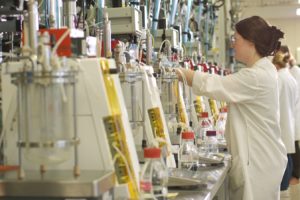
With the industry’s support and despite political opposition, new U.S. lighting efficiency standards went into effect this month. This move, along with similar actions in Europe and China, is helping spur new technologies that will change the way the world's homes and businesses are illuminated.
READ MORE

Putting a Price on<br /> The Real Value of Nature

Interview

Putting a Price on
The Real Value of Nature

Indian banker Pavan Sukhdev has been grappling with the question of how to place a monetary value on nature. In an interview with Yale Environment 360, he discusses the ways natural ecosystems benefit people and why policymakers and businesses must rethink how they assess environmental costs and benefits.
READ MORE

Can ‘Climate-Smart’ Agriculture<br /> Help Both Africa and the Planet?

Report

Can ‘Climate-Smart’ Agriculture
Help Both Africa and the Planet?

by fred pearce
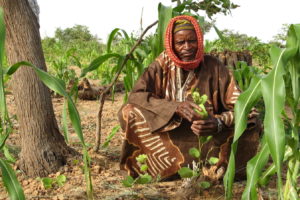
One idea promoted at the Durban talks was “climate-smart agriculture," which could make crops less vulnerable to heat and drought and turn depleted soils into carbon sinks. The World Bank and African leaders are backing this new approach, but some critics are skeptical that it will benefit small-scale African farmers.
READ MORE

Sweden’s Green Veneer Hides<br /> Unsustainable Logging Practices

Report

Sweden’s Green Veneer Hides
Unsustainable Logging Practices

by erik hoffner
Sweden has a reputation as being one of the world’s most environmentally progressive nations. But its surprisingly lax forestry laws often leave decisions about logging to the timber companies — and as a result, large swaths of biologically-rich boreal forest are being lost.
READ MORE

The New Story of Stuff:<br /> Can We Consume Less?

Analysis

The New Story of Stuff:
Can We Consume Less?

by fred pearce
A new study finds that Britons are consuming less than they did a decade ago, with similar patterns being seen across Europe. Could this be the beginning of a trend in developed countries? Might we be reaching “peak stuff”?
READ MORE

China’s Appetite for Wood<br /> Takes a Heavy Toll on Forests

Analysis

China’s Appetite for Wood
Takes a Heavy Toll on Forests

by william laurance
More than half of the timber now shipped globally is destined for China. But unscrupulous Chinese companies are importing huge amounts of illegally harvested wood, prompting conservation groups to step up boycotts against rapacious timber interests.
READ MORE

A Power Company President<br /> Ties His Future to Green Energy

Interview

A Power Company President
Ties His Future to Green Energy

David Crane, the CEO of one of the nation’s largest electric companies, has become a leading proponent of renewable energy. In an interview with Yale Environment 360, he explains how, in the face of government paralysis, the private sector can help lead the shift away from fossil fuels.
READ MORE

Building Retrofits: Tapping<br /> The Energy-Saving Potential

Report

Building Retrofits: Tapping
The Energy-Saving Potential

by david biello
No more cost-effective way to make major cuts in energy use and greenhouse gas emissions exists than retrofitting buildings. Now, from New York to Mumbai to Melbourne, a push is on to overhaul older buildings to make them more energy efficient.
READ MORE

What If Experts Are Wrong<br /> On World Population Growth?

Analysis

What If Experts Are Wrong
On World Population Growth?

by carl haub
A central tenet of demography is that global population will peak at 9 to 10 billion this century and then gradually decline as poorer countries develop. But that assumption may be overly optimistic — and if it is, population will continue to rise, placing enormous strains on the environment.
READ MORE

The World at 7 Billion:<br /> Can We Stop Growing Now?

Opinion

The World at 7 Billion:
Can We Stop Growing Now?

by robert engelman
With global population expected to surpass 7 billion people this year, the staggering impact on an overtaxed planet is becoming more and more evident. A two-pronged response is imperative: empower women to make their own decisions on childbearing and rein in our excessive consumption of resources.
READ MORE

In Brazil, Palm Oil Plantations<br /> Could Help Preserve the Amazon

Analysis

In Brazil, Palm Oil Plantations
Could Help Preserve the Amazon

by rhett butler
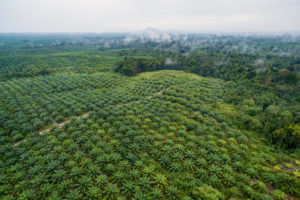
In recent years, palm oil development in Malaysia and Indonesia has devastated tropical forests there. With Brazil on the verge of its own palm oil boom, can sustainable cultivation of the crop actually help save the rainforest, rather than hastening its destruction?
READ MORE

Off the Pedestal: Creating a<br /> New Vision of Economic Growth

Opinion

Off the Pedestal: Creating a
New Vision of Economic Growth

by james gustave speth
The idea of economic growth as an unquestioned force for good is ingrained in the American psyche. But a longtime environmental leader argues it’s time for the U.S. to reinvent its economy into one that focuses on sustaining communities, family life, and the natural world.
READ MORE

Green Failure: What’s Wrong<br /> With Environmental Education?

Interview

Green Failure: What’s Wrong
With Environmental Education?

by michelle nijhuis
Marine conservationist Charles Saylan believes the U.S. educational system is failing to create responsible citizens who consider themselves stewards of the environment. To do that, he says in a Yale Environment 360 interview, educators need to go beyond rhetoric and make environmental values a central part of a public education.
READ MORE

Africa’s Flourishing Niger Delta<br /> Threatened by Libya Water Plan

Report

Africa’s Flourishing Niger Delta
Threatened by Libya Water Plan

by fred pearce
The inland Niger delta of Mali is a unique wetland ecosystem that supports a million farmers, fishermen, and herders and a rich diversity of wildlife. But now, the country’s president and Libyan leader Moammar Gaddafi have begun a major agricultural project that will divert much of the river’s water and put the delta’s future at risk.
READ MORE

China Turns to Biogas to<br /> Ease Impact of Factory Farms

Report

China Turns to Biogas to
Ease Impact of Factory Farms

by eliza barclay
In China, millions of tons of waste from livestock farms are causing severe water pollution and massive emissions of methane. Now, some large livestock operators are turning to biogas fuel production in hopes of creating “ecological” factory farms.
READ MORE

A Symbolic Solar Road Trip <br />To Reignite a Climate Movement

Opinion

A Symbolic Solar Road Trip
To Reignite a Climate Movement

by bill mckibben
An activist caravan to bring one of Jimmy Carter’s solar panels back to the White House symbolizes the time that the U.S. has lost in developing new energy technologies – and the urgent need for taking action on climate.
READ MORE

Will REDD Preserve Forests <br />Or Merely Provide a Fig Leaf?

Analysis

Will REDD Preserve Forests
Or Merely Provide a Fig Leaf?

by fred pearce
The tropical forest conservation plan, known as REDD, has the potential to significantly reduce deforestation and carbon dioxide emissions worldwide. But unless projects are carefully designed and monitored, the program could be undercut by shady dealings at all levels, from the forests to global carbon markets.
READ MORE

Eyeing the Difficult Path<br /> To a Sustainable Future

Interview

Eyeing the Difficult Path
To a Sustainable Future

Environmentalist David Orr says the easy part of helping the United States live within its ecological limits may be passing laws, such as one that puts a price on carbon. The hard part, he maintains in an interview with Yale Environment 360, is changing a culture of consumption that causes extensive environmental damage — and unhappiness.
READ MORE

The Anthropocene Debate: <br /> Marking Humanity’s Impact

Analysis

The Anthropocene Debate:
Marking Humanity’s Impact

by elizabeth kolbert
Is human activity altering the planet on a scale comparable to major geological events of the past? Scientists are now considering whether to officially designate a new geological epoch to reflect the changes that homo sapiens have wrought: the Anthropocene.
READ MORE

Out of the Demographic Trap:<br /> Hope for Feeding the World

Opinion

Out of the Demographic Trap:
Hope for Feeding the World

by fred pearce
In Africa and elsewhere, burgeoning population growth threatens to overwhelm already over-stretched food supply systems. But the next agricultural revolution needs to get local — and must start to see rising populations as potentially part of the solution.
READ MORE

Stewart Brand’s Strange Trip:<br /> Whole Earth to Nuclear Power

Interview

Stewart Brand’s Strange Trip:
Whole Earth to Nuclear Power

by todd woody
When the founder of the Whole Earth Catalog embraces nuclear power, genetically engineered crops, and geoengineering schemes to cool the planet, you know things have changed in the environmental movement. In an interview with Yale Environment 360, Stewart Brand explains how the passage of four decades — and the advent of global warming — have shifted his thinking about what it means to be green.
READ MORE

The Greenest Place in the U.S.<br /> May Not Be Where You Think

Opinion

The Greenest Place in the U.S.
May Not Be Where You Think

by david owen
Green rankings in the U.S. don’t tell the full story about the places where the human footprint is lightest. If you really want the best environmental model, you need to look at the nation’s biggest — and greenest — metropolis: New York City.
READ MORE

The <em>Other</em> Inconvenient Truth:<br /> The Crisis in Global Land Use

Opinion

The Other Inconvenient Truth:
The Crisis in Global Land Use

by jonathan foley
As the international community focuses on climate change as the great challenge of our era, it is ignoring another looming problem — the global crisis in land use. With agricultural practices already causing massive ecological impact, the world must now find new ways to feed its burgeoning population and launch a "Greener" Revolution.
READ MORE

What Makes Europe<br /> Greener than the U.S.?

Opinion

What Makes Europe
Greener than the U.S.?

by elisabeth rosenthal
The average American produces three times the amount of CO2 emissions as a person in France. A U.S. journalist now living in Europe explains how she learned to love her clothesline and sweating in summer.
READ MORE

Green Intelligence: Toward<br /> True Ecological Transparency

Analysis

Green Intelligence: Toward
True Ecological Transparency

by daniel goleman
Wal-Mart’s push to develop a sustainability index for the products it carries could prove to be a pivotal moment in the effort to make consumers aware of the environmental impacts of what they buy.
READ MORE

Reconnecting with Nature<br /> Through Green Architecture

Interview

Reconnecting with Nature
Through Green Architecture

by richard conniff
Stephen Kellert, a social ecologist, is a passionate advocate for the need to incorporate aspects of the natural world into our built environment. In an interview with Yale Environment 360, he explains what we can learn from cathedrals, why flowers in a hospital can heal, and how green design can boost a business’s bottom line.audio
READ MORE

Adaptation Emerges as Key<br /> Part of Any Climate Change Plan

Report

Adaptation Emerges as Key
Part of Any Climate Change Plan

by bruce stutz
After years of reluctance, scientists and governments are now looking to adaptation measures as critical for confronting the consequences of climate change. And increasingly, plans are being developed to deal with rising seas, water shortages, spreading diseases, and other realities of a warming world.
READ MORE

A Potential Breakthrough<br /> in Harnessing the Sun’s Energy

Report

A Potential Breakthrough
in Harnessing the Sun’s Energy

by david biello
New solar thermal technology overcomes a major challenge facing solar power – how to store the sun’s heat for use at night or on a rainy day. As researchers tout its promise, solar thermal plants are under construction or planned from Spain to Australia to the American Southwest.
READ MORE

Analysis

Using Peer Pressure as a Tool
to Promote Greener Choices

by richard conniff
Environmentalists, utilities, and green businesses are turning to behavioral economics to find innovative ways of influencing people to do the right thing when it comes to the environment. Is this approach really good for the planet or just a fad?
READ MORE

Consumption Dwarfs Population <br />as Main Environmental Threat

Opinion

Consumption Dwarfs Population
as Main Environmental Threat

by fred pearce
It's overconsumption, not population growth, that is the fundamental problem: By almost any measure, a small portion of the world's people — those in the affluent, developed world — use up most of the Earth's resources and produce most of its greenhouse gas emissions.
READ MORE

Food Industry Pursues the Strategy of Big Tobacco

Interview

Food Industry Pursues the Strategy of Big Tobacco

Kelly Brownell has long studied the relationship between rising levels of obesity in the U.S. and the way our food is grown, processed, packaged, and sold. In an interview with Yale Environment 360, he discusses the common marketing and lobbying tactics employed by the food and tobacco industries.audio
READ MORE

China’s Grand Plans for <br/>Eco-Cities Now Lie Abandoned

Report

China’s Grand Plans for
Eco-Cities Now Lie Abandoned

by christina larson
Mostly conceived by international architects, China’s eco-cities were intended to be models of green urban design. But the planning was done with little awareness of how local people lived, and the much-touted projects have largely been scrapped.
READ MORE

Pursuing the Elusive Goal<br />  of a Carbon-Neutral Building

Analysis

Pursuing the Elusive Goal
of a Carbon-Neutral Building

by richard conniff
Yale University’s recently opened Kroon Hall is a state-of-the-art model of where the green building movement is headed. Yet even this showcase for renewable energy highlights the difficulties of creating a building that is 100 percent carbon neutral.
READ MORE

The New Urbanists: <br />Tackling Europe’s Sprawl

Analysis

The New Urbanists:
Tackling Europe’s Sprawl

by bruce stutz
In the last few decades, urban sprawl, once regarded as largely a U.S. phenomenon, has spread across Europe. Now an emerging group of planners is promoting a new kind of development — mixed-use, low-carbon communities that are pedestrian-friendly and mass-transit-oriented.
READ MORE

Environmental Failure: <br/> A Case for a New Green Politics

Opinion

Environmental Failure:
A Case for a New Green Politics

by james gustave speth
The U.S. environmental movement is failing – by any measure, the state of the earth has never been more dire. What’s needed, a leading environmentalist writes, is a new, inclusive green politics that challenges basic assumptions about consumerism and unlimited growth.
READ MORE

Green Strategies Spur <br />Rebirth of American Cities

Analysis

Green Strategies Spur
Rebirth of American Cities

by keith schneider
U.S. cities have been using green planning to spark economic development, helping create a real urban renaissance in America. With a new administration soon to arrive in Washington, these same approaches may finally start being used on a national scale.
READ MORE

Thomas Friedman: Hope in a Hot, Flat and Crowded World

Interview

Thomas Friedman: Hope in a Hot, Flat and Crowded World

by elizabeth kolbert
In an exclusive interview with Yale Environment 360, best-selling author Thomas Friedman talks with Elizabeth Kolbert about his new book and about why he’s optimistic that an energy-technology revolution can revitalize the United States and set the world on a new, greener path. audio
READ MORE

Saving the Seeds of the<br /> Next Green Revolution

Analysis

Saving the Seeds of the
Next Green Revolution

by fred pearce
With food prices skyrocketing and climate change looming, the world needs a green revolution like the one a generation ago. But many valuable seed varieties have been lost – and scientists now are scrambling to protect those that remain before they vanish down the genetic drain.
READ MORE

Opinion

Has the Population Bomb Been Defused?

by fred pearce
Paul Ehrlich still believes that overpopulation imperils the Earth’s future. But the good news is we are approaching a demographic turning point: Birth rates have been falling dramatically, and population is expected to peak later this century — after that, for the first time in modern history, the world's population should actually start to decline.
READ MORE

Too Many People, <br />Too Much Consumption

Opinion

Too Many People,
Too Much Consumption

by paul r. ehrlich and anne h. ehrlich
Four decades after his controversial book, The Population Bomb, scientist Paul Ehrlich still believes that overpopulation — now along with overconsumption — is the central environmental crisis facing the world. And, he insists, technological fixes will not save the day.
READ MORE

Michael Pollan on What’s <br />Wrong with Environmentalism

Interview

Michael Pollan on What’s
Wrong with Environmentalism

In an interview with Yale Environment 360, best-selling author Michael Pollan talks about biofuels and the food crisis, the glories of grass-fed beef, and why environmentalists must look beyond wilderness to sustainability.audio
READ MORE

Global Commodities Boom <br />Fuels New Assault on Amazon

Report

Global Commodities Boom
Fuels New Assault on Amazon

by rhett butler
With soaring prices for agricultural goods and new demand for biofuels, the clearing of the world's largest rain forest has accelerated dramatically. Unless forceful measures are taken, half of the Brazilian Amazon could be cut, burned or dried out within 20 years.
READ MORE

The Tipping Point

Opinion

The Tipping Point

by bill mckibben
New evidence suggests that we have already passed a dangerous threshold for the amount of carbon dioxide in the atmosphere – and that the time for taking strong action is slipping away.
READ MORE

Analysis

Water Scarcity: The Real Food Crisis

by fred pearce
In the discussion of the global food emergency, one underlying factor is barely mentioned: The world is running out of water. A British science writer, who authored a major book on water resources, here explores the nexus between water overconsumption and current food shortages.
READ MORE

e360 digest

RELATED e360 DIGEST ITEMS


13 Feb 2012: Student Push for Ban on
Plastic Water Bottles Irks Industry

Student groups on some college campuses are pushing their schools to ban the sale of plastic water bottles, a campaign that so far has prompted more than 20 colleges and universities to impose partial or complete bans. The bottled water industry has responded with a
Plastic Water Bottle Ban
Wikimedia Commons
sarcastic video belittling the campaign. Student groups, citing environmental and health concerns of one-time bottle use, have worked with nonprofit groups like Ban the Bottle to have bottled water removed from vending machines and cafeterias and to push for more reusable bottle handouts and the use of water fountains. In recent months, Macalester College in Minnesota and Humboldt State University in California have imposed campus-wide bans, and the University of Vermont says it will end its contract with Dasani bottler Coca-Cola this year. “We’re really trying to make it part of the student culture to carry a water bottle,” Clare Pillsbury, a Macalester senior, told NPR. In response, the International Bottled Water Association has released a video belittling the students’ cause — contrasting the campaign with other campus protest issues from the past, from civil rights to Darfur — and making the case that a bottled water ban would leave consumers with fewer healthy beverage options.
PERMALINK


07 Feb 2012: Nearly Half of Electricity
At UK Businesses Wasted During Off Hours

A UK report says that nearly half of the electricity consumed by British businesses is wasted when employees are not at work. In an analysis of more than 6,000 smart meters, British Gas found that 46 percent

Click to enlarge
British Gas Energy Waste

British Gas
Evening energy use, Manchester
of electricity use occurs from 6 p.m. to 8 a.m., when most businesses are typically closed. Common examples of unnecessary electricity use include the lighting of parking areas on weekends, keeping the lights on at retail stores after shopping centers are closed, and running vending machines around the clock. The UK utility also released a series of thermal images illustrating how much energy is lost from energy-inefficient buildings in London, Manchester, and Liverpool during evening hours. According to British Gas, the average business could save £1,200 ($1,900) on its annual electricity bill by simply switching off lights at parking lots on weekends.
PERMALINK


02 Feb 2012: Road-based Charging Network
Could Charge EVs While They Drive

U.S. researchers have designed a wireless charging system for electric vehicles they say could ultimately lead to all-electric highways capable of charging cars and

Click to enlarge
Stanford Magnetic EV charging

Sven Beiker/CARS/Stanford University
Wireless electric car charger
trucks as they drive down the road. The system, developed by a team at Stanford University, uses magnetic fields to transmit large electric currents between metal coils embedded a few feet apart under the surface of the road. Based on magnetic resonance coupling technology, the process involves one coil that is connected to an electric current, which generates a magnetic field that causes the second coil to resonate, triggering an invisible transfer of electrical energy. The developers say there is a potential to eventually create a wireless network across highway systems, a step that would drastically increase the range of electric vehicles since they would theoretically never have to plug into a charging station. “You could actually have more energy stored in your battery at the end of your trip than you started with,” said Richard Sassoon, managing director of the Stanford Global Climate and Energy Project and co-author of the study published in the journal Applied Physics Letters.
PERMALINK


30 Jan 2012: Wheat Yields in India
May Drop as Region Warms, Study Says

An analysis of satellite images has revealed that extreme temperatures are cutting wheat yields in northern India, indicating that the adverse impacts of rising temperatures on wheat production in warmer climes may be more severe than previously believed. Using nine years of imagery of India’s fertile Ganges plain, Stanford University researcher David Lobell found that wheat turned from green to brown earlier when average temperatures were higher, an indication that the warmer conditions are causing the crops to age prematurely. The effects were particularly strong when temperatures exceeded 34 degrees C (93 degrees F), Lobell found. He calculated that an average temperature increase of 2 degrees C could trigger a 50 percent greater yield loss than existing models suggest. Earlier studies calculated that wheat-growing areas could see yield drops of 5 percent for every 1 degree C that the average temperature rises above 14 degrees C. Wheat is the world’s second-biggest crop and provides about one-fifth of the world’s protein.
PERMALINK


26 Jan 2012: California ‘Clean’ Car Rules
Mandate Boost in Electric Vehicle Sales

California regulators are expected to pass new rules today requiring that 15 percent of all new cars sold by 2025 be powered by electricity, hydrogen, or other reduced-emission sources. The new rules proposed by the California Air Resources Board would also require a 75-percent reduction in smog-creating emissions from new cars, SUVS, pickups and minivans, and a 50-percent reduction in emissions of carbon dioxide and other greenhouse gases by 2025. According to the board, the initiative would put about 1.4 million low-emission vehicles on California roads by 2025, compared with current levels of about 10,000. They predict the new rules will add about $1,900 to the price of a new car, but will save about $5,900 in fuel costs during the life of the vehicle. “This is a really large step. It’s transformational,” Tom Cackette, the board's chief deputy director, told the San Jose Mercury News. “Ten years from now the market is going to look quite a bit different.” The new standards will be introduced in 2018 and strengthened over the next seven years.
PERMALINK


25 Jan 2012: South Pacific ‘Free-for-All’
Decimating Fish Stocks, Report Says

Years of lax oversight, corruption, and political rivalry have allowed industrial fishing fleets from Asia, Europe, and Latin America to decimate fish stocks across the southern Pacific, a “free-for-all” that has pushed one
Peru Fish Meal Factory
Getty Images
A Peruvian fishmeal factory
critical species to the brink, according to a new report by the International Consortium of Investigative Journalists (ICIJ). With governments ignoring the threat of overfishing and heavily subsidizing the fishing industry, fleets have plundered the waters off Chile and Peru and have fished heavily right up to protected Antarctic waters. Stocks of jack mackerel — an oily fish that is a staple in Africa and a vital component in fishmeal for aquaculture — have declined by more than 90 percent, from an estimated 30 million metric tons to less than 3 million metric tons, in just two decades. According to Daniel Pauly, an oceanographer at the University of British Columbia, the jack mackerel decline could portend a collapse in fisheries worldwide.
PERMALINK


24 Jan 2012: Real-Time Fisheries Information
Could Reduce Waste, Company Says

A Japanese fisheries company has equipped some of its boats with technology that enables crews to publish details of catches online in real time, an innovation they say could significantly reduce waste and allow for more sustainable management of fish stocks. Using webcams and laptop computers on four fishing boats, the company, Sanriku Toretate Ichiba, allows fishermen to match their catch to consumer demand, and enables customers to buy fish before it even reaches port. The system could also allow fishing crews to dump live fish back into the sea if there is not ample demand on shore, the company says. “The hard reality is most caught produce goes to waste and in extreme cases this results in fishermen increasing their catch to compensate for lost revenues,” said Kenichiro Yagi, the company president. Some experts question whether such technologies are feasible at industry scale, particularly in the case of large trawlers, whose harvesting processes are often lethal to fish as soon as they’re caught.
PERMALINK


20 Jan 2012: Value of Conserving Habitats
Could be Worth $500B to World’s Poor

A new study says that compensating the world’s poorest communities for helping conserve the planet’s most vital habitats would help solve two major challenges: biodiversity loss and poverty. In fact, if global leaders were to put an economic value on the preservation of the world’s biodiversity hotspots — including such benefits as providing food and water and absorbing carbon emissions — it could be worth more than $500 billion annually for 330 million of the world’s poorest people. Since the people who live near these resources typically don’t have the means to protect them, the urgency for such economic mechanisms becomes increasingly critical, according to the study, published in the journal BioScience. “Developed and developing economies cannot continue to ask the world’s poor to shoulder the burden of protecting these globally important ecosystem services for the world’s benefit,” said Will Turner, vice president of Conservation International and lead author of the study.
PERMALINK


18 Jan 2012: Natural Gas Boom to Slow
Growth of U.S. Renewables, Report Says

The sheer abundance of recently discovered natural gas resources in the U.S. could drive down gas and electricity prices in the next few decades, yield an overall increase in energy use, and stunt the nation’s still-emerging renewable energy sector, a new report says. Using economic modeling, researchers at the Massachusetts Institute of Technology (MIT) found that relatively cheap natural gas — much of it to be extracted from underground shale formations — could represent an increasingly large share of U.S. electricity use, particularly in the face of a weak national climate policy. By 2050, the report says, this growth could cause national energy use to increase, possibly leading to a jump in greenhouse gas emissions of 13 percent above 2005 levels. Absent this supply of natural gas — which has become increasingly available as a result of improved drilling methods, including the emergence of hydraulic fracturing, or “fracking” — the U.S. could have expected emissions to decline 2 percent, the report says. The ascendance of natural gas could also retard the development of carbon capture technology, the report says.
PERMALINK


10 Jan 2012: Brazil Gains in Food Production
Coincided With Drop in Deforestation

A new study of land use in the Brazilian state of Mato Grosso shows that deforestation rates decreased significantly from 2006 to 2010 even as agricultural production in the region reached an all-time high. The study found that growers in Mato Grosso, where more than a third of forest loss in the Brazilian Amazon occurred in the 1980s, have increasingly used previously cleared pasture land. Using satellite data and government statistics on deforestation and production, researchers from Columbia University calculated that 26 percent of the increase in soy production within Mato Grosso from 2001 to 2005 was the result of cropland expansion into forested areas, accounting for 10 percent of total deforestation; during the second half of the decade, however, soy expansion accounted for just 2 percent of total deforestation. According to the study, published in the Proceedings of the National Academy of Sciences, this shift coincided with a drop in commodity markets, as well as a series of high-profile policy initiatives to reduce deforestation and improved methods in monitoring illegal clearing, including satellite-based tracking systems.
PERMALINK


09 Jan 2012: U.S. Imposes Catch Limits
On All Managed Fisheries For First Time

For the first time ever, the U.S. this year will impose catch limits for all 528 federally managed species, a new policy one official said will become an “international guidepost” for sustainable fisheries practices. After years of political wrangling, a coalition of lawmakers, environmental groups, fishing groups, and scientists were able to insert language into a reauthorized version of the Magnuson-Stevens Act — which governs all U.S. fishing — that will include annual limits on all fish stocks by the time the 2012 fishing year begins for all species. Some species, including mahi-mahi and wahoo, will have catch limits for the first time. “This simple but enormously powerful provision has eluded lawmakers for years and is probably the most important conservation statute ever enacted into America’s fisheries law,” Joshua Reichert, managing director of the Pew Environment Group, told The Washington Post. Because the new limits were achieved in cooperation with regional fisheries councils, advocates predict a greater probability of success.
PERMALINK


Interview: Putting a Price
On the Real Value of Nature

How do you put a price on the value of nature? That’s the question Indian banker Pavan Sukhdev and
Pavan Sukhdev
Pavan Sukhdev
his colleagues are seeking to answer in their international project on The Economics of Ecosystems and Biodiversity (TEEB), which published its latest report last month. The challenge, as Sukhdev sees it, is how to address the “economic invisibility of nature.” In an interview with Yale Environment 360, he cited crucial benefits from nature that are often overlooked, including the capacity of wetlands for filtering water, the role of forests in preventing erosion and flooding, and the importance of bees in pollinating crops. “When did the bees last send you an invoice for pollination?” he asks.
Read the interview
PERMALINK


29 Dec 2011: New Innovation System
Urged for Developing Renewable Energy

Two U.S. energy experts are calling for a new strategy to develop renewable energy, including the creation of regional programs to drive innovation of new technologies. Richard Lester of the Massachusetts Institute of Technology and David Hart of George Mason University say that current strategies — which have failed to create broad public support for bold action — should be replaced with programs that highlight the benefits of energy innovation to individuals and the nation. In a new book, Unlocking Energy Innovation, the two men call for a bottom-up approach to energy innovation that begins with an emphasis on energy efficiency and improving gas mileage, moves to a mid-range strategy of reducing the costs and risks of developing low-carbon sources of energy and better electricity-storage technologies, and then ends in several decades with the deployment of fundamentally new energy technologies based on advances in fields such as materials science and catalysis. The pair recommends that a regional, rather than a federal, approach be taken to manage and finance this three-stage process of innovation.
Read the interview
PERMALINK


28 Dec 2011: Map Projects When U.S. Cities
Will Achieve Grid Parity for Solar

If energy cost trends remain consistent — with the price of retail electricity rising and solar power falling — solar energy could become cheaper than power from the grid in most major U.S. metropolitan areas by 2027,

Click to enlarge
Map of Grid Parity in U.S.

Energy Self-Reliant States
Grid parity in U.S. states
according to a recent projection. In a new map published on the Energy Self-Reliant States website, energy policy analyst John Farrell has predicted which U.S. cities will achieve so-called “grid parity” first — and the order in which other cities will follow through 2027. Farrell, a researcher with the group, Local Self-Reliance, based his projections on recent regional retail rates for electricity, which have seen the cost of solar energy decline by an average of 7 percent per year and the cost of retail electricity increase by 2 percent annually. If that trend holds, Farrell predicts that San Diego will become the first city to achieve grid parity, in 2013, followed by New York in 2015. By 2020, 17 metropolitan areas nationwide will have reached grid parity; the number will jump to more than 40 by 2027, he projects.
PERMALINK


22 Dec 2011: The Top Ten Trends
In Clean Technology for 2011

The Web site, earth2tech, has named the top clean-tech trends of the year, with the plummeting cost of solar panels topping the list, followed by India’s emergence as a renewable energy powerhouse. Earth2tech reports that the price of solar panels dropped 40 percent in 2011, in large part because Chinese manufacturers flooded the market with low-cost solar panels. That should help spur the installation of more solar panels on rooftops, and also means that some solar power developers are foregoing large solar-thermal power projects in favor of residential solar. Other top trends include a sharp slowdown in initial public offerings (IPOs) for clean-tech companies, with the exception of biofuel companies, which offered some IPOs. The Web site said that sales of electric vehicles were slow, and that battery technology for EVs continued to be a drag on development and sales of electric cars. Earth2tech also noted that investors and start-ups were becoming increasingly interested in the “cleanweb” — mobile device and Web applications to manage energy use and other resources.
PERMALINK


Interview: Development Expert
Relies On Resilience of Villagers

Geographer Edward Carr has spent much of his time working in sub-Saharan Africa, where climate change and other environmental threats present a growing
Edward Carr
Edward Carr
challenge to the local people. In an interview with Yale Environment 360, he describes how his experience in Ghana taught him that villagers were “repositories of information about how to improve the human condition cheaply and with minimal environmental impact.” Carr contends that any outside aid, including funds for adapting to a warming world, must build on this inherent resilience. “One of the most important and fascinating things that comes out of my experience,” says Carr, “is that people are enormously capable with access to very limited resources, while managing serious economic and environmental instability.”
Read the interview
PERMALINK


20 Dec 2011: Mexico City Closes Dump
In Push to Boost Recycling and Reuse

Mexico City has announced plans to close one of the world’s largest open-air garbage dumps as part of an initiative to convert more of the city’s waste into reusable materials or energy. By the end of the year, garbage trucks will no longer be allowed to drop trash at the Bordo Poniente, a massive dump that has received more than 76 million tons of trash since it opened after the devastating 1985 earthquake. At its peak, the dump received about 12,700 tons of garbage daily. A recycling separation facility and composting plant will remain open at the site. According to a plan announced by city officials, a large concrete company, Cemex SAB, will buy 3,000 tons of trash daily to convert into energy. Mexico City is searching for other dump sites to use until a new recycling program is instituted in 2012. Meanwhile, Seattle became the latest U.S. city to ban plastic grocery bags and also passed a 5-cent fee on paper bags in an attempt to reduce its waste stream.
PERMALINK


12 Dec 2011: Increased Bicycling Will Help
EU Meet Climate Targets, Report Says

If all Europeans bicycled as much as the people of Denmark, the European Union could achieve up to one-quarter of its target for carbon emissions reductions in the transportation sector by 2050, a new report says. According to the European Cyclists’ Federation, the average Dane cycles about 2.6 kilometers a day. If that rate were achieved across the EU, it would reduce carbon dioxide emissions by 55 million to 120 million tons annually, or 5 to 11 percent of the EU’s overall emissions target, by 2020. (By 2020, the EU has vowed to reduce emissions 20 percent below 1990 levels). By 2050, a large-scale shift to cycling would represent a cut in C02 emissions of 63 million to 142 million tons, or 12 to 26 percent of the target reduction for the transportation sector. Since the EU is unlikely to meet its targets with more efficient technology alone, the report says that a shift away from cars is critical.
PERMALINK


09 Dec 2011: ExxonMobil Forecasts
Major Shift to Greener Vehicles

A new report from ExxonMobil predicts that nearly half of the world’s cars will either be hybrids or powered by alternative fuels by 2040. While hybrids now account for just about 1 percent of all vehicles worldwide, the oil giant forecasts that hybrids and alternative energy vehicles will move to the mainstream as governments increasingly push for better fuel efficiency. The ExxonMobil report, “The Outlook for Energy: A View to 2040,” predicts that overall energy demand will remain flat in developed nations over the next three decades, but demand in developing nations such as China and India will increase nearly 60 percent from 2010 to 2040. The report also predicts a worldwide boom in shale gas production and forecasts that 30 percent of the world’s electricity will be produced from natural gas, while demand for coal will peak before seeing “its first long-term decline in modern history.”
PERMALINK


Interview: Exploring Humanity's
Place in the Journey of the Universe

As a pioneer in the field of religion and ecology, Mary Evelyn Tucker has long believed that science and policy alone are not enough to deal with the Earth’s most pressing environmental challenges. What’s also needed,
Mary Evelyn Tucker Yale
Mary Evelyn Tucker
she says, is a spiritual or religious framework for valuing the natural world, a sense that “there is something here that’s larger than us, something that’s given birth to all life forms and sustains us.” That is the essence of a new film she co-produced, Journey of the Universe, which is premiering on PBS. In an interview with Yale Environment 360, Tucker describes the evolution of her work and how it is brought together in Journey of the Universe. While the film does not include any overt religious references, it seeks to evoke a sense of what she calls “wonder and awe.” Says Tucker, “There is a broad spiritual sensibility, which many environmentalists share, but often don’t talk about or want to name.”
Read the interview
PERMALINK


Yale
Yale Environment 360 is
a publication of the
Yale School of Forestry
& Environmental Studies
.

SEARCH e360


Donate to Yale Environment 360

CONNECT

Twitter: YaleE360
e360 on Facebook
Donate to e360
View mobile site
Bookmark
Share e360
Email newsletter
Subscribe to our feed:
rss


ABOUT

About e360
Contact
Submission Guidelines
Reprints

e360 VIDEO

Warriors of Qiugang
The Warriors of Qiugang, a Yale Environment 360 video that chronicles the story of a Chinese village’s fight against a polluting chemical plant, was nominated for a 2011 Academy Award for Best Documentary (Short Subject). Watch the video.


DEPARTMENTS

Opinion
Reports
Analysis
Interviews
e360 Digest
Video Reports

TOPICS

Biodiversity
Business & Innovation
Climate
Energy
Forests
Oceans
Policy & Politics
Pollution & Health
Science & Technology
Sustainability
Urbanization
Water

REGIONS

Antarctica and the Arctic
Africa
Asia
Australia
Central & South America
Europe
Middle East
North America

e360 VIDEO REPORT

When the Water Ends
As temperatures rise and water supplies dry up, tribes in East Africa increasingly are coming into conflict. A Yale Environment 360 video reports on a phenomenon that could become more common: how worsening drought will pit groups — and nations — against one another. Watch the video.

e360 MOBILE

Mobile
The latest
from Yale
Environment 360
is now available for mobile devices at e360.yale.edu/mobile.


header image
Top Image: aerial view of Iceland. © Google & TerraMetrics.

e360 VIDEO REPORT

Leveling Appalachia
Leveling Appalachia: The Legacy of Mountaintop Removal Mining, an e360 video examining the environmental and human impacts of this mining practice, won the award for best video in the 2010 National Magazine Awards for Digital Media. Watch the video.


OF INTEREST


RESOURCES


Yale