Tehran, Iran. Ninara via Wikipedia
Iran is being choked by deadly air pollution, another consequence of one of the worst droughts in decades.
Tehran has for several weeks been one of the most polluted cities in the world, according to air quality monitors. The pollution has forced schools and offices to close, and it had dire consequences for human health. In recent weeks, more than 350 deaths have been linked to pollution.
Emergency services have received thousands of calls connected to poor air quality, straining response services. Across the country, hospitals have reported a rising number of patients with lung and heart issues.
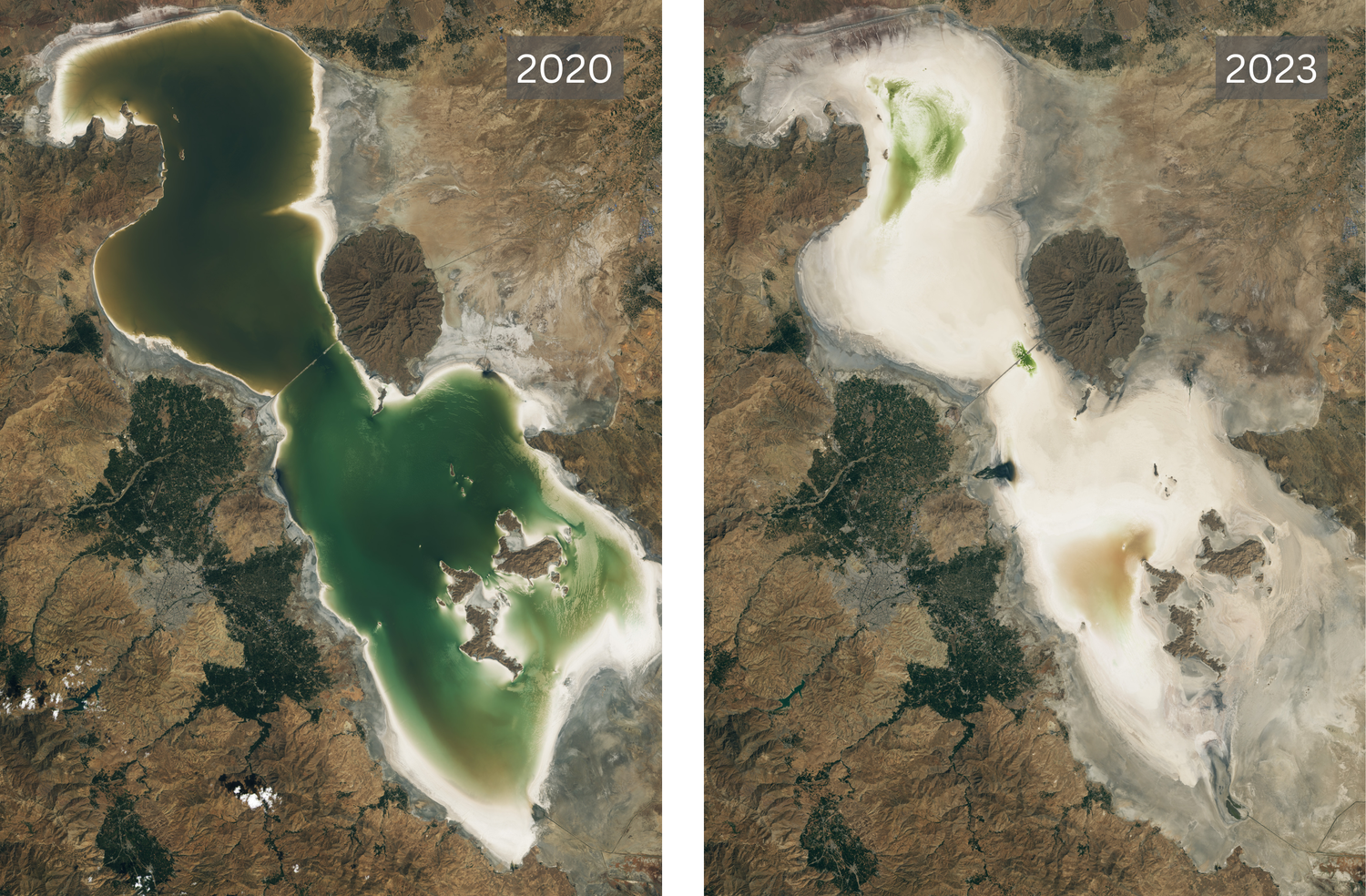
Lake Urmia in Iran in 2020 (left) and 2023 (right), after being desiccated by drought. NASA
A key driver of the air pollution crisis is the ongoing drought in Iran, say researchers, writing in The Conversation. Now in its fifth consecutive year, the drought has strained the arid country’s water reserves. Rivers, lakes, and marshlands are drying up, and as the water recedes, dust is left exposed. Winds are carrying plumes of dust hundreds of miles away, worsening air quality throughout the country.
Lake Urmia, once the Middle East’s largest lake, is almost entirely dried up according to satellite imagery from NASA. Research has found that salt-laden dust from the lakebed can spread hundreds of miles in a matter of hours.
Researchers say the water crisis is the result of decades of mismanagement. To boost farming, the country aggressively dammed waterways, drained aquifers, and dried wetlands, depleting water reserves.