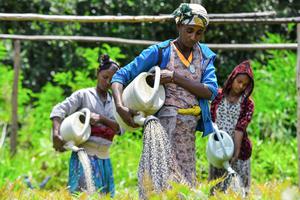
A child in Madagascar. Steve Evans via Flickr
A study of thousands of children across the developing world found that those continually exposed to severe heat were more likely to see developmental delays.
The new study looked at nearly 20,000 children between the ages of three and four living in the Gambia, Georgia, Madagascar, Malawi, Palestine, or Sierra Leone. Researchers parsed data on childhood development, as well as data related to health and education, and the local climate.
Comparing children in the same region, researchers found those facing an average high of more than 86 degrees F (30 degrees C) were around 6 percent less likely to meet milestones for reading and math than those facing an average high of less than 79 degrees F (26 degrees C). The gap was greater for children in poorer households and for those with less access to clean water, according to the study, published in the Journal of Child Psychology and Psychiatry.
The findings should alert researchers and policymakers “to the urgent need to protect children’s development in a warming world,” said lead author Jorge Cuartas, of New York University. “We urgently need more research to identify the mechanisms that explain these effects and the factors that either protect children or heighten their vulnerability.”
Other studies involving children have shown that high heat can disrupt sleep, make it harder to concentrate in class, and exact an emotional toll, leading to greater irritability, anxiety, and depression.
ALSO ON YALE E360
Heat Stress Is a Major Driver of India’s Kidney Disease Epidemic