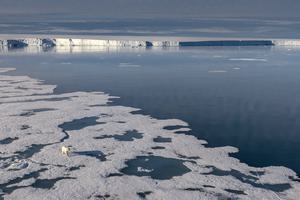
Orange, acidic waters in Alaska's Igning River. Taylor Evinger / UC Davis
As the Arctic warms and tundra thaws, minerals long trapped in frozen soil are leaching into rivers, turning them orange and acidic. A study from northern Alaska found “rusting” waters to be more metallic and acidic than drainage from metal mines.
Researchers found iron and sulfuric acid from thawing tundra throughout watersheds in the Brooks Range. On the Salmon River, they determined, leaching raised metal levels as much as seventy-fold some 60 miles downstream. The findings were published in AGU Advances.
Analyzing records of water quality, researchers also determined that rusting began in the summer of 2019, the hottest summer on record in the state of Alaska. Since then, rusting has been recorded in more than 200 rivers in Alaska, as well as in waterways across much of northern Canada.
Researchers are only beginning to grapple with the implications for wildlife. But there are fears that rusting may have led to the collapse of the chinook salmon fishery in the region.
The plumes of orange water in Arctic rivers, in Alaska and beyond, have come as a surprise to scientists, said Brett Poulin, a professor of environmental toxicology at the University of California, Davis, and the coauthor of the new study.
“This was a process that was not forecast, predicted, or included in any assessment of how the Arctic will change under a warmer climate,” he said, “but we’re seeing it in rivers across the Arctic.”
ALSO ON YALE E360
Rusting Rivers: Alarm Grows Over Uptick in Acidic Arctic Waters