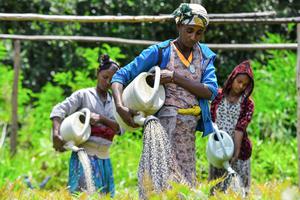
Sara Meléndez, an Indigenous environmental defender in Peru, whose brother was killed after opposing coca cultivation on community land. Leslie Searles / Global Witness
At least 124 people were murdered last year for defending their forests, farms, or waterways from destruction or degradation, according to a stark new report. Its authors say that deep cuts to foreign aid by wealthy nations have weakened human rights groups that support environmental defenders.
“The effects of these budget cuts are not abstract,” said Juliana Vélez Echeverri, a senior campaigner with the watchdog group Global Witness, which published the report. “In Colombia, projects working to promote and protect human rights and support defenders have been hit by the sudden drop in foreign aid, particularly from the U.S.”
Land disputes were linked to more than half of the killings of environmental defenders last year, while roughly a third of those killed were Indigenous people, according to the report. Latin America accounted for 85 percent of killings, making it the deadliest region for defenders, a distinction it has earned every year since Global Witness began tracking killings in 2012.
Last year Colombia led the world with 39 murders, followed by Brazil with 26. Colombia has seen a surge in the growing of coca, used to make cocaine, and its cultivation is driving conflicts over land, putting defenders in the crosshairs of drug traffickers. In Brazil, killings were concentrated at the edges of the Amazon, where miners, loggers, and ranchers are illegally pushing further into the rainforest.
The Philippines was once again the deadliest country in Asia. It recorded 12 killings last year, as armed forces cracked down on activists. Killings were lower elsewhere on the continent, though the report documents how Indonesia has moved to criminalize activism, while regimes in Russia and across Central Asian nations have worked to discredit political opponents through online smear campaigns.