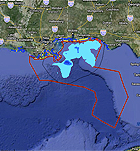
The U.S. government this week launched an interactive resource that allows the public to follow developments in the BP oil spill and ongoing response efforts in “near-real-time.” Originally designed as a way to keep participants in the vast clean-up effort informed, the GeoPlatform uses the latest information from various federal, state, and local organizations to track the spill’s path, identify closed fishing areas and threatened coastal zones, and to map the latest response efforts. Numerous agencies, including the U.S. Coast Guard and the Environmental Protection Agency, post data on a common server. The site was created by the National Oceanic and Atmospheric Administration and the University of New Hampshire’s Coastal Response Research Center. “This Web site provides users with an expansive, yet detailed geographic picture of what’s going on with the spill,” Jane Lubchenco, NOAA administrator, said in a statement. Several weeks ago, the government launched another site, deepwaterhorizonresponse.com, to provide updates on spill response and the latest news.
Interactive Resource Tracks Gulf Spill Response in Near Real-Time
More From E360
-
Solutions
Fifty Billion Seedlings: Can Ethiopia Replant Its Ravaged Forests?
-
OPINION
The Solar Boom in Developing Nations: Fast, Chaotic, and Unequal
-
Climate
Why Germany Is Building an Ark for U.S. Climate Data
-
INTERVIEW
From Indigenous Loss, a Potent Legal Argument on Climate
-
Biodiversity
Sargassum Superbloom: Seaweed Scourge or Ecological Boon?
-
Oceans
A Surge of Marine Heat Waves Threatens to Scramble Ocean Life
-
Policy
A Hard-Won Rule to Cut Chemical Plant Pollution Is Being Unraveled
-
E360 FILM CONTEST WINNER
Filipino Cacao Growers Learn to Live With a Hotter Climate
-
E360 FILM CONTEST
A Bicycle Journey Across Brazil to Find a Vanishing Savanna
-
OPINION
For America’s Rarest Wildlife, Survival May Hinge on a Single Word
-
E360 Film Contest
Who Gets to Decide the Fate of a Pristine Alaskan Rainforest?
-
Biodiversity
‘Wastelands’ No More: India Charts a Future for Its Grasslands