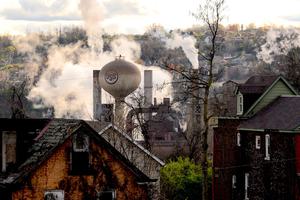
The former lead mine in Kabwe, Zambia. Diane McCarthy / Human Rights Watch
Three decades after one of the largest lead mines in the world closed down, people in Kabwe, Zambia, are still dealing with the aftermath. Facing pervasive lead contamination that continues to endanger their children, families in Kabwe, with a coalition of human rights groups, are calling on the African Union to force Zambia to clean up the site.
“For generations, children in Kabwe have been forced to grow up in a toxic environment that no child should ever be subjected to,” said Musa Kika, head of the Institute for Human Rights and Development in Africa, one of the groups filing the complaint with the African Union. “The science is clear, the harm is undeniable, and the State has been on notice for years. Children cannot continue to pay the price for inaction.”
The group contends that by failing to tackle the widespread lead contamination in Kabwe, Zambia has violated the African Charter on the Rights and Welfare of the Child.
While the Broken Hill lead and zinc mine was shut down in 1994, the site was never cleaned up. Today, some 6.4 million tons of lead-bearing waste continues to pollute Kabwe, and 95 percent of children living near the mine have unsafe levels of lead in their blood, Yale Environment 360 reported in March.

A school situated less than a mile from the shuttered Broken Hill mine in Kabwe. Kennedy Phiri
“We have children who are sick,” David Mwape, a teacher in Kabwe, told e360. “Sometimes they even sleep in class. Concentration is not good.”
Local families and human rights groups are pressing the African Union to find a permanent solution to the issue. They want Zambia to finally eliminate the lead contamination, put a stop to artisanal mining at the former mine, and provide testing and health care to affected children.
Allan Ngari, Africa advocacy director at Human Rights Watch, said the complaint “is a necessary and urgent effort to end this cycle of neglect and demand accountability and immediate action from the Zambian government.”
The move comes as Zambia looks to ramp up mining of copper, cobalt, and other metals used in electric vehicles and batteries. The toxic contamination from past mining has raised fears that a new wave of extraction could come at a high cost for Zambians.
“Should mining expansion wait until we sort out the issues and the exposure that we are dealing with?” Josphat Njobvu, head of the Zambian group Advocacy for Child Justice, told e360. “Of course.”