Humans may see flowering plants as pleasant decorations, but David George Haskell views them as radical forces that have shaped the evolution of countless other species and played key roles in the creation of some of Earth’s most important ecosystems. His new book, How Flowers Made Our World, explains how they did this and why it matters for the future.
Using examples such as orchids, seagrasses, and pansies, Haskell shows how flowers build relationships with other organisms and create ecological communities. He also explains how genetic flexibility has enabled flowering plants to move into new territories and adapt to radical changes in living conditions since they first evolved more than 130 million years ago.
Today, climate change and habitat loss are driving what Haskell and many other scientists consider Earth’s sixth mass extinction. To survive climate chaos, Haskell says, it’s essential to protect plants’ genetic diversity. That means shifting agriculture away from corn and soy monocultures to a wider range of crops, and populating parks and gardens with local plant species instead of species translocated from afar. Through steps like these, he writes, we can give plants what they need to be resilient in a rapidly changing world.
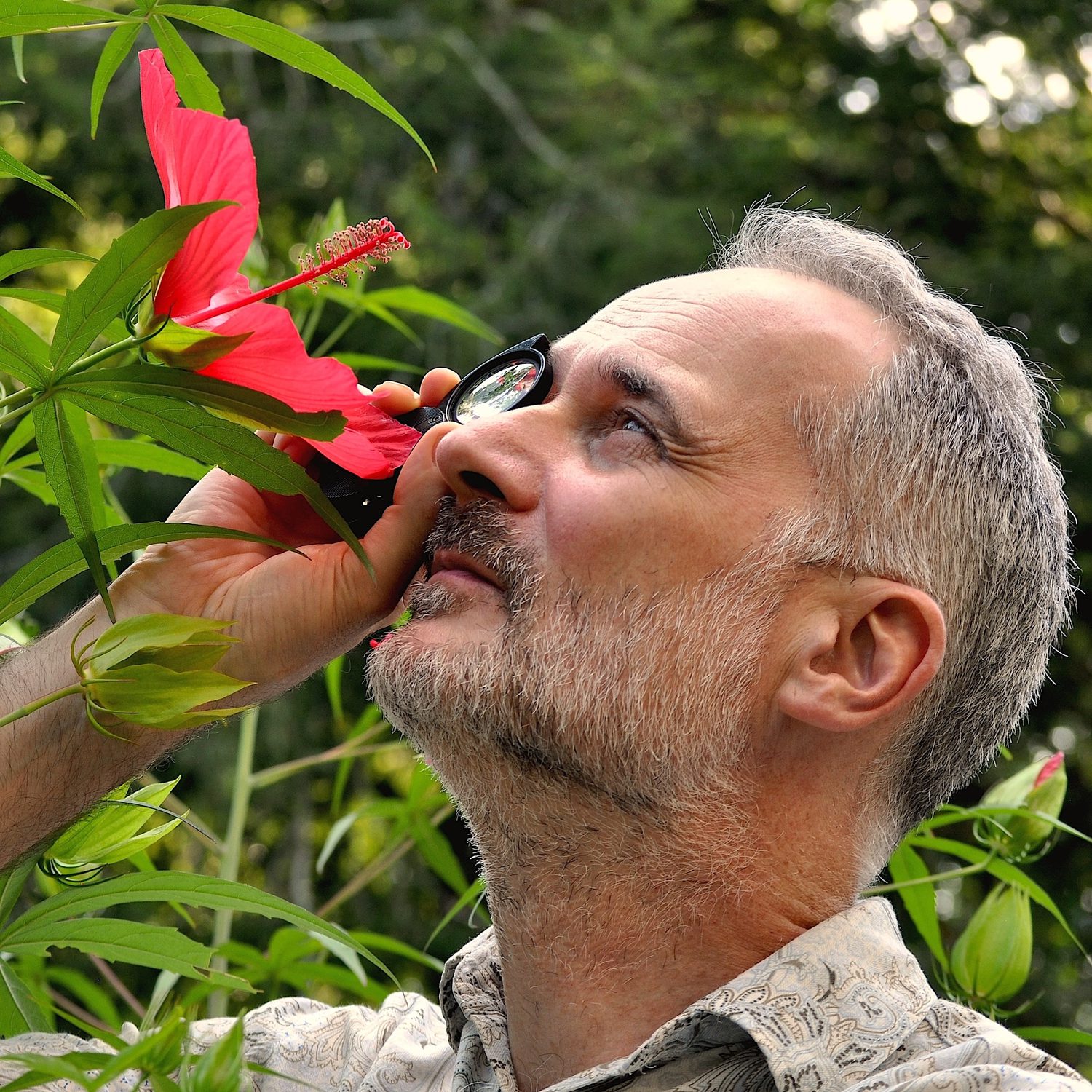
David George Haskell. Katherine Lehman
Yale Environment 360: You write that when flowering plants appeared on Earth, they caused “an explosion of biodiversity and ecological productivity” and that they did this mainly “through beauty and cooperation.” Can you unpack that statement?
David George Haskell: Beauty is a flower’s way of speaking the language that animals understand. Pollinating insects are an example. Insects were mostly nothing but trouble for plants for three or four hundred million years, until flowering plants flipped the narrative by providing aromas and rewards like nectar and pollen that the insects could eat. They turned former enemies into allies through interspecies communication. Evolution found a way for plants to tap into animals’ aesthetics, and flowers forged new bonds of cooperation that made their reproduction way more efficient.
From insects’ point of view, new opportunities for feeding didn’t even exist before flowering plants came along. Neither did bees or butterflies. The emergence of flowering plants spurred the evolution of a lot of new animals in response to these incredible opportunities for collaboration.
And then flowering plants formed ecosystems — like rainforests, prairies, and savannas — that didn’t previously exist. Those ecosystems are incredibly productive, so flowering plants actually opened opportunities for other species, even if they didn’t work directly together.
“There were no grazing mammals before flowering plants, and grasses more specifically, evolved.”
Some flowering plants are sneaky and deceptive. For example, many orchids look like they’re full of food and nectar but, in fact, don’t provide those to the pollinating insects that visit them. Other plants look and smell just like a female wasp, so male wasps try to mate with them. That’s a pointless activity for the wasp, but the orchid puts pollen on the wasp’s head, and then the wasp tries to mate with another flower. The plant uses sexual deception to pollinate.
e360: We’re edging up to the idea of coevolution. What is it, and why is it important?
Haskell: Coevolution is a process where changes in one species induce changes in another, and then they go back and forth. A classic example is changes in some orchids, where the tube that holds their nectar gets longer and longer to accommodate a very specific kind of moth that drinks it. Charles Darwin knew of an orchid with a very long nectar spur [the Madagascar orchid, Angraecum sesquipedale] and predicted that there must be a moth with a proboscis with exactly that length. Twenty-five years after Darwin died, somebody found the moth.
Certain species of fig release an aroma molecule that is specific to the senses of one species of wasp. Through the close relationship between the wasps’ sensory preferences and the aroma, this fig is then pollinated by just a single wasp species.

Bee orchids in New Addington, United Kingdom. The flowers resemble female bees, helping them to attract male pollinators. Dan Kitwood / Getty Images
e360: You write that grasses “built vast prairies, steppes, and savannas” over roughly the past 10 million years. Can you describe that process?
Haskell: We often don’t even think of grasses as flowers. They are wind-pollinated, but they make flowers nonetheless. Their seeds are really densely packed with [nutrient-rich] endosperm, which is why we as a species are almost completely dependent on grasses [like wheat, corn, rice, and oats] for our food.
Grasses started their evolution in the understory of tropical forests and then gradually spread out from there. Their growth form is to hug close to the ground. If a fire comes through, or a cow comes along and eats some of the grass, the embryonic areas or meristems – the tissues from which the plant continues its growth – are undamaged.
Grasses actually encourage fire by producing lots of lush aboveground growth that gets dry late in the season. It just takes a little spark from lightning and the whole prairie is set alight. For grasses, fire is a friend. It eliminates woody competition from shrubs and blackberries and little saplings. Those get turned into ash, which is fertilizer for the grasses, and the grasses can then spring back up again.
“Flowering plants have a 100-million-year record of coming through mass extinctions and thriving.”
Grasses also have a cooperative relationship with grazing mammals. There were no grazing mammals before flowering plants — and grasses more specifically — evolved. As grasses spread around the world, various mammals and other species, like insects, moved out into grasslands. They evolved adaptations, such as teeth that can chew down the grass. Grazing mammals became groundskeeping crews for grasses, which sacrificed some of their leaves so that these helpful mammals would go around and clear the competition. Grasses were the original deforesters of this planet.
e360: As the planet warms, how can we ensure that those flowering grasses will be there for us in the future?
Haskell: Flowering plants have a 100-million-year record of coming through mass extinctions and thriving in the face of calamity. They are world creators, and we need to help. One promising path is to work collaboratively with grasses’ genetic diversity, rather than trying to engineer single new breeds.
For example, there’s an ancient sustainable farming practice called maslin agriculture that involves planting a variety of grass species in the same fields, instead of using genetically identical monocultures. This slows the spread of pests and is more resilient in the face of uncertainty. In the same vein, planting a variety of wheat genotypes in the same fields allows the plants to discover what works best in an uncertain future. Organizations like the Land Institute in Kansas and the Breadlab at Washington State University are using this approach to build new forms of agriculture.

Silvergrass blooming in Tongren City, China. CFOTO / Future Publishing via Getty Images
e360: Seagrasses evolved on land, then moved back into coastal waters. What adaptations allow them to grow completely submerged? And how did they change coastlines as they spread?
Haskell: The fact that flowering plants literally bloom underwater blows me away. There wasn’t just one lineage of flowering plants that went back to the ocean – there were several, but they all did it in pretty much the same way. They brought lignin, which is a really tough molecule that they can use to grow roots down into ocean sediment and hold themselves in place. By growing very, very strong mats of roots down into the sediment, seagrasses established themselves below the water.
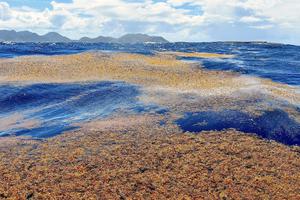
By spreading that mass of roots out, they can eventually cover hundreds or even thousands of square kilometers. And in doing so, they stabilize the coastline. They store and hold massive amounts of carbon in sediments. And they serve as nurseries for biodiversity. Lots of fish and invertebrates and other creatures rely on seagrass beds in order to either live full-time or lay their eggs and raise their young. For me, seagrasses are true unsung environmental heroes in the plant world.
e360: In your book’s conclusion, you discuss how plant life in Australia might represent a possible ecological future thousands of years from now, as this planet warms. What would that world look like?
Haskell: This is looking 100 million years into the future, and it’s extremely speculative. But if we’re looking at what humans are doing to the world now, we are increasing fire, we are degrading soils worldwide, and we’re increasing the temperature. Southwest Australia, and also the Cape region of South Africa, have fire-prone ecosystems with very old and nutrient-impoverished soils, and are often quite hot.
“It would help if we stopped annihilating biodiversity worldwide, to give evolution some raw material to work with.”
These places, paradoxically, are hot spots of flowering plant diversity, with the most exuberant, crazy plants you could possibly imagine. Why is that? When plants grow in those very challenging conditions, if you give them millions of years, the plants adapt to the particular nutrient conditions of the place. They can’t grow a lot of biomass because there’s not much phosphorus or calcium or anything in the soil. They have to grow very slowly, with tough, leathery leaves. But what they can do is make nectar, because nectar is sugar water, made out of just carbon, hydrogen, and oxygen.
So these plants pump out nectar, and you have the evolution of lots and lots of nectar-eating birds and insects. There’s even a mammal, the honey possum, which only eats nectar and pollen. It’s an intensification of what flowers have been doing all along: crafting new relationships with animals, which then spur and catalyze the evolution of whole new groups of nectar-eating animals. There are dozens of species in Australia that exist nowhere else in the world, and that have evolved specifically to feed in an extremely nectar-rich environment.
Now, for the world to be like that in 100 million years, it would help if we stopped annihilating biodiversity worldwide, to give evolution some raw material to work with. That’s why this is speculative. That floral future is more likely if we are less damaging.
Virtually no mammal species have lived more than a few million years — they either go extinct or evolve into something else. Humans, a species that has only ever thrived by working with flowering plants, aren’t going to be around forever. But if our descendants are still around in 100 million years, I predict that they will be flower people. They will have figured out how to work in deep cooperation with flowering plants so that they and the rest of the ecosystem can thrive.
This interview was edited for length and clarity.