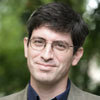
Carl Zimmer writes about science for
The New York Times and a number of magazines. He is currently a lecturer at Yale University. A 2007 winner of the National Academies of Science Communication Award, Zimmer is the author of several books, including
Microcosm: E. coli and the New Science of Life and
The Tangled Bank: An Introduction to Evolution. He also writes an award-winning blog about science called
The Loom.
More from Carl Zimmer
by carl zimmer
A new study indicates soot, known as black carbon, plays a far greater role in global warming than previously believed and is second only to CO2 in the amount of heat it traps in the atmosphere. Reducing some forms of soot emissions — such as from diesel fuel and coal burning — could prove effective in slowing down the planet’s warming.
READ MORE
by carl zimmer
A new study from a Pacific atoll reveals the links between native trees, bird guano, and the giant manta rays that live off the coast. In unraveling this intricate web, the researchers point to the often little-understood interconnectedness between terrestrial and marine ecosystems.
READ MORE
by carl zimmer
In pockets ranging from mountain peaks to bogs, scientists are discovering plants and animals that survived previous eras of climate change. Now, conservation biologists say, these climate “relicts” could shed light on how some species may hang on in the coming centuries.
READ MORE
by carl zimmer
One of the tenets of conservation management holds that alien species are ecologically harmful. But a new study is pointing to research that demonstrates that some non-native plants and animals can have beneficial impacts.
READ MORE
by carl zimmer
Yale ecologist David Skelly wanted to know why a sizable percentage of frogs in the northeastern United States suffered from deformities. His ongoing research has implicated human activity — but not in the way many researchers had thought.
READ MORE
by carl zimmer
As warming intensifies, scientists warn, the oxygen content of oceans across the planet could be more and more diminished, with serious consequences for the future of fish and other sea life.
READ MORE
by carl zimmer
Within the planet’s oceans and soils are trillions of bacteria that store and release far more carbon dioxide than all of the Earth’s trees and plants. Now, scientists are attempting to understand how the world’s bacteria will influence — and be influenced by — a warming climate.
READ MORE
by carl zimmer
A new study says the seas are acidifying ten times faster today than 55 million years ago when a mass extinction of marine species occurred. And, the study concludes, current changes in ocean chemistry due to the burning of fossil fuels may portend a new wave of die-offs.
READ MORE
by carl zimmer
In the last two decades, network theory has emerged as a way of making sense of everything from the World Wide Web to the human brain. Now, as ecologists have begun applying this theory to ecosystems, they are gaining insights into how species are interconnected and how to foster biodiversity.
READ MORE
by carl zimmer
The Earth has nine biophysical thresholds beyond which it cannot be pushed without disastrous consequences, the authors of a new paper in the journal Nature report. Ominously, these scientists say, we have already moved past three of these tipping points.
READ MORE
by carl zimmer
In a matter of years or decades, researchers believe, animals and plants already are adapting to life in a warmer world. Some species will be unable to change quickly enough and will go extinct, but others will evolve, as natural selection enables them to carry on in an altered environment.
READ MORE
by carl zimmer
By 2100, the world will probably be hotter than it’s been in 3 million years. In an interview with Yale Environment 360, paleoecologist Anthony D. Barnosky describes the unprecedented challenges that many species will face in this era of intensified warming.
READ MORE
by carl zimmer
With global warming pushing some animals and plants to the brink of extinction, conservation biologists are now saying that the only way to save some species may be to move them.
READ MORE
by carl zimmer
A number of companies, including one headed by biologist and entrepreneur Craig Venter, are developing genetically engineered biofuels that they say will provide a greener alternative to oil. But some environmentalists are far from convinced.
READ MORE
by carl zimmer
Paleontologists and geologists are looking to the ancient past for clues about whether global warming will result in mass extinctions. What they're finding is not encouraging.
READ MORE

Yale Environment 360 is
a publication of the
Yale School of Forestry
& Environmental Studies.
Twitter: YaleE360
e360 on Facebook
Donate to e360
View mobile site
Bookmark
Share e360
Email newsletter
Subscribe to our feed:
About e360
Contact
Submission Guidelines
Reprints

South African photojournalist Adam Welz documents the harrowing relocation of six white rhinos to a region that has lost all its rhinos to poaching.
View the gallery.
Opinion
Reports
Analysis
Interviews
e360 Digest
Podcasts
Video Reports
Biodiversity
Business & Innovation
Climate
Energy
Forests
Oceans
Policy & Politics
Pollution & Health
Science & Technology
Sustainability
Urbanization
Water
Antarctica and the Arctic
Africa
Asia
Australia
Central & South America
Europe
Middle East
North America

A
Yale Environment 360 video explores Ecuador’s threatened Yasuni Biosphere Reserve with scientists inventorying its stunning forests and wildlife.
Watch the video.
The latest
from
Yale
Environment 360 is now available for mobile devices at
e360.yale.edu/mobile.
In a
Yale Environment 360 video, photographer Pete McBride documents how increasing water demands have transformed the Colorado River, the lifeblood of the arid Southwest.
Watch the video.

Top Image: aerial view of
Iceland. © Google & TerraMetrics.
The Warriors of Qiugang, a
Yale Environment 360 video that chronicles the story of a Chinese village’s fight against a polluting chemical plant, was nominated for a 2011 Academy Award for Best Documentary (Short Subject).
Watch the video.