Last year, the amount of U.S. home battery capacity enlisted in virtual power plants grew by 153 percent.
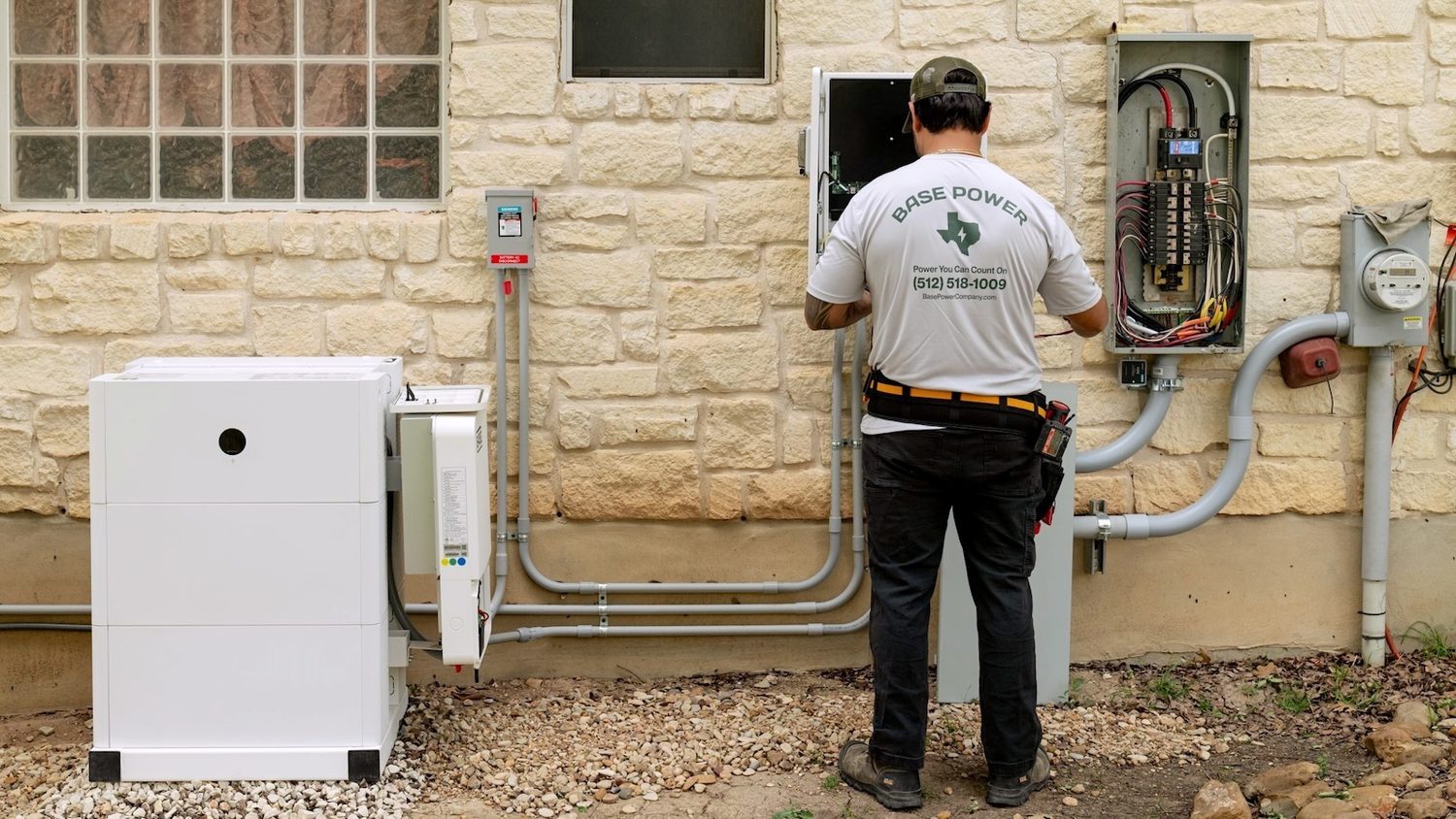
Unlike a net metering system, which sends unused energy from rooftop solar panels directly into the grid in return for an energy credit, a VPP requires a storage system and software that tells the battery to send energy to the grid when it needs more power, like on a hot summer day. Compensation for tapping a homeowner’s battery is paid by either a local utility or a VPP program, of which there are now more than 500 in the U.S. and thousands in Europe.
This rapid expansion of home batteries and advanced software that aggregates thousands of decentralized energy sources is “transforming not only the way electricity is generated, but also how it is traded, delivered, and consumed,” concludes a 2022 International Energy Agency report. These assets, the report said, “can provide valuable services to the grid when incentivized with appropriate technologies, policies, and regulations.”
Currently, fewer than 10 percent of Australian homeowners who have solar arrays have signed contracts with energy providers. But experts believe the model has immense potential to expand, thanks to a global “battery revolution” that has, in a matter of years, seen battery prices plummet and their storage capacity shoot up even as their size has shrunk. Today, a 10 kilowatt-hour unit — which can simultaneously run a few household appliances and some lighting and electronics for 24 hours — can snugly fit under a staircase or into a garage corner. Between 2010 and 2020, battery density increased by more than 700 percent, and between 2010 and 2023, the price of lithium-ion batteries plunged from about $1,400 per kilowatt-hour to less than $140 per kilowatt-hour — one of the fastest cost declines of any energy technology in history.

The Amber Electric smartphone app allows homeowners in Australia to manage their battery systems. Courtesy of New South Wales Climate and Energy Action
Climate experts hope that grids can be cheaply and effectively balanced by hundreds of thousands of batteries distributed across cities, suburbs, and rural areas — some in electric vehicles, others on the walls of garages or cellars, and some in utility-scale storage parks, which still provide the lion’s share of solar-energy storage everywhere in the world. Ideally, aggregating the capacity of decentralized batteries — whether they are charged by solar panels or directly through the grid during off-peak hours — will replace dirty gas peaker plants.
Large battery projects, says a May report from the energy think tank Ember, “are increasingly cost-competitive and faster to build than new gas power plants.” And their carbon footprint is about 87 percent smaller than an average-size gas peaker. Home batteries offer similar advantages. When home battery systems are programmed to charge during times of high renewable output and discharge during peak grid demand, studies show they can reduce average household emissions by 2.2 to 6.4 percent.
Last year, the amount of U.S. home battery capacity enlisted in virtual power plants grew by 153 percent. Programs in Puerto Rico and California that paid homeowners for their stored energy were a “key driver of the growth,” according to policy and research analyst Madeline Turner of San Diego-based Ohm Analytics. California’s VPP program, according to Canary Media, “has shown that its fleet of home batteries can be relied on much like a traditional power plant.” During a two-hour test last July, roughly 100,000 home batteries delivered about 539 megawatts of energy — more than the output of a large gas peaker plant.
In the U.S., an installed 10 kilowatt-hour system costs roughly $8,000 to $13,000. A 30-percent federal clean energy credit ended in 2025, although customers can still benefit until 2027 from tax incentives by leasing a battery system from a commercial solar or battery company. California offers an additional baseline rebate of around $150 per kilowatt-hour.
In Puerto Rico, which has a particularly rickety power grid, 70,000 home batteries are helping to reduce the risk of blackouts.
Residential storage markets function differently from country to country, and in the U.S. from state to state, as do their payment schemes. In Germany this spring, Octopus Energy’s PowerDrive bundle began providing customers with a smart meter and an EV charger that enables electricity to flow in two directions, allowing it to manage its customers’ EV charging in exchange for up to 10,000 free miles of driving, plus an annual bonus of up to $409 if the EV is plugged in, at home, for 300 or more hours. Octopus makes money selling the power stored in customers’ EVs when demand peaks and prices spike. The nation’s EV ownership rate is just under 3 percent, though, so the total impact of vehicle-to-grid technology is quite small.
Since 2022, the U.K. has had a system that pays homeowners for reducing demand when the grid is stressed — whether by high demand or a lack of wind, which provides about 30 percent of the U.K.’s total electricity generation. Battery owners have the advantage of being able to rely on their batteries during these periods. In Puerto Rico, which has a particularly rickety power grid, some 70,000 home batteries are helping to reduce the risk of blackouts, according to the grid operator.
Germany’s largest VPP is Statkraft, whose software links a multitude of decentralized energy resources including a few large fossil-fueled power plants, biogas and hydroelectric plants, thousands of solar and wind farms, and thousands more residential and commercial batteries. It markets its tidy bundles of energy on short-term European power exchanges.

Home batteries have become the biggest source of battery capacity in Germany. Figures reflect the total battery capacity in January of each year. Source: Bundesnetzagentur. Yale Environment 360 / Made with Flourish
With the growing demand for power, and long waits for grid connections, utilities are prepared to pay storage owners for the right to lease their batteries. But because the demand for and price of energy on a macro scale is different than the needs of a single household, most VPPs won’t optimize price fluctuations to benefit a household budget. Rather, they will optimize those fluctuations to benefit their own business model. A homeowner may prefer to charge their battery overnight, when the price of power drops, and discharge it in the late afternoon, when prices surge. But a VPP will charge and discharge the battery as needed to balance the grid — even if prices are unfavorable to the homeowner.
The primary drawbacks of joining a VPP, says Toby Couture of E3 Analytics, a Berlin-based energy think tank, are the household’s loss of control over when and how much power a third party can call upon (though most plans allow battery owners to set a reserve level), uncertain financial returns, and some additional wear and tear on the battery from extra cycling. A 2025 study found that EVs enrolled in a VPP program degraded 9 to 14 percent faster over a 10-year period. Another drawback is the high purchase price of home batteries, although some countries and several U.S. states offer subsidies.
Australia’s policies, which have reduced regulatory hurdles and challenges to integrating residential power, have made it the frontrunner in bidirectional storage, and similar policies in other countries could propel the clean energy transition forward. Where two-way battery storage makes financial sense to grid operators and battery owners, whether large or small, virtual power plants will likely expand in places where regulatory conditions allow, experts say. This is the logic of a battery revolution that is just beginning to transform our electricity markets.