Europe
-
Breaking Records
How the World Passed a Carbon Threshold and Why It Matters
-
Full Speed Ahead
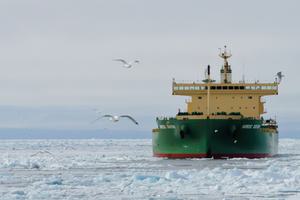
Shipping Plans Grow as Arctic Ice Fades
-
The Moth Snowstorm
Finding True Value in Nature’s Riches
-
A Post-Fact World
How the Attack on Science Is Becoming a Global Contagion
-
Video Contest Winner - Runner Up
After Denial: How People React to the Hard Reality of Climate Change
-
The New Green Grid: Utilities Deploy ‘Virtual Power Plants’
By linking together networks of energy-efficient buildings, solar installations, and batteries, a growing number of companies in the U.S. and Europe are helping utilities reduce energy demand at peak hours and supply targeted areas with renewably generated electricity.
-
Sticker Shock: The Soaring Costs Of Germany’s Nuclear Shutdown
German Chancellor Angela Merkel’s 2011 decision to rapidly phase out the country’s 17 nuclear power reactors has left the government and utilities with a massive problem: How to clean up and store large amounts of nuclear waste and other radioactive material.
-
Floating Solar: A Win-Win for Drought-Stricken Lakes in U.S.
Floating solar panel arrays are increasingly being deployed in places as diverse as Brazil and Japan. One prime spot for these “floatovoltaic” projects could be the sunbaked U.S. Southwest, where they could produce clean energy and prevent evaporation in major man-made reservoirs.
-
Can Virtual Reality Emerge As a Tool for Conservation?
New advances in technology are sparking efforts to use virtual reality to help people gain a deeper appreciation of environmental challenges. VR experiences, researchers say, can be especially useful in conveying key issues that are slow to develop, such as climate change and extinction.
-
Unable to Endure Rising Seas, Alaskan Villages Stuck in Limbo
As an advocate for Alaska’s Native communities, Robin Bronen points to a bureaucratic Catch-22 — villages cannot get government support to relocate in the face of climate-induced threats, but they are no longer receiving funds to repair their crumbling infrastructure.
-
What Would a Global Warming Increase of 1.5 Degrees Be Like?
The Paris climate conference set the ambitious goal of finding ways to limit global warming to 1.5 degrees Celsius, rather than the previous threshold of 2 degrees. But what would be the difference between a 1.5 and 2 degree world? And how realistic is such a target?
-
The Case Against More Ethanol: It’s Simply Bad for Environment
The revisionist effort to increase the percentage of ethanol blended with U.S. gasoline continues to ignore the major environmental impacts of growing corn for fuel and how it inevitably leads to higher prices for this staple food crop. It remains a bad idea whose time has passed.
-
Why CO2 ‘Air Capture’ Could Be Key to Slowing Global Warming
Physicist Klaus Lackner has long advocated deploying devices that extract carbon dioxide from the atmosphere to combat climate change. Now, as emissions keep soaring, Lackner says in a Yale Environment 360 interview that such “air capture” approaches may be our last best hope.